The high-voltage traction battery is the single most expensive component in any electric vehicle. It determines your range, your charging speed, and ultimately your long-term ownership cost. Yet for most EV shoppers, the battery remains a black box — a source of anxiety rather than understanding.
This guide breaks down exactly what happens inside your EV's battery pack over time, how chemistry choices affect your daily vehicle battery charge routine, what the degradation data actually shows, and what you'll pay if the worst happens. We'll also cover how to monitor State of Health (SoH) and what's coming next in battery technology.
LFP vs NMC/NCA: Choosing Your Battery Chemistry
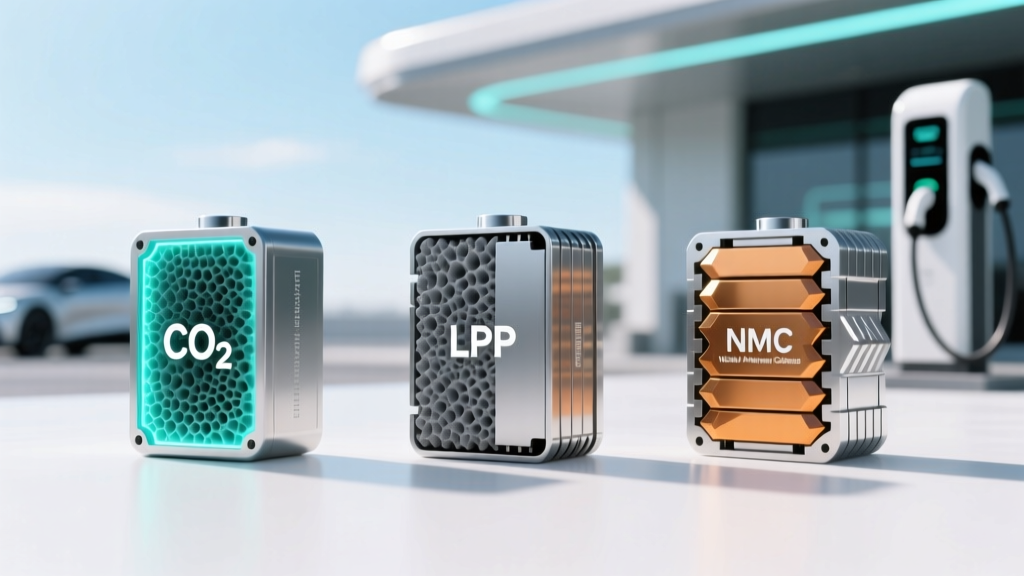
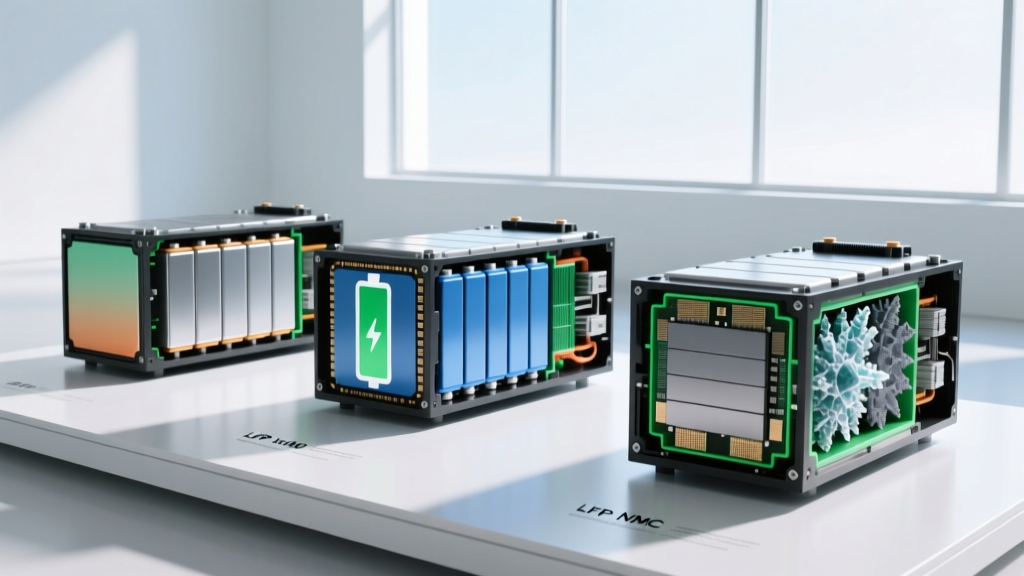
Every EV sold in the US in 2026 uses one of two dominant lithium-ion cathode chemistries: LFP (lithium iron phosphate) or NMC/NCA (nickel manganese cobalt / nickel cobalt aluminum). The chemistry determines your energy density, cycle life, cold-weather behavior, and cost — and it should influence your buying decision.
LFP batteries, now standard in the Tesla Model 3 RWD, base Model Y, and several Ford and Hyundai trims, use no nickel or cobalt. They are cheaper to produce, tolerate repeated 100% charging better than NMC, and offer superior cycle life — often exceeding 3,000 full charge-discharge cycles before significant degradation. The trade-off: lower energy density (roughly 160–180 Wh/kg at the cell level vs. 250–300 Wh/kg for NMC), meaning heavier packs for the same range, and worse cold-weather performance where you may see 30–40% range loss below freezing vs. 20–30% for NMC.
NMC/NCA chemistries dominate in long-range and performance trims — the Model 3 Long Range, Hyundai Ioniq 5 (77.4 kWh pack), Ford Mustang Mach-E Extended Range, and most luxury EVs. They pack more energy per kilogram, charge faster at DC stations (higher C-rate tolerance), and lose less range in cold weather. But manufacturers typically recommend daily charging to 80% to preserve longevity, and cycle life is generally rated around 1,000–2,000 cycles before notable capacity loss.
| Attribute | LFP (LiFePO₄) | NMC / NCA |
|---|---|---|
| Energy Density (cell-level) | 160–180 Wh/kg | 250–300 Wh/kg |
| Cycle Life (to 80% SoH) | 3,000–5,000 cycles | 1,000–2,000 cycles |
| Daily Charge Recommendation | 100% OK | 80% recommended |
| Cold-Weather Range Loss | 30–40% | 20–30% |
| DC Fast-Charge Tolerance | Moderate (lower peak kW) | High (250–350 kW peak) |
| Cost per kWh (pack-level) | ~$100–120 | ~$130–160 |
| Cobalt / Nickel Content | None | Yes — supply-chain risk |
| Common Vehicles (2026) | Tesla Model 3 RWD, Model Y RWD, some Ford/Hyundai base trims | Model 3 LR, Ioniq 5, Mach-E ER, BMW i4, most luxury EVs |
Which is better? If you charge primarily at home overnight, live in a mild climate, and want a lower purchase price with maximum cycle life, LFP is the pragmatic choice. If you need maximum range per charge, frequent DC fast charging on road trips, or regularly drive in sub-freezing temperatures, NMC/NCA is better suited. Neither chemistry is universally superior — the right answer depends on your driving and charging patterns.
How Long Do EV Batteries Actually Last?
The short answer: most EV traction batteries will outlast the vehicle they're installed in. Data from multiple fleet studies and manufacturer reports consistently show that modern liquid-cooled battery packs lose roughly 1–2% of total capacity per year under normal use.
Here's what the real-world data shows:
- Tesla 2024 Impact Report: Model 3/Y batteries retained approximately 85% capacity after 200,000 miles — consistent with earlier Model S/X data showing ~90% retention at 150,000 miles.
- Geotab fleet study (6,300 EVs): Average degradation of 1.8% per year across all brands, with most vehicles retaining above 80% SoH at 10 years.
- Recurrent Auto data (2025 update): Among 15,000+ EVs tracked, median degradation at 100,000 miles was 8–10%, with LFP-equipped vehicles showing slightly slower loss curves.
To put this in perspective: the average American drives ~14,000 miles per year. At 1.5–2% annual degradation, a battery will retain roughly 75–85% of its original capacity after 10 years / 140,000 miles. That means a vehicle with an EPA-rated 300-mile range when new will still deliver approximately 225–255 miles at age 10 — still very usable for daily driving.
Typical Degradation Curve (NMC, liquid-cooled, normal use):
Year 1: ~2–3% loss (initial formation period) • Years 2–5: ~1.5% per year (linear phase) • Years 6–10: ~1–1.5% per year (plateau phase) • Expected SoH at 150,000 mi / 10 yr: ~78–85%
The curve is non-linear — batteries degrade faster in the first year, then settle into a slow, predictable decline. Catastrophic failure (sudden capacity loss) is extremely rare in liquid-cooled packs and typically covered under warranty.
EV Battery Warranty Terms: What's Covered
Federal law mandates that EV batteries carry a minimum warranty of 8 years / 100,000 miles (whichever comes first). In California Air Resources Board (CARB) states, the requirement extends to 10 years / 150,000 miles. Most manufacturers meet or exceed these minimums.
The critical number is the capacity retention threshold — the point at which the manufacturer will repair or replace the battery. In 2026, this threshold is typically 70% of original capacity, though a few brands set it at 65%.
| Manufacturer | Warranty Period | Mileage Limit | Capacity Threshold |
|---|---|---|---|
| Tesla (Model 3/Y) | 8 years | 100,000–120,000 mi | 70% |
| Hyundai / Kia | 10 years | 100,000 mi | 70% |
| Ford (Mach-E, F-150 Lightning) | 8 years | 100,000 mi | 70% |
| BMW (i4, iX) | 8 years | 100,000 mi | 70% |
| Rivian | 8 years | 175,000 mi | 70% |
| GM (Ultium platform) | 8 years | 100,000 mi | 70% (some trims 65%) |
Important nuances: warranties cover defects and excessive degradation, not damage from accidents, flooding, or improper modifications. If your battery drops below the threshold during the warranty period, the manufacturer will typically replace failed modules rather than the entire pack — a less invasive and faster process. Always check the specific warranty language for your trim, as terms can vary between RWD and AWD or standard-range and long-range versions.
EV Battery Replacement Cost: When and How Much
Let's address the biggest fear directly: most EV owners will never need to replace their traction battery. The data from Recurrent Auto, Geotab, and manufacturer warranty claim rates consistently shows that complete battery failure outside of collision damage affects well under 2% of EVs during the first 10 years of ownership.
When replacement is needed — whether due to a manufacturing defect, cell failure, or extreme degradation — here's what it costs in 2026:
| Vehicle | Battery Size (kWh) | Full Pack Cost (Parts) | Labor | Estimated Total |
|---|---|---|---|---|
| Tesla Model 3 RWD (LFP) | 60 kWh | $8,000–$12,000 | $2,000–$3,000 | $10,000–$15,000 |
| Tesla Model Y LR (NMC) | 75 kWh | $12,000–$16,000 | $2,000–$3,500 | $14,000–$19,500 |
| Hyundai Ioniq 5 | 77.4 kWh | $11,000–$15,000 | $2,500–$4,000 | $13,500–$19,000 |
| Ford F-150 Lightning Ext. | 131 kWh | $18,000–$25,000 | $3,000–$5,000 | $21,000–$30,000 |
| Chevrolet Equinox EV | 85 kWh | $12,000–$16,000 | $2,500–$4,000 | $14,500–$20,000 |
Several factors are driving costs down: pack-level prices have fallen from roughly $200/kWh in 2020 to approximately $110–140/kWh in 2026, according to BloombergNEF. Additionally, the growing EV salvage and refurbishment market means that for older vehicles, a refurbished or salvaged pack can cost 40–60% less than a new OEM replacement. Module-level repairs — replacing only the degraded cells rather than the entire pack — are increasingly common and can cost $2,000–$6,000 depending on the number of modules affected.
For context, a $15,000 battery replacement at year 12 is roughly equivalent to the cumulative fuel and maintenance costs of a comparable gas vehicle over the same period. The EV still typically wins on total cost of ownership, even in a worst-case battery scenario.
What Affects Battery Life — and What You Can Control
Battery degradation is driven by four primary factors. Understanding them lets you make informed choices about your daily vehicle battery charge habits.
1. State of Charge (SoC) extremes. Lithium-ion cells experience the most stress at the top and bottom of their charge range. Sitting at 100% SoC for extended periods accelerates electrolyte decomposition. Regularly draining below 10% increases internal resistance. The sweet spot for daily use is 20–80% SoC for NMC/NCA chemistries. LFP batteries are more tolerant of 100% SoC and many manufacturers recommend periodic full charges for accurate BMS (Battery Management System) calibration.
2. Temperature. Heat is the primary enemy of long-term battery health. Sustained exposure to ambient temperatures above 95°F (35°C) — especially combined with high SoC — accelerates degradation. This is why liquid-cooled packs (standard on virtually all 2026 EVs) are vastly superior to passively cooled packs like those in early Nissan Leafs. Cold temperatures don't permanently damage batteries but do temporarily reduce range and slow charging speeds.
3. DC fast-charging frequency. High-power DC charging (150–350 kW) generates significant heat within the cells. Occasional fast charging on road trips has negligible impact on modern liquid-cooled packs. However, exclusive reliance on DC fast charging — daily, for months on end — has been shown in Geotab's fleet data to increase degradation rates by roughly 1–2 additional percentage points over several years. If you have access to Level 2 home charging, use it for daily needs.
4. Charge rate and depth. Shallow cycles (e.g., charging from 40% to 70%) are gentler than deep cycles (10% to 90%). You don't need to obsess over this — modern BMS systems manage cell balancing automatically — but it's worth knowing that partial charges are perfectly healthy for your battery.
Battery Care Checklist — Maximize Your Pack's Lifespan
- ✅ Set daily charge limit to 80% (NMC/NCA) or 100% (LFP, per manufacturer guidance)
- ✅ Use Level 2 home charging for daily needs; reserve DC fast charging for road trips
- ✅ Avoid leaving the vehicle at 100% SoC for more than a few hours — schedule charging to finish just before departure
- ✅ In extreme heat, park in shade or a garage when possible
- ✅ In extreme cold, use preconditioning while plugged in to warm the battery before driving and charging
- ✅ Don't let the battery sit below 10% SoC for extended periods (days or weeks)
- ✅ Keep up with software updates — manufacturers regularly improve BMS algorithms and thermal management
- ❌ Avoid repeated deep discharges to 0% unless absolutely necessary
- ❌ Don't rely exclusively on DC fast charging if Level 2 is available
How to Check Your Battery's State of Health (SoH)
State of Health (SoH) is expressed as a percentage — the ratio of your battery's current maximum capacity to its original capacity when new. A battery at 90% SoH that started with 75 kWh usable capacity now holds approximately 67.5 kWh.
Here's how to check SoH on popular 2026 EVs:
- Tesla: No native SoH display in the app. Use third-party tools like TeslaFi or Scan My Tesla (via OBD-II adapter) to read BMS-reported capacity. Alternatively, perform a manual test: charge to 100%, note the displayed range, and compare to the EPA-rated range when new.
- Hyundai / Kia: The infotainment system includes a battery health screen (EV → Settings → Battery) showing SoH percentage directly.
- Ford: The FordPass app and SYNC system display estimated battery health. Dealers can pull a detailed SoH report via the diagnostic port.
- BMW: The iDrive system shows battery capacity under EV settings. BMW dealers can provide a certified SoH certificate useful for resale.
- Universal method: Apps like Recurrent, ABRP (A Better Routeplanner), and OBD-II readers (e.g., OBDLink SX with an EV-compatible app) can estimate SoH across most brands by tracking charge energy vs. displayed range over multiple cycles.
A practical tip: track your SoH every 6–12 months rather than obsessing over daily fluctuations. BMS estimates can vary by 1–2% depending on temperature and recent driving patterns. If you see SoH dropping faster than ~2% per year consistently, contact your dealer — it may indicate a module imbalance or warranty-covered defect.
What's Next: Solid-State, Silicon Anodes, and Realistic Timelines
Several next-generation battery technologies are in development. Here's where they stand as of 2026 — with honest timelines, not marketing promises.
Solid-state batteries replace the liquid electrolyte with a solid material, promising higher energy density (potentially 400–500 Wh/kg), faster charging, improved safety (no flammable electrolyte), and longer cycle life. Toyota, Samsung SDI, and QuantumScape are the most visible developers. Toyota has announced limited production of solid-state-equipped vehicles for 2027–2028, initially in low volumes and likely in Japan-market models first. Mass-market availability at competitive pricing is realistically 2030 or later. QuantumScape's cells are in validation testing with Volkswagen's PowerCo division, with pilot production targeted for 2027.
Silicon anode technology replaces graphite anodes with silicon, which can store roughly 10x more lithium ions per unit mass. Companies like Sila Nanotechnologies and Group14 are already shipping silicon-dominant anode materials to battery manufacturers. Expect to see this technology incrementally integrated into NMC cells starting in 2026–2028 model-year vehicles, offering 10–20% energy density improvements rather than a dramatic step-change. Mercedes-Benz's next-generation EQ models and certain GM Ultium variants are expected to incorporate silicon anode materials.
Sodium-ion batteries are emerging as a low-cost alternative for entry-level EVs and stationary storage. CATL has begun mass production, and early Chinese-market vehicles (e.g., certain BYD and Chery models) use sodium-ion packs. US-market adoption is likely 2028+, primarily in budget-oriented models where lower energy density is acceptable.
The practical takeaway: if you're buying an EV in 2026, today's LFP and NMC chemistries are mature, well-understood, and backed by extensive real-world data. Waiting for solid-state is not a practical strategy — it's years away from mainstream availability and will debut at premium pricing.
Frequently Asked Questions
How long do EV batteries last in years and miles?
Based on fleet data from Geotab, Recurrent Auto, and manufacturer reports, modern liquid-cooled EV batteries typically last 15–20 years or 200,000+ miles before degrading to 70–80% of original capacity. Most EVs will be retired for other reasons (body damage, technology obsolescence, owner preference) before the battery fails completely.
How much does an EV battery cost to replace?
Full pack replacement in 2026 ranges from approximately $10,000–$15,000 for a 60 kWh pack (Tesla Model 3 RWD) to $21,000–$30,000 for a 131 kWh pack (F-150 Lightning Extended Range). Module-level repairs, which replace only the degraded cells, cost $2,000–$6,000. Refurbished packs from the salvage market can reduce costs by 40–60%. However, fewer than 2% of EVs require battery replacement in the first decade.
What does the EV battery warranty cover?
Federal minimum is 8 years / 100,000 miles (10 years / 150,000 miles in CARB states). Coverage applies to defects and capacity loss below a specified threshold — typically 70% of original capacity. The warranty does not cover damage from accidents, flooding, or unauthorized modifications. Some manufacturers, like Hyundai and Kia, offer 10 years / 100,000 miles across all states as a competitive differentiator.
How do I check and maximize my EV battery health?
Check SoH through your vehicle's native display (Hyundai/Kia, Ford), dealer diagnostics, or third-party apps like TeslaFi or Recurrent. To maximize health: charge to 80% daily for NMC/NCA (100% is fine for LFP), use Level 2 charging for daily needs, precondition the battery in cold weather, avoid leaving the car at 100% SoC for extended periods, and keep up with OTA software updates.
LFP vs NMC — which battery chemistry is better for me?
Choose LFP if you charge at home, live in a mild climate, want lower cost, and prioritize maximum cycle life — it's the pragmatic daily-driver choice. Choose NMC/NCA if you need maximum range, frequently DC fast-charge on road trips, or regularly drive in freezing temperatures. Neither is universally better; the right choice depends on your specific driving and charging patterns.
Does frequent DC fast charging damage the battery?
On modern liquid-cooled packs, occasional DC fast charging (road trips, a few times per month) has minimal impact on long-term health. Geotab's fleet data shows that vehicles that DC fast-charge more than 3 times per week lose approximately 1–2% more capacity over several years compared to vehicles that primarily use Level 2. The effect is real but modest — not a reason to avoid fast charging when you need it.
Can I replace just one battery module instead of the full pack?
Yes. Most modern EV battery packs are modular, containing 4–16 individual modules. If diagnostics identify a single degraded or failed module, a qualified EV technician can replace just that module for $2,000–$6,000 rather than replacing the entire pack. This is increasingly common practice at both dealer service centers and independent EV shops.
For official warranty details specific to your vehicle, consult your manufacturer's warranty booklet. For federal tax credit eligibility related to battery sourcing requirements under IRS §30D, see IRS.gov clean vehicle credits. For EPA range and efficiency data by model, visit fueleconomy.gov.