If you've been researching long-duration energy storage or following grid-scale battery news, you've likely encountered the term vanadium flow batteries (VFBs). They promise near-infinite cycle life, zero thermal runaway risk, and decoupled power and energy capacity. But how do they stack up against the lithium-ion chemistries — LFP (lithium iron phosphate) and NMC (nickel manganese cobalt) — that actually power today's EVs? And could vanadium flow technology ever find its way into your next electric car?
This guide breaks down the real engineering trade-offs between vanadium flow and lithium-ion chemistries, gives you hard data on EV battery degradation, warranty coverage, replacement costs, and the care habits that maximize State of Health (SoH). We'll also cover where vanadium flow batteries fit in the broader EV ecosystem — spoiler: not under your hood, but potentially at your charger.
What Are Vanadium Flow Batteries and How Do They Work?
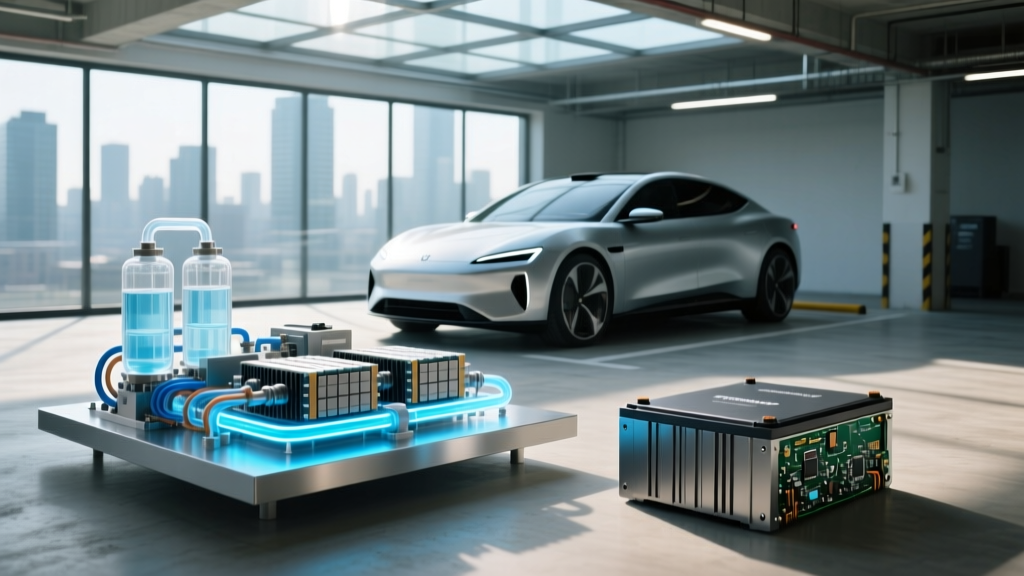
A vanadium redox flow battery stores energy in liquid electrolyte solutions containing vanadium ions in different oxidation states. Two tanks hold the electrolyte — one for the anolyte (V²⁺/V³⁺) and one for the catholyte (V⁴⁺/V⁵⁺). Pumps circulate these liquids through a central electrochemical cell separated by an ion-exchange membrane, generating electricity as ions cross the membrane.
The critical engineering advantage: power and energy are decoupled. Want more capacity? Build bigger tanks. Want more power? Add more cell stacks. This makes VFBs highly scalable for stationary storage — exactly the use case driving companies like Invinity Energy Systems and Largo Inc. to deploy multi-megawatt-hour installations for utilities and industrial sites.
However, this same architecture is what disqualifies vanadium flow batteries from automotive use. The tanks, pumps, plumbing, and membrane stacks add significant volume and mass. A VFB system delivering 75 kWh of usable energy — comparable to a Tesla Model 3 Long Range pack — would weigh roughly 3,000 to 4,500 lbs and occupy the footprint of a small shipping container. For context, Tesla's actual 75 kWh NMC pack weighs approximately 1,050 lbs and fits in a skateboard chassis.
How Today's EV Batteries Actually Work: LFP vs. NMC vs. NCA
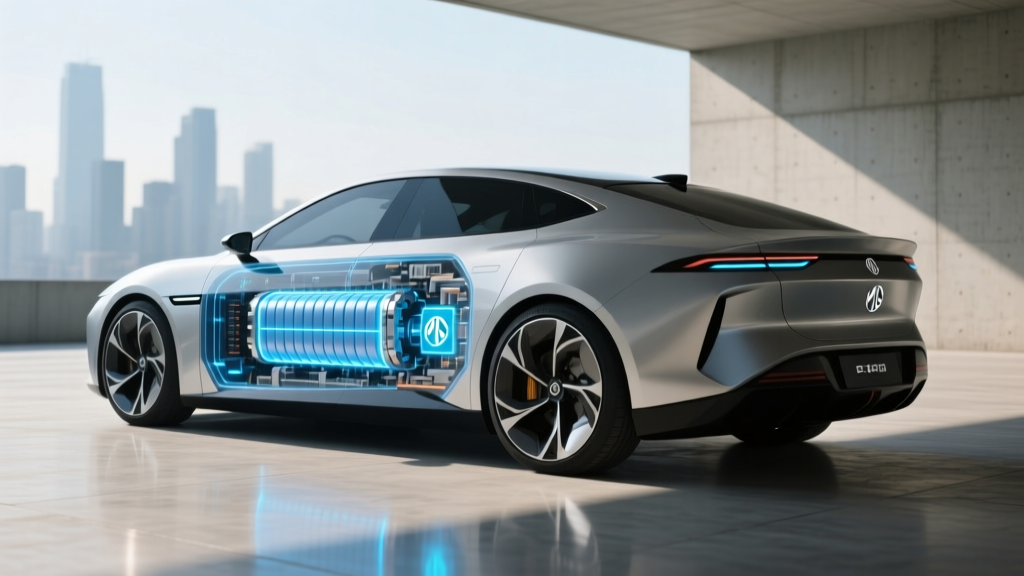
Every mass-market EV sold in 2026 uses one of three lithium-ion cathode chemistries: LFP, NMC, or NCA (nickel cobalt aluminum). Each has distinct trade-offs in energy density, cycle life, thermal stability, cold-weather performance, and cost.
| Attribute | LFP (LiFePO₄) | NMC (NiMnCo) | NCA (NiCoAl) |
|---|---|---|---|
| Energy density (cell-level) | 160–180 Wh/kg | 220–270 Wh/kg | 250–290 Wh/kg |
| Cycle life (to 80% capacity) | 3,000–6,000+ cycles | 1,000–2,500 cycles | 800–2,000 cycles |
| Thermal runaway risk | Very low (~270°C onset) | Moderate (~150–210°C) | Higher (~150°C) |
| Cold-weather range loss | Higher (up to 40% at -10°C without heat pump) | Moderate (~25–35% at -10°C) | Moderate (~25–30% at -10°C) |
| Cost (cell-level, $/kWh) | $80–$100 | $110–$140 | $120–$150 |
| Common 2026 models | Tesla Model 3 RWD, Model Y RWD, Ford Mustang Mach-E Select, Chevrolet Equinox EV | Hyundai Ioniq 5/6, Kia EV6/EV9, Ford F-150 Lightning Extended, BMW iX | Tesla Model S/X, Lucid Air, Rivian R1T/R1S Max Pack |
| Recommended SoC ceiling for daily use | 100% (charge fully at least weekly for BMS calibration) | 80% daily; 100% before trips | 80% daily; 100% before trips |
How Long Do EV Batteries Actually Last? Real Degradation Data
The short answer: far longer than most buyers fear. According to fueleconomy.gov, modern lithium-ion EV battery packs are engineered to retain 70–80% of their original capacity after 150,000 to 200,000 miles. Real-world fleet data supports this.
Here's what long-term degradation looks like across popular chemistries and models, compiled from owner-reported data, fleet studies, and manufacturer disclosures:
Typical EV Battery Capacity Retention Over Time
- Tesla Model 3/Y (NMC/NCA, 2019–2023): ~5–8% loss at 100,000 miles; ~10–12% at 200,000 miles. Tesla's own 2024 Impact Report states an average of 12% degradation at 200,000 miles across the fleet.
- Hyundai Ioniq 5 (NMC, 2022–2025): ~4–6% loss at 60,000 miles based on owner forums and fleet data. Hyundai's 800V architecture and aggressive thermal management contribute to slower fade.
- Tesla Model 3 RWD (LFP, 2022–2025): ~3–5% loss at 80,000 miles. LFP cells degrade more slowly at the cathode, though calendar aging and low-temperature cycling still contribute to gradual loss.
- Nissan Leaf (NMC, passively cooled, 2018–2023): ~10–15% loss at 60,000 miles. The Leaf's lack of active liquid cooling accelerates degradation, particularly in hot climates — a cautionary data point for why thermal management matters.
- Chevrolet Bolt EV/EUV (NMC, 2017–2023): ~6–9% loss at 80,000 miles post battery-recall replacement packs. Original packs had a higher defect rate leading to the 2021–2022 recall.
For comparison, a vanadium flow battery can achieve 15,000 to 20,000+ full depth-of-discharge cycles with near-zero capacity fade, because the vanadium electrolyte doesn't structurally degrade the way lithium-ion cathode materials do. This is the core value proposition for grid storage — but again, the size and weight penalty makes this irrelevant for vehicle integration.
What Does the EV Battery Warranty Actually Cover?
Federal law mandates that EV batteries carry a minimum warranty of 8 years / 100,000 miles (10 years / 150,000 miles in California Air Resources Board states). Most manufacturers exceed this baseline. Here's how the major brands structure their coverage in 2026:
| Manufacturer | Duration / Mileage | Capacity Retention Threshold | Notes |
|---|---|---|---|
| Tesla | 8 yr / 100,000–150,000 mi (varies by model) | 70% | Model 3/Y: 100k mi; Model S/X: 150k mi |
| Hyundai / Kia | 10 yr / 100,000 mi | 70% | Among the longest coverage in the industry |
| Ford | 8 yr / 100,000 mi | 70% | Covers battery and hybrid/electric components |
| GM (Chevrolet/Cadillac) | 8 yr / 100,000 mi | 60–70% (varies by model) | Ultium platform; Bolt EV post-recall packs at 70% |
| BMW | 8 yr / 100,000 mi | 70% | Transferable to second owner |
| Rivian | 8 yr / 175,000 mi | 70% | Highest mileage threshold among mainstream OEMs |
What's covered: Capacity loss below the stated threshold (e.g., if your 75 kWh pack falls below 52.5 kWh usable). Manufacturing defects. Cell imbalance failures. Battery management system (BMS) faults.
What's typically NOT covered: Gradual degradation above the threshold (a pack at 72% capacity at year 7 won't trigger a warranty claim). Damage from collisions, flooding, or improper modifications. Failure to follow manufacturer charging guidelines — though this is rarely enforced.
How Much Does an EV Battery Replacement Cost?
This is the number-one anxiety for prospective EV buyers. Here's the honest picture: most EV owners will never need to replace their traction battery. The pack is designed to outlast the vehicle's economic life. But if you do face an out-of-warranty replacement — typically at 200,000+ miles or 15+ years — here's what it costs:
| Vehicle | Battery Size (kWh) | Chemistry | Replacement Cost (parts + labor) |
|---|---|---|---|
| Tesla Model 3 RWD | 57.5 (usable) | LFP | $8,000–$12,000 |
| Tesla Model Y Long Range | 75 (usable) | NMC | $12,000–$16,000 |
| Hyundai Ioniq 5 | 72.6 (usable) | NMC | $10,000–$15,000 |
| Ford F-150 Lightning Extended | 131 (usable) | NMC | $18,000–$25,000 |
| Chevrolet Equinox EV | 85 (usable) | LFP | $9,000–$13,000 |
| BMW iX xDrive50 | 105.2 (usable) | NMC | $16,000–$22,000 |
Cell prices continue to fall. According to BloombergNEF, average lithium-ion cell prices dropped below $100/kWh at the pack level in 2025, with LFP cells trading as low as $60–$75/kWh. This trend means replacement costs will keep declining — a pack that costs $15,000 today may cost $10,000 by 2030. Additionally, a growing EV battery refurbishment market offers module-level repairs (replacing individual degraded modules rather than the full pack) for $3,000–$7,000 depending on the vehicle.
Factors That Accelerate (or Preserve) Battery Health
Not all miles age a battery equally. Here are the variables that most significantly impact State of Health, ranked by effect magnitude:
Battery Care Checklist: Maximize Your EV's State of Health
- Avoid sustained high SoC (NMC/NCA only): Keeping an NMC or NCA pack at 100% for days accelerates cathode degradation. Set your charge limit to 80% for daily driving. LFP owners: charge to 100% at least once weekly — LFP cells need full-charge calibration for accurate SoC estimation.
- Minimize DC fast charging above 150 kW when unnecessary: Frequent use of 250–350 kW chargers generates more heat than Level 2 charging. Data from NREL shows that exclusive DCFC use can add 1–3% additional degradation over 100,000 miles compared to predominantly Level 2 charging. Use DCFC for road trips; rely on Level 2 at home.
- Precondition before fast charging: Battery preconditioning warms or cools the pack to the optimal temperature window (typically 25–40°C) before high-power charging. Most modern EVs do this automatically when you navigate to a charger. Skipping preconditioning — especially in cold weather — forces the battery to accept charge at reduced kW, and in extreme cold, can cause lithium plating on the anode.
- Limit deep discharges below 10% SoC: While modern BMS systems maintain a buffer (typically 2–5 kWh below the displayed 0%), habitually driving to near-empty stresses cells. Try to charge before dropping below 15–20%.
- Manage extreme temperature exposure: Parking in direct sun in Phoenix (ambient 115°F+) or in -20°F Minnesota winters accelerates calendar aging. Garage parking helps. Most EVs run thermal management even when parked — this draws from the pack but protects longevity.
- Don't store at 0% or 100% for extended periods: If leaving your EV unused for weeks, set SoC to 50–60% for NMC/NCA or 50–80% for LFP. Most EVs have a "storage mode" or scheduled departure feature that maintains optimal SoC.
How to Check and Monitor Your EV's Battery State of Health
State of Health (SoH) is expressed as a percentage: a brand-new pack is 100% SoH; a pack that can only hold 85% of its original kWh capacity is at 85% SoH. Here's how to check it:
1. In-vehicle displays: Tesla provides a battery health estimate in the Service menu (added in 2023 software updates). Hyundai/Kia's infotainment system shows SoH under EV diagnostics. BMW iDrive includes a battery health screen. Not all OEMs surface this natively.
2. OBD-II apps: Devices like the OBDLink SX or vLinker BM+ paired with apps such as EV Health, Leaf Spy (Nissan Leaf), or Scan My Tesla can read the BMS-reported SoH, cell voltage variance, and pack temperature data directly.
3. Dealer diagnostic reports: Request a battery health report at your next service visit. Dealers can pull detailed cell-level data showing individual module balance and internal resistance trends.
4. Third-party inspections: Companies like Recurrent Auto provide battery health reports for used EVs, analyzing historical charging data and projecting future degradation curves. These reports are increasingly used in certified pre-owned programs.
Where Vanadium Flow Batteries Fit in the EV Ecosystem
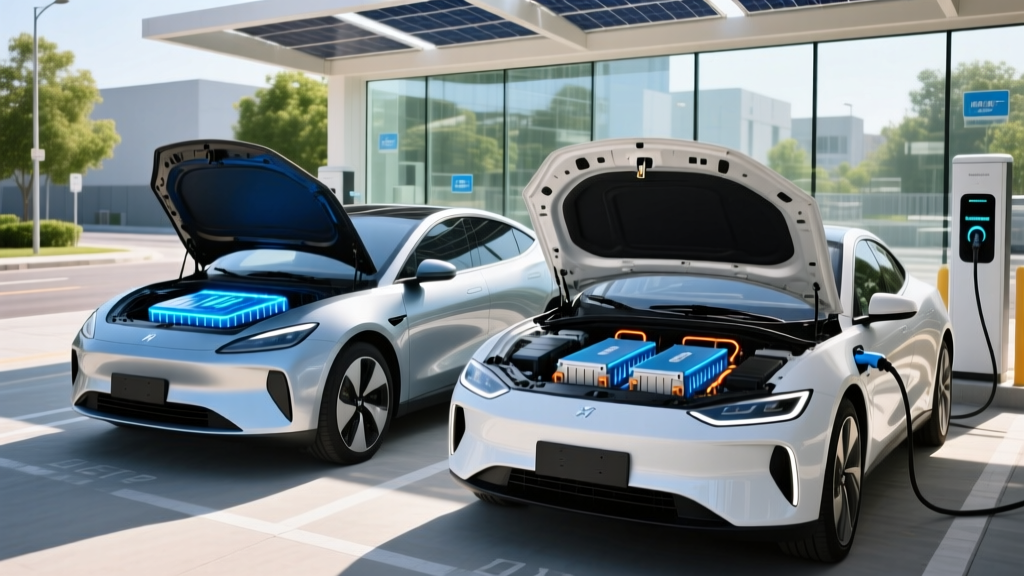
While vanadium flow batteries won't power your car, they are increasingly relevant to how your car charges. Here's where VFBs intersect with EV ownership:
DC fast-charging site buffering: A 350 kW DC fast charger pulling from the grid during peak hours faces massive demand charges ($15–$25/kW in some utility territories). Pairing a VFB system (e.g., 500 kWh / 250 kW) with solar allows the station to trickle-charge the flow battery from solar throughout the day, then discharge at high power to EVs during peak demand — slashing demand charges and reducing grid strain.
Renewable firming for home charging: For homeowners with solar + storage aspirations, VFBs offer a non-flammable, 25-year-lifespan alternative to lithium-ion home batteries. Current VFB home systems (5–20 kWh) cost $800–$1,200/kWh installed — roughly 2–3x the cost of a Tesla Powerwall 3 — but with zero degradation over 20,000+ cycles and no fire risk.
Grid-scale storage enabling cheaper EV electricity: Utilities deploying VFBs for long-duration storage (8–12+ hours) help flatten wholesale electricity prices, making time-of-use EV charging rates more predictable and affordable.
Emerging Battery Technologies: What's Next Beyond Lithium-Ion and Flow?
Several next-generation chemistries are in development that could reach EV production vehicles. Note: these are forward-looking and not currently available in any production EV as of 2026.
Solid-state batteries: Toyota, Samsung SDI, and QuantumScape are targeting 2027–2029 production timelines for solid-state cells promising 350+ Wh/kg energy density, 10-minute 10–80% charging, and improved safety. Toyota has announced a solid-state-equipped EV for 2027–2028, though initial production volumes will be limited and pricing premium. Realistic mass-market availability: 2030+.
Silicon-dominant anodes: Companies like Sila Nanotechnologies and Group14 are replacing graphite anodes with silicon composites, boosting energy density 20–40% without changing the cathode chemistry. Mercedes-Benz's next-generation EQ models (announced for 2027) are expected to use silicon-anode cells from Sila. This technology is closer to market than solid-state and may appear in production vehicles within 1–2 years.
Sodium-ion batteries: CATL and BYD have begun producing sodium-ion cells for low-cost, short-range EVs in China (e.g., the BYD Seagull variant). Energy density is lower (~140 Wh/kg) but raw materials are abundant and cheap. US-market availability remains uncertain, with no confirmed OEM commitments for 2026–2027.
None of these technologies change the fundamental physics that disqualify vanadium flow batteries from automotive use: you cannot shrink liquid electrolyte tanks and pump systems into a vehicle chassis while maintaining competitive weight and packaging.
Frequently Asked Questions
Can vanadium flow batteries ever be used in electric vehicles?
Not with current engineering. The energy density of a vanadium flow system is roughly 15–25 Wh/kg at the system level (including tanks, pumps, and plumbing), compared to 150–250 Wh/kg for lithium-ion packs. A 75 kWh VFB system would weigh over 3,000 kg — more than most entire vehicles. VFBs are strictly a stationary storage technology.
How long do EV batteries last in years and miles?
Most modern EV battery packs retain 70–85% of original capacity at 150,000–200,000 miles (10–15 years). LFP packs tend to degrade more slowly (3–5% per 100,000 miles in mild climates), while NMC/NCA packs lose 5–8% per 100,000 miles under typical use. Thermal management quality and charging habits are the dominant variables.
How much does it cost to replace an EV battery out of warranty?
Full pack replacement ranges from $8,000 to $25,000 depending on battery size and chemistry. LFP packs are cheaper to replace ($8,000–$13,000 for a 60–85 kWh pack) than large NMC packs ($15,000–$25,000 for 100+ kWh). Module-level repairs cost $3,000–$7,000. Most owners will never need a replacement — the pack typically outlasts the vehicle.
LFP vs. NMC — which battery chemistry is better for me?
Choose LFP if you prioritize longevity, safety, and lower cost, and you don't need maximum range per charge. LFP is ideal for daily commuting, warm-to-moderate climates, and owners who plan to keep their EV 8+ years. Choose NMC/NCA if you need maximum range (300+ miles EPA), tow frequently, drive in very cold climates (better cold-weather performance), or want the fastest DC charging speeds. NMC/NCA packs are more energy-dense but degrade faster and cost more.
Does frequent DC fast charging damage my EV battery?
Exclusively relying on DC fast charging (especially 250–350 kW) adds measurable but modest degradation — studies suggest 1–3% additional capacity loss over 100,000 miles compared to predominantly Level 2 home charging. The heat generated during high-power charging is the primary stressor. Modern thermal management systems mitigate this significantly. If you DC fast charge 2–3 times per week with preconditioning enabled, the real-world impact is small — but if you have home Level 2 access, using it for daily charging is the optimal strategy.
How do I check my EV battery's State of Health?
Check your vehicle's infotainment diagnostics screen (Tesla, Hyundai, BMW, and others show SoH natively), use an OBD-II adapter with an app like Scan My Tesla or Leaf Spy, or request a dealer diagnostic report. Third-party services like Recurrent Auto also provide battery health analysis based on your charging history.
Sources: U.S. DOE fueleconomy.gov, NREL EV Battery Research, IRS §30D Clean Vehicle Credit guidelines.