If you've been researching EV battery chemistries, you've likely seen the usual suspects: lithium iron phosphate (LFP) and nickel manganese cobalt (NMC/NCA). But a lesser-known term keeps surfacing in battery forums and tech headlines — vanadium battery. Whether it refers to lithium-vanadium-oxide cathodes being explored in labs or vanadium redox flow batteries used in grid storage, the question EV buyers actually need answered is simpler: how does vanadium-based chemistry stack up against the LFP and NMC packs powering today's electric vehicles?
This guide breaks down every major EV battery chemistry in production or near-production as of 2026, including where vanadium fits in, and gives you the exact degradation figures, warranty terms, replacement costs, and care practices that determine how long your pack will last.
EV Battery Chemistries Explained: LFP, NMC, and Where Vanadium Fits
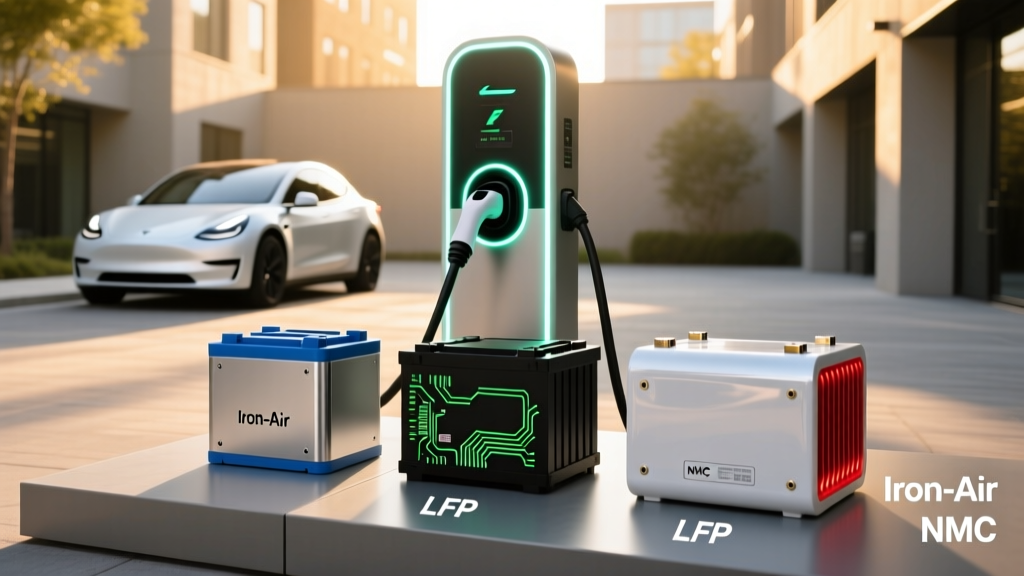
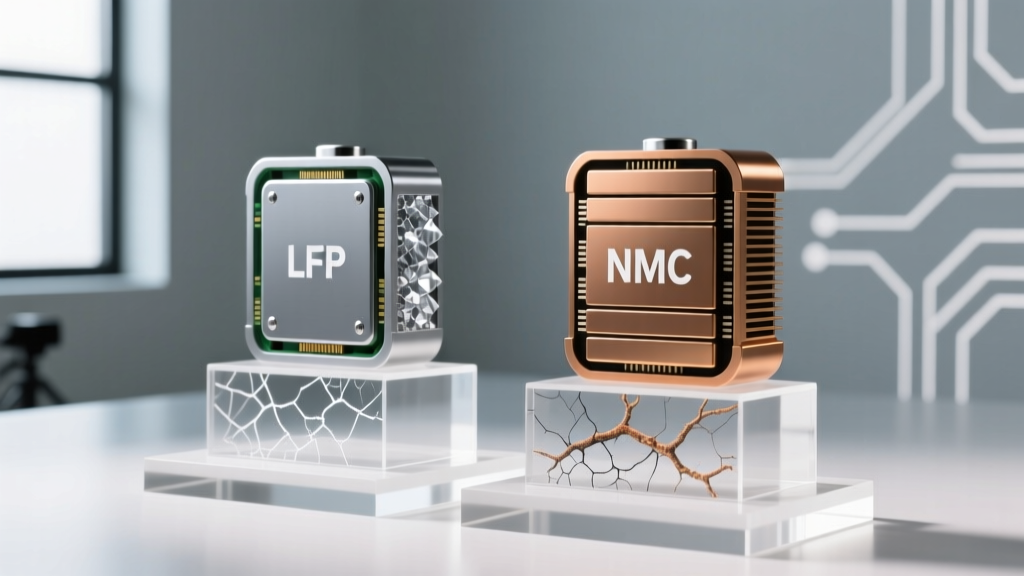
Every EV traction battery (the high-voltage pack that drives the wheels, not the 12V auxiliary battery) uses a specific cathode chemistry. That chemistry dictates energy density, cycle life, thermal stability, cold-weather performance, and cost. Here are the three chemistries most relevant to EV buyers right now:
- NMC/NCA (Nickel Manganese Cobalt / Nickel Cobalt Aluminum): The dominant chemistry in long-range EVs. Used in most Hyundai Ioniq 5/6 variants, Ford Mustang Mach-E Extended Range, BMW iX, and many Tesla Model 3/Y Long Range builds. Offers the highest energy density — meaning more kWh in a lighter, more compact pack.
- LFP (Lithium Iron Phosphate): The cost and durability champion. Standard in Tesla Model 3/Y RWD, base Ford Mustang Mach-E Select, and many Chinese-market EVs. Lower energy density but significantly longer cycle life and better thermal stability.
- Vanadium-based chemistries: Lithium-vanadium-oxide (LVO) and vanadium-phosphate cathodes are in active R&D for EV traction batteries, prized for high theoretical capacity and low material cost. Vanadium redox flow batteries (VRFBs) are already deployed at grid scale for stationary storage but are too heavy and bulky for vehicle use. As of 2026, no mass-market EV uses a vanadium-based traction battery, though several startups have announced pilot programs.
| Attribute | LFP | NMC/NCA | Vanadium-Based (R&D) |
|---|---|---|---|
| Energy Density (Wh/kg, cell-level) | 160–200 | 230–300 | ~200–260 (lab estimates) |
| Typical Cycle Life (to 80% SoH) | 3,000–6,000+ | 1,000–2,500 | 2,000–4,000 (projected) |
| Cold-Weather Range Loss (at 20°F) | ~25–35% | ~20–30% | |
| Thermal Runaway Risk | Very low | Moderate | Low (projected) |
| Raw-Material Cost | Low | High (cobalt/nickel) | Low–Moderate |
| Current EV Availability | Widely available | Widely available | None (pre-production) |
| Best For | Daily commuters, fleet, budget EVs | Long-range, performance EVs | Future mid-range EVs (TBD) |
The practical takeaway: If you're buying an EV today, your real choice is LFP vs NMC. Vanadium remains a future prospect worth monitoring but not a purchasing factor in 2026.
LFP vs NMC: Which Battery Chemistry Should You Choose?
This is the single most consequential battery decision you'll make as an EV buyer, and the answer depends on your driving profile.
Choose LFP if:
- You primarily drive under 200 miles per day and charge at home nightly
- You plan to keep the vehicle 10+ years and want maximum cycle life
- You live in a warm climate (LFP's cold-weather weakness is less relevant)
- You want the lowest upfront cost — LFP packs save $1,500–$4,000 vs equivalent NMC
- You're comfortable charging to 100% regularly (LFP actually benefits from periodic full charges for cell balancing)
Choose NMC/NCA if:
- You need 300+ miles of EPA range for road trips or long commutes
- You frequently drive in sub-freezing climates (NMC loses less range in cold)
- You prioritize performance — NMC supports higher discharge rates for quicker acceleration
- You want the lightest possible pack for handling and efficiency
Real-world example: The 2026 Tesla Model 3 RWD uses a ~60 kWh LFP pack (CATL-sourced) with an EPA range of 272 miles, while the Model 3 Long Range AWD uses a ~75 kWh NMC pack for 341 miles EPA. The LWD model is $5,000 cheaper, but you give up 69 miles of range and roughly 1.5 seconds in 0-60 time.
How Long Do EV Batteries Actually Last? Degradation Data
The fear that EV batteries will fail like smartphone batteries after two years is not supported by fleet data. Modern thermal management systems and chemistry improvements have pushed real-world degradation well below early pessimistic projections.
Typical Degradation Curve (Fleet-Averaged Data):
| Time / Mileage | LFP Avg Capacity Retention | NMC Avg Capacity Retention | Notes |
|---|---|---|---|
| Year 1 / ~12,000 mi | 97–98% | 95–97% | Initial calibration loss |
| Year 3 / ~36,000 mi | 94–96% | 91–94% | Curve begins to flatten |
| Year 5 / ~60,000 mi | 91–94% | 87–91% | Most owners notice ~5–8% range loss |
| Year 8 / ~100,000 mi | 88–92% | 82–88% | Within warranty threshold for most OEMs |
| Year 12 / ~150,000 mi | 84–90% | 76–84% | Still functional; below 80% triggers warranty on some packs |
Sources: Geotab fleet telemetry data, manufacturer warranty disclosures, and Recurrent Auto battery reports.
Two critical nuances in this data:
- Degradation is non-linear. Most capacity loss occurs in the first 1–2 years (the "break-in" period), then the curve flattens significantly. A battery at 92% after year 3 will likely still be at 85%+ at year 8.
- Calendar aging matters as much as mileage. A garage-kept EV driven 5,000 miles/year will still degrade from heat exposure and time. Batteries age whether you drive them or not.
What Does the EV Battery Warranty Actually Cover?
Federal law mandates a minimum 8-year/100,000-mile warranty on EV battery packs for emissions-related compliance, and most manufacturers exceed this. But the details — specifically the capacity-retention threshold — determine whether you'll actually get a replacement.
| Manufacturer / Model | Warranty Period | Capacity Threshold | Chemistry |
|---|---|---|---|
| Tesla Model 3 RWD | 8 yr / 100,000 mi | 70% retention | LFP |
| Tesla Model 3 LR / Model Y LR | 8 yr / 120,000 mi | 70% retention | NMC |
| Hyundai Ioniq 5 | 10 yr / 100,000 mi | 70% retention | NMC |
| Ford Mustang Mach-E | 8 yr / 100,000 mi | 70% retention | NMC / LFP |
| Chevrolet Equinox EV | 8 yr / 100,000 mi | 60% retention | NMC (Ultium) |
| BMW iX xDrive50 | 8 yr / 100,000 mi | 70% retention | NMC |
Key warranty caveats:
- The warranty covers defects and excessive degradation — not damage from accidents, flooding, or improper modifications.
- "Replacement" may mean a refurbished or remanufactured pack, not brand-new cells.
- Some OEMs (like Chevrolet with the 60% threshold) set the bar lower, making a successful claim harder.
- Warranty transferability varies — check before buying used.
How Much Does an EV Battery Replacement Cost?
This is the question that generates the most anxiety — and the most misinformation. Here are the actual numbers as of 2026:
| Vehicle | Battery Size (kWh) | Chemistry | Replacement Cost (Parts + Labor) |
|---|---|---|---|
| Tesla Model 3 RWD | ~60 | LFP | $12,000–$16,000 |
| Tesla Model Y Long Range | ~75 | NMC | $14,000–$20,000 |
| Hyundai Ioniq 5 | ~77.4 | NMC | $15,000–$22,000 |
| Ford F-150 Lightning Ext. Range | ~131 | NMC | $25,000–$35,000 |
| Chevrolet Silverado EV | ~200 | NMC (Ultium) | $35,000–$45,000 |
| Nissan Leaf (40 kWh) | ~40 | NMC | $8,000–$12,000 |
Context that matters:
- Most owners never pay this. Based on current degradation data, the vast majority of EV batteries will retain 75–85%+ capacity at 150,000 miles — well above the point where most vehicles are traded or retired.
- Costs are falling. Battery pack prices have declined roughly 10–15% per year over the last decade. A replacement in 2032 will cost substantially less than today's figures.
- Module-level repair is increasingly available. Many shops can replace individual modules within a pack for $2,000–$5,000 rather than swapping the entire assembly.
- Out-of-warranty replacements are rare before year 10–12. Catastrophic failure (not gradual degradation) is the only scenario where an early full replacement is needed, and this affects fewer than 1–2% of packs according to OEM service data.
Factors That Accelerate (or Preserve) Battery Life
Battery degradation isn't random — it's driven by specific, controllable factors. Here's what actually moves the needle:
Battery Care Best Practices
- Avoid sustained 100% SoC (NMC only): For NMC/NCA packs, set your daily charge limit to 80%. LFP packs are the exception — Tesla and Ford recommend periodic 100% charges for cell balancing. Always follow your specific OEM's guidance.
- Minimize DC fast charging when possible: Frequent 150+ kW DCFC sessions generate sustained heat. Using Level 2 home charging for daily needs and reserving DCFC for road trips is the ideal pattern. Data from Geotab shows vehicles that DCFC more than 3x/week degrade ~1–2% faster over 4 years.
- Precondition before fast charging: Most modern EVs do this automatically when you navigate to a charger. A cold battery charging at high power causes lithium plating, which permanently reduces capacity.
- Avoid extreme SoC in extreme heat: Parking at 100% SoC in 100°F+ ambient temperatures accelerates calendar aging. If storing in heat, leave the pack at 50–60%.
- Don't baby it excessively: The difference between "perfect" battery care and "normal" use is typically 2–4% additional capacity retention over 8 years. Drive the car.
How to Check Your EV's Battery Health (State of Health)
State of Health (SoH) is the percentage of your battery's original usable capacity that remains. A new pack is 100% SoH; at 70% SoH, your 300-mile EPA range is effectively ~210 miles. Here's how to monitor it:
- In-car displays: Tesla shows battery health via the service menu (accessible through the software screen). Hyundai/Kia provides a battery health indicator in the EV settings menu on 2024+ models. BMW includes SoH in the iDrive battery management screen.
- OEM apps: The Tesla app, FordPass, Hyundai Bluelink, and myChevrolet apps show estimated range and, on some models, a battery health percentage or condition rating.
- Third-party diagnostics: Services like Recurrent and AVILOO offer battery health reports based on telematics data. Some dealerships can pull a detailed SoH report via the OBD-II port.
- Manual estimation: Charge to 100% (or your max daily limit), note the displayed range, and compare it to the EPA sticker adjusted for your typical conditions. A consistent 10% drop from your baseline after the first year warrants a dealer check.
When to be concerned: If your SoH drops below 80% within the warranty period, contact your dealer. If it drops suddenly (more than 3–5% in a single month), that may indicate a module failure rather than normal degradation.
Emerging Battery Tech: Solid-State, Silicon Anode, and Vanadium's Future
Several next-generation battery technologies are in development. Here's where they stand — with realistic timelines, not marketing promises:
- Solid-state batteries: Toyota has announced a solid-state battery targeting 2027–2028 production with ~450 miles of range and 10-minute fast charging. Nissan and Samsung SDI have similar timelines. These use a solid electrolyte instead of liquid, enabling lithium-metal anodes and dramatically higher energy density. Reality check: pilot production only; mass-market availability is 2028 at the earliest, likely 2030 for affordable models.
- Silicon-anode batteries: Companies like Sila Nanotechnologies and Group14 are replacing graphite anodes with silicon, boosting energy density 20–40%. Mercedes-Benz has partnered with Sila for the next-gen G-Class EV. Timeline: limited production in 2026–2027 premium vehicles; broader adoption by 2029.
- Vanadium-based cathodes: Research from institutions including MIT and several Chinese universities has demonstrated lithium-vanadium-phosphate and vanadium-oxide cathodes with promising energy density (~250 Wh/kg) and low material cost. Vanadium is abundant and cheaper than cobalt or nickel. Timeline: no announced production vehicle as of 2026; likely 2029–2032 before commercial viability, if cathode stability challenges are resolved.
- Sodium-ion batteries: CATL has begun limited production of sodium-ion packs for budget Chinese-market EVs. Lower energy density (~140 Wh/kg) but extremely low cost and excellent cold performance. Timeline: available now in China; US-market vehicles possible by 2027–2028 for entry-level models.
None of these technologies change the buying calculus for 2026. LFP and NMC remain the proven, well-understood chemistries with extensive real-world track records.
Frequently Asked Questions
How long do EV batteries last in years and miles?
Based on fleet data from Geotab and Recurrent, most modern EV batteries retain 82–92% of original capacity at 100,000 miles (roughly year 8). Many will function well past 200,000 miles with 75%+ capacity. Complete failure before 150,000 miles is rare (under 2% of packs). The vehicle's body, suspension, or electronics are more likely to end the car's life than the battery.
How much does an EV battery cost to replace in 2026?
Replacement costs range from ~$8,000 for a small pack (Nissan Leaf 40 kWh) to $35,000–$45,000 for a large truck pack (Chevrolet Silverado EV 200 kWh). The average mid-size EV (Tesla Model Y, Hyundai Ioniq 5) falls in the $14,000–$22,000 range for parts and labor. Most owners never pay this — the pack outlasts the ownership period or is covered under warranty.
What does the EV battery warranty cover?
Federal law requires a minimum 8-year/100,000-mile battery warranty. Most OEMs guarantee the pack will retain 70% of original capacity (some, like Chevrolet, set 60%). The warranty covers defects and excessive degradation, not accident damage or improper use. Replacement may be a refurbished pack. Always verify the exact threshold and transferability for your model.
How do I check and maximize my EV battery health?
Check SoH through your vehicle's settings menu, OEM app, or a third-party diagnostic service. Maximize longevity by: using Level 2 charging for daily needs, setting NMC charge limits to 80% (LFP can go to 100%), avoiding frequent DC fast charging, preconditioning before fast charges, and not leaving the car at 100% SoC in extreme heat for extended periods.
LFP vs NMC — which battery is better for me?
Neither is universally better. LFP wins on cost (saves $1,500–$4,000), cycle life (3,000–6,000+ cycles vs 1,000–2,500), and safety. NMC wins on energy density (more range in a lighter pack), cold-weather performance (~5–10% less range loss at 20°F), and high-power discharge for performance driving. If you need 300+ miles and drive in cold weather, choose NMC. If you commute under 200 miles daily and want the longest-lasting, most affordable pack, choose LFP.
Is a vanadium battery available in any EV I can buy today?
No. As of 2026, no production EV uses a vanadium-based traction battery. Vanadium redox flow batteries are used in grid-scale stationary storage, and lithium-vanadium-oxide cathodes remain in the research and pilot stage for automotive applications. If vanadium cathode stability and manufacturing scalability challenges are solved, commercial EVs could appear in the 2029–2032 timeframe.