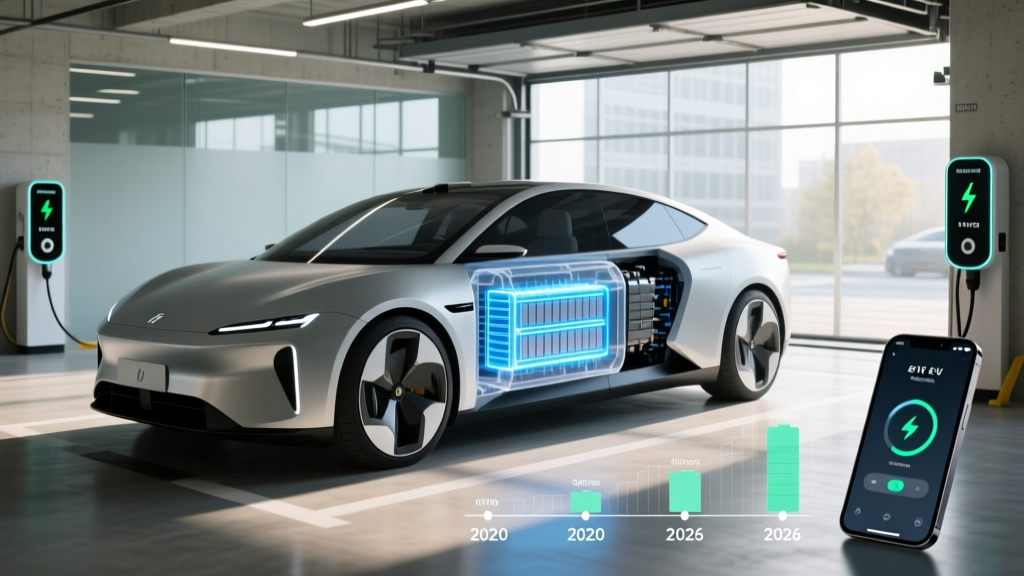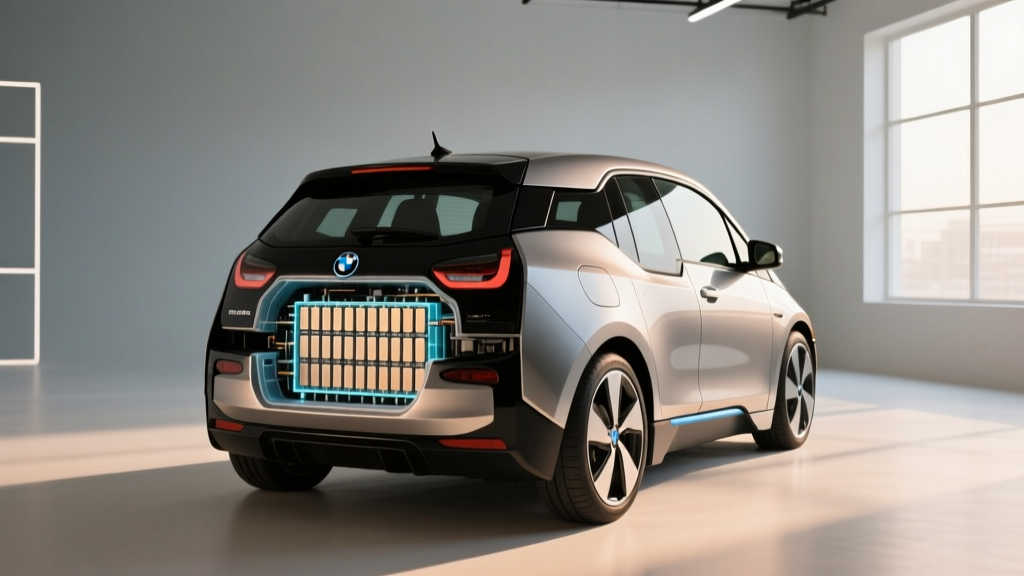
When an automaker advertises an 82 kWh battery pack, you will never actually access all 82 kWh. The usable battery — the portion of total capacity the vehicle's battery management system (BMS) allows you to charge and discharge — is always smaller than the gross figure. Understanding this gap, along with the chemistry inside the cells and how degradation erodes capacity over time, is essential for any EV buyer or owner making a long-term ownership decision.
This guide covers everything that determines how much energy your EV actually holds, how that number changes over years of driving, and what it costs when the pack finally needs attention.
Gross vs. Usable Battery Capacity: Why the Numbers Differ
Every EV battery pack has two capacity figures:
- Gross capacity — the total physical energy stored in all cells when fully charged, measured in kilowatt-hours (kWh).
- Usable (net) capacity — the energy the BMS allows the driver to access, typically 85–95% of gross.
The buffer exists for a critical reason: lithium-ion cells degrade faster when held at extreme states of charge (100% SoC) or deep discharge (0% SoC). By locking away a top buffer (usually 3–5%) and a bottom buffer (2–5%), the BMS prevents the cells from reaching voltage levels that accelerate chemical wear. This is why your EV's displayed 0% is not truly empty, and why some manufacturers recommend daily charging to 80% rather than 100%.
Here is how usable capacity compares across popular 2025–2026 models:
| Vehicle | Gross kWh | Usable kWh | Chemistry | EPA Range |
|---|---|---|---|---|
| Tesla Model 3 RWD | 60 | ~57.5 | LFP | 272 mi |
| Hyundai Ioniq 5 SEL AWD | 84 | ~77.4 | NMC | 290 mi |
| Ford F-150 Lightning Ext. Range | 131 | ~122 | NMC | 320 mi |
| Chevrolet Equinox EV 3RS | 85 | ~80 | NMC | 319 mi |
| Tesla Model Y Long Range | 78.1 | ~75 | NMC | 320 mi |
The usable battery is the number that matters for range calculations, charging-cost math, and long-term degradation tracking. When comparing vehicles, always look at net kWh — not the headline gross figure.
LFP vs. NMC/NCA: The Chemistry Inside the Usable Battery
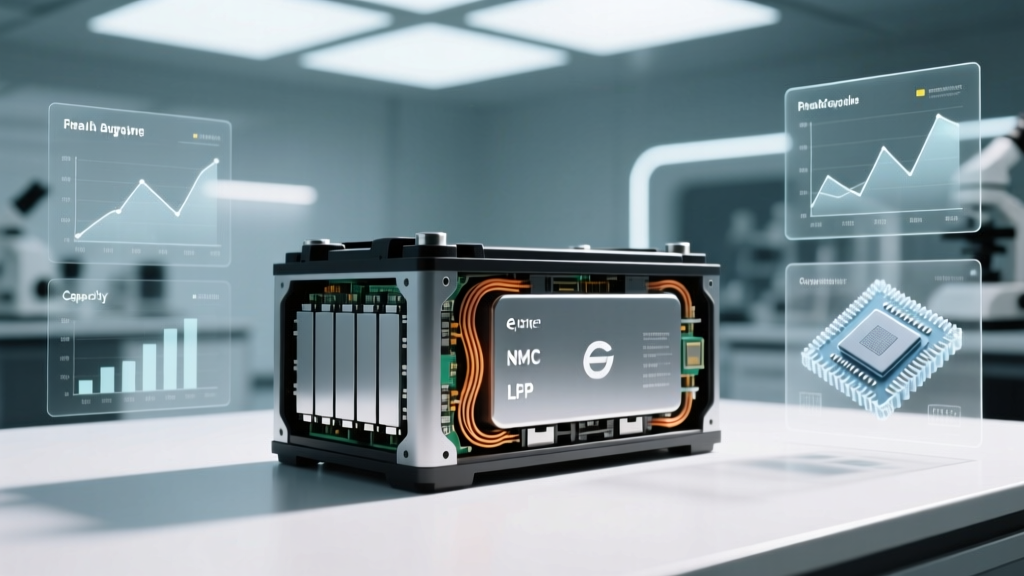
Two dominant cathode chemistries power today's EVs, and the choice directly affects your usable battery's energy density, lifespan, cold-weather behavior, and cost.
| Attribute | LFP (Lithium Iron Phosphate) | NMC/NCA (Nickel Manganese Cobalt / Nickel Cobalt Aluminum) |
|---|---|---|
| Energy Density | Lower (~160 Wh/kg cell-level) | Higher (~220–260 Wh/kg cell-level) |
| Typical Cycle Life | 3,000–5,000+ cycles to 80% SoH | 1,000–2,000 cycles to 80% SoH |
| Cold Performance | Moderate — slower charge acceptance below 32°F, ~15–25% range loss at 20°F | Better — more consistent charge speeds in cold, ~10–20% range loss at 20°F |
| Cost | Lower — no cobalt or nickel | Higher — commodity-priced nickel and cobalt |
| SoC Recommendation | Can charge to 100% daily without accelerated wear | Best kept at 80% daily; 100% for trips only |
| Common Applications | Tesla Model 3/Y RWD, BYD models, base-trim EVs | Long-range and performance trims, most luxury EVs |
Which is better? It depends on your driving pattern. If you charge at home nightly and mostly commute under 60 miles, LFP's superior cycle life and 100% daily charging convenience make it ideal. If you need maximum range per charge, frequently road-trip, or live in a cold climate, NMC's higher energy density and better cold-weather charge acceptance give it the edge. Neither chemistry is universally superior — they serve different ownership profiles.
How Long Do EV Batteries Last? Real-World Degradation Data
Battery degradation is measured as the loss of usable capacity relative to the pack's original state, expressed as State of Health (SoH). A new battery starts at 100% SoH; at 70–80% SoH, most manufacturers consider the pack degraded enough to trigger a warranty claim.
Typical degradation trajectory (fleet-aggregate data):
- Year 1 / 15,000 mi: 2–4% loss (initial formation loss, steepest part of the curve)
- Year 3 / 45,000 mi: 5–8% total loss
- Year 5 / 75,000 mi: 8–12% total loss
- Year 8 / 120,000 mi: 10–15% total loss
- Year 10 / 150,000 mi: 12–20% total loss (highly usage-dependent)
Data from Geotab's fleet study of over 10,000 EVs shows that the average EV battery loses roughly 1.8% of capacity per year under typical mixed use. Critically, degradation is not linear: the steepest drop occurs in the first year, after which the curve flattens considerably. Many EVs reach 150,000 miles with 85%+ SoH — meaning the usable battery still holds enough energy for daily driving even after a decade of service.
For context, a Tesla Model 3 Long Range with an original usable capacity of ~75 kWh and 85% SoH at 150,000 miles still delivers roughly 63.7 kWh — enough for approximately 270 miles of real-world range at typical highway efficiency.
What the Battery Warranty Actually Covers
Federal law mandates that EV battery warranties last a minimum of 8 years or 100,000 miles (whichever comes first). In California Air Resources Board (CARB) states, that extends to 10 years or 150,000 miles. However, the specifics of what triggers a warranty replacement vary significantly by manufacturer.
| Manufacturer | Warranty Period | Mileage Limit | Capacity Threshold | CARB State Extension |
|---|---|---|---|---|
| Tesla (Model 3/Y) | 8 years | 100,000 mi (RWD) / 120,000 mi (LR/P) | 70% SoH | Varies by model |
| Hyundai / Kia | 8 years | 100,000 mi | 70% SoH | 10 yr / 150,000 mi |
| Ford | 8 years | 100,000 mi | 70% SoH | 10 yr / 150,000 mi |
| Chevrolet (Ultium) | 8 years | 100,000 mi | 70% SoH (est.) | 10 yr / 150,000 mi |
| BMW | 8 years | 100,000 mi | 70% SoH | 10 yr / 150,000 mi |
Key details buyers often miss:
- The threshold is typically 70% SoH, not 80%. A battery at 72% health — which still provides meaningful range — will not trigger a warranty replacement.
- Warranty covers defects AND excessive degradation, but "excessive" means falling below the stated threshold, not merely losing some range.
- The warranty is usually transferable to subsequent owners, which supports used-EV resale value.
- Some manufacturers replace with a refurbished or remanufactured pack, not necessarily a brand-new one. The replacement must meet the capacity threshold but may not restore 100% SoH.
EV Battery Replacement Cost: What Owners Actually Pay
Out-of-warranty battery replacement is the single largest potential expense in EV ownership. However, it is important to frame this with context: most EV batteries outlast the vehicle itself. Full pack replacement is typically needed only after 15+ years, 200,000+ miles, or in cases of physical damage or manufacturing defect.
| Vehicle Class | Battery Size (Usable) | Estimated Replacement Cost (Parts + Labor) | Typical Replacement Timeline |
|---|---|---|---|
| Compact EV (e.g., Chevy Bolt, Tesla Model 3 RWD) | 57–65 kWh | $8,000–$14,000 | 15+ years / 200,000+ mi |
| Midsize crossover (e.g., Ioniq 5, Model Y LR) | 75–84 kWh | $12,000–$18,000 | 15+ years / 200,000+ mi |
| Full-size truck/SUV (e.g., F-150 Lightning, Rivian R1T) | 100–131 kWh | $18,000–$28,000 | 15+ years / 200,000+ mi |
| Luxury sedan (e.g., Mercedes EQS, Lucid Air) | 90–118 kWh | $20,000–$35,000 | 15+ years / 200,000+ mi |
Several factors are driving these costs down over time:
- Cell-level pricing has fallen from ~$400/kWh in 2015 to approximately $100–$130/kWh in 2025–2026 at the pack level, according to BloombergNEF battery price surveys.
- Module-level repair is increasingly available. Many packs consist of 8–16 modules; if a single module fails, a specialist can replace just that module for $1,500–$4,000 rather than swapping the entire pack.
- Third-party EV repair shops are growing in number, offering out-of-warranty pack service at lower rates than dealer networks.
Factors That Accelerate (or Preserve) Battery Life
The usable battery's longevity is not fixed — it responds directly to how you charge, drive, and store the vehicle. Here are the variables with the greatest impact:
Charging Habits
- Daily SoC target: For NMC batteries, set your charge limit to 80% for daily use. Reserve 100% for road trips. LFP batteries tolerate 100% daily charging without accelerated degradation — follow the manufacturer's recommendation.
- Avoid frequent DC fast charging: Occasional DCFC (1–2 times per week) shows minimal impact in fleet data. Daily DCFC, especially at 150+ kW, can add 1–3% additional degradation over 100,000 miles compared to Level 2 home charging.
- Don't let the battery sit at 0% or 100%: Extended storage at extreme SoC is more damaging than cycling. If storing for weeks, target 50% SoC.
Temperature Management
- Precondition before fast charging: Most modern EVs automatically precondition the battery when you navigate to a DC fast charger. This brings cells to the optimal 85–105°F range, enabling peak charge speeds and reducing stress. Always use the vehicle's built-in navigation to route to chargers.
- Garage parking helps: Vehicles parked in temperature-controlled or shaded environments show measurably slower degradation in hot climates (Arizona, Texas data).
- Cold-weather charging is slower but not harmful: The BMS limits charge speed in cold temps to protect the cells. This is a feature, not a defect.
Driving Patterns
- Moderate acceleration: Repeated hard launches generate high current draw and heat. Occasional spirited driving is fine; daily drag-racing is not.
- Regenerative braking: Using regen rather than friction brakes returns energy to the pack at moderate rates, which is well within design tolerances.
How to Check Your Battery's State of Health (SoH)
Monitoring your usable battery's health is straightforward with modern EVs, though the level of detail varies by brand:
- In-vehicle display: Tesla, BMW, and Mercedes offer a battery health percentage in the service menu or app. Hyundai/Kia display this in the EV-specific settings screen on 2024+ models.
- OBD-II diagnostics: Third-party apps like Scan My Tesla, LeafSpy (for Nissan), or Car Scanner can read detailed SoH data, cell voltage variance, and cycle counts via the OBD-II port paired with a Bluetooth adapter (~$30–$50 for the hardware).
- Dealer diagnostic report: Any authorized service center can pull a full battery health report. Request this during routine service or before purchasing a used EV.
- Charging-data analysis: If you track your kWh delivered per full charge (via your home charger's app or the vehicle's trip computer), a declining trend over months signals capacity loss. Compare current full-charge kWh to the original usable capacity spec.
For used-EV buyers, a battery health check should be as routine as a pre-purchase mechanical inspection. A vehicle showing 90%+ SoH at 50,000 miles is tracking well; one at 82% SoH at the same mileage warrants investigation into prior charging habits or potential defect.
Beyond Today's Cells: Solid-State and Silicon Anode Batteries
Next-generation battery technologies promise significant improvements to the usable battery, but realistic timelines matter more than press-release hype:
- Silicon-dominant anodes: Companies like Sila Nanotechnologies and Group14 are replacing graphite anodes with silicon composites, boosting energy density by 20–40%. These are entering production in limited applications in 2025–2026, with broader EV adoption expected by 2028–2030. Early deployments target performance and luxury segments.
- Solid-state batteries: Toyota, Samsung SDI, and QuantumScape are leading development. Solid-state cells replace the liquid electrolyte with a solid material, potentially offering 50–80% more energy density, faster charging, and improved safety. Toyota has announced a 2027–2028 production target for limited models, but mass-market availability at scale is not expected before 2030–2032. Cost per kWh remains the primary barrier.
- Sodium-ion batteries: CATL and BYD are producing sodium-ion cells for lower-cost, shorter-range EVs. These offer lower energy density than LFP but use abundant, inexpensive materials. Expect these in budget EV segments starting 2026–2027, primarily in Chinese-market vehicles initially.
For buyers shopping today, these technologies are announced and in development — not available in current production vehicles. Current LFP and NMC chemistries, properly maintained, will serve reliably for the vehicle's full lifespan.
Frequently Asked Questions
How long do EV batteries last in years and miles?
Based on fleet data from Geotab and manufacturer reports, the average EV battery retains 85–90% of its original capacity at 150,000 miles (roughly 10 years of average driving). Most packs will outlast the vehicle's structural and mechanical components. Full replacement before 200,000 miles is uncommon outside of defect or physical damage.
How much does an EV battery cost to replace?
Out-of-warranty replacement costs range from approximately $8,000 for a compact EV (60 kWh pack) to $28,000+ for a full-size truck (130+ kWh pack), including parts and labor. Module-level repair, when available, can reduce costs to $1,500–$4,000. Cell pricing continues to decline, and these costs are expected to decrease further by 2030.
What does the EV battery warranty cover?
Federal law requires a minimum 8-year/100,000-mile battery warranty (10 years/150,000 miles in CARB states). Coverage includes manufacturing defects and capacity loss below a stated threshold — typically 70% State of Health. The warranty is generally transferable to subsequent owners. Check your specific manufacturer's terms, as thresholds and mileage limits vary by model and trim.
How do I check and maximize my battery's health?
Check SoH through your vehicle's app, OBD-II diagnostic tools, or a dealer service report. Maximize longevity by charging NMC batteries to 80% daily (LFP to 100% if the manufacturer recommends it), avoiding daily DC fast charging, preconditioning before fast charges, and not leaving the vehicle at extreme SoC for extended periods.
LFP vs. NMC — which battery chemistry is better for me?
Choose LFP if you charge at home nightly, commute under 60 miles daily, want maximum cycle life (3,000–5,000+ cycles), and prefer the simplicity of 100% daily charging. Choose NMC/NCA if you need maximum range per charge (higher energy density), frequently take road trips, live in a cold climate (better cold-weather charge acceptance), or need the longest single-charge distance. Both chemistries are proven and reliable when maintained properly.
Does fast charging damage my EV battery?
Occasional DC fast charging (1–3 sessions per week) shows negligible additional degradation in fleet studies — roughly 0.5–1% extra loss over 100,000 miles. Daily DCFC at high power (150–350 kW) can accelerate wear by 2–4% over the same distance. The BMS actively manages charge speed and temperature to protect cells, but minimizing unnecessary fast charging remains a sound practice for long-term SoH.
Will my EV battery need to be replaced before I sell the car?
Statistically, no. The majority of EV batteries retain sufficient capacity (80%+ SoH) through 150,000 miles and 10+ years of typical ownership. The more common ownership scenario is selling or trading the vehicle with 85–92% battery health remaining. Out-of-warranty replacement is a long-tail risk, not an expected mid-ownership expense.
The usable battery is the real measure of your EV's energy capacity — and understanding the gap between gross and net kWh, the chemistry trade-offs, and the degradation curve gives you the data to buy confidently and own efficiently. The numbers show that modern EV batteries are engineered to last the life of the vehicle, with warranties and declining replacement costs providing a durable safety net.