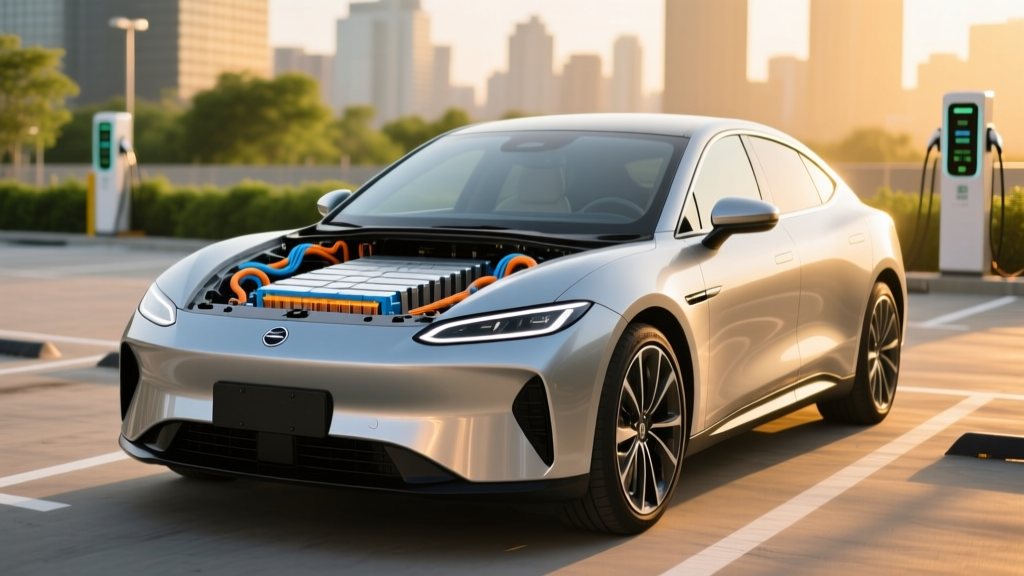
The rapid expansion of US EV battery plants is no longer a future headline — it is actively reshaping what sits beneath the floorpan of the electric vehicle you buy today. From joint-venture gigafactories in Georgia, Tennessee, Michigan, and Nevada to standalone LFP (lithium iron phosphate) cell lines coming online across the Southeast, domestic production now determines not only where your battery was made, but what chemistry it uses, how long it will last, how much a replacement might cost, and whether the vehicle qualifies for the federal §30D tax credit.
This guide cuts through the press-release hype and focuses on what matters to an EV buyer or owner in 2026: the real-world trade-offs between the chemistries rolling off these new lines, hard degradation numbers, warranty fine print, replacement economics, and the habits that actually move the needle on longevity.
Why US EV Battery Plants Matter for Your Next EV
Before 2023, the vast majority of EV battery cells sold in the United States were imported from South Korea (LG Energy Solution, SK On, Samsung SDI), Japan (Panasonic), or China (CATL, BYD). Today, a growing share of cells and complete packs are assembled domestically — a shift driven by the Inflation Reduction Act's §30D critical-minerals and battery-component sourcing requirements, which tie the up-to-$7,500 federal credit to North American manufacturing. Per the IRS, vehicles must meet escalating thresholds for battery components and critical minerals manufactured or recycled in North America to qualify.
Major 2026-era US EV battery plants and joint ventures include:
- Ultium Cells (GM + LG Energy Solution) — Spring Hill, TN; Lansing, MI; New Carlisle, IN
- BlueOval SK (Ford + SK On) — Glendale, KY (two plants)
- Panasonic Energy — Sparks, NV (Tesla supply) + new De Soto, KS facility
- Envision AESC — Smyrna, TN; Florence, SC (Nissan, Mercedes supply)
- Stellantis + Samsung SDI — Kokomo, IN
- Honda + LG — Fayette County, OH
- CATL + Ford (LFP licensing model) — Marshall, MI
This geographic spread means buyers now encounter two distinct chemistries — NMC/NCA and LFP — sourced from different factories, each with different lifespan and performance characteristics.
Chemistry 101: LFP vs NMC/NCA
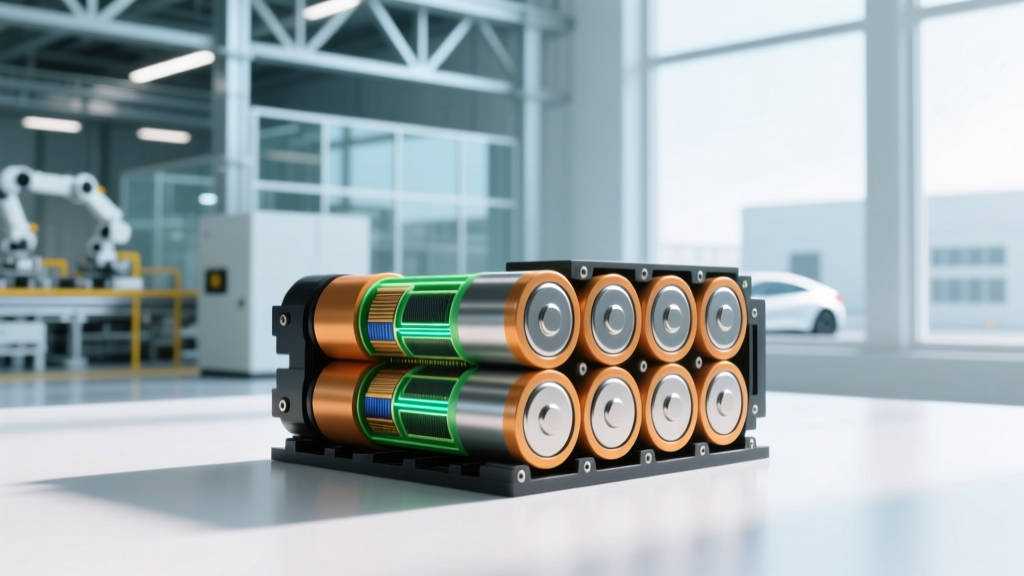
The single biggest technical decision an EV buyer makes today is the battery chemistry. US EV battery plants now produce both major families, and they are not interchangeable in their strengths.
| Attribute | LFP (Lithium Iron Phosphate) | NMC / NCA (Nickel-based) |
|---|---|---|
| Energy density | Lower (~150-170 Wh/kg cell) | Higher (~220-270 Wh/kg cell) |
| Range per kWh | More pack weight for same range | Lighter pack for equivalent range |
| Cycle life | 3,000-5,000+ cycles | 1,000-2,000 cycles typical |
| Cold-weather performance | Weaker below 32°F; slower regen | Better low-temp power delivery |
| Thermal stability | Excellent (less runaway risk) | Good, but more active cooling needed |
| Cost per kWh | Lower (~$80-95/kWh cell, 2026) | Higher (~$110-135/kWh cell, 2026) |
| Recommended SoC ceiling | 100% OK daily | 80% preferred daily, 100% for trips |
| Typical US applications | Tesla Model 3/Y RWD, Ford Mustang Mach-E Select (LFP trims), base Chevy Equinox EV | Long-range AWD trims, trucks (F-150 Lightning Extended, Silverado EV), luxury sedans |
Which is better? Neither, universally. LFP wins on longevity, cost, and daily-charging convenience (charge to 100% freely) but trades off cold-weather range and weight. NMC wins on energy density and winter performance — the reason most long-range and performance trims still use nickel-based chemistry. If you live in Phoenix and commute 30 miles, LFP is arguably superior. If you live in Minnesota and regularly road-trip 400 miles in January, NMC still holds an edge.
How Long Do EV Batteries Actually Last?
The fear that EV batteries need replacement every few years is not supported by fleet data. Modern liquid-cooled packs from US EV battery plants routinely exceed 150,000-200,000 miles before reaching the 70% capacity-retention threshold that most warranties define as end-of-life.
Observed degradation benchmarks (compiled from fleet and third-party data):
- Tesla Model 3/Y (NMC, Panasonic 2170 cells, NV): ~5-7% loss at 100,000 miles, plateauing to ~10-12% at 200,000 miles per Tesla's 2024 Impact Report and independent Recurrent Auto data.
- Chevrolet Bolt EV/EUV (NMC, LG cells): ~6-9% loss at 100,000 miles; some packs replaced under warranty due to the 2021-2022 recall, but post-recall packs showing stronger retention.
- Ford Mustang Mach-E (NMC, SK On): ~5-8% loss at 80,000 miles per early owner data.
- Tesla Model 3 RWD (LFP, CATL prismatic): ~3-5% loss at 80,000 miles, with very flat long-term curve projected based on LFP cycle life.
- Hyundai Ioniq 5 (NMC, SK On Georgia plant): ~4-6% at 60,000 miles in temperate-climate fleets.
The pattern is consistent: a steeper initial drop (2-4% in the first year or 15,000 miles), followed by a long, slow linear decline of roughly 1-2% per year or 15,000 miles thereafter. Most packs outlast the vehicle's body, suspension, and interior.
What the Battery Warranty Actually Covers
Federal law mandates a minimum 8-year/100,000-mile battery warranty for EVs, but California Air Resources Board (CARB) states extend that to 10 years/150,000 miles — and most automakers apply the longer term nationwide for simplicity. The trigger for a warranty claim is typically capacity retention falling below 70% of original.
| Manufacturer | Warranty Term | Capacity Threshold | Notes |
|---|---|---|---|
| Tesla | 8 yr / 120,000 mi (Model 3/Y LR); 8 yr / 100,000 mi (RWD) | 70% | LFP RWD warranty matches NMC in years, slightly lower miles |
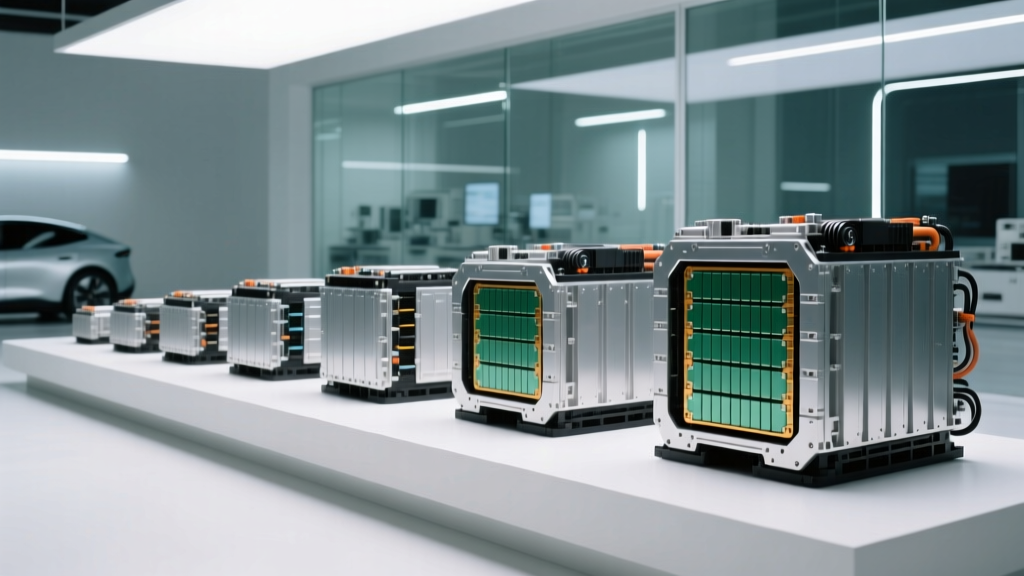
| GM (Ultium) | 8 yr / 100,000 mi | 70% | Modular pack design allows section replacement |
| Ford | 8 yr / 100,000 mi | 70% | Applies to Mach-E, F-150 Lightning |
| Hyundai / Kia | 10 yr / 100,000 mi | 70% | Industry-leading term, applies to Ioniq 5/6, EV6/EV9 |
| Rivian | 8 yr / 175,000 mi (R1T/R1S Dual); 8 yr / 120,000 mi (Standard) | 70% | Higher mile cap for dual-motor trims |
| BMW | 8 yr / 100,000 mi | 70% | i4, iX, i7 |
Critical fine print: warranties typically cover defects and abnormal degradation but not damage from accidents, flooding, improper charging equipment, or aftermarket modifications. Most also exclude gradual capacity loss above the 70% threshold — a pack at 72% is "within spec" even if the owner notices reduced range.
EV Battery Replacement Cost: What to Budget (and When)
Outside-warranty replacement is rare before 150,000 miles but not unheard of — typically due to manufacturing defects, collision damage, or coolant leaks. Costs vary dramatically by pack size and chemistry.
| Model / Pack | Chemistry | Usable Capacity | Out-of-Warranty Replacement (2026) |
|---|---|---|---|
| Tesla Model 3 RWD | LFP | ~57 kWh | $12,000 - $15,000 |
| Tesla Model Y Long Range | NMC (Panasonic) | ~75 kWh | $16,000 - $20,000 |
| Chevy Equinox EV | NMC (Ultium) | ~85 kWh | $18,000 - $22,000 |
| Ford F-150 Lightning Extended | NMC (SK On) | ~131 kWh | $25,000 - $32,000 |
| Hyundai Ioniq 5 | NMC (SK On) | ~77.4 kWh | $16,000 - $20,000 |
| Rivian R1T Max Pack | NMC (Samsung SDI) | ~149 kWh | $28,000 - $36,000 |
Prices have fallen roughly 40-50% since 2020 thanks to US EV battery plant scale-up and LFP adoption, but labor, diagnostics, and coolant-system work add $2,000-$5,000 on top of the pack itself. The good news: for a typical owner driving 12,000 miles per year, a warranty-covered battery will outlast two ownership cycles. Most buyers will sell or trade the vehicle long before a paid replacement is needed.
Five Factors That Actually Move the Degradation Needle
Not all miles age a battery equally. These five factors dominate long-term State of Health (SoH):
- DC fast-charging frequency. Occasional road-trip fast charging is fine; daily 150-250 kW sessions accelerate wear by 1-3% per year versus Level 2 home charging, primarily due to heat. Per fueleconomy.gov, thermal stress is the primary degradation driver.
- State of Charge ceiling and floor. For NMC packs, storing above 90% or below 10% for extended periods accelerates calendar aging. LFP is more tolerant of 100% storage. The 20-80% daily window remains best practice for NMC.
- Extreme temperature exposure. Repeated operation above 95°F or below 10°F without preconditioning stresses cells. Liquid-cooled packs (standard on all 2026 US-market EVs) mitigate this substantially.
- Preconditioning discipline. Using the vehicle's navigation-based battery preconditioning before DC fast charging (Tesla, Hyundai/Kia, GM, Ford all offer this) reduces peak cell temperature during charging.
- Depth of discharge patterns. Shallow cycles (e.g., 40-70% daily) are gentler than full 0-100% swings, especially for NMC.
Checking and Monitoring Battery Health (SoH)
Owners can assess battery State of Health through several channels:
- In-vehicle displays: Tesla's battery health readout (Settings → Software → Battery Health, added in 2024), Hyundai/Kia's service-mode SoH percentage, GM's myChevrolet app battery-health tile.
- OBD-II tools: Apps like OBDeleven, LeafSpy (Nissan), and Scan My Tesla pull raw BMS (Battery Management System) data including nominal full-pack kWh versus original.
- Third-party services: Recurrent Auto and Geotab offer fleet-grade degradation reports based on telematics; some dealerships now provide SoH printouts during service visits.
- DIY calculation: Fully charge to 100%, note the displayed range, divide by EPA original, and track quarterly. A drop from 310 mi to 285 mi over 3 years ≈ 8% degradation.
For resale, a documented SoH report from a certified service center adds measurable value — particularly important as the used-EV §25E tax credit (up to $4,000) keeps the secondhand market active.
Emerging Tech: Solid-State, Silicon Anode, and Beyond
US EV battery plants are also piloting next-generation chemistries, though buyers should treat these as forward-looking, not currently purchasable:
- Solid-state batteries (Toyota, QuantumScape + VW/PowerCo, Solid Power + Ford/BMW): promise 30-40% higher energy density and faster charging. Toyota targets limited 2027-2028 production; QuantumScape's prototype cells have demonstrated 80% capacity after 800+ cycles. Mass-market availability is realistically 2029+.
- Silicon-dominant anodes (Sila Nanotechnologies, Group14): increase cell energy density 15-25% without full solid-state complexity. Entering premium EVs in 2026-2027 production runs.
- Sodium-ion (Na-ion) (CATL, Northvolt): lower cost, no lithium or cobalt, but ~30% lower energy density. Best suited for urban/short-range EVs and stationary storage; limited US production expected 2027+.
None of these are available in a 2026-model-year vehicle you can buy today. Announced timelines from OEMs should be treated as preliminary.
Frequently Asked Questions
How long do EV batteries last in years and miles?
Modern liquid-cooled packs from US EV battery plants typically retain 70-85% of original capacity at 150,000-200,000 miles, translating to 12-18 years of typical use before reaching the warranty threshold. LFP packs are projected to exceed 250,000 miles based on cycle-life data.
How much does an EV battery cost to replace?
Out-of-warranty replacement ranges from ~$12,000 (small LFP packs like Tesla Model 3 RWD) to ~$36,000 (large NMC packs like Rivian Max or F-150 Lightning Extended Range), plus $2,000-$5,000 in labor. Most owners never pay this — the battery outlasts the car.
What does the battery warranty cover?
Federally mandated minimum is 8 years/100,000 miles (10/150,000 in CARB states). Coverage triggers at 70% capacity retention. Defects and abnormal degradation are covered; accident damage, flooding, and improper modifications are excluded.
How do I check my EV's battery health?
Use the vehicle's native SoH display (Tesla, Hyundai, GM apps), an OBD-II reader with BMS access, or a third-party service like Recurrent Auto. Track displayed 100%-charge range quarterly against the original EPA figure.
LFP vs NMC — which is better?
LFP wins on longevity (3,000-5,000+ cycles), cost, and daily 100% charging tolerance. NMC wins on energy density, cold-weather range, and performance. Choose LFP for moderate climates and commuting; NMC for long-range road trips and northern winters.
Will US-made batteries make EVs cheaper?
Cell costs from domestic plants have already fallen to $80-135/kWh depending on chemistry, contributing to the sub-$35,000 EVs now on the market (Chevy Equinox EV, Tesla Model 3 RWD). Further scale-up through 2027 is expected to push LFP packs below $75/kWh, enabling more affordable trims.
The rise of US EV battery plants is not just a manufacturing story — it is the story of what chemistry, longevity, and economics your next EV will actually deliver. Focus less on the factory's location and more on the chemistry it produces, the warranty behind it, and the habits you bring to the charger. That combination determines whether your battery is a 200,000-mile asset or an early-life liability.