The single most common question new EV owners ask isn't about range — it's about the battery. How long will it last? How much does a replacement cost? And practically: when should you unplug your battery car to protect long-term health? These aren't hypothetical concerns. The high-voltage traction battery is the most expensive component in any electric vehicle, typically representing 30–40% of the vehicle's build cost. Understanding how it degrades, what voids a warranty, and when to stop charging is the difference between a battery that lasts 200,000 miles and one that needs attention at 120,000.
This guide covers the chemistry inside modern EV battery packs, real-world degradation data from vehicles on the road, federal warranty mandates, replacement cost realities, and the daily habits that meaningfully extend battery life. We'll also address the emerging solid-state and silicon-anode technologies — and when (or whether) they'll matter for your next purchase.
EV Battery Chemistry: LFP vs NMC vs NCA Explained
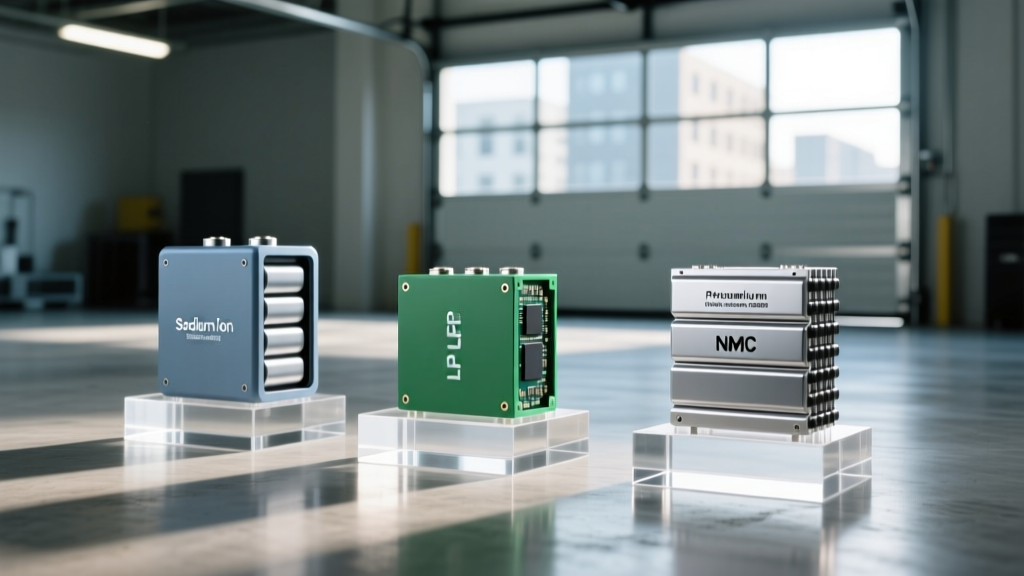
Not all EV batteries are the same. The cathode chemistry determines energy density, cycle life, cold-weather behavior, cost, and even how you should charge daily. In 2026, the two dominant chemistries in the U.S. market are LFP (lithium iron phosphate) and NMC/NCA (nickel manganese cobalt / nickel cobalt aluminum).
NMC/NCA packs dominate long-range and performance vehicles. They offer higher energy density (more kWh in a lighter, smaller pack), making them ideal for vehicles targeting 300+ miles of EPA range. The Tesla Model 3 Long Range, Hyundai Ioniq 5, Ford Mustang Mach-E Extended Range, and most premium EVs use NMC variants. The trade-off: NMC cells degrade faster under high states of charge and elevated temperatures, and they carry supply-chain concerns around cobalt and nickel sourcing.
LFP chemistry has gained significant ground in standard-range and more affordable models. Tesla offers LFP in the Model 3 Rear-Wheel Drive and Model Y Standard Range. BYD's Blade Battery (LFP) powers several global models. LFP cells are heavier and less energy-dense, meaning a smaller EPA range for the same pack weight — but they tolerate daily 100% charging, survive more charge cycles before measurable degradation, perform well in calendar aging, and contain no cobalt or nickel.
| Attribute | LFP (Lithium Iron Phosphate) | NMC / NCA (Nickel-based) |
|---|---|---|
| Energy Density | Lower (~160–180 Wh/kg cell-level) | Higher (~220–260 Wh/kg cell-level) |
| Typical EPA Range | 240–272 mi (Standard Range models) | 290–402 mi (Long Range / Performance) |
| Cycle Life | 3,000–5,000+ cycles to 80% SoH | 1,000–2,000 cycles to 80% SoH |
| Daily Charging to 100% | Recommended by manufacturers | Not recommended; 80% daily limit advised |
| Cold-Weather Performance | Moderate; greater range loss below 32°F | Better low-temp discharge, especially with heat pump |
| Cost per kWh | Lower (~$90–110/kWh at pack level, 2025–2026) | Higher (~$120–145/kWh at pack level) |
| Critical Minerals | No cobalt or nickel | Requires cobalt, nickel (sourcing concerns) |
| Common Vehicles (2026) | Tesla Model 3 RWD, Model Y Std Range, BYD models | Tesla LR/Performance, Ioniq 5, Mach-E, Rivian, BMW iX |
Which is better? Neither is universally superior. If you commute 30–50 miles daily, charge at home every night, and want a battery that will outlast the car with minimal degradation anxiety, LFP is the pragmatic pick — charge it to 100% without worry. If you need 300+ miles for road trips, tow frequently, or live in a cold climate where every mile of range matters, NMC/NCA's energy density is worth the extra care (charging to 80% daily, preconditioning before DC fast charging).
How Long Do EV Batteries Actually Last?
The short answer: longer than most buyers expect. Data from fleets, long-term owner studies, and manufacturer reports consistently show that modern liquid-cooled EV batteries retain 85–95% of original capacity after 100,000 miles and 75–90% after 200,000 miles — well within warranty thresholds.
Here's what the data shows across major platforms:
Real-World Degradation Data Points (2024–2026):
- Tesla Model 3/Y (NMC, 2018–2023): ~5–7% capacity loss at 100,000 miles; ~10–12% at 200,000 miles. Tesla's 2024 Impact Report states average fleet degradation of ~12% at 200,000 miles.
- Tesla Model 3 RWD (LFP, 2021–2025): ~3–5% loss at 100,000 miles based on owner-reported State of Health (SoH) data via Tessie and TeslaFi aggregators.
- Chevrolet Bolt EV/EUV (NMC, 2017–2023): Higher early-model degradation (~8–12% at 80,000 mi) led to a recall and battery replacement program. Post-recall packs show improved performance.
- Hyundai Ioniq 5 (NMC, 2022–2025): Limited long-term data, but 2-year/30,000-mile owner reports indicate 2–4% loss. Hyundai's battery management system (BMS) is conservative with buffer.
- Nissan LEAF (passive air-cooled, 2011–2025): Historically higher degradation due to lack of liquid cooling — 15–25% loss at 80,000–100,000 miles in hot climates. A cautionary example of why thermal management matters.
The critical takeaway: most EV batteries outlast the vehicle they're installed in. The average U.S. vehicle age is 12.6 years (per S&P Global Mobility). A 2026 EV with a 250-mile EPA range and 10% degradation at year 12 still delivers ~225 miles — more than adequate for 95% of daily driving. Full battery replacement before 150,000 miles is statistically uncommon for liquid-cooled packs.
What the Battery Warranty Actually Covers
Federal law mandates that EV batteries carry a minimum warranty of 8 years or 100,000 miles (whichever comes first). In California Air Resources Board (CARB) states — which include California, New York, Massachusetts, Colorado, Oregon, Washington, and others adopting CARB standards — the mandate extends to 10 years or 150,000 miles.
But the details matter. Warranties cover capacity retention below a threshold, not any degradation at all. The typical threshold is 70% of original capacity, though some manufacturers set it at 65% or 75%.
| Manufacturer | Warranty Term | Capacity Threshold | Notes |
|---|---|---|---|
| Tesla (Model 3/Y) | 8 yr / 100,000 mi (Std Range); 8 yr / 120,000 mi (LR/Perf) | 70% | Covers defects + capacity below 70% |
| Hyundai / Kia | 10 yr / 100,000 mi | 70% | Among the longest terms in the U.S. market |
| Ford (Mach-E, F-150 Lightning) | 8 yr / 100,000 mi | 70% | Covers battery components + capacity |
| Chevrolet (Equinox EV, Blazer EV) | 8 yr / 100,000 mi | 70% | GM standard EV battery warranty |
| BMW (i4, iX) | 8 yr / 100,000 mi | 70% | Includes high-voltage components |
| Rivian (R1T, R1S) | 8 yr / 175,000 mi | 70% | Higher mileage cap reflects truck use case |
What's typically NOT covered: Gradual degradation that stays above the threshold (a pack at 72% at 90,000 miles isn't a warranty claim). Damage from accidents, flooding, or unauthorized modifications. Some warranties exclude vehicles used commercially (ride-share, delivery) beyond certain mileage — check your specific terms.
For the most current warranty specifics, always reference the manufacturer's official warranty guide or the EPA's fueleconomy.gov listings, which include warranty data per model.
EV Battery Replacement Cost: What You'd Actually Pay
This is where fear-mongering runs rampant. Headlines cite $20,000+ replacement costs without context. Let's ground this in reality.
Yes, out-of-warranty battery replacement is expensive. But it's also rare. Most EVs are sold, traded, or scrapped before the battery needs replacement. And when replacement is needed, it's often a module-level repair (replacing individual cell modules within the pack) rather than a full pack swap.
| Vehicle | Battery Size (kWh usable) | Chemistry | Estimated Full Pack Replacement | Typical Need Timeline |
|---|---|---|---|---|
| Tesla Model 3 RWD | 57.5 kWh | LFP | $12,000–$15,000 | 200,000+ mi (if ever) |
| Tesla Model Y Long Range | 75 kWh | NMC | $14,000–$18,000 | 200,000+ mi (if ever) |
| Hyundai Ioniq 5 SE/Limited | 77.4 kWh | NMC | $15,000–$20,000 | 200,000+ mi (if ever) |
| Ford F-150 Lightning Ext. Range | 131 kWh | NMC | $25,000–$32,000 | 200,000+ mi (if ever) |
| Chevrolet Equinox EV | 85 kWh | NMC (Ultium) | $16,000–$21,000 | 200,000+ mi (if ever) |
| Nissan LEAF (40 kWh) | 40 kWh | NMC (older gen) | $8,000–$12,000 | 100,000–140,000 mi (hot climates) |
Key context: Battery pack prices have fallen from ~$200/kWh in 2018 to approximately $115–135/kWh at the pack level in 2025–2026 (per BloombergNEF data). By the time a 2026 EV actually needs a replacement in the 2038–2040 timeframe, packs will likely cost significantly less. Additionally, the growing EV recycling and second-life industry (Redwood Materials, Li-Cycle) is driving down refurbished pack availability.
Module-level repairs — replacing a degraded subset of cells rather than the entire pack — typically cost $3,000–$7,000 at a dealership or qualified EV shop. Many independent EV repair facilities now offer this service.
When to Unplug Your Battery Car: Daily Charging Habits That Matter
So when should you unplug your battery car? The answer depends on your chemistry and your routine.
For NMC/NCA owners: Set your charge limit to 80% for daily driving. Unplug (or let the car stop charging) at 80% to avoid prolonged time at high state of charge. Charge to 100% only when you need the full range for a road trip, and try to begin that trip shortly after reaching 100% rather than letting the car sit fully charged overnight. Use your vehicle's scheduled charging feature to time completion close to your departure.
For LFP owners: Tesla and BYD explicitly recommend charging to 100% at least once per week. LFP cells need periodic full charges for the BMS to accurately calibrate state of charge. You can leave your LFP vehicle plugged in at 100% without the same degradation concerns as NMC — the chemistry tolerates it.
Daily & Weekly Battery Care Checklist:
- ☐ Set charge limit to 80% (NMC/NCA) or 100% (LFP) via vehicle app or touchscreen
- ☐ Use scheduled charging to finish near departure time — avoids sitting at high SoC for hours
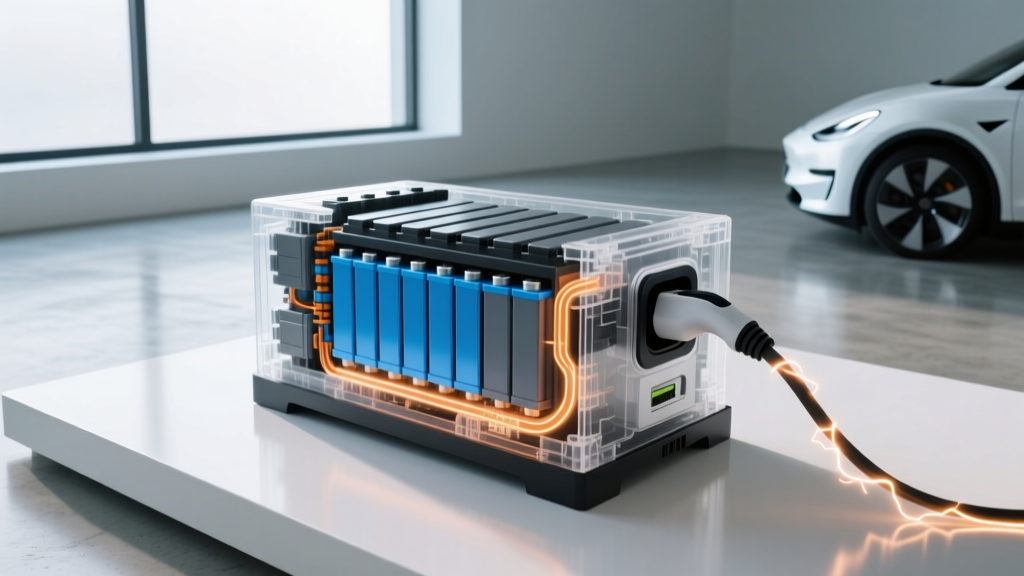
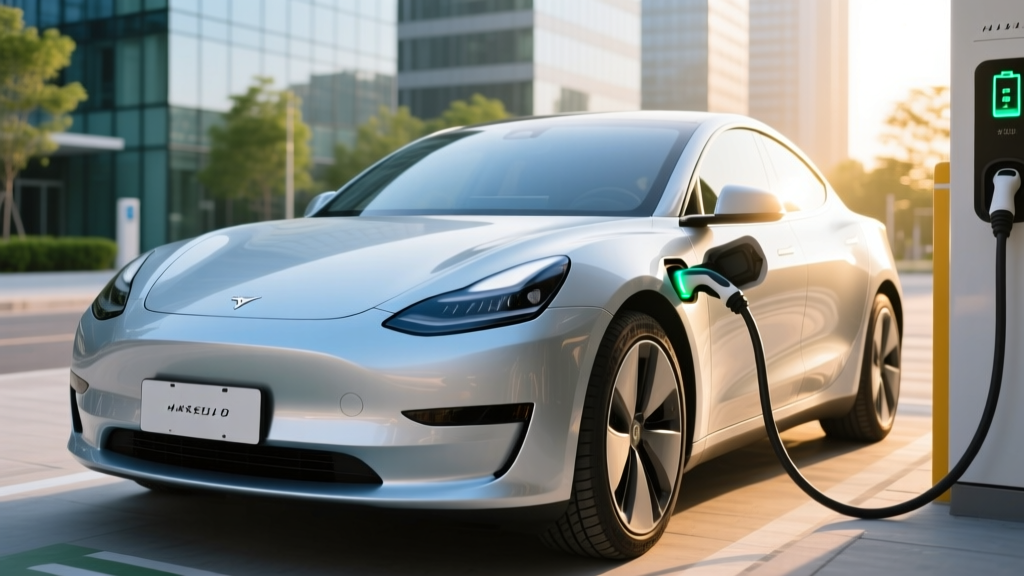
- ☐ Plug in when you get home; let Level 2 handle overnight needs (cheaper, gentler than DCFC)
- ☐ Precondition the battery before DC fast charging (most EVs do this automatically when you navigate to a charger)
- ☐ Avoid letting the battery sit below 10% SoC for extended periods — charge soon after dipping low
- ☐ In extreme heat, park in shade or a garage when possible; thermal management draws from the pack
- ☐ In extreme cold, plug in and precondition while connected to shore power — preserves range and reduces stress
- ☐ Limit DC fast charging to road trips and situations where Level 2 isn't available; daily DCFC accelerates degradation
Factors That Accelerate Battery Degradation
Battery degradation isn't linear, and it isn't random. It's driven by a handful of well-understood stress factors:
1. High State of Charge + Time: Lithium-ion cells degrade fastest when held at high voltage (above ~4.0V per cell, roughly 80%+ SoC) for extended periods. A car sitting at 100% in a hot garage for a week accumulates more calendar aging than a car driven and recharged daily between 30–80%.
2. Temperature Extremes: Battery chemistry degrades faster above 95°F (35°C) ambient, especially when combined with high SoC. Cold temperatures don't permanently damage cells but temporarily reduce available capacity and increase internal resistance. Charging a cold battery without preconditioning can cause lithium plating — a permanent degradation mechanism.
3. Frequent DC Fast Charging: High C-rates (charging at 150–350 kW) generate heat and mechanical stress within cells. Studies from NREL (National Renewable Energy Laboratory) show that exclusive DCFC use can increase degradation by 2–5% over 100,000 miles compared to Level 2 charging. Occasional DCFC on road trips is fine; daily reliance is the concern.
4. Deep Discharges: Regularly running the battery to 0% (or near-zero) stresses cells. The BMS maintains a buffer (typically 2–5 kWh below displayed 0%), but habitually arriving at very low SoC accelerates wear.
5. Lack of Thermal Management: Vehicles without active liquid cooling (older Nissan LEAF, some early compliance EVs) degrade significantly faster in hot climates. Every current-generation mainstream EV sold in the U.S. in 2026 uses liquid-cooled battery packs.
How to Check Your EV Battery's State of Health (SoH)
State of Health (SoH) is the percentage of original battery capacity remaining. A new EV starts at 100% SoH; at 70% SoH, you've hit the typical warranty claim threshold.
Manufacturer Apps: Some brands show SoH directly. BMW's iDrive displays battery health percentage. Hyundai/Kia's connected services include battery diagnostics. Tesla does not natively display SoH in the app, but you can calculate it: charge to 100%, note the displayed range, and compare to the original EPA rating (adjusting for the fact that displayed range uses a fixed Wh/mi figure).
Third-Party Tools: Apps like Tessie and TeslaFi (Tesla-specific) track SoH over time using charge logs. OBDeleven and Carista OBD-II adapters can read battery health data from many non-Tesla EVs. Some dealerships will pull a full battery health report on request — ask for the "high-voltage battery diagnostic" during service visits.
Manual Calculation: Charge to 100% (or your known max). Record the displayed range or energy added (kWh) from a known low SoC to full. If your 77.4 kWh Ioniq 5 accepts only 69 kWh from 5% to 100% (accounting for charging losses of ~5–8%), your usable capacity has decreased. Compare to original specs for an approximate SoH.
Monitor SoH every 3–6 months. A sudden drop (more than 2–3% in a short period) warrants a dealership diagnostic — it could indicate a failing cell module rather than normal degradation.
What's Next: Solid-State, Silicon Anode, and Future Battery Tech
Next-generation battery technologies are frequently hyped. Here's where they actually stand as of 2026:
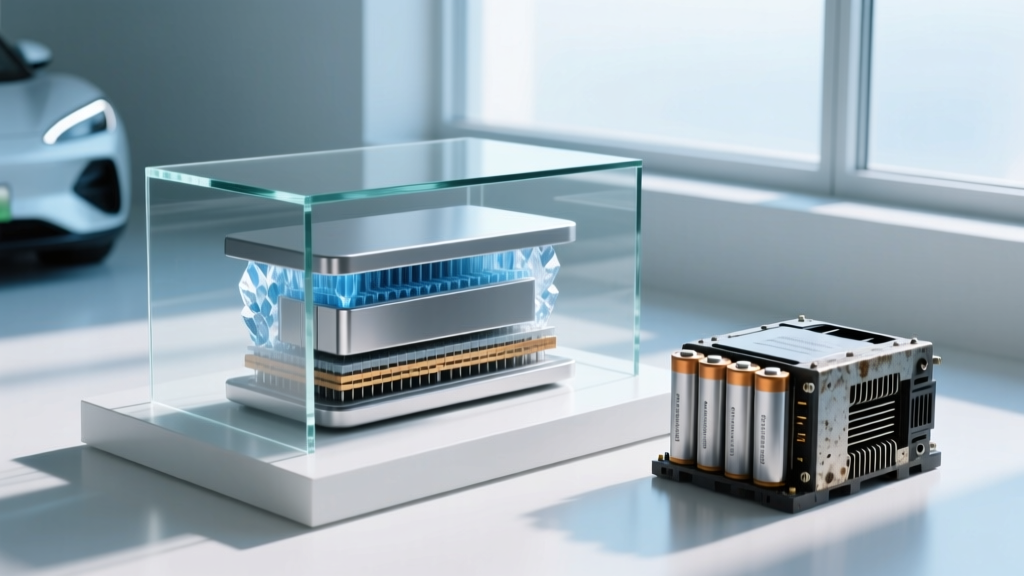
Solid-State Batteries: These replace the liquid electrolyte with a solid material, promising higher energy density, faster charging, and improved safety (no flammable electrolyte). Toyota has announced solid-state EVs for 2027–2028, and QuantumScape is working with Volkswagen on pilot production. However, solid-state packs remain in pre-commercial stages. Manufacturing scale, cost, and cycle-life validation are unresolved. Realistic timeline for mainstream U.S. availability: 2029–2032.
Silicon Anode Batteries: Companies like Sila Nanotechnologies and Group14 are replacing graphite anodes with silicon-dominant materials, boosting energy density by 20–40%. These are beginning to appear in limited production (Mercedes G 580 EQ uses a silicon-anode pack from Sila). Realistic timeline for broad adoption: 2027–2030.
Sodium-Ion Batteries: Cheaper than lithium, with no critical-mineral supply concerns. CATL and BYD are producing sodium-ion packs for smaller, lower-range vehicles in China. U.S. adoption is likely limited to budget city EVs and energy storage. Realistic timeline: 2027–2029 for niche U.S. models.
None of these technologies should factor into a 2026 purchase decision. Current NMC and LFP packs are mature, well-understood, and backed by extensive warranty coverage. Waiting for solid-state means waiting 3–6 years with no guarantee of initial affordability or availability.
Frequently Asked Questions
How long do EV batteries last in years and miles?
Most liquid-cooled EV batteries from 2020 onward retain 85–90% of original capacity at 150,000 miles and 10–12 years of age. With proper care (80% daily charge limit for NMC, avoiding extreme heat), a 2026 EV battery should provide reliable service for 200,000+ miles — often outlasting the vehicle itself. The IRS §30D tax credit requires battery sourcing compliance, but that doesn't affect longevity.
How much does an EV battery cost to replace?
Full pack replacement ranges from $12,000 (smaller packs like Tesla Model 3 RWD) to $32,000 (large packs like F-150 Lightning Extended Range). However, most replacements are covered under the 8-year/100,000-mile federal warranty, and module-level repairs cost $3,000–$7,000. By the 2038–2040 timeframe when a 2026 EV might need a replacement, pack prices are projected to be 30–50% lower than today.
What does the EV battery warranty actually cover?
Federal law requires 8 years / 100,000 miles minimum coverage (10 yr / 150,000 mi in CARB states). Warranties cover manufacturing defects and capacity loss below a specified threshold — typically 70% of original capacity. Gradual degradation above that threshold is considered normal wear. Check your specific manufacturer's warranty document for exclusions (commercial use, accident damage, unauthorized modifications).
How do I check and maximize my EV battery health?
Check SoH via your vehicle's connected app, third-party tools (Tessie, TeslaFi, OBDeleven), or request a dealer diagnostic. Maximize longevity by: charging to 80% daily (NMC) or 100% (LFP), using Level 2 over DC fast charging for daily needs, preconditioning before fast charging, avoiding prolonged storage at 100% or below 10%, and parking in shade in extreme heat.
Should I unplug my EV when it reaches 80%?
You don't need to physically unplug — modern EVs stop drawing current once they hit the set charge limit. Simply configure your charge limit to 80% (for NMC/NCA) in the vehicle's app or settings, and the car handles the rest. For LFP vehicles, set to 100% and leave it plugged in. The key is avoiding prolonged high-SoC states in NMC packs, not the physical act of unplugging.
Is LFP or NMC better for my situation?
Choose LFP if: you want a lower purchase price, plan to keep the car 10+ years, mostly commute under 50 miles daily, and prefer the simplicity of 100% charging. Choose NMC if: you need 300+ miles of range, tow or haul frequently, regularly drive in cold weather, or take frequent road trips where energy density matters. Both chemistries are proven and well-supported in 2026.
For official efficiency and range data across all current EVs, reference fueleconomy.gov. For current federal EV tax credit eligibility rules — which include battery component and critical mineral sourcing requirements that affect which vehicles qualify — consult the IRS Clean Vehicle Credit page or a qualified tax professional.