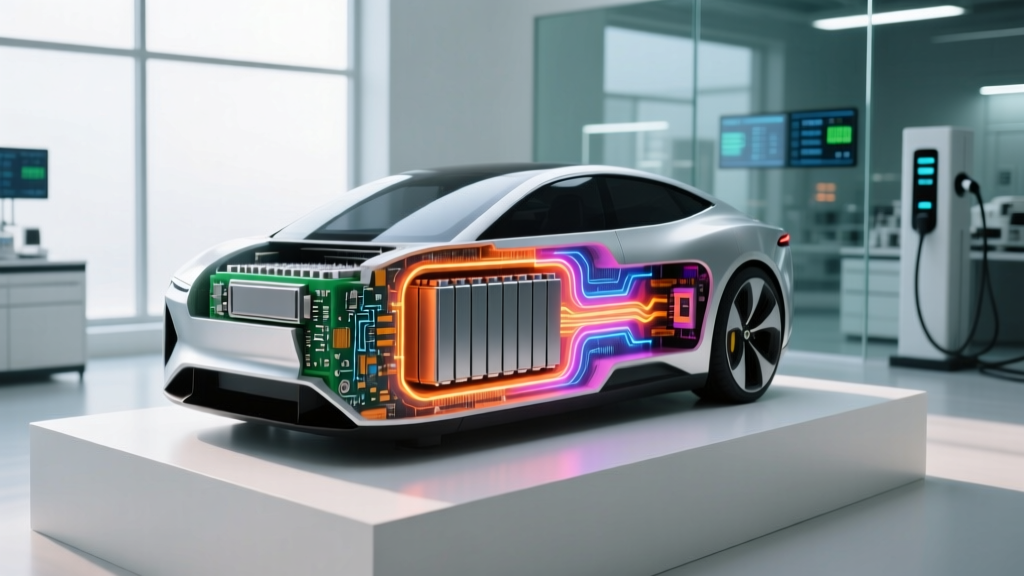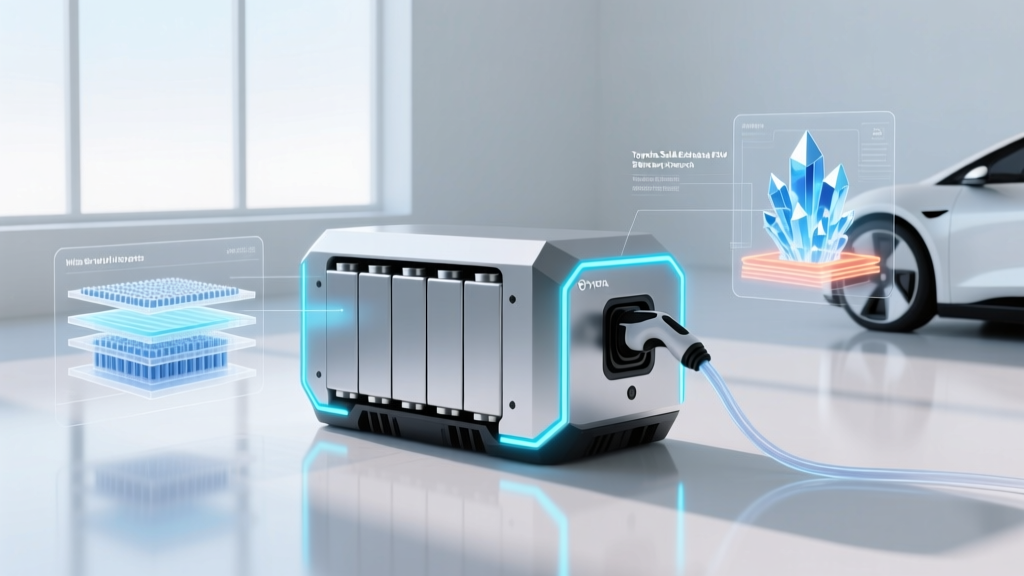
Toyota's solid-state EV battery announcements have generated more headlines than almost any other battery technology in the electric vehicle space. The promise — over 750 miles of range and a 10-minute fast charge — reads like science fiction. But for buyers trying to make a real purchase decision today, separating marketing ambition from engineering reality is essential.
This guide breaks down where Toyota's solid-state technology actually stands in 2026, how it compares to the lithium-ion chemistries powering today's EVs, and what the data says about battery longevity, replacement costs, and health management for current owners.
Where Toyota's Solid-State EV Battery Stands in 2026
Toyota has been developing solid-state battery technology for over a decade, holding more than 1,300 related patents — the most of any automaker. The core idea replaces the liquid electrolyte in conventional lithium-ion cells with a solid material, theoretically enabling higher energy density, faster charging, and improved safety (no flammable liquid to ignite in a thermal event).
Toyota's strategy is phased. The company has outlined a "Performance" battery (bipolar lithium-ion with enhanced energy density) arriving first, followed by a "Popularisation" battery using LFP chemistry for cost reduction, and eventually a true solid-state cell. This layered approach reflects the manufacturing and cost challenges that have kept solid-state batteries out of consumer vehicles despite years of laboratory progress.
For buyers shopping today, understanding current lithium-ion chemistries — specifically LFP and NMC — remains far more relevant than waiting for a technology that won't reach showrooms for several years.
LFP vs NMC: The Chemistry Battle Powering Today's EVs
Every EV battery sold in 2026 uses one of two dominant cathode chemistries: lithium iron phosphate (LFP) or nickel manganese cobalt (NMC), with some manufacturers using the closely related nickel cobalt aluminum (NCA). Each carries distinct trade-offs in energy density, cost, longevity, and temperature performance.
| Attribute | LFP (Lithium Iron Phosphate) | NMC / NCA (Nickel-Based) |
|---|---|---|
| Energy Density | Lower (~160–180 Wh/kg cell-level) | Higher (~220–300 Wh/kg cell-level) |
| Range per kWh of Pack Weight | Shorter range for same pack mass | Longer range for same pack mass |
| Cycle Life | 3,000–5,000+ cycles to 80% capacity | 1,000–2,500 cycles to 80% capacity |
| Cost | Lower — no cobalt or nickel | Higher — commodity-sensitive metals |
| Cold-Weather Performance | More range loss below freezing (~30–40%) | Moderate range loss below freezing (~20–30%) |
| Thermal Stability / Safety | Excellent — very resistant to thermal runaway | Good — requires more robust BMS and cooling |
| State of Charge Recommendation | Can charge to 100% daily without significant harm | Best kept at 80% daily; 100% only for trips |
| Common in (2026 examples) | Tesla Model 3/Y RWD, Ford Mustang Mach-E Select, BYD models | Tesla Long Range, Hyundai Ioniq 5/6, Rivian, BMW iX |
Which is better? It depends on your use case. If you want maximum range in a lighter package and don't mind charging to 80% daily, NMC delivers. If you prioritize longevity, lower cost, and the convenience of charging to 100% every night, LFP is the stronger choice — and it's why LFP adoption has surged in standard-range trims across the industry.
How Long Do EV Batteries Actually Last?
The fear of a $20,000 battery swap at year five is the single biggest psychological barrier to EV adoption. The data tells a different story: the vast majority of EV batteries outlast the vehicles they're installed in.
Modern EV battery packs are engineered for 1,500 to 3,000+ full charge cycles before degrading to 80% of original capacity. For a vehicle with 300 miles of EPA range, that translates to 450,000 to 900,000 miles of theoretical cycle life — far beyond what any consumer will drive.
- Tesla fleet data (2024 Impact Report): Model S/X batteries retained approximately 88% capacity at 150,000 miles and roughly 85% at 200,000 miles.
- Geotab analysis of 10,000+ EVs: Average annual degradation across all brands measured at approximately 1.8% per year, meaning a typical EV retains ~82% capacity after 10 years.
- Nissan Leaf (passive cooling, earlier generations): Showed higher degradation rates — up to 3–4% annually in hot climates — underscoring the importance of active thermal management.
- Hyundai/Kia E-GMP platform: Early fleet data suggests ~1.5% annual degradation, aided by robust liquid cooling.
The critical takeaway: calendar aging (degradation that happens regardless of use) and cycle aging (degradation from charge/discharge) both occur, but modern battery management systems (BMS) and liquid thermal management have dramatically slowed both processes. A 2026 EV battery reaching 70–75% state of health (SoH) at 15 years is a reasonable expectation, not a failure scenario.
What EV Battery Warranties Actually Cover
Federal law mandates a minimum battery warranty of 8 years / 100,000 miles for all EVs sold in the United States. California Air Resources Board (CARB) states extend this to 10 years / 150,000 miles. Most manufacturers exceed these minimums, and the warranty threshold — the capacity level at which a claim is honored — is almost universally set at 70% of original capacity.
| Manufacturer | Warranty Period | Capacity Threshold | Notes |
|---|---|---|---|
| Tesla | 8 yr / 120,000–150,000 mi (varies by model) | 70% | Model 3/Y: 100k mi; Model S/X: 150k mi |
| Hyundai / Kia | 10 yr / 100,000 mi | 70% | Among the longest time-based coverage |
| Ford | 8 yr / 100,000 mi | 70% | Covers battery and electric drive components |
| BMW | 8 yr / 100,000 mi | 70% | Transferable to subsequent owners |
| Rivian | 8 yr / 175,000 mi | 70% | Highest mileage threshold in the market |
What's covered: Capacity loss below the threshold, manufacturing defects, and cell/module failures. What's not: Damage from accidents, improper charging equipment, modifications, or normal wear above the threshold. A battery at 72% SoH at year 7 technically hasn't triggered a warranty claim, even though the owner may notice meaningful range reduction.
For details on warranty obligations, refer to the EPA's green vehicle warranty overview and your manufacturer's specific warranty booklet.
EV Battery Replacement Costs: Data, Not Fear
When an out-of-warranty battery does need replacement — a scenario that remains rare for vehicles under 15 years old — costs vary significantly by pack size, chemistry, and whether the manufacturer offers refurbished or partial-pack replacements.
| Vehicle / Pack Size | Estimated Full-Pack Cost | Module-Level Repair | Typical Need Timeline |
|---|---|---|---|
| Nissan Leaf (40–62 kWh) | $6,500–$9,000 | Not commonly available | 12–18 years (passive cooling models) |
| Tesla Model 3 (60–82 kWh) | $12,000–$16,000 | $3,000–$5,000 per module group | 15–20+ years (projected) |
| Hyundai Ioniq 5 (77.4 kWh) | $13,000–$18,000 | Available — modular design | 15–20+ years (projected) |
| Ford F-150 Lightning (98–131 kWh) | $18,000–$28,000 | Under development | 15+ years (projected) |
| Chevrolet Bolt EV (65 kWh) | $9,000–$14,000 | Limited availability | 12–18 years |
Two important context points. First, battery pack prices have fallen roughly 80% since 2013 (per BloombergNEF data), from over $700/kWh to approximately $130–140/kWh at the pack level in 2025. Replacement costs will continue declining. Second, module-level repair — replacing only the degraded cell groups rather than the entire pack — is becoming more common and can cut costs by 60–75%.
For most owners who trade vehicles every 8–12 years, a full battery replacement will never be needed. The battery will outlast the car's economic life for reasons unrelated to the powertrain: body damage, interior wear, or simply upgrading to newer technology.
What Affects Battery Life — and What You Can Control
Battery degradation isn't random. It's driven by measurable electrochemical stressors that owners can manage through daily habits.
- Avoid sustained 100% SoC: For NMC batteries, charge to 80% daily and reserve 100% for road trips. LFP batteries tolerate 100% better and manufacturers often recommend periodic full charges for BMS calibration.
- Minimize DC fast charging when possible: Occasional fast charging is fine; daily reliance on 150+ kW DCFC accelerates degradation. Home Level 2 (7–11 kW) is the ideal daily charging method.
- Precondition before fast charging: Cold batteries charge slower and experience more stress. Use your vehicle's preconditioning feature (most EVs do this automatically when you navigate to a charger).
- Avoid extreme SoC + extreme heat: A fully charged battery sitting in 100°F+ ambient heat experiences the most calendar aging. If parking in hot weather for days, leave the car at 50–60% SoC.
- Don't baby it excessively: The difference between "optimal" and "normal" use is small. Modern BMS systems protect against the worst stressors automatically. Drive the car.
The single most impactful habit is relying on Level 2 home charging for daily needs and reserving DC fast charging for road trips. Research published in NREL battery aging studies consistently shows that elevated charge rates and high temperatures are the primary accelerants of lithium plating and electrolyte decomposition — the two main degradation mechanisms.
How to Check and Monitor Battery State of Health (SoH)
State of Health (SoH) is expressed as a percentage: a new battery is 100% SoH, and a battery that has lost 15% of its original usable capacity sits at 85% SoH. Monitoring this metric helps you understand your battery's trajectory and plan accordingly.
Built-in methods:
- Tesla: The Service menu (accessed via the car's touchscreen) displays battery health percentage on newer software versions. Third-party apps like Tessie and TeslaFi also track SoH using API data.
- Hyundai/Kia: The EV-specific menu in the infotainment system shows battery condition. OBD-II scanners with EV protocols can pull more granular cell-voltage data.
- General OBD-II tools: Devices like the OBDLink MX+ paired with apps such as ABRP (A Better Route Planner) or Car Scanner can read SoH, cell voltages, and battery temperature from most EVs.
- Dealership diagnostic: A service center can run a full battery health report, typically during scheduled maintenance visits.
What to watch for: A gradual, linear decline (1–2% per year) is normal and healthy. Sudden drops, large cell-voltage imbalances (individual cells reading significantly different voltages), or rapid capacity loss after a specific event (deep discharge, extreme heat exposure) warrant a service visit.
Solid-State and Silicon Anode: Realistic Timelines for Next-Gen Batteries
Beyond Toyota's solid-state program, the broader battery industry is pursuing several next-generation technologies. Here's where they stand with honest timelines:
Solid-state batteries (Toyota, QuantumScape, Samsung SDI): The engineering promise is real — solid electrolytes eliminate flammability risk, enable lithium-metal anodes, and could push energy density past 400 Wh/kg at the cell level. But manufacturing challenges remain severe. Solid electrolyte materials are brittle, difficult to produce at scale, and require new factory tooling. Toyota's 2027–2028 target is for limited, premium-vehicle deployment. Broad availability at mainstream price points is unlikely before 2030–2032.
Silicon-dominant anodes (Sila Nanotechnologies, Group14, Enovix): Replacing graphite anodes with silicon can increase energy density by 20–40%. Some silicon-blend anodes are already in production (Porsche Taycan uses a silicon-graphite mix). Pure silicon anodes that solve the swelling problem (silicon expands ~300% during lithiation) are expected in limited production by 2027–2028.
Sodium-ion batteries (CATL, BYD): Lower cost and no lithium dependency, but significantly lower energy density (~120–150 Wh/kg). Best suited for budget city cars and stationary storage. Already in limited production in China for small EVs; unlikely to reach the US market in meaningful volume before 2028.
Frequently Asked Questions
How long do EV batteries last in years and miles?
Based on fleet data from Tesla, Geotab, and manufacturer reports, most modern EV batteries retain 75–85% of original capacity at 150,000–200,000 miles, which typically corresponds to 12–18 years of average driving (12,000–15,000 miles/year). Full failure requiring replacement is rare before 15+ years.
How much does it cost to replace an EV battery?
Full-pack replacement ranges from approximately $6,500 for smaller packs (Nissan Leaf) to $28,000 for large truck packs (F-150 Lightning Extended Range). Module-level repairs, where available, cost $3,000–$5,000. These prices are expected to decline as pack-level costs continue falling.
What does the EV battery warranty cover?
All EVs carry a minimum 8-year/100,000-mile battery warranty (10 years/150,000 miles in CARB states). Coverage applies when capacity drops below 70% of original. Manufacturing defects and cell failures are covered; accident damage and normal wear above the threshold are not.
How do I check my EV battery health?
Most EVs display battery health or SoH in the infotainment system. Third-party OBD-II tools (OBDLink MX+, Car Scanner app) can read detailed cell-voltage and SoH data. Tesla owners can access health data through the Service menu or third-party apps. Dealership diagnostics provide the most comprehensive reports.
LFP vs NMC — which battery chemistry should I choose?
Choose LFP if you want lower cost, longer cycle life (3,000–5,000+ cycles), the ability to charge to 100% daily, and maximum thermal safety — and you're willing to accept slightly lower range per pound and more cold-weather range loss. Choose NMC if you prioritize maximum range, better cold-weather performance, and don't mind limiting daily charges to 80%.
Will Toyota's solid-state battery be worth waiting for?
Toyota's solid-state targets — 750+ miles of range, 10-minute fast charging — would be transformative if achieved at a competitive price. However, limited production isn't expected until 2027–2028, with mass-market availability projected for 2030 or later. Early units will likely appear in premium Lexus models at high price points. For most buyers, current lithium-ion EVs offer proven technology with real-world data backing.
Sources: fueleconomy.gov (EPA range and efficiency data), IRS §30D clean vehicle credit rules, manufacturer warranty documentation, Geotab EV battery degradation study, Toyota Motor Corporation technology briefings.