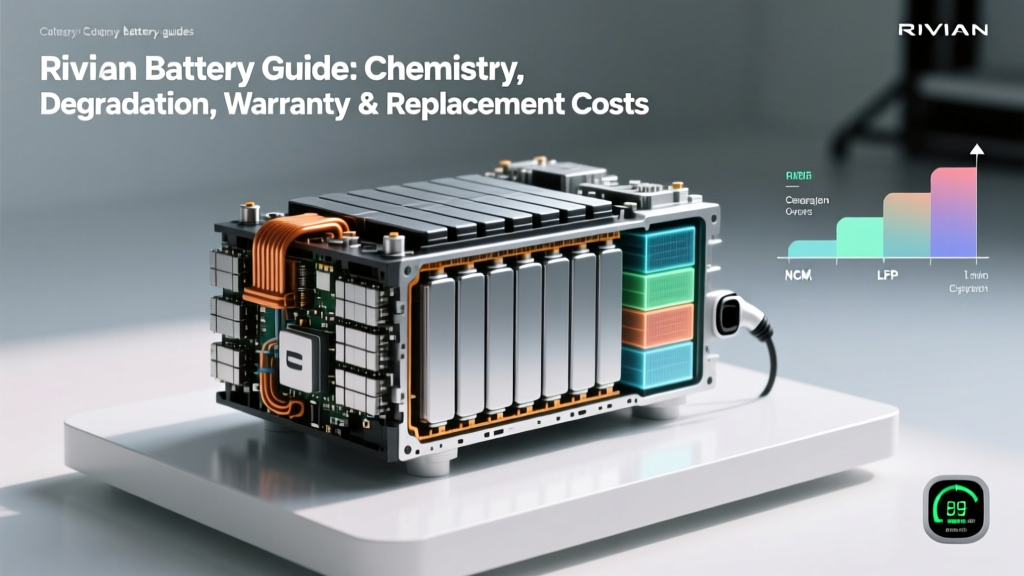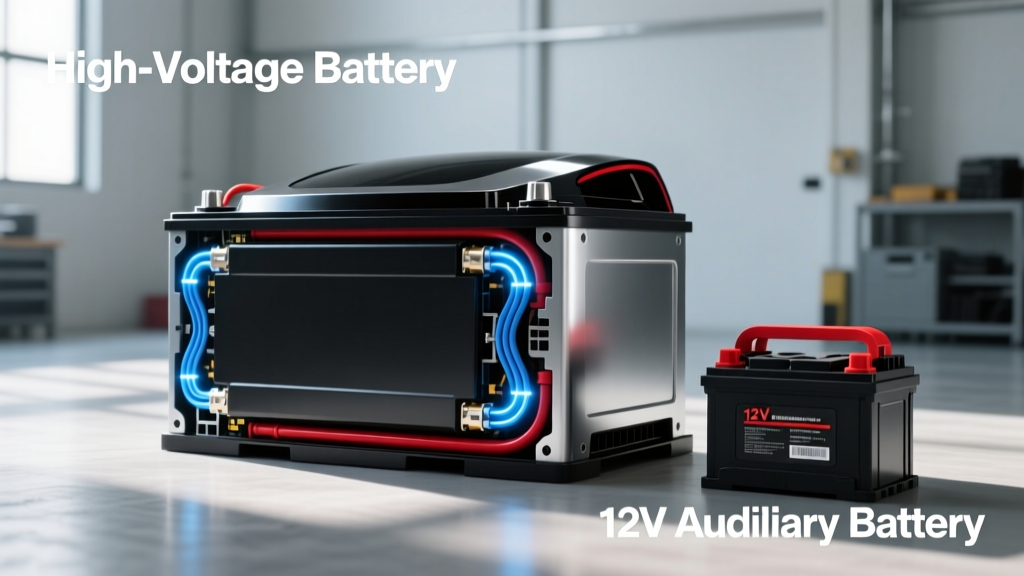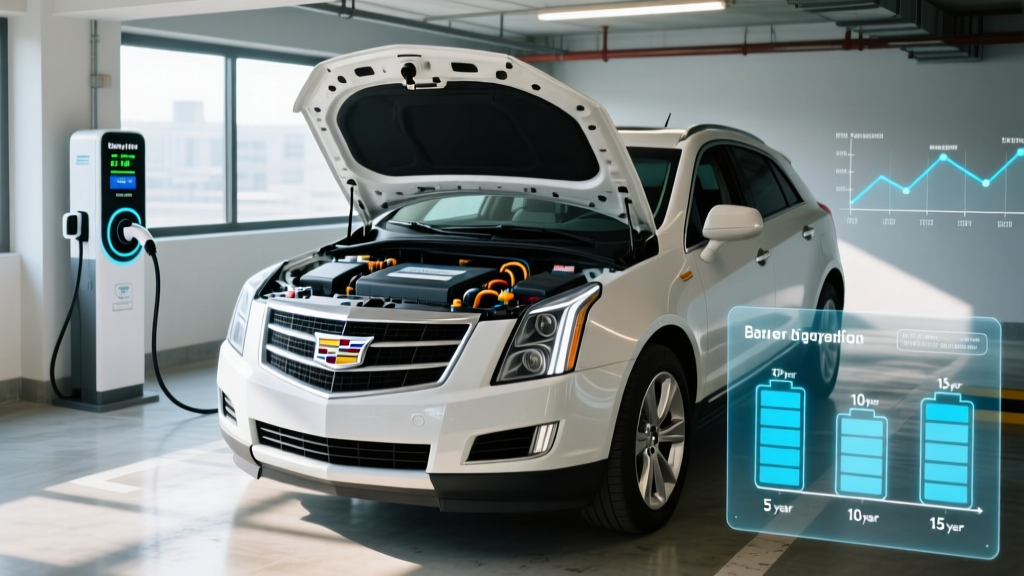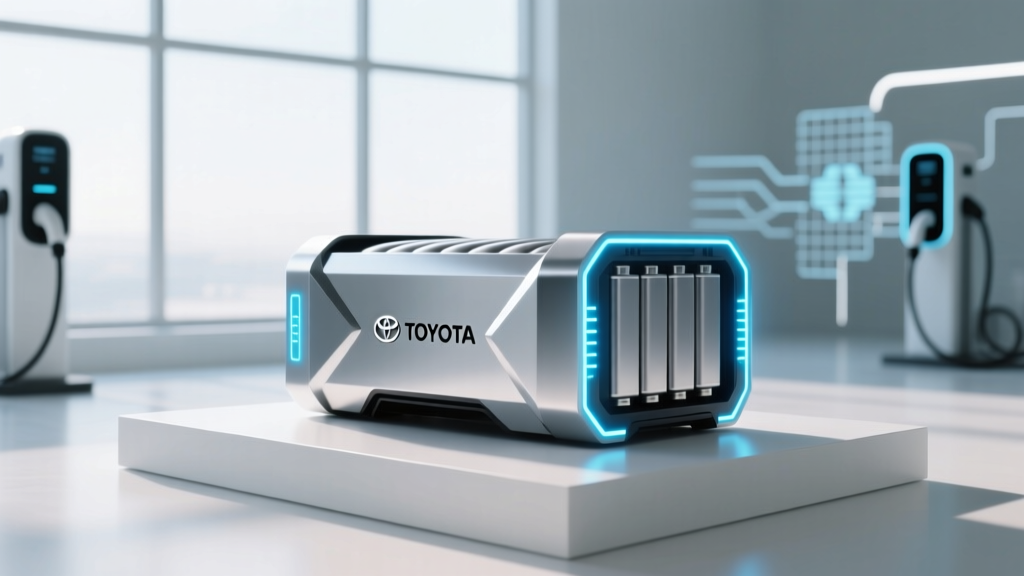
The promise of a Toyota solid-state EV battery has dominated headlines for years — longer range, faster charging, and improved safety over conventional lithium-ion cells. But as of 2026, Toyota's solid-state technology remains in limited, pre-commercial production, while today's EV buyers are choosing between proven chemistries like NMC (nickel manganese cobalt) and LFP (lithium iron phosphate). This guide cuts through the hype to explain what's actually available now, what solid-state batteries realistically deliver, and how to evaluate, protect, and eventually replace any EV battery on the market.
Where Toyota's Solid-State EV Battery Stands in 2026
Toyota and its battery partner Idemitsu Kosan have demonstrated solid-state prototype cells in lab settings, claiming targets of 750+ km (roughly 465 miles) of range and 10-minute fast-charge capability from 10–80%. However, Toyota has officially stated that mass production of full solid-state batteries for consumer EVs is not expected before 2027–2028, and even then, initial deployment will likely be limited to low-volume, premium models.
What Toyota has begun shipping in select 2025–2026 models (like the bZ4X successor and certain Lexus nameplates) is a bipolar NiMh and semi-solid-state hybrid battery architecture — not the true all-solid-state cell many buyers envision. These intermediate designs improve energy density and thermal stability over conventional pouch cells but do not eliminate the liquid electrolyte entirely.
The engineering hurdles remain significant: solid electrolyte materials (typically sulfide-based in Toyota's approach) are sensitive to moisture, difficult to manufacture at scale, and prone to interfacial cracking under repeated charge cycles. Until these manufacturing challenges are resolved at automotive volumes and cost targets, today's buyers should focus on the proven chemistries actually powering current EVs.
LFP vs NMC/NCA: The Battery Chemistry Decision
Every EV battery on sale in 2026 uses one of three dominant cathode chemistries. Understanding the trade-offs is essential before you buy, because chemistry affects range, longevity, cold-weather performance, and even your eligibility for the federal §30D tax credit.
| Attribute | LFP (Lithium Iron Phosphate) | NMC (Nickel Manganese Cobalt) | NCA (Nickel Cobalt Aluminum) |
|---|---|---|---|
| Energy Density | Lower (~160 Wh/kg cell-level) | Higher (~220–260 Wh/kg) | Highest (~260–300 Wh/kg) |
| Cycle Life | 3,000–5,000+ cycles | 1,000–2,000 cycles | 1,000–1,500 cycles |
| Cold-Weather Performance | Moderate loss (~15–25% range drop below 32°F) | Moderate loss (~10–20%) | Moderate loss (~10–20%) |
| Thermal Stability / Safety | Excellent — very resistant to thermal runaway | Good with active thermal management | Requires robust BMS/cooling |
| Cost per kWh | Lowest (~$90–110/kWh pack-level) | Mid (~$120–145/kWh) | Higher (~$130–155/kWh) |
| Common Vehicles (2026) | Tesla Model 3/Y RWD, Ford Mustang Mach-E Select, BYD models | Hyundai Ioniq 5/6, Kia EV6/EV9, VW ID.4, most GM Ultium | Tesla Model S/X/3/Y Long Range, Rivian, Lucid |
| §30D Tax Credit Sourcing | Often China-sourced cathode — may disqualify from full credit | Increasingly FEOC-compliant supply chains | Mixed — verify per model year |
Which is better? There is no universal winner. If you prioritize maximum range and performance in a lighter package, NMC/NCA delivers higher energy density. If you plan to keep the vehicle 10+ years, charge daily to 100%, or want the lowest replacement cost exposure, LFP's vastly superior cycle life and thermal stability make it the pragmatic choice — even if you sacrifice 15–30 miles of EPA-rated range for the same physical pack size.
How Long Do EV Batteries Actually Last?
The short answer: most EV traction batteries outlast the vehicle they're installed in. The long answer requires looking at real degradation data rather than worst-case anecdotes.
kWh (kilowatt-hours) measures the energy stored in your battery — think of it as the "tank size." kW (kilowatts) measures the rate of energy transfer — your charging speed. Degradation reduces usable kWh over time.
Based on fleet data aggregated by sources including Geotab's analysis of over 10,000 EVs and manufacturer-reported warranty claims, here is what typical degradation looks like:
- Year 1: ~2–3% capacity loss (initial formation loss)
- Year 2–3: ~1% per year (linear, gradual)
- Year 4–5: ~1% per year
- Year 6–8: ~0.5–1% per year (curve flattens)
- Average at 8 years / 100,000 miles: ~88–92% State of Health (SoH) retained
- Average at 10 years / 150,000 miles: ~82–88% SoH retained
Sources: Geotab fleet data (2024 update), Recurrent Auto battery reports, manufacturer warranty threshold data.
The critical insight: degradation is non-linear. Most loss occurs in the first year, then the curve flattens considerably. Vehicles with active liquid thermal management (Tesla, Hyundai/Kia E-GMP, GM Ultium, BMW) consistently outperform passively-cooled packs (older Nissan Leaf) by 5–10 percentage points of SoH at the same mileage.
LFP chemistry further flattens this curve. Tesla's LFP-equipped Model 3 RWD units have shown less than 5% degradation at 100,000 miles in Recurrent Auto's owner-contributed data — approaching the statistical noise of measurement variability.
What Does the Battery Warranty Actually Cover?
Federal law (EPA emissions warranty provisions) effectively mandates that manufacturers warrant EV batteries for a minimum of 8 years or 100,000 miles (whichever comes first). California Air Resources Board (CARB) states extend this to 10 years / 150,000 miles. But the capacity retention threshold — the SoH level at which the manufacturer must repair or replace — varies by brand.
| Manufacturer | Duration | Capacity Threshold | Notes |
|---|---|---|---|
| Tesla | 8 yr / 120,000 mi (Model 3/Y LR); 8 yr / 100,000 mi (RWD) | 70% SoH | Transferable to subsequent owners |
| Hyundai / Kia | 10 yr / 100,000 mi | 70% SoH | 10/100 in all 50 states (exceeds federal min) |
| GM (Chevrolet, Cadillac) | 8 yr / 100,000 mi | 70% SoH (Ultium) | Module-level replacement available |
| Ford | 8 yr / 100,000 mi | 70% SoH | Covers battery and hybrid components |
| Toyota (bZ series) | 8 yr / 100,000 mi | 70% SoH | Extended to 10 yr in CARB states |
| Volkswagen | 8 yr / 100,000 mi | 70% SoH | ID.4, ID.7; module service available |
| BMW | 8 yr / 100,000 mi | 70% SoH | Gen5 eDrive platform |
The 70% threshold is standard across the industry. If your battery drops below 70% of original usable capacity within the warranty period, the manufacturer must repair, replace, or recondition it at no cost. In practice, warranty claims for degradation are rare — the vast majority of EVs retain well above 80% SoH at the 8-year mark.
EV Battery Replacement Cost: What to Expect
This is the question that generates the most anxiety — and the most misinformation. Let's ground it in data.
When is replacement typically needed? For most owners, it isn't. The battery usually outlasts other major vehicle systems. Replacement becomes relevant only if: (a) a manufacturing defect causes premature cell failure outside normal degradation, (b) physical damage from a collision compromises the pack, or (c) you're keeping a vehicle past 15–20 years and 200,000+ miles.
| Vehicle / Pack Size | Battery Capacity | Full Pack Replacement | Module-Level Repair |
|---|---|---|---|
| Tesla Model 3 RWD (LFP) | ~60 kWh | $12,000–$16,000 | $2,000–$4,500 per module section |
| Tesla Model Y LR (NMC) | ~75 kWh | $14,000–$20,000 | $2,500–$5,000 per module |
| Hyundai Ioniq 5 (NMC) | 77.4 kWh | $15,000–$22,000 | $3,000–$5,500 per module |
| Ford F-150 Lightning Ext. Range | 131 kWh | $25,000–$35,000 | $4,000–$7,000 per module |
| Chevrolet Equinox EV (Ultium) | ~85 kWh | $14,000–$19,000 | $2,500–$5,000 per module |
Two critical trends are reducing these figures over time. First, pack-level costs have declined from ~$180/kWh in 2020 to roughly $110–130/kWh in 2026 (per BloombergNEF battery price surveys). Second, most manufacturers now support module-level repair — replacing only the degraded or failed cell modules rather than the entire pack. On GM's Ultium platform, for example, individual modules can be swapped at a fraction of the full-pack cost.
For context, a conventional vehicle's transmission replacement can cost $3,000–$7,000, and an engine rebuild $4,000–$10,000. Battery replacement costs, while higher in absolute terms for large packs, are increasingly comparable when amortized over 15+ years of service.
Factors That Accelerate (or Preserve) Battery Health
Not all miles are created equal when it comes to battery wear. Research from the National Renewable Energy Laboratory (NREL) and fleet operators confirms that the following factors have the largest measurable impact on long-term State of Health:
🔴 Accelerates Degradation
- Frequent DC fast charging above 150 kW — especially without preconditioning. Repeated high-C-rate charging stresses cell chemistry.
- Routinely charging to 100% and holding there — high SoC at elevated temperatures is the single worst combination for NMC/NCA cells.
- Deep discharges below 10% SoC — regularly running the battery near empty stresses the anode.
- Extreme heat exposure — sustained ambient temperatures above 95°F with the vehicle parked at high SoC. (Phoenix and Las Vegas fleet data shows measurably higher degradation.)
- Track use / repeated high-power discharge — sustained high-current draws generate internal heat beyond what thermal management can shed.
🟢 Preserves Battery Health
- Daily charging between 20–80% SoC — the "middle 60%" is where lithium-ion cells are happiest.
- Level 2 home charging (7–11 kW) for daily use — gentle C-rates produce minimal heat.
- Preconditioning before DC fast charging — warming the battery to optimal temperature (~77–95°F) reduces internal resistance and lithium plating risk.
- Garage parking in extreme climates — even a carport reduces thermal soak significantly.
- LFP owners: periodic 100% calibration charges — LFP's flat voltage curve makes SoC estimation difficult; Tesla and BYD recommend charging to 100% at least weekly for accurate range display.
How to Check and Monitor Your Battery's State of Health
State of Health (SoH) is the percentage of your battery's original usable capacity that remains available. A new battery starts at 100% SoH; a battery at 88% SoH that originally held 77.4 kWh now delivers ~68.1 kWh of usable energy.
Methods for checking SoH:
- OBD-II diagnostic apps: Tools like OBD2 scanners paired with apps such as Leaf Spy (Nissan), Teslamate/TeslaFi (Tesla), or Car Scanner (universal) can read the battery management system's SoH estimate directly.
- Manufacturer apps: Tesla's app shows rated range (which correlates to SoH). Hyundai's Bluelink and GM's myChevrolet include battery health indicators.
- Dealer diagnostic scan: Request a printout of the battery health report during service visits. This is the most authoritative measurement and is essential for warranty claims.
- Third-party services: Companies like Recurrent Auto offer free battery health reports by connecting to your vehicle's telematics data, providing degradation trend charts and peer comparisons.
For used-EV buyers, a SoH reading is as critical as a compression test on a gas car. Insist on a documented SoH figure before purchase. A vehicle showing 90%+ SoH at 50,000 miles is a strong indicator of careful ownership and proper charging habits.
Silicon Anodes and Other Emerging Battery Technologies
Beyond Toyota's solid-state program, several technologies are moving toward commercialization with more near-term impact:
- Silicon-dominant anodes: Companies like Sila Nanotechnologies and Group14 are supplying silicon-composite anode materials that boost energy density by 10–20% over graphite. These are beginning to appear in 2025–2026 model-year premium vehicles and offer a more incremental but realistic improvement path.
- Sodium-ion batteries: CATL and BYD have begun producing sodium-ion cells for lower-cost, shorter-range urban EVs. These trade energy density for dramatically lower material cost and better cold-weather performance, but are not expected in US-market vehicles before 2027.
- LMFP (lithium manganese iron phosphate): A hybrid chemistry that adds manganese to LFP for ~15% higher energy density while retaining LFP's safety and longevity advantages. Expected in several 2026–2027 Chinese-market models and potentially in US-market vehicles by 2028.
The realistic timeline for transformative battery technology reaching mainstream US vehicles remains 2028–2030 at the earliest. Buyers making decisions today should evaluate vehicles on the merits of current, proven chemistry — not the promise of future breakthroughs.
Frequently Asked Questions
How long do EV batteries last in years and miles?
Based on fleet data, most modern EV batteries with active thermal management retain 85–92% of original capacity at 100,000 miles and 8 years. Many will provide reliable service for 15–20 years and 200,000+ miles before reaching the 70% SoH threshold that typically defines "end of automotive life." Even at 70% SoH, the battery is not dead — it simply holds less energy, reducing range proportionally.
How much does it cost to replace an EV battery?
Full pack replacement ranges from roughly $12,000 for a ~60 kWh LFP pack to $35,000 for a 131 kWh extended-range pack. However, module-level repair — replacing only the degraded sections — typically costs $2,000–$7,000. Most batteries never require full replacement under normal ownership.
What does the EV battery warranty cover?
All major manufacturers warrant the high-voltage traction battery for at least 8 years / 100,000 miles against capacity loss below 70% SoH. This covers defects and abnormal degradation. It does not cover damage from collisions, improper modifications, or use of non-approved charging equipment. Warranty is typically transferable to subsequent owners.
How do I check my EV battery health?
Use an OBD-II scanner with an EV-compatible app (Car Scanner, Leaf Spy, TeslaFi), your manufacturer's connected-services app, or request a dealer diagnostic report. Third-party services like Recurrent Auto also provide free SoH trend analysis by connecting to your vehicle's data.
LFP vs NMC — which battery chemistry should I choose?
Choose LFP if you want maximum cycle life, can charge to 100% daily without worry, prioritize safety, and don't need maximum range from a given pack size. Choose NMC/NCA if you need the longest possible range, fastest acceleration, or live in a region with extreme cold where NMC's slightly better low-temperature performance matters. Both chemistries will comfortably outlast a typical ownership period.
Will Toyota's solid-state battery be available soon?
Toyota has indicated limited production may begin around 2027–2028, initially in premium Lexus models. Mass-market availability is not expected before 2029–2030. If you're buying an EV in 2026, solid-state is not a reason to wait — current LFP and NMC batteries are mature, well-warrantied, and cost-competitive.
Does fast charging damage my EV battery?
Occasional DC fast charging (road trips) has minimal measurable impact on modern batteries with active thermal management. However, daily reliance on 150+ kW DC fast charging without preconditioning can accelerate degradation by 1–3% over the battery's life compared to primarily Level 2 charging. Preconditioning — warming the battery before charging — significantly mitigates this effect.
Sources: EPA fueleconomy.gov, IRS §30D Clean Vehicle Credit, Geotab EV Battery Degradation Study, Recurrent Auto Battery Health Reports, BloombergNEF Battery Price Survey 2025. Tax credit eligibility varies by vehicle, buyer income, and battery sourcing — consult a tax professional and verify at irs.gov before purchasing.