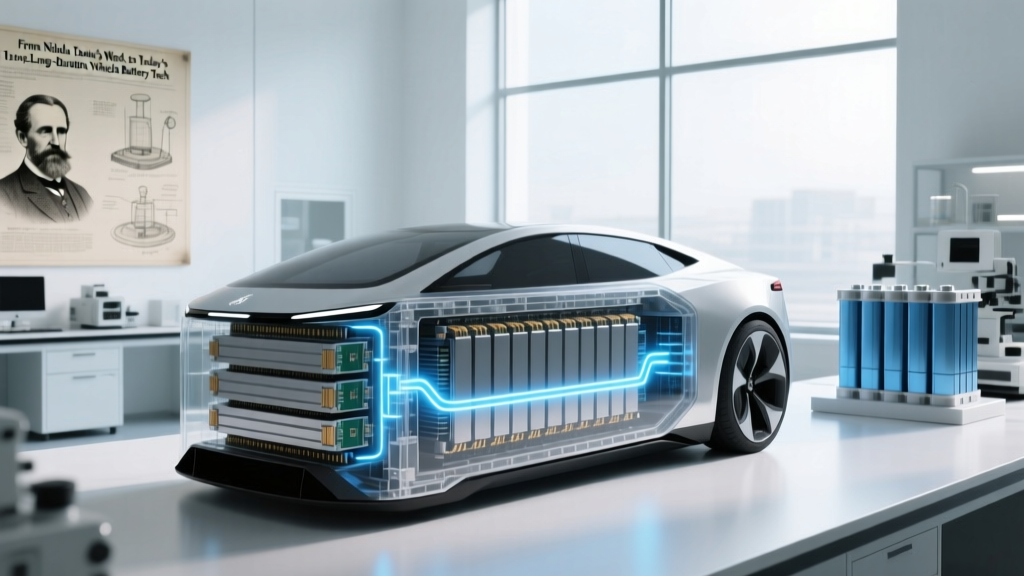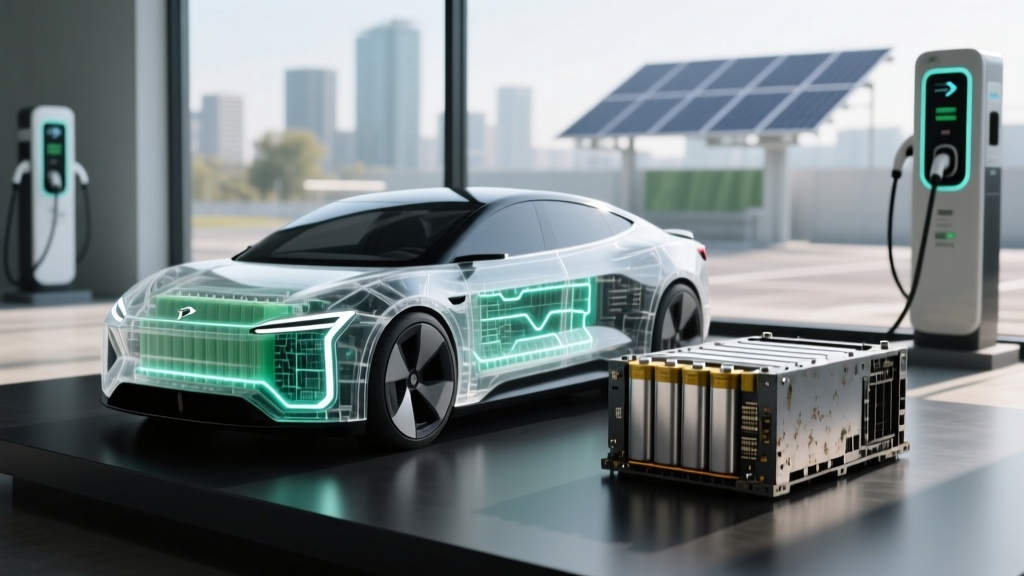
Headlines about Toyota all-solid-state EV batteries promise 745 miles of range and 10-minute fast charges. For EV shoppers and owners in 2026, the more pressing questions are practical: How long will my current lithium-ion pack last? What does a replacement cost? And when — if ever — will solid-state tech actually reach a dealership near me?
This guide cuts through the hype. We'll cover the battery chemistry you can buy today (LFP and NMC/NCA), real-world degradation data, warranty protections, replacement economics, and exactly where Toyota's solid-state program stands. Whether you're evaluating a 2026 EV purchase or planning long-term ownership, these are the numbers that matter.
LFP vs. NMC/NCA: The Chemistry You Can Buy Right Now
Every EV on sale in 2026 uses one of two lithium-ion cathode chemistries. Understanding the trade-offs is essential because chemistry determines your pack's energy density, lifespan, cold-weather behavior, and ultimately what you'll pay.
LFP (Lithium Iron Phosphate) has become the dominant chemistry for standard-range and budget-oriented EVs. Tesla uses LFP in Model 3 and Model Y Rear-Wheel Drive trims. Ford equips the Mustang Mach-E Select with LFP. BYD's entire lineup is LFP-based. The chemistry uses iron and phosphate — abundant, inexpensive materials — instead of cobalt and nickel.
NMC (Nickel Manganese Cobalt) and NCA (Nickel Cobalt Aluminum) power most long-range and performance EVs. The Hyundai Ioniq 5, Kia EV6, Chevrolet Silverado EV, BMW iX, and most 300+ mile vehicles use NMC variants. Higher nickel content increases energy density but raises material cost and supply-chain complexity.
| Attribute | LFP (Lithium Iron Phosphate) | NMC / NCA (Nickel-based) |
|---|---|---|
| Energy Density | ~160–180 Wh/kg (cell-level) | ~230–300 Wh/kg (cell-level) |
| Typical Cycle Life | 3,000–5,000+ full cycles | 1,000–2,500 full cycles |
| Cold Performance (–10°C / 14°F) | Greater range loss (~35–45%) | Better cold retention (~25–35% loss) |
| Recommended Daily SoC | Can charge to 100% regularly | Best kept at 80% daily; 100% for trips |
| Thermal Stability | Excellent — higher runaway threshold | Good — requires robust thermal management |
| Cost (cell-level) | ~$80–100/kWh | ~$110–140/kWh |
| Common Applications | Standard-range Tesla, BYD, Ford LFP trims | Long-range Hyundai, Kia, GM, BMW, Mercedes |
Which is better? It depends entirely on your use case. If you charge at home nightly, drive under 250 miles daily, and want maximum pack longevity, LFP is the pragmatic choice — charge it to 100%, don't worry about it, and expect minimal degradation over a decade. If you need 300+ miles of EPA range, tow frequently, or live in a cold climate where every percentage of range matters, NMC delivers the energy density you need. Neither is universally superior; they solve different problems.
How Long Do EV Batteries Actually Last?
The short answer: far longer than most buyers expect. The high-voltage traction battery in a modern EV is not like a laptop battery that degrades noticeably in two years. Automotive-grade packs are engineered with oversized buffers, active thermal management, and chemistry tuned for decade-plus service.
Here's what the data actually shows:
Real-World Degradation Data Points:
- Tesla fleet data (2025 Impact Report): Model S/X batteries retain approximately 88% of original capacity at 150,000 miles. Model 3/Y LFP packs show even slower degradation curves due to chemistry advantages.
- Geotab analysis (2024, 10,000+ vehicles): Average EV battery degradation across all brands is approximately 1.8% per year in the first four years, with the curve flattening significantly after the initial formation period.
- Consumer Reports survey data: The vast majority of EV owners report less than 10% range loss after 100,000 miles. Packs reaching 200,000+ miles with 80%+ capacity retention are common in fleet data.
- Taxi/ride-hail fleet data (Taycan, Model 3): High-mileage vehicles (200,000–300,000 miles) with frequent DC fast charging still show 75–85% capacity retention, demonstrating that modern thermal management mitigates fast-charge stress.
A realistic expectation for a 2026 EV battery: 85–92% capacity retention at 100,000 miles, and 78–88% at 200,000 miles, depending on chemistry, climate, and charging habits. Most EV batteries will outlast the vehicle's body, interior, and suspension components.
What the Battery Warranty Actually Covers
Federal law mandates a minimum 8-year / 100,000-mile warranty on EV battery packs (extended to 10 years / 150,000 miles in California and states that follow CARB standards). But the details matter enormously — specifically, the capacity retention threshold that triggers a warranty claim.
| Manufacturer | Warranty Term | Capacity Threshold | Notes |
|---|---|---|---|
| Tesla (Model 3/Y RWD — LFP) | 8 yr / 120,000 mi | 70% retention | LFP packs covered under standard terms |
| Tesla (Model 3/Y LR, S, X — NMC/NCA) | 8 yr / 120,000–150,000 mi | 70% retention | Varies by model |
| Hyundai / Kia | 10 yr / 100,000 mi | 70% retention | Among the longest terms in the industry |
| General Motors (Ultium) | 8 yr / 100,000 mi | 70% retention | Covers battery and drive components |
| Ford (Mach-E, F-150 Lightning) | 8 yr / 100,000 mi | 70% retention | LFP and NMC packs same terms |
| BMW | 8 yr / 100,000 mi | 70% retention | Transferable to second owner |
| Toyota (bZ4X) | 10 yr / 150,000 mi | 70% retention | Extended term reflects Toyota's hybrid-era confidence |
The 70% threshold is the industry standard. If your pack drops below 70% of its original capacity within the warranty period, the manufacturer must repair or replace it at no cost. In practice, warranty claims are rare — most packs never approach the threshold under normal use. According to fueleconomy.gov, EV battery failures within the warranty period are far less common than conventional transmission failures in gas vehicles.
EV Battery Replacement Cost: The Honest Numbers
This is where fear-mongering runs rampant, so let's be precise. A full battery pack replacement is expensive — but it's also uncommon, and the cost context matters.
| Vehicle / Pack Size | Battery Capacity | Estimated Replacement Cost | Typical Replacement Scenario |
|---|---|---|---|
| Tesla Model 3 RWD (LFP) | ~60 kWh | $10,000 – $14,000 | Out-of-warranty catastrophic failure (rare) |
| Hyundai Ioniq 5 (NMC) | ~77.4 kWh | $14,000 – $18,000 | Out-of-warranty failure or severe degradation |
| Ford F-150 Lightning Ext. Range | ~131 kWh | $22,000 – $30,000 | Largest consumer packs; most expensive replacements |
| Chevrolet Bolt EV/EUV | ~65 kWh | $9,000 – $14,000 | Post-recall packs; pricing stabilized |
| BMW iX xDrive50 | ~111.5 kWh | $20,000 – $28,000 | Premium segment; labor-intensive access |
Critical context: Most EV owners will never need a battery replacement. The pack is not a wear item like brake pads or tires. When replacements do occur outside warranty, they're typically due to physical damage (collision, flooding) rather than degradation. Third-party battery refurbishers and module-level repairs (replacing individual bad modules rather than the full pack) are increasingly available for $3,000–$8,000, reducing out-of-pocket costs significantly.
Cell prices continue to decline. Bloomberg NEF reports average pack-level prices fell below $130/kWh in 2025 and are projected to reach $100/kWh by 2027–2028, which will further reduce replacement costs over time.
Factors That Actually Affect Battery Lifespan
Not all miles are equal when it comes to battery wear. These are the factors — ranked by impact — that determine how quickly your pack degrades:
- State of Charge habits (highest impact): For NMC/NCA packs, routinely sitting at 100% SoC accelerates degradation. Daily charging to 80% and only going to 100% for road trips can add years of useful life. LFP packs are an exception — Toyota, Tesla, and BYD all recommend periodic 100% charges for LFP to maintain cell balancing accuracy.
- Extreme temperature exposure: Repeated exposure to ambient temperatures above 95°F (35°C) without preconditioning stresses the chemistry. Similarly, charging a cold-soaked NMC pack at high power without preconditioning causes lithium plating. Modern thermal management systems mitigate this substantially, but garage parking in extreme climates helps.
- DC fast charging frequency: Exclusive reliance on DC fast charging (3–4 sessions per week at 150+ kW) accelerates degradation compared to primarily Level 2 home charging. Fleet data suggests the penalty is approximately 2–4% additional loss over 100,000 miles — meaningful but not catastrophic.
- Depth of discharge cycles: Shallow cycles (charging from 30% to 80%) are gentler than deep cycles (10% to 100%). This is why larger battery packs degrade more slowly in absolute terms — each mile represents a shallower cycle.
- Calendar aging: Even a parked EV battery degrades over time. Packs stored at 50% SoC in moderate temperatures age slowest. Calendar aging typically accounts for 1–2% capacity loss per year regardless of mileage.
How to Check and Monitor Battery Health (SoH)
State of Health (SoH) is the metric that tells you what percentage of your battery's original capacity remains usable. Here's how to track it:
Built-in vehicle tools: Most 2026 EVs display battery health in the infotainment system or companion app. Tesla's app shows estimated range at 100% — compare this to the original EPA figure for a rough SoH proxy. Hyundai's Bluelink and Kia Connect provide battery conditioning status. The Nissan Leaf (one of the earliest mass-market EVs) displays battery health bars directly on the dash.
OBD-II diagnostic apps: Tools like LeafSpy (Nissan), Tessie (Tesla), and Car Scanner (universal) read the battery management system's internal SoH estimate via the OBD-II port. These typically report SoH within 1–2% accuracy and are the gold standard for used-EV buyers performing pre-purchase checks.
Dealer diagnostic reports: Any authorized dealer can pull a detailed battery health report showing individual module voltages, internal resistance, and overall SoH. Request this during routine service visits — it's often free and provides the most authoritative health snapshot.
Real-world range tracking: The simplest method: note your vehicle's range at 100% charge on the same route at similar temperatures over time. A consistent decline signals degradation. Account for seasonal variation — expect 10–20% less range in winter due to cabin heating and reduced battery efficiency, which is not degradation.
Toyota All-Solid-State EV Batteries: Where Things Stand in 2026
Toyota has been the most vocal proponent of solid-state battery technology for EVs, and the company's announcements have generated enormous interest. Here's a clear-eyed assessment of where the technology stands — and what it means for buyers.
What solid-state batteries promise: By replacing the liquid electrolyte in current lithium-ion cells with a solid material (sulfide-based, oxide-based, or polymer), solid-state batteries could deliver significantly higher energy density (potentially 400–500 Wh/kg at the cell level vs. ~250–300 Wh/kg for today's best NMC), faster charging (Toyota has claimed 10%–80% in under 10 minutes), improved safety (no flammable liquid electrolyte), and better cold-weather performance.
Toyota's announced timeline: Toyota has stated it aims to commercialize solid-state batteries in EVs by 2027–2028, initially in limited-production vehicles. The company holds over 1,300 solid-state battery patents — more than any other automaker or battery supplier. In partnership with Idemitsu Kosan, Toyota is developing sulfide-based solid electrolyte manufacturing processes.
The reality check: Solid-state batteries remain in the announced/preliminary stage for consumer EVs as of 2026. The engineering challenges are substantial:
- Manufacturing scale: Producing solid-state cells at automotive volume (millions per year) with consistent quality is unproven. Lab success does not equal factory success.
- Cost: Current solid-state prototypes are estimated at 4–10x the cost per kWh of mature lithium-ion production. Cost parity is years away even after initial commercialization.
- Interface degradation: The solid-solid interface between the electrolyte and electrodes can crack and degrade during charge/discharge cycling — a problem that doesn't exist with liquid electrolytes that flow and conform.
- Pressure requirements: Some solid-state designs require significant external pressure (stack pressure) to maintain electrode contact, adding weight and packaging complexity.
What this means for buyers: If you need an EV in 2026 or 2027, solid-state technology will not be a factor in your purchase decision. Today's lithium-ion packs (LFP and NMC) are mature, well-understood, and backed by comprehensive warranties. Toyota's own current EV, the bZ4X, uses conventional NMC lithium-ion cells. Waiting for solid-state means waiting at minimum until 2028–2029 for limited availability, likely in a premium-priced Toyota or Lexus model, with broad-market availability not expected before 2030 at the earliest.
Other solid-state players include QuantumScape (partnered with Volkswagen), Solid Power (partnered with BMW and Ford), and Samsung SDI. None have reached mass production for consumer vehicles.
Battery Care Best Practices: Maximizing Your Pack's Life
Based on current degradation research and fleet data, these practices will help any EV owner maximize battery longevity:
- Set your daily charge limit to 80% for NMC/NCA vehicles; 100% is fine for LFP (check your owner's manual for chemistry-specific guidance).
- Precondition before fast charging. Most 2026 EVs automatically precondition when you navigate to a DC fast charger. This warms the pack to optimal temperature and dramatically reduces charge-induced stress.
- Avoid prolonged storage at extreme SoC. If your EV will sit unused for more than two weeks, leave it at approximately 50% SoC.
- Use Level 2 home charging as your primary method. Overnight Level 2 charging at 7–11 kW is gentle on the pack and eliminates the need for frequent DC fast sessions.
- Don't obsess about the last 1%. The difference between meticulous and reasonable battery care is typically 3–5% SoH over a decade — perhaps 10–15 miles of range. Drive the car.
Bottom line for 2026 EV buyers: Today's lithium-ion batteries — whether LFP or NMC — are proven technology with predictable degradation, strong warranty coverage, and declining replacement costs. Toyota all-solid-state EV batteries represent a genuine technological advance on the horizon, but they remain 2–4 years from limited commercialization and 4+ years from broad market availability at competitive prices. The best EV battery is the one in the car that meets your needs today, maintained with reasonable care.
Frequently Asked Questions
How long do EV batteries last in years and miles?
Most modern EV batteries are engineered for 15–20 years or 200,000+ miles before reaching 70–80% of original capacity. Fleet data from Tesla, Geotab, and ride-hail operators consistently shows 85–92% retention at 100,000 miles. The battery will likely outlast other major vehicle components.
How much does an EV battery cost to replace?
Full pack replacement ranges from approximately $9,000 for smaller packs (Chevrolet Bolt, ~65 kWh) to $30,000 for the largest (Ford F-150 Lightning Extended Range, ~131 kWh). However, most owners never need a replacement — out-of-warranty failures are rare, and module-level repairs cost significantly less ($3,000–$8,000).
What does the EV battery warranty cover?
All 2026 EVs include a minimum 8-year/100,000-mile battery warranty (10 years/150,000 miles in CARB states). Coverage applies if the pack drops below 70% of original capacity. The warranty covers repair or replacement at no cost and typically transfers to second owners.
How do I check my EV battery's State of Health?
Use your vehicle's built-in app or infotainment display for a basic health estimate. For more precision, OBD-II tools like Tessie (Tesla) or LeafSpy (Nissan) read the BMS-reported SoH directly. Dealer diagnostic reports provide the most detailed module-level analysis. Simply tracking your 100%-charge range over time at consistent temperatures also reveals degradation trends.
LFP vs. NMC — which chemistry is better for me?
Choose LFP if you want maximum cycle life, can charge to 100% daily without worry, drive under 250 miles between charges, and prioritize lower cost. Choose NMC/NCA if you need 300+ miles of EPA range, live in a cold climate where energy density matters, or tow frequently. Both chemistries will comfortably last the life of the vehicle with reasonable care.
Should I wait for Toyota's solid-state battery EVs?
Toyota all-solid-state EV batteries are not available in any production vehicle as of 2026. Toyota's announced timeline targets limited commercialization in 2027–2028, with broad availability unlikely before 2030. If you need an EV now, today's lithium-ion technology is mature, reliable, and well-warrantied. Waiting for solid-state means a multi-year delay with no guarantee of affordable pricing at launch.