Every few months, headlines reignite around the Toyota new solid-state battery — a technology the automaker has been developing for years with promises of 600+ miles of range and 10-minute charge times. As of early 2026, Toyota has announced limited commercialization in select hybrid models and continues to scale production, but the vast majority of EVs on sale today still rely on lithium-ion batteries using either NMC (nickel manganese cobalt) or LFP (lithium iron phosphate) chemistries.
Understanding what's real today versus what's on the horizon matters enormously if you're shopping for an EV now. This guide breaks down the chemistry trade-offs, degradation realities, warranty protections, and replacement economics that define battery ownership — and explains where solid-state tech actually stands.
LFP vs NMC: The Chemistry Trade-Off That Defines Your EV
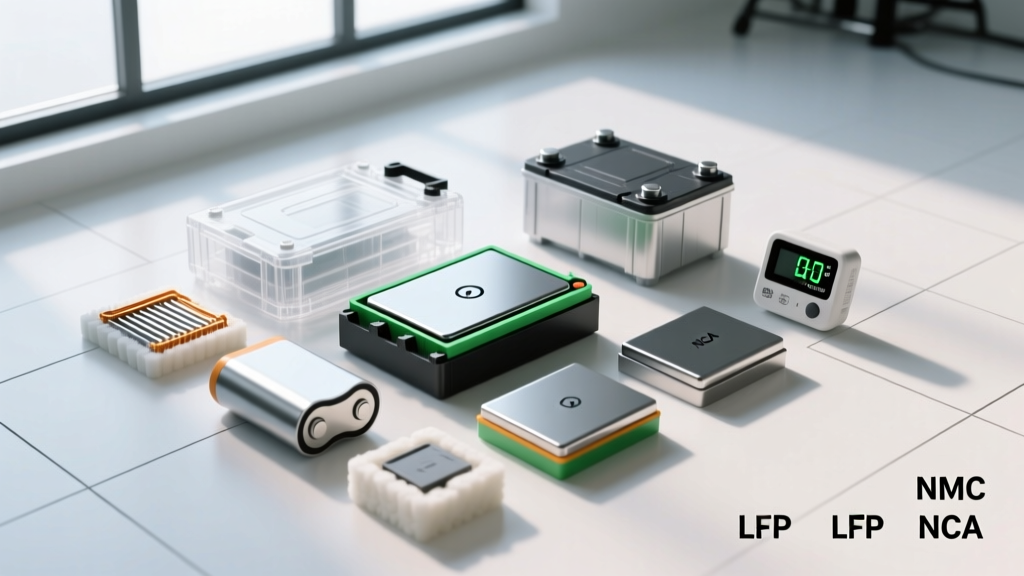
Every EV battery stores energy in lithium-ion cells, but the cathode chemistry determines how much energy it holds, how long it lasts, and how it handles cold weather. The two dominant chemistries in 2026 are NMC/NCA (nickel manganese cobalt / nickel cobalt aluminum) and LFP (lithium iron phosphate). Here's how they compare on the metrics that matter:
| Attribute | LFP (Lithium Iron Phosphate) | NMC/NCA (Nickel-Based) |
|---|---|---|
| Energy Density | ~160–180 Wh/kg (lower) | ~220–300 Wh/kg (higher) |
| Typical Range Impact | Shorter range for same pack size | Longer range, lighter pack |
| Cycle Life | 3,000–5,000+ cycles | 1,500–2,500 cycles |
| Cold-Weather Performance | More range loss in freezing temps | Better cold-weather retention |
| Cost per kWh | ~$90–$110/kWh (cheaper) | ~$120–$150/kWh (more expensive) |
| Thermal Stability | Higher (less prone to thermal runaway) | Lower (requires more cooling) |
| Common Vehicles (2026) | Tesla Model 3/Y RWD, Ford Mustang Mach-E Select, many Chinese-market EVs | Tesla Long Range, Hyundai Ioniq 5/6, Rivian, BMW iX, most AWD/LR trims |
| Charging to 100% | Recommended periodically for calibration | Better kept at 80% daily; 100% for trips only |
The practical takeaway: If you prioritize maximum range and all-weather capability, NMC/NCA is the better fit. If you plan to own the vehicle for 10+ years, drive mostly in moderate climates, and value lower upfront cost and longer cycle life, LFP is increasingly compelling. Tesla's switch to LFP in its base Model 3 and Model Y RWD trims reflects this trade-off — you give up ~30 miles of EPA range but gain a battery that can tolerate daily 100% charging and thousands more cycles.
How Long Do EV Batteries Actually Last?
The single most common fear among prospective EV buyers is that the battery will die prematurely, leaving them with a $15,000+ replacement bill. The data tells a far less alarming story.
Based on fleet data from Tesla's 2025 Impact Report, real-world studies by Geotab across 10,000+ vehicles, and warranty claim rates published by major automakers, here's what degradation actually looks like:
- Year 1 / 15,000 miles: ~2–4% capacity loss (initial drop, then stabilizes)
- Year 3 / 45,000 miles: ~5–8% total loss
- Year 5 / 75,000 miles: ~8–12% total loss
- Year 8 / 120,000 miles: ~10–15% total loss (within warranty threshold for most)
- Year 10 / 150,000 miles: ~12–18% total loss (varies by chemistry and care)
Sources: Tesla Impact Report 2025, Geotab longitudinal study, manufacturer warranty claim data. NMC batteries in hot climates with frequent DC fast charging trend toward the higher end of these ranges; LFP batteries in moderate climates trend toward the lower end.
For context, a 15% degradation on a vehicle with 320 miles of EPA-rated range means you'd still have ~272 miles available — more than sufficient for the vast majority of drivers. Modern EV batteries are engineered to outlast the vehicles they're installed in for most first owners.
What Does the Battery Warranty Actually Cover?
Federal regulations mandate a minimum EV battery warranty of 8 years / 100,000 miles (10 years / 150,000 miles in CARB states like California, New York, and Massachusetts). Most major automakers meet or exceed this baseline. Here's how the leading brands structure coverage in 2026:
| Manufacturer | Warranty Term | Capacity Retention Threshold | Notes |
|---|---|---|---|
| Tesla (Model 3/Y) | 8 yr / 120,000 mi (LR/AWD); 8 yr / 100,000 mi (RWD) | 70% | Includes battery and drive unit |
| Hyundai / Kia | 10 yr / 100,000 mi | 70% | Among the longest terms |
| Ford (Mach-E, F-150 Lightning) | 8 yr / 100,000 mi | 70% | Covers battery components and capacity |
| GM (Ultium platform) | 8 yr / 100,000 mi | 70% (some trims 60% for fleet) | Varies by model |
| Rivian | 8 yr / 175,000 mi | 70% | Higher mileage cap than most |
| BMW | 8 yr / 100,000 mi | 70% | Includes high-voltage battery only |
What triggers a warranty claim: If your battery's usable capacity drops below the stated threshold (typically 70% of original) within the warranty period, the manufacturer must repair or replace it at no cost. In practice, very few EVs fall below 70% within 8 years under normal use. The warranty also covers manufacturing defects, module failures, and thermal management system issues — not just gradual capacity loss.
What it doesn't cover: Damage from accidents, flooding, improper modifications, or using non-approved charging equipment. Some warranties also exclude "consumable" capacity loss if the owner consistently charges to 100% on NMC batteries or exclusively uses DC fast charging — though enforcing this is rare.
EV Battery Replacement Cost: What You'd Actually Pay
If your battery falls outside the warranty window and needs replacement, costs vary significantly by vehicle, battery size, and whether you need a full pack or individual module repair:
| Vehicle | Battery Size | Full Pack Replacement | Module-Level Repair |
|---|---|---|---|
| Tesla Model 3 (LFP, 60 kWh) | 60 kWh | $12,000–$16,000 | $2,000–$5,000 |
| Tesla Model Y LR (NMC, 82 kWh) | 82 kWh | $16,000–$22,000 | $3,000–$7,000 |
| Hyundai Ioniq 5 (77.4 kWh) | 77.4 kWh | $14,000–$20,000 | $2,500–$6,000 |
| Ford F-150 Lightning Ext. Range (131 kWh) | 131 kWh | $22,000–$32,000 | $4,000–$10,000 |
| Chevrolet Bolt EV (65 kWh) | 65 kWh | $10,000–$14,000 | $2,000–$4,500 |
| Rivian R1T (Large, 135 kWh) | 135 kWh | $25,000–$35,000 | $5,000–$12,000 |
Important context: Module-level repairs are increasingly common and far cheaper than full pack replacements. A single degraded or failed module can often be swapped without replacing the entire battery. Independent EV repair shops (a growing segment) also offer refurbished packs at 30–50% below OEM dealer pricing.
The reality is that full battery replacements remain uncommon. According to data cited by Consumer Reports, fewer than 5% of EVs require battery replacement within the first 10 years, and the vast majority of those are covered under warranty.
Where Toyota's Solid-State Battery Actually Stands in 2026
Toyota has been the most vocal automaker about solid-state battery development, and the search interest around "Toyota new solid-state battery" reflects genuine curiosity about a technology that could reshape EV ownership. Here's the honest, current picture:
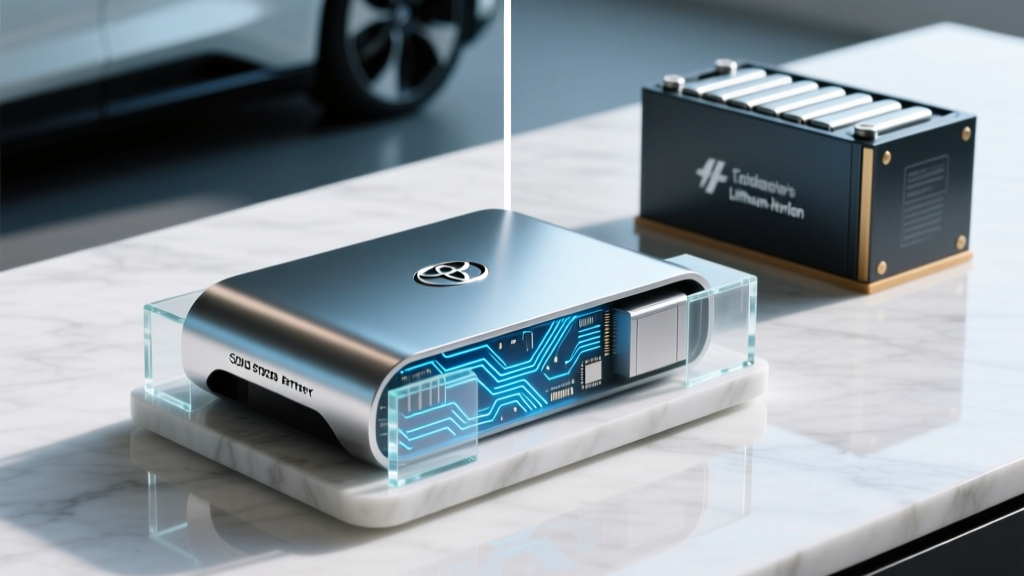
What Toyota has announced: Toyota holds over 1,300 patents related to solid-state battery technology — more than any other automaker. The company has stated it aims to commercialize solid-state batteries in EVs by 2027–2028, with initial targets of ~750 km (466 miles) of range and 10-minute 10–80% DC fast charging capability. In 2025, Toyota began limited deployment of an early-generation solid-state battery in a hybrid application (not a full BEV) in the Japanese market.
What's still uncertain:
- Manufacturing scale: Solid-state cells remain extremely expensive to produce at automotive volumes. Yield rates and dry-room manufacturing requirements are significant barriers.
- Cost parity: Current estimates place solid-state cell costs at 2–4x the price of equivalent NMC cells. Mass-market affordability is likely years away.
- Durability data: Long-term cycle life and degradation characteristics of solid-state cells under real-world conditions remain largely unpublished.
- Availability: Toyota has indicated initial BEV applications will likely debut in Lexus or premium models before reaching mainstream Toyota vehicles.
Other emerging technologies worth monitoring include silicon-anode batteries (which increase energy density by replacing graphite anodes with silicon — companies like Sila Nanotechnologies are supplying cells for the Mercedes G-Class EV) and sodium-ion batteries (lower cost, lower energy density, suited for city cars and stationary storage). Neither is widely available in U.S. EVs yet.
Factors That Accelerate Battery Degradation (and How to Avoid Them)
Not all EV batteries age equally. The gap between a well-maintained pack and an abused one can mean the difference between 8% and 20% degradation over five years. Here are the factors with the largest measurable impact:
- Limit DC fast charging to road trips. Frequent use of 150+ kW DC chargers generates heat that accelerates cell wear. Weekly Level 2 home charging is far gentler. Studies show vehicles that DC fast charge more than 3x per week degrade ~2–3% faster over 5 years.
- Avoid sustained 100% or 0% state of charge. For NMC/NCA batteries, keep daily charging between 20–80%. LFP batteries tolerate 100% better and benefit from periodic full charges for BMS calibration.
- Precondition before fast charging. Most modern EVs automatically precondition the battery when you navigate to a charger. This brings cells to optimal temperature (35–45°C) and reduces stress. If your EV doesn't auto-precondition, enable it manually.
- Park in shade or garages during extreme heat. Battery degradation accelerates significantly above 40°C (104°F) ambient. Vehicles in Phoenix, Houston, and similar climates show measurably higher degradation rates.
- Don't let the car sit at 0% for extended periods. If storing the vehicle, leave it at ~50% SoC. A fully depleted battery left uncharged for weeks can suffer irreversible cell damage.
- Use the vehicle's scheduled/optimized charging feature. Most EVs let you set a target SoC and charging window — use them to avoid unnecessary top-offs.
How to Check Your EV's Battery Health (State of Health)
State of Health (SoH) is the metric that tells you how much capacity your battery retains compared to when it was new. A SoH of 92% means your pack holds 92% of its original kWh capacity. Here's how to monitor it:
1. In-vehicle diagnostics: Some EVs display SoH or battery health directly. Nissan Leaf has long shown a capacity bar gauge. Tesla's service menu (accessed via the software screen) includes battery health data. Hyundai/Kia models in some markets show SoH in the cluster settings.
2. Manufacturer apps: The Tesla app, FordPass, Hyundai Bluelink, and myChevrolet apps increasingly include battery health summaries or will flag degradation concerns proactively.
3. OBD-II diagnostic tools: Third-party apps like Leaf Spy (for Nissan), Scan My Tesla, and ABRP's OBD integration can read detailed cell-level data including SoH, individual cell voltages, and pack temperature. A $30–$50 OBD-II Bluetooth dongle paired with the right app provides more data than most dealer service departments share willingly.
4. Dealer inspection: Request a battery health report during routine service. Most dealers can pull a detailed SoH readout, though they don't always volunteer it. Ask specifically for "state of health percentage" and "cell voltage delta."
When to be concerned: If your SoH drops below 80% within the warranty period, you likely have grounds for a warranty claim. A sudden drop (e.g., 3% in a single month) may indicate a cell or module failure that warrants immediate dealer inspection.
Frequently Asked Questions
How long do EV batteries last in years and miles?
Most modern EV batteries retain 70–85% of their original capacity at 150,000 miles / 10 years based on fleet data. With proper care (moderate charging habits, limited DC fast charging), many packs will function well beyond 200,000 miles before reaching the 70% warranty threshold. LFP chemistry packs in moderate climates show the longest lifespans.
How much does it cost to replace an EV battery in 2026?
Full pack replacements range from ~$10,000 for a Chevrolet Bolt to $35,000 for a Rivian R1T with the large pack. However, module-level repairs — which are increasingly common — cost $2,000–$12,000 depending on the vehicle. Fewer than 5% of EVs need battery replacement within the first decade, and most are covered under the 8-year/100,000-mile warranty.
What does the EV battery warranty actually cover?
Federal law requires a minimum 8-year/100,000-mile warranty on EV batteries (10 years/150,000 miles in CARB states). Coverage includes capacity loss below a stated threshold (usually 70% of original), manufacturing defects, and component failures in the battery and often the drive unit. It does not cover accident damage, flooding, or unauthorized modifications.
Is LFP or NMC better for my EV?
It depends on your priorities. NMC/NCA offers higher energy density (more range in a lighter pack) and better cold-weather performance — ideal for long-range and AWD models. LFP offers longer cycle life, lower cost, better thermal safety, and tolerance for daily 100% charging — ideal for standard-range models and owners who plan to keep the vehicle 10+ years. Neither is universally "better"; they serve different use cases.
Will Toyota's solid-state battery be available soon?
Toyota targets 2027–2028 for initial solid-state battery deployment in production EVs, likely starting with premium Lexus models. As of early 2026, no U.S.-market EV uses solid-state technology. Manufacturing scale, cost, and long-term durability data remain open questions. Buyers shopping today should evaluate vehicles based on proven LFP and NMC battery technology.
Does fast charging damage my EV battery?
DC fast charging generates more heat than Level 2 charging, which accelerates degradation over time. Occasional fast charging (road trips, a few times per month) has a minimal impact. Daily fast charging can add ~2–3% additional degradation over 5 years compared to primarily Level 2 charging. Preconditioning the battery before charging and avoiding charging above 80% at DC stations helps mitigate the effect.