Toyota's Solid-State Battery: Breakthrough or Vaporware?
If you follow EV news, you've seen the headlines: Toyota's solid-state battery will deliver up to 750 miles of range, charge from 10% to 80% in under 10 minutes, and fundamentally reshape electric transportation. Toyota has filed more solid-state battery patents than any other automaker, and in 2023, the company announced a commercialization roadmap targeting limited production by 2027–2028. As of 2026, however, no Toyota vehicle with a solid-state traction battery is available for purchase anywhere in the world.
The technology is real. Toyota and its battery partner Idemitsu Kosan have demonstrated prototype cells and are building a pilot production line. But moving from lab-scale cells to mass-manufactured, cost-competitive battery packs that survive thousands of charge cycles in real-world conditions is a different engineering challenge entirely. Toyota's own executives have acknowledged that initial solid-state packs will likely debut in limited-run, premium vehicles before scaling to mainstream models.
So what does this mean for EV buyers today? You're going to buy a car with a lithium-ion battery using either NMC (nickel manganese cobalt) or LFP (lithium iron phosphate) chemistry. Understanding how those batteries actually perform, degrade, and cost over a decade of ownership is far more useful than waiting for a technology that remains 2–4 years from showrooms — and likely several more years from affordability.
Today's Battery Chemistry: LFP vs NMC vs NCA
Every EV battery sold today uses a lithium-ion cell architecture, but the cathode chemistry varies significantly. The two dominant chemistries in the US market are NMC (nickel manganese cobalt) and LFP (lithium iron phosphate). Tesla also uses NCA (nickel cobalt aluminum) in some Performance variants. Each chemistry involves distinct engineering trade-offs across energy density, longevity, cost, and temperature tolerance.
| Attribute | LFP (Lithium Iron Phosphate) | NMC (Nickel Manganese Cobalt) | NCA (Nickel Cobalt Aluminum) |
|---|---|---|---|
| Energy Density | Lower (~160 Wh/kg cell-level) | Higher (~220–260 Wh/kg) | Highest (~260–300 Wh/kg) |
| Cycle Life | 3,000–5,000+ cycles | 1,000–2,000 cycles | 800–1,500 cycles |
| Recommended Daily SoC | 100% (no degradation penalty) | 80% (for daily use) | 80% (for daily use) |
| Cold-Weather Performance | More range loss in cold (~30–40%) | Moderate cold loss (~20–30%) | Moderate cold loss (~20–30%) |
| Cost per kWh | Lower (no cobalt or nickel) | Higher (cobalt/nickel supply chain) | Higher (cobalt/nickel) |
| Thermal Stability | Excellent (very low thermal runaway risk) | Good (requires robust BMS) | Good (requires robust BMS) |
| Common Vehicles (2026) | Tesla Model 3/Y RWD, Ford Mustang Mach-E Select, Rivian Standard | Hyundai Ioniq 5/6, Kia EV6/EV9, BMW iX, VW ID.4 AWD | Tesla Model S/X, some Performance variants |
The practical takeaway: If you charge at home daily and want maximum battery lifespan with minimal babysitting, LFP is the stronger choice — you can charge to 100% every night without accelerating degradation. If you need maximum range in a lighter vehicle or live in a cold climate where every mile counts in winter, NMC's higher energy density is the better trade. Neither chemistry is universally "better"; the right choice depends on your driving pattern and climate.
How Long Do EV Batteries Actually Last?
The short answer: longer than most buyers expect, and in the majority of cases, longer than the rest of the vehicle. Data aggregated from fleets, owner surveys, and manufacturer reports consistently shows that modern liquid-cooled EV batteries lose roughly 1–2% of total capacity per year under normal use.
- Tesla Model 3/Y (NMC and LFP): Tesla's 2024 Impact Report showed the fleet averages approximately 12% degradation at 200,000 miles. LFP variants show slower early-life degradation curves.
- Nissan Leaf (passive air-cooled, 2011–2017): Early Leafs without active thermal management showed 20–30% degradation at 80,000–100,000 miles, especially in hot climates — a cautionary data point for why liquid cooling matters.
- Chevrolet Bolt EV/EUV (NMC, liquid-cooled): Owner-reported data on forums and Recurrent Auto studies show approximately 5–8% degradation at 100,000 miles.
- Hyundai Ioniq 5 (NMC, 77.4 kWh): Limited long-term fleet data available yet (launched 2022), but early indicators from Recurrent Auto suggest 3–5% loss at 50,000 miles.
- Taxi/fleet Tesla Model 3: Multiple European fleet operators report 85–90% State of Health (SoH) at 150,000–180,000 miles with frequent DC fast charging.
At a 1.5% annual loss rate, a 10-year-old EV battery would retain approximately 85% of its original capacity. For a vehicle with a 300-mile EPA range when new, that means roughly 255 miles of range at the 10-year mark — still highly usable for daily driving. Catastrophic battery failure (sudden, total loss of function) is rare in liquid-cooled packs and is typically covered under warranty.
What Does the Battery Warranty Actually Cover?
Federal law mandates that EV batteries carry a minimum warranty of 8 years or 100,000 miles (whichever comes first). In California and states that have adopted California Air Resources Board (CARB) emissions standards — including Colorado, Maine, Massachusetts, New York, Oregon, Vermont, and Washington — the mandate extends to 10 years or 150,000 miles.
| Manufacturer | Duration | Mileage | Capacity Retention Threshold |
|---|---|---|---|
| Tesla (Model 3/Y LFP) | 8 years | 100,000 mi | 70% |
| Tesla (Model 3/Y Long Range) | 8 years | 120,000 mi | 70% |
| Hyundai / Kia | 10 years | 100,000 mi | 70% |
| Ford (Mach-E, F-150 Lightning) | 8 years | 100,000 mi | 70% |
| GM (Ultium-based: Equinox EV, Blazer EV, Silverado EV) | 8 years | 100,000 mi | 70% (some models 60%) |
| Rivian | 8 years | 175,000 mi | 70% |
| BMW (iX, i4) | 8 years | 100,000 mi | 70% |
The critical detail is the capacity retention threshold. Most manufacturers warrant that the battery will retain at least 70% of its original capacity during the warranty period. If your 300-mile EV drops below 210 miles of range within 8 years/100,000 miles, the manufacturer must repair or replace the battery at no cost. Normal gradual degradation above that threshold is considered expected wear and is not covered.
Warranty claims for total battery failure (cell shorts, BMS faults, coolant intrusion) are separate from degradation claims and are typically covered regardless of capacity percentage.
EV Battery Replacement Costs: The Real Numbers
Out-of-warranty battery replacement is the single largest potential ownership cost for an EV — and the number that generates the most anxiety. Here's what the data actually shows:
| Vehicle | Battery Size | Chemistry | Estimated Replacement Cost |
|---|---|---|---|
| Tesla Model 3 RWD | ~60 kWh | LFP | $12,000–$16,000 |
| Tesla Model Y Long Range | ~75 kWh | NMC | $14,000–$20,000 |
| Hyundai Ioniq 5 | 77.4 kWh | NMC | $15,000–$22,000 |
| Ford F-150 Lightning (Extended Range) | ~131 kWh | NMC | $25,000–$35,000 |
| Chevrolet Bolt EV | 65 kWh | NMC | $14,000–$18,000 |
| Rivian R1T (Large Pack) | ~135 kWh | NMC | $28,000–$40,000 |
These are significant numbers, but context matters enormously. According to data from Recurrent Auto and warranty claim rates published by major automakers, fewer than 2% of EV batteries require full replacement due to failure, and the vast majority of degradation-related claims occur within the warranty period. The average age of vehicles needing out-of-warranty replacement is 12–15 years — at which point the battery cost must be weighed against the vehicle's residual value, just as you would weigh a $5,000 transmission rebuild on a 14-year-old gas car.
Battery cell prices have declined from approximately $400/kWh in 2010 to roughly $100–$130/kWh at the pack level in 2025–2026, according to BloombergNEF tracking. This trend means replacement costs will continue to decrease over the life of any EV purchased today. Additionally, a growing third-party battery refurbishment market is emerging, offering module-level repairs (replacing individual degraded modules rather than the entire pack) for $3,000–$8,000 on common platforms.
What Affects Battery Life — and What You Can Control
Not all miles and charge cycles are created equal. The following factors have measurable, data-backed effects on long-term battery health:
- Frequent DC fast charging above 150 kW: Occasional road-trip fast charging is fine. Daily reliance on 250–350 kW DC charging generates sustained high temperatures that stress cells. Data from taxi fleets shows ~2–4% additional degradation over 100,000 miles for vehicles that DC fast charge daily vs. Level 2 home charging.
- Sustained high State of Charge (NMC/NCA only): Storing an NMC battery at 100% SoC for days or weeks accelerates electrolyte decomposition. LFP batteries do not share this vulnerability and can be stored at 100%.
- Deep discharges below 10%: Regularly draining the battery to near-zero stresses the anode. Most BMS systems maintain a hidden bottom buffer (typically 2–5% of gross capacity), but habitually running the battery very low still marginally increases wear.
- Extreme heat exposure: Ambient temperatures above 95°F (35°C) combined with high SoC is the worst-case scenario for calendar aging. Vehicles parked outdoors in Phoenix or Houston for extended periods show measurably faster degradation than garage-kept vehicles in temperate climates.
- Extreme cold charging without preconditioning: Charging a cold battery (below 32°F/0°C) at high power can cause lithium plating on the anode. Most modern EVs with thermal management precondition the battery before fast charging, but Level 1/Level 2 charging in extreme cold without preconditioning should be limited to low power.
- Home Level 2 charging as your primary routine: Slow, moderate-power charging (7–11 kW) generates minimal heat and is the gentlest charge profile.
- Set daily charge limit to 80% for NMC/NCA: Use the vehicle's charge-limit setting. Charge to 100% only when you need the full range for a trip.
- For LFP, charge to 100% regularly: LFP cells benefit from periodic full charges for cell balancing and BMS calibration. Tesla and Ford recommend 100% at least once per week for LFP packs.
- Use preconditioning before DC fast charging: Navigate to the charger using the vehicle's built-in navigation (Tesla, Hyundai, Ford, and others auto-precondition when a Supercharger or compatible DC station is the nav destination).
- Park in shade or a garage in hot climates: Reducing passive heat soak meaningfully slows calendar degradation.
How to Check Your Battery's State of Health
State of Health (SoH) is expressed as a percentage: a brand-new battery is 100% SoH, and a battery that has lost 12% of its original capacity is at 88% SoH. Monitoring SoH helps you track degradation trends, identify anomalies, and document condition for resale.
Built-in vehicle tools: Tesla displays battery health in the Service menu (on 2023+ software versions). Hyundai/Kia provides SoH readouts through the dealer diagnostic tool, accessible during service visits. BMW's iDrive system shows estimated range that adjusts with degradation, though it doesn't display a direct SoH percentage.
OBD-II apps and third-party tools: Devices like the OBD-II dongle paired with apps such as EVNotify, Scan My Tesla, or Car Scanner ELM OBD2 can read detailed battery telemetry including SoH, cell voltage variance, pack temperature, and cycle count. These tools cost $30–$80 for the hardware and provide far more granular data than the vehicle's native display.
Dealer diagnostic reports: Any authorized service center can pull a full battery health report. Request one during routine service visits, especially before the warranty period expires, to establish a documented baseline.
What to watch for: A sudden drop in SoH (more than 3–5% in a short period) or a significant increase in cell voltage variance between modules can indicate a failing module that may qualify for a warranty repair. Normal degradation is gradual and linear; step-function drops warrant investigation.
Toyota's Solid-State Battery: What We Know for 2026
Toyota's solid-state battery program remains the most advanced among legacy automakers. Here's where the technology stands based on Toyota's public disclosures and industry reporting:
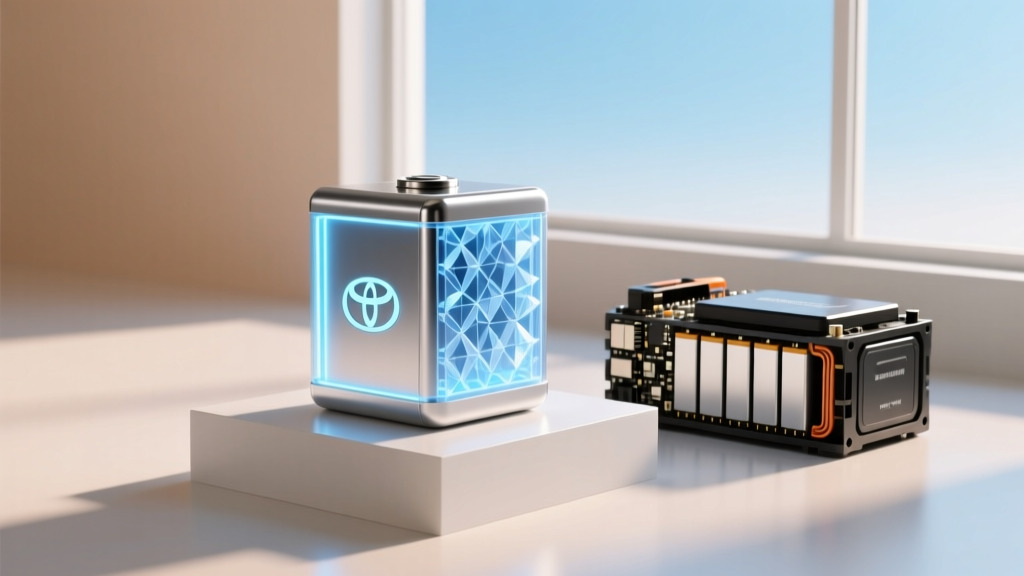
Prototype specifications (announced): Toyota has demonstrated cells targeting 750 km (approximately 466 miles) of range in a next-generation EV platform, with a 10–80% DC fast charge time of under 10 minutes. The energy density target is roughly double that of current NMC cells, which would enable either dramatically more range in the same physical pack size or equivalent range in a significantly smaller, lighter pack.
Manufacturing partnership: Toyota's collaboration with Idemitsu Kosan focuses on sulfide-based solid electrolytes, which offer superior ionic conductivity compared to oxide or polymer alternatives but are highly sensitive to moisture and require dry-room manufacturing conditions that are expensive to scale.
Timeline (announced, subject to change): Toyota has stated it aims to commercialize solid-state batteries in a limited-production vehicle by 2027–2028, with broader rollout to follow in the early 2030s. Industry analysts at BloombergNEF and S&P Global Mobility consider 2028–2030 a more realistic window for even limited commercial availability, with cost-competitive mass production unlikely before 2032–2035.
Cost challenge: Solid-state cells are currently estimated to cost 4–8x more per kWh than mature lithium-ion cells at lab scale. Bringing that cost below $150/kWh — the threshold for price parity with NMC — requires manufacturing breakthroughs that have not yet been demonstrated at scale.
What this means for buyers: If you need an EV in 2026 or 2027, solid-state technology will not be an option. The vehicles available to you will use LFP or NMC lithium-ion chemistry, and those batteries are demonstrably durable enough to outlast the functional life of most vehicles. Waiting 5–8 years for solid-state means forgoing the fuel savings, tax credits, and lower maintenance costs of an EV you could be driving today.
Frequently Asked Questions
How long do EV batteries last in years and miles?
Modern liquid-cooled EV batteries typically last 15–20 years or 200,000+ miles before reaching 70–80% of original capacity. Real-world fleet data from Tesla shows approximately 88% capacity retention at 200,000 miles on average. Catastrophic failure is rare (under 2% of packs) and usually occurs within the warranty period. Most EV batteries will outlast the vehicle's useful economic life.
How much does it cost to replace an EV battery out of warranty?
Full pack replacement costs range from approximately $12,000 for a 60 kWh LFP pack (Tesla Model 3 RWD) to $35,000+ for a 131 kWh pack (Ford F-150 Lightning Extended Range). However, fewer than 2% of owners ever pay this cost — the vast majority of failures occur under warranty, and module-level repairs ($3,000–$8,000) are increasingly available from third-party shops. Cell prices continue to decline year over year.
What does the EV battery warranty actually cover?
Federal law requires a minimum 8-year/100,000-mile warranty on EV batteries. In CARB states, the minimum is 10 years/150,000 miles. The warranty covers capacity loss below a defined threshold (typically 70% of original capacity) and any manufacturing defects or premature failures. Normal gradual degradation above the threshold is not covered. Always check your specific manufacturer's warranty terms, as thresholds and durations vary.
How do I check and maximize my EV battery's health?
Monitor State of Health through your vehicle's built-in display, OBD-II diagnostic apps (EVNotify, Scan My Tesla, Car Scanner), or dealer service reports. To maximize lifespan: rely primarily on Level 2 home charging, set daily charge limits to 80% for NMC/NCA batteries (100% for LFP), avoid frequent DC fast charging above 150 kW when possible, precondition before fast charging, and avoid prolonged storage at 100% SoC or in extreme heat.
LFP vs NMC — which battery chemistry is better for me?
Choose LFP if you charge at home daily, want maximum cycle life (3,000–5,000+ cycles), prefer the simplicity of charging to 100% every night, and don't need the absolute maximum range. LFP is lower-cost, more thermally stable, and longer-lasting, but heavier and less energy-dense — and it loses more range in extreme cold. Choose NMC if you need maximum range in a lighter vehicle, live in a cold climate where energy density matters for winter range, or need the longest possible single-charge trips. NMC requires more careful SoC management (80% daily limit) but offers superior cold-weather performance and energy density.
Should I wait for Toyota's solid-state battery before buying an EV?
Toyota's solid-state battery is not available in any production vehicle as of 2026. The announced timeline targets limited commercialization in 2027–2028, with mass-market affordability unlikely before the early-to-mid 2030s. If you need a vehicle in the next 1–3 years, today's lithium-ion EVs offer 250–400 miles of EPA range, mature charging infrastructure, available §30D federal tax credits (up to $7,500 with point-of-sale transfer, subject to IRS income, MSRP, and sourcing requirements), and batteries that demonstrably last 15+ years. The fuel and maintenance savings you accumulate while driving an EV today will likely outweigh any future solid-state advantage.
Sources: Tesla Impact Report, Recurrent Auto battery degradation studies, BloombergNEF Battery Price Survey, manufacturer warranty documentation, EPA fueleconomy.gov, IRS §30D Clean Vehicle Credit guidelines. All specifications reflect 2026 model-year data where available. Solid-state battery specifications are based on manufacturer announcements and are preliminary.