Search "Toyota solid battery" and you will find a decade of headlines promising a revolution just around the corner. As of 2026, Toyota's solid-state cells remain in pilot production and limited demonstration fleets — not in any vehicle you can buy today. That does not make the technology irrelevant; it makes accurate timelines and a clear understanding of current lithium-ion battery chemistry far more useful for anyone shopping for an EV right now.
This guide separates Toyota's announced solid-state roadmap from what is actually shipping, then walks through the chemistry, degradation data, warranty terms, replacement costs, and care habits that determine how long a modern EV battery will serve you.
Toyota's Solid-State Battery: What's Real and What's Announced
Toyota, through its joint venture with Idemitsu Kosan, has demonstrated sulfide-based solid-electrolyte cells in lab settings and small pilot lines. The automaker's most recent public roadmap targets:
- 2027–2028: Limited production of BEVs using first-generation solid-state cells, likely in a premium or halo model, with output measured in thousands — not hundreds of thousands — of units.
- ~2030: Scaled production aiming for a claimed 750 km (WLTP, roughly 465 mi) range and a 10-minute 10–80% DC fast charge, per Toyota's published technical briefings.
- Cost parity with lithium-ion: Not expected until the 2030s, and dependent on solid-electrolyte material costs falling significantly from today's lab-scale pricing.
Toyota's official battery strategy releases consistently emphasize these are targets, not guarantees. Manufacturing sulfide solid electrolytes at automotive scale with consistent quality is an unsolved engineering challenge, which is why every announced timeline in this space has slipped at least once. Treat any solid-state vehicle as announced/preliminary until you can place a refundable order on a configurator.
Today's Reality: LFP vs NMC/NCA Chemistry Trade-Offs
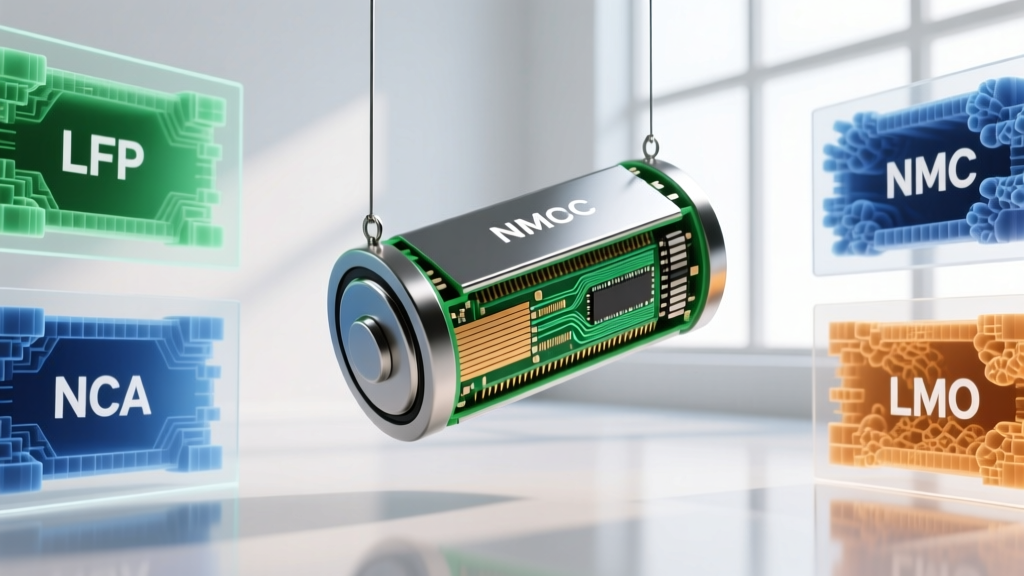
While solid-state matures, every EV sold in 2026 uses some variant of lithium-ion chemistry. The two dominant families are LFP (lithium iron phosphate) and NMC/NCA (nickel manganese cobalt / nickel cobalt aluminum). They behave very differently, and the right choice depends on your driving pattern.
| Attribute | LFP (LiFePO₄) | NMC / NCA |
|---|---|---|
| Energy density (cell-level) | ~160–180 Wh/kg | ~230–280 Wh/kg |
| Typical pack size in mainstream EVs | 50–65 kWh | 70–100+ kWh |
| Cycle life (to 80% SoH) | 2,500–4,000+ cycles | 1,000–2,000 cycles |
| Cold-weather range loss (20°F) | ~25–35% reduction | ~20–30% reduction |
| Recommended daily SoC | 100% OK; periodic full charges help BMS calibration | 80% daily; 100% only for trips |
| Cost per kWh (2026 pack-level) | ~$90–$110 | ~$120–$150 |
| Cobalt/nickel content | None | Significant (supply-chain and ESG factor) |
| Common in | Tesla Model 3/Y RWD, BYD, base trims | Long-range, performance, luxury trims |
Which is better? For a daily commuter who charges at home and rarely exceeds 200 miles between plugs, LFP wins on longevity and cost. For a road-trip-heavy driver who needs maximum range per charge and can tolerate 80% daily SoC discipline, NMC/NCA delivers the energy density required. Neither is universally superior — the chemistry should match the use case.
How Long Do EV Batteries Actually Last?
The fear that an EV battery will fail like a smartphone battery at year three is not supported by fleet data. Most modern liquid-cooled packs outlast the vehicle they are installed in.
Observed degradation from real-world fleet studies (2024–2025 data from Geotab, Recurrent, and OEM reports):
- Year 1: ~1–3% capacity loss (initial formation settling)
- Year 3 / ~45,000 mi: ~5–8% loss typical across chemistries
- Year 5 / ~75,000 mi: ~7–12% loss (NMC); ~4–7% loss (LFP)
- Year 8 / ~120,000 mi: ~10–17% loss (NMC); ~6–10% loss (LFP)
- Year 12 / ~150,000+ mi: Many packs still above 80% State of Health, especially LFP
The degradation curve flattens after the first 1–2 years. Catastrophic failure (sudden, non-gradual loss) is rare and usually covered under warranty.
Geotab's multi-year study of over 10,000 EVs found an average annual degradation of roughly 1.8%, with substantial variation driven by climate and charging habits rather than chemistry alone.
What the Battery Warranty Actually Covers
Federal law mandates a minimum 8-year / 100,000-mile warranty on EV battery packs, with California Air Resources Board (CARB) states requiring 10 years / 150,000 miles. Most OEMs meet or exceed these floors.
| OEM | Term | Capacity Retention Threshold |
|---|---|---|
| Tesla (Model 3/Y) | 8 yr / 120,000 mi (LR/AWD); 8 yr / 100,000 mi (RWD) | 70% of original capacity |
| Hyundai / Kia | 10 yr / 100,000 mi | 70% of original capacity |
| Ford (Mustang Mach-E, F-150 Lightning) | 8 yr / 100,000 mi | 70% of original capacity |
| GM (Ultium-based) | 8 yr / 100,000 mi | 70% of original capacity |
| Toyota (bZ4X) | 8 yr / 100,000 mi (10 yr in CARB states) | 70% of original capacity |
| BMW / Mercedes (premium) | 8 yr / 100,000 mi | 70% of original capacity |
The 70% threshold matters: if your 80 kWh pack drops to 56 kWh of usable capacity within the term, the OEM must repair or replace it — usually by swapping in a refurbished pack of equivalent health, not a brand-new one. Gradual range loss above 70% SoH is considered normal wear and is not covered.
EV Battery Replacement Cost: What Owners Actually Pay
Out-of-warranty battery replacement is the single most cited fear in EV ownership. The numbers are large but rarely paid in full by the owner, because most packs last beyond the car's economic life.
| Vehicle Class | Pack Size | Replacement Cost (Parts + Labor) | Typical Trigger |
|---|---|---|---|
| Compact EV (Nissan Leaf, Chevy Bolt EUV) | 40–65 kWh | $6,000–$10,000 | Post-warranty cell imbalance or module failure |
| Mid-size sedan/crossover (Model 3, Ioniq 5, bZ4X) | 70–80 kWh | $10,000–$16,000 | Rare before 150,000+ mi |
| Large SUV / truck (F-150 Lightning, Rivian R1T, Hummer EV) | 100–215 kWh | $15,000–$25,000+ | Very rare; mostly collision or flood damage |
| Luxury (Taycan, EQS, iX) | 80–110 kWh | $18,000–$30,000 | Almost never in-warranty or ownership life |
Important context: module-level repair is increasingly common. Rather than replacing an entire pack, shops with high-voltage certification can identify and swap a single degraded module for $1,500–$4,000. This is where the market is heading as independent EV service matures.
Factors That Accelerate Battery Degradation
Chemistry sets the ceiling, but owner habits determine where on the curve you land. The five biggest degradation drivers, ranked by impact:
- Chronic 100% SoC storage (NMC/NCA): Storing a nickel-rich pack at full charge for days accelerates electrolyte oxidation. Daily 80% limit, 100% only before trips.
- Frequent DC fast charging above 150 kW in hot weather: Heat is the enemy. Precondition the battery (most EVs do this automatically when you navigate to a charger) and avoid back-to-back fast charges when ambient temps exceed 90°F.
- Deep discharges below 10% SoC: Occasional is fine; habitual storage near 0% stresses the anode. Plug in when you hit 15–20%.
- Extreme ambient temperatures without thermal management: Liquid-cooled packs (standard on nearly all 2026 EVs) mitigate this. Passive-air-cooled older packs (early Leaf) degrade far faster in Phoenix or Minneapolis.
- High-performance driving and towing: Sustained high C-rates (hard acceleration, mountain towing) generate internal heat. Occasional use is fine; daily track use or heavy commercial towing shortens pack life.
LFP owners can largely ignore the 100% storage rule — the chemistry is structurally tolerant of full charges, which is one reason Tesla recommends 100% at least weekly for its LFP Model 3 RWD to keep the BMS calibrated.
How to Check and Monitor Battery Health (SoH)
State of Health (SoH) is the percentage of original usable capacity the pack can still deliver. Most owners never see this number directly, but you can access it:
- In-vehicle menus: Some EVs (notably the Nissan Leaf with its 12-bar display, and recent Hyundai/Kia models) expose a battery health indicator in the instrument cluster or infotainment settings.
- OBD-II + app: Tools like LeafSpy (Leaf), Scan My Tesla, or OBDeleven can read pack SoH, cell voltage variance, and cycle count from the BMS. Expect $30–$80 for the adapter plus a free or $10 app.
- Dealer diagnostic: Request a battery health report during service visits. OEMs will pull this for warranty claims.
- Third-party services: Companies like Recurrent offer battery health reports based on telematics data, often free for enrolled owners.
When buying a used EV, a SoH reading is as important as a vehicle history report. A 5-year-old EV at 92% SoH is a healthier buy than a 3-year-old EV at 85% SoH, because the latter suggests abusive charging patterns.
Silicon Anodes and Other Near-Term Battery Advances
Solid-state is not the only evolution in flight. Silicon-dominant anodes — used in limited form in the Mercedes G-Class EQ (via Sila Nanotechnologies) and GM's upcoming Ultium applications — promise 20–40% energy density gains over graphite anodes within the same cell form factor. These are shipping in low volumes now and are expected to reach mainstream pricing by 2028–2030.
Other developments worth tracking, all forward-looking and none yet in mass-market EVs:
- Sodium-ion batteries: Lower energy density but no lithium or cobalt; BYD and CATL are deploying these in Chinese-market subcompacts. US availability is uncertain and likely 2028+.
- Condensed-state batteries (CATL): A semi-solid approach targeting 500 Wh/kg for aviation and premium EVs; automotive deployment expected late this decade.
- LMFP (lithium manganese iron phosphate): Adds manganese to LFP for ~15% higher energy density while retaining cobalt-free advantages. Tesla and Ford have signaled interest; production vehicles expected 2026–2027.
None of these change the fundamental advice for a 2026 buyer: choose the chemistry that fits your driving pattern, care for the pack within its design envelope, and let the warranty cover the tail risk.
Frequently Asked Questions
How long do EV batteries last in years and miles?
Based on fleet data, most liquid-cooled EV batteries retain 80% or more of their original capacity at 8–10 years and 120,000–150,000 miles. LFP packs routinely exceed this. Many EVs are retired for unrelated reasons (collision, owner upgrade) before the battery reaches end-of-life.
How much does it cost to replace an EV battery?
Out-of-warranty replacement ranges from roughly $6,000 for a compact EV to $25,000+ for a large truck or luxury sedan. In practice, most owners never pay this: the pack either outlasts the car's ownership life, is repaired at the module level for $1,500–$4,000, or is covered under the 8–10 year / 100,000+ mile warranty.
What does the EV battery warranty actually cover?
Every 2026 EV sold in the US carries at minimum an 8-year / 100,000-mile battery warranty (10/150,000 in CARB states). Coverage triggers when usable capacity drops below 70% of original. The OEM repairs or replaces the pack — typically with a refurbished unit of equivalent health — at no cost to the owner. Damage from collisions, floods, or aftermarket modifications is excluded.
How do I check my EV battery's State of Health?
Use an OBD-II adapter with an EV-specific app (LeafSpy, Scan My Tesla, OBDeleven) to read SoH directly from the BMS, request a battery health report at a dealer service visit, or enroll in a telematics service like Recurrent. When buying used, insist on a SoH reading before purchase.
Is LFP or NMC better for daily driving?
For daily commuting with home charging, LFP is generally the better choice: longer cycle life, tolerance for 100% storage, lower cost, and no cobalt. For drivers who regularly need 250+ miles of real-world range per charge or who take frequent long road trips, NMC/NCA's higher energy density is the practical pick. Match the chemistry to your driving pattern rather than chasing a single "best" answer.
Will Toyota's solid-state battery be available soon?
Toyota targets limited production solid-state BEVs for 2027–2028, with scaled production around 2030. These timelines have shifted before and should be treated as preliminary. No solid-state EV is currently available for purchase from Toyota or any other automaker as of 2026. Buyers shopping today should evaluate current lithium-ion technology on its demonstrated merits.