If you have been following EV news, you have likely seen the recurring headline: a Toyota solid state battery car is coming, promising 750+ miles of range and 10-minute fast charging. Toyota and its battery partner Prime Planet Energy & Solutions (PPES) have repeatedly demonstrated solid-state prototype cells, and the automaker has outlined a phased commercialization plan targeting the late 2020s.
But as of the 2026 model year, no Toyota solid-state EV is available for purchase. The bZ4X — Toyota's current all-electric offering — uses a conventional lithium-ion NMC (nickel manganese cobalt) pack, and Toyota's near-term electrification strategy still leans heavily on hybrids and plug-in hybrids. If you are shopping for an EV today, or planning to in the next couple of years, you need to understand the battery technology that is actually on the market right now.
This guide breaks down current EV battery chemistry, real-world degradation data, warranty coverage, replacement costs, and the practical habits that maximize battery longevity — so you can make an informed purchase without waiting for a technology that remains in development.
Current EV Battery Chemistry: LFP vs NMC vs NCA
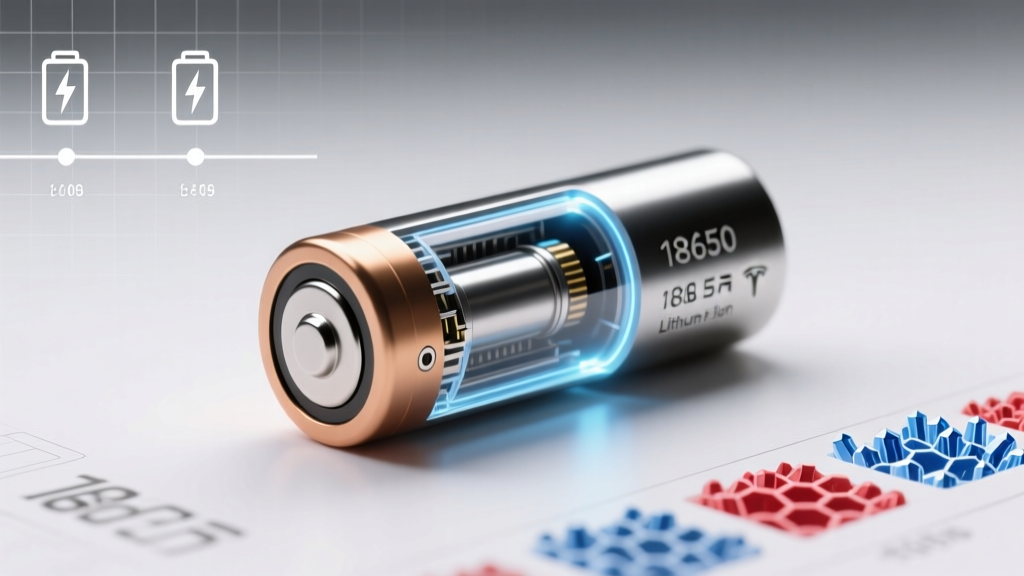
Every EV sold today uses some variant of lithium-ion chemistry. The two dominant families are LFP (lithium iron phosphate) and NMC/NCA (nickel manganese cobalt / nickel cobalt aluminum). The choice between them involves real engineering trade-offs that affect range, longevity, charging behavior, and cost.
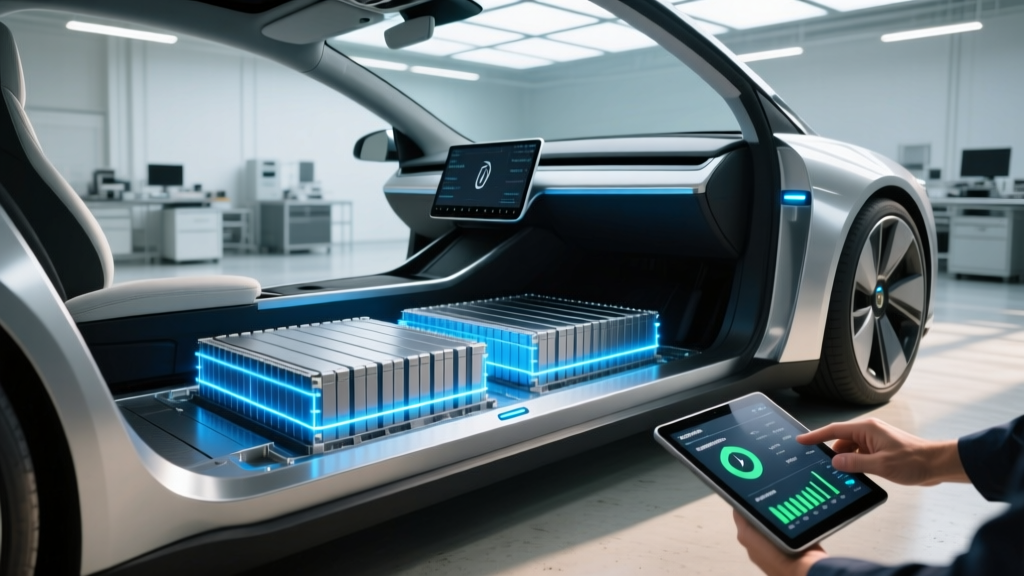
LFP (Lithium Iron Phosphate) uses iron and phosphate in the cathode. It offers lower energy density than NMC, meaning a heavier and bulkier pack for the same kWh capacity. However, LFP cells tolerate deeper daily cycling, endure more charge cycles before significant degradation, and are less prone to thermal runaway. They are also cheaper to produce because they contain no cobalt or nickel. Tesla uses LFP packs in the standard-range Model 3 and Model Y, and BYD's Blade Battery is LFP-based.
NMC (Nickel Manganese Cobalt) and NCA (Nickel Cobalt Aluminum) offer higher energy density, which translates to more range in a lighter, more compact pack. This makes them the default for long-range and performance EVs — the Hyundai Ioniq 5, Ford Mustang Mach-E Extended Range, and most premium EVs use NMC variants. The trade-off is slightly faster degradation under aggressive cycling and higher raw-material cost.
| Attribute | LFP (Lithium Iron Phosphate) | NMC / NCA |
|---|---|---|
| Energy Density | ~160–180 Wh/kg (cell level) | ~220–300 Wh/kg (cell level) |
| Typical Cycle Life | 3,000–5,000+ cycles to 80% SoH | 1,000–2,500 cycles to 80% SoH |
| Cold-Weather Performance | Moderate; slower charge acceptance below 32°F | Better low-temp charge acceptance with thermal mgmt |
| Thermal Stability | Excellent; higher thermal runaway threshold (~518°F) | Good with BMS; lower runaway threshold (~410°F) |
| Daily Charging Recommendation | Can charge to 100% daily | Best kept at 80% for daily use |
| Cost per kWh (pack level) | ~$100–$120 | ~$130–$160 |
| Common Applications | Tesla Model 3 RWD, BYD models, standard-range EVs | Long-range EVs, performance trims, most non-Tesla EVs |
Which is better? Neither is universally superior. If you prioritize maximum range and don't mind managing state-of-charge habits (charging to 80% daily), NMC gives you more miles per pound. If you want a low-maintenance battery you can charge to 100% every night and expect to outlast 300,000+ miles with minimal degradation, LFP is the stronger choice — provided you accept slightly less range for a given pack size.
How Long Do EV Batteries Actually Last?
The short answer: most EV batteries will outlast the vehicle they are installed in. Real-world degradation data from millions of EVs on the road shows that modern lithium-ion packs lose capacity gradually, not suddenly, and typically retain 85–92% of their original capacity after 100,000 miles.
Here is what the data shows across different chemistries and use cases:
Observed Degradation Benchmarks (Industry Data):
- Tesla fleet data (2024 Impact Report): Model 3/Y packs retain approximately 85% capacity at 150,000 miles. Model S/X (NMC/NCA, older packs) retain ~88% at the same mileage.
- Geotab fleet study (12,000+ EVs, 2024): Average annual degradation across all brands was 1.8% per year, meaning a typical EV retains ~82% capacity after 10 years.
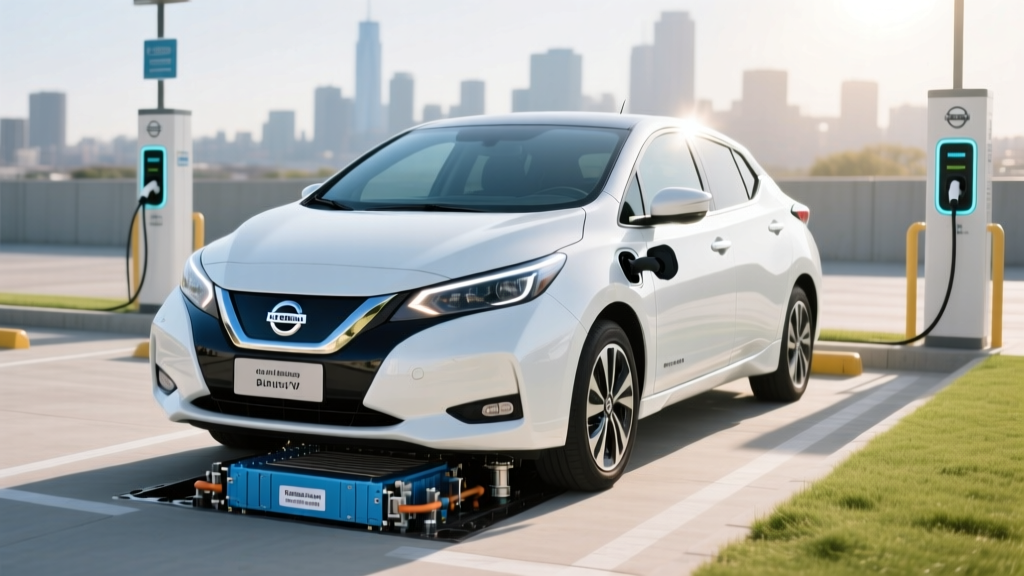
- Recurrent Auto data (2025): Chevy Bolt EV (NMC, LG Chem cells affected by recall) showed higher variance, but post-recall replacement packs demonstrated less than 5% loss over 40,000 miles. Nissan Leaf (passive air cooling) showed accelerated degradation in hot climates — up to 15% loss over 5 years/60,000 miles in Arizona conditions.
- LFP-specific (Tesla Model 3 RWD): Fleet data from high-mileage ride-share vehicles shows LFP packs retaining 90%+ capacity at 120,000 miles with daily 100% charging.
The critical insight: battery degradation is not linear. Most packs experience a steeper drop in the first 20,000–30,000 miles (roughly 2–5%), then settle into a very gradual decline. A pack that has lost 5% in year one is not on track to lose 50% in year ten. This "knee" in the degradation curve is well-documented and factored into warranty design.
According to fueleconomy.gov, modern EV battery packs are engineered for a usable lifespan of 150,000–200,000+ miles before capacity drops below the 70–80% threshold where range reduction becomes practically noticeable to most drivers.
What Does the EV Battery Warranty Actually Cover?
Federal regulations in the United States mandate that EV battery packs carry a minimum warranty of 8 years or 100,000 miles (whichever comes first). In California Air Resources Board (CARB) states, that extends to 10 years or 150,000 miles. These are minimums — some automakers exceed them.
The warranty covers capacity loss below a specified threshold, typically 70% of original usable capacity. If your 82 kWh pack degrades to below 57.4 kWh within the warranty period, the manufacturer must repair or replace it at no cost. Importantly, this is not a pro-rated warranty like a tire warranty — it is a full replacement obligation if the threshold is crossed.
| Manufacturer | Warranty Term | Capacity Retention Threshold | Notes |
|---|---|---|---|
| Tesla (Model 3/Y LFP) | 8 yr / 100,000 mi | 70% | Standard range models |
| Tesla (Model 3/Y LR/Perf) | 8 yr / 120,000 mi | 70% | Long Range and Performance |
| Hyundai / Kia | 10 yr / 100,000 mi | 70% | Among the longest terms |
| Ford (Mustang Mach-E) | 8 yr / 100,000 mi | 70% | Includes battery components |
| GM (Ultium-based EVs) | 8 yr / 100,000 mi | 70% | Covers module-level repair |
| Toyota (bZ4X) | 8 yr / 100,000 mi | 70% | 10 yr / 150k mi in CARB states |
| Volkswagen (ID.4) | 8 yr / 100,000 mi | 70% | Net usable capacity basis |
What is NOT covered: Gradual degradation that stays above the 70% threshold is considered normal wear. Physical damage from collisions, flooding, or improper modification also voids coverage. Read your specific warranty booklet — the language around "net usable capacity" versus "gross capacity" matters, as manufacturers measure against the usable buffer, not the total cell capacity.
EV Battery Replacement Cost: What You Will Actually Pay
This is the question that generates the most anxiety — and the most misinformation. The headline number for a full battery pack replacement is steep, but context is essential: the vast majority of EV batteries never need replacement during the vehicle's useful life.
When replacement is needed — typically due to a manufacturing defect that triggers warranty coverage, physical damage, or very high mileage well beyond 200,000 miles — here is what it costs:
| Vehicle / Pack Size | Battery Capacity | Estimated Replacement Cost (Parts + Labor) | Typical Replacement Scenario |
|---|---|---|---|
| Tesla Model 3 RWD (LFP) | ~60 kWh | $12,000–$15,000 | Out-of-warranty, 200k+ mi |
| Tesla Model Y LR (NMC) | ~82 kWh | $16,000–$20,000 | Out-of-warranty, 200k+ mi |
| Hyundai Ioniq 5 (NMC) | ~77.4 kWh | $15,000–$19,000 | Rare; mostly warranty-covered |
| Ford Mustang Mach-E ER | ~91 kWh | $18,000–$22,000 | Out-of-warranty, high mileage |
| Chevy Bolt EV/EUV | ~65 kWh | $14,000–$16,000 | Post-recall packs widely available |
| Nissan Leaf (40/60 kWh) | 40–60 kWh | $8,000–$12,000 | Most common replacement scenario (hot climates, passive cooling) |
| Toyota bZ4X | ~71.4 kWh | $14,000–$17,000 | Limited data; most under warranty |
Several important caveats apply. First, module-level repair is increasingly common: rather than replacing the entire pack, technicians swap individual degraded modules for $2,000–$5,000. Second, the used EV battery market is growing, with refurbished packs available at 40–60% of new-pack cost. Third, pack-level prices have been declining roughly 8–12% per year as manufacturing scales — a $20,000 replacement today may cost $14,000 by 2030.
For comparison, a conventional car's engine or transmission replacement typically costs $4,000–$8,000 and is needed more frequently than an EV battery swap. The EV battery is not the liability many fear it to be.
Factors That Accelerate (or Preserve) Battery Life
Battery degradation is driven by electrochemical stress. The following factors have the greatest measurable impact on long-term State of Health (SoH):
1. State of Charge (SoC) Habits
Keeping an NMC battery between 20% and 80% for daily use significantly slows degradation compared to regularly charging to 100% or discharging to near 0%. LFP batteries are an exception — they tolerate and even benefit from periodic 100% charges (which help the BMS recalibrate cell balancing). Tesla explicitly recommends 100% daily charging for LFP-equipped vehicles.
2. DC Fast Charging Frequency
Occasional DC fast charging (1–2 times per week) has a negligible effect on battery health. However, daily reliance on DC fast charging — particularly at rates above 150 kW without adequate preconditioning — accelerates degradation. A Recurrent Auto study of 12,500 vehicles found that EVs fast-charging more than 3 times per week showed approximately 2–3% additional capacity loss over 3 years compared to those primarily charging on Level 2.
3. Extreme Temperatures
Heat is the primary enemy of lithium-ion longevity. Sustained battery temperatures above 95°F (35°C) accelerate electrolyte decomposition and solid electrolyte interphase (SEI) layer growth. Active liquid cooling — standard on virtually all modern EVs except the base Nissan Leaf — mitigates this substantially. Extreme cold (below 10°F) does not permanently damage the battery but temporarily reduces available capacity and slows charge acceptance until the pack warms via preconditioning.
4. Depth of Discharge
Shallow cycles (e.g., using 30–40% of capacity per day and recharging) are gentler than deep cycles (using 80%+ daily). This is why a 300-mile EV driven 40 miles daily and charged nightly degrades far less than one driven 250 miles daily and fast-charged to full.
EV Battery Care Checklist — Maximize Your SoH
- Set daily charge limit to 80% for NMC/NCA packs; 100% for LFP
- Use Level 2 home charging as your primary method; reserve DC fast charging for road trips
- Enable preconditioning before fast charging (warms the pack for faster, gentler charging)
- Avoid leaving the vehicle at 100% SoC in hot weather for extended periods (days)
- Don't let the pack sit at 0% for more than a few days — lithium-ion cells can be damaged by prolonged deep discharge
- In extreme summer heat, park in shade or a garage when possible
- Use the vehicle's scheduled charging feature to time charges for cooler overnight hours
How to Check Your Battery's State of Health (SoH)
State of Health (SoH) is the percentage of original usable capacity your battery currently holds. A new pack is at 100% SoH; one that has degraded to hold 75 kWh out of an original 82 kWh is at ~91.5% SoH.
Most automakers do not display a direct SoH percentage on the dashboard, but there are several ways to monitor it:
- OBD-II diagnostic apps: Tools like LeafSpy (Nissan), Scan My Tesla, or OBDLink paired with apps such as EV Bat Health or ABRP can read the BMS-reported SoH directly from the vehicle's CAN bus. This is the most accurate consumer-accessible method.
- Dealership health check: Most service departments can run a battery health report during routine service. Hyundai, Kia, and Tesla include this in annual inspections.
- Range comparison method: Track your vehicle's displayed range at 100% SoC over time. If your Ioniq 5 showed 303 miles at 100% when new and now shows 278 miles at 100% under similar temperature conditions, that indicates roughly 8% degradation (~92% SoH). This method is approximate because displayed range is affected by recent driving efficiency and temperature.
- Third-party services: Companies like Recurrent Auto and Geotab offer battery health monitoring platforms that track SoH trends over time using telematics data, often available through fleet programs or direct subscription.
For used-EV buyers, requesting a battery health report before purchase is strongly recommended. Some states (notably California) are moving toward mandatory battery SoH disclosure for used EV sales.
The Toyota Solid State Battery Car: Timeline and Reality
Toyota has been developing solid-state battery technology for over a decade and holds the most patents in the field of any automaker. The company's published roadmap (updated in mid-2024) outlines the following:
- 2026–2027: Introduction of "Performance" lithium-ion batteries (advanced NMC with bipolar electrode design) targeting 490+ mile range and ~20-minute 10–80% DC fast charging. These are still liquid-electrolyte cells, not solid-state.
- 2027–2028: First commercial deployment of solid-state batteries in limited-production vehicles. Toyota has described this as an initial run of a few thousand units, likely in a premium Lexus model, targeting 750+ km (465+ mile) range and 10-minute 10–80% charging.
- 2028–2030: Scaled solid-state production if manufacturing yields and cost targets are met.
What this means for buyers: A Toyota solid state battery car is not available today and will not be available in meaningful volumes before 2028 at the earliest. The technology is genuinely promising — solid electrolytes eliminate flammability risk, enable lithium-metal anodes for higher energy density, and tolerate faster charging without dendrite formation. However, the manufacturing challenges are substantial. Producing solid-state cells at automotive scale with acceptable yields and cost remains an unsolved engineering problem across the industry.
Toyota is not alone: Samsung SDI, QuantumScape (with Volkswagen), and Nissan are all pursuing solid-state technology with similar 2027–2030 timelines. None have announced a production vehicle you can buy today.
Other emerging technologies — including silicon-dominant anodes (which increase capacity by replacing graphite with silicon, currently used in limited form by Tesla and others) and sodium-ion batteries (CATL's lower-cost alternative for budget EVs, already deployed in some Chinese-market vehicles) — are closer to mainstream deployment but also not yet in US-market vehicles at scale.
The practical takeaway: if you need an EV in the 2026–2028 timeframe, today's NMC and LFP batteries are mature, well-warrantied, and demonstrably long-lasting. Waiting for solid-state means waiting at least 2–4 years for limited availability, likely at premium pricing, with early-adopter risk on a new manufacturing process.
Frequently Asked Questions
How long do EV batteries last in years and miles?
Based on fleet data from Tesla, Geotab, and Recurrent Auto, modern EV batteries typically retain 80–90% of their original capacity after 150,000 miles or 10–12 years of use. Most packs are engineered to remain functional for 200,000+ miles. Battery replacement before the vehicle's end of life is the exception, not the rule.
How much does it cost to replace an EV battery?
A full pack replacement costs between $8,000 and $22,000 depending on the vehicle and pack size, but most replacements are covered under the 8-year/100,000-mile warranty. Out-of-warranty replacements are rare and typically only needed beyond 200,000 miles. Module-level repairs cost $2,000–$5,000.
What does the EV battery warranty cover?
Federal law requires a minimum 8-year/100,000-mile warranty (10-year/150,000-mile in CARB states) covering capacity loss below 70% of original usable capacity. If your battery degrades below this threshold within the warranty period, the manufacturer must repair or replace it at no charge. Normal gradual degradation above the threshold is not covered.
How do I check and maximize my EV battery health?
Use OBD-II diagnostic apps (LeafSpy, Scan My Tesla) for direct SoH readings, or track your displayed range at 100% charge over time. To maximize longevity: charge to 80% daily for NMC packs (100% for LFP), minimize DC fast charging, avoid prolonged storage at extreme SoC levels, and use preconditioning before fast charging. See the IRS clean vehicle credit page if you are also evaluating the purchase economics of a new EV.
LFP vs NMC — which battery chemistry is better for me?
Choose LFP if you want maximum cycle life, can accept slightly less range per kWh of pack weight, charge at home daily, and prefer the simplicity of charging to 100% without degradation concerns. Choose NMC/NCA if you need the longest possible range, drive a long-range or performance trim, and are willing to manage charge limits (80% daily) for optimal longevity. Both chemistries are proven to last well beyond 150,000 miles with proper care.
Is Toyota's solid-state battery available in a car I can buy today?
No. As of 2026, Toyota has not released a production vehicle with a solid-state battery. The company's roadmap targets limited commercial deployment in 2027–2028, likely in a premium Lexus model, with scaled production possible by 2029–2030. Current Toyota electrified vehicles (bZ4X, Prius PHEV, RAV4 Prime) use conventional NMC lithium-ion batteries.