The promise of Toyota solid-state batteries has dominated EV forums and headlines for years. The pitch is seductive: double the range, 10-minute fast charges, and a battery that barely degrades. But as we move through 2026, it's time to separate the laboratory breakthroughs from the driveway reality. While Toyota has begun limited commercialization of its solid-state tech in specific markets and models, the vast majority of EVs on the road today—and those you can buy right now—rely on proven lithium-ion chemistries like NMC (Nickel Manganese Cobalt) and LFP (Lithium Iron Phosphate).
This guide is designed for the research-heavy buyer. We aren't just going to tell you that solid-state is the future; we are going to look at the exact degradation curves, warranty thresholds, and replacement costs of the batteries you can actually buy today. Whether you are eyeing a Tesla Model 3 with an LFP pack or a Hyundai Ioniq 5 with NMC, understanding the physics and economics of your high-voltage traction battery is the single most important part of EV ownership.
Chemistry 101: NMC vs. LFP Trade-offs
Before we look at the solid-state horizon, you must understand the two dominant chemistries in the current market. Your choice between NMC and LFP dictates your charging habits, your range, and your long-term ownership experience.
| Feature | NMC / NCA (Nickel-based) | LFP (Lithium Iron Phosphate) |
|---|---|---|
| Energy Density | High (250–300 Wh/kg). Enables 300+ mile ranges in smaller packs. | Lower (160–200 Wh/kg). Requires heavier/larger packs for same range. |
| Cycle Life | 1,000–2,000 cycles before significant degradation. | 3,000–5,000+ cycles. Extremely durable. |
| Fast Charging | Excellent. Often peaks at 250–350 kW. | Good, but often tapers earlier. Peaks 150–200 kW typically. |
| Cold Performance | Better conductivity in freezing temps. | Poorer. Requires aggressive preconditioning. |
| State of Charge (SoC) | Daily limit 80%. 100% only for trips. | Can and should be charged to 100% weekly for BMS calibration. |
| Cost | Higher (uses cobalt/nickel). | Lower (abundant iron/phosphate). |
The Toyota Solid-State Battery Timeline
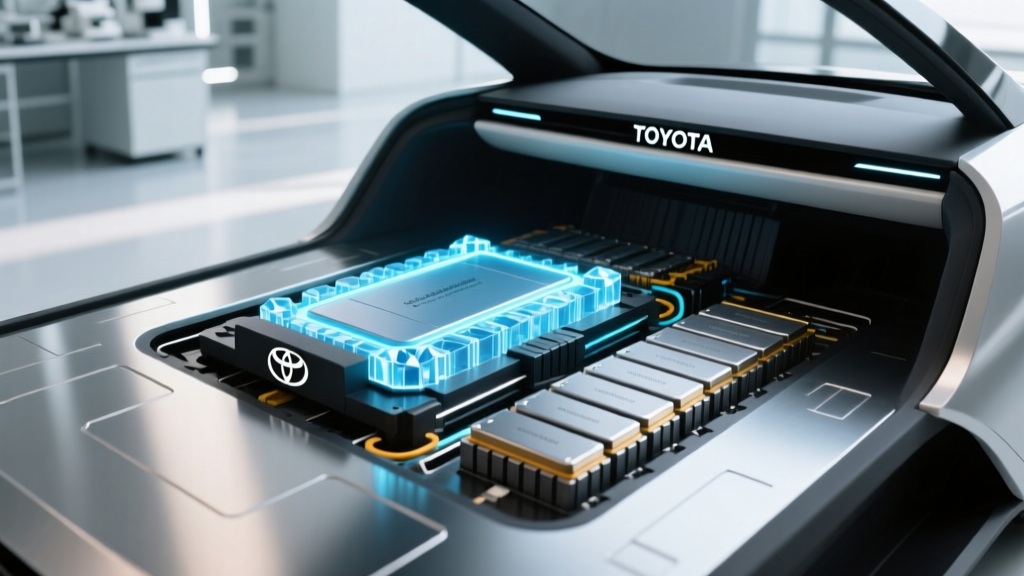
Toyota has announced that its first-generation solid-state batteries will offer a range of over 750 km (approx. 466 miles) and a 10-minute 10-80% charge time. While these figures are staggering, the production reality is more measured. Toyota's initial rollout is focused on hybrid applications and limited-run BEVs where the high cost of solid-state manufacturing can be absorbed. For the mass-market EV buyer in 2026, NMC and LFP remain the standard.
Solid-state technology replaces the liquid electrolyte with a solid material, which theoretically eliminates the risk of thermal runaway and allows for lithium-metal anodes. However, scaling this technology to meet global demand while keeping costs below $100/kWh remains a significant hurdle. Until then, modern liquid-electrolyte cells have proven to be remarkably resilient when managed correctly.
Real-World Degradation: What the Data Says
The fear of a "dead" battery is the biggest barrier to EV adoption, but the data from millions of miles of real-world driving tells a different story. Most modern EV batteries are designed to outlast the car's mechanical components.
Typical Degradation Curve (NMC & LFP):
- Year 1-2: 2-5% loss (initial "break-in" degradation).
- Year 3-5: Linear loss of ~1% per year.
- Year 8-10: Total capacity usually between 85-90% of original.
Source: Geotab Fleet Data Analysis
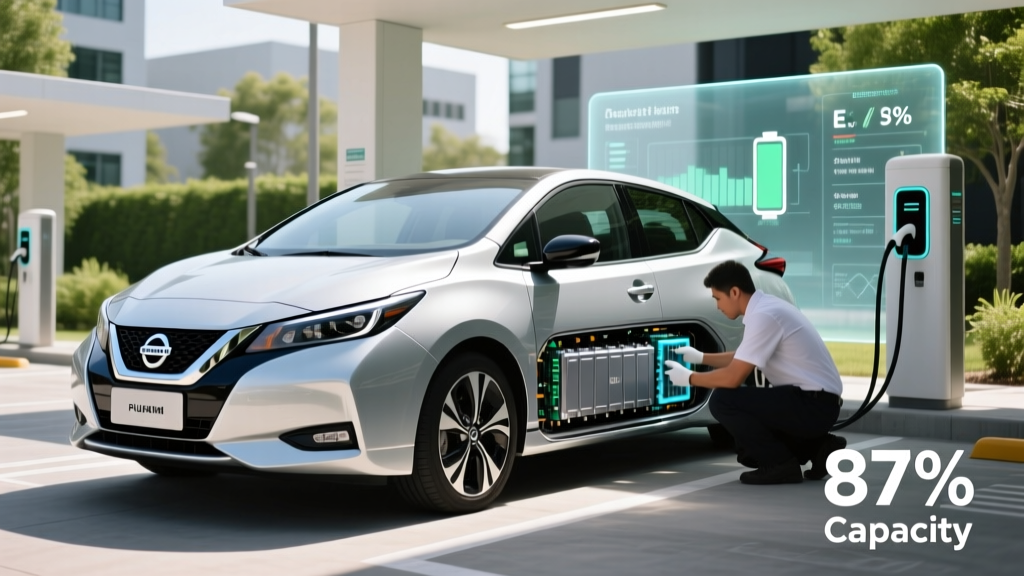
According to data from fueleconomy.gov and long-term fleet studies, a well-maintained battery will likely retain 85% of its capacity after 100,000 miles. For a 300-mile EV, that means you still have 255 miles of range a decade into ownership.
Warranty Terms and Replacement Economics
Federal law mandates that EV batteries carry a warranty of at least 8 years or 100,000 miles. In states that follow California's CARB standards (like New York, Massachusetts, and Washington), that warranty extends to 10 years or 150,000 miles.
| Manufacturer | Warranty Period | Capacity Threshold |
|---|---|---|
| Tesla (Model 3/Y RWD - LFP) | 8 yr / 100,000 mi | 70% retention |
| Hyundai / Kia | 10 yr / 100,000 mi | 70% retention |
| Ford (F-150 Lightning) | 8 yr / 100,000 mi | 70% retention |
| GM (Ultium Platform) | 8 yr / 100,000 mi | 60-70% retention (varies by model) |
If your battery falls below these thresholds within the warranty period, the manufacturer must replace or repair it at no cost. However, out-of-warranty replacements are a different financial reality.
| Battery Size / Model | Estimated Replacement Cost (2026) |
|---|---|
| 60 kWh (e.g., Tesla Model 3 RWD) | $8,000 – $12,000 |
| 85-100 kWh (e.g., Ford F-150 Lightning) | $15,000 – $22,000 |
| Hybrid/PHEV (15-20 kWh) | $3,500 – $6,000 |
Maximizing Battery Health: The Owner's Checklist
How long your battery lasts depends on how you treat it. While modern Battery Management Systems (BMS) are sophisticated, they cannot overcome the laws of chemistry.
- Limit DC Fast Charging: Use DCFC (Level 3) only for road trips. Frequent 150kW+ charging accelerates degradation due to internal heat.
- The 20-80% Rule: For NMC/NCA batteries, keep the state of charge between 20% and 80% for daily use.
- Thermal Management: Always "precondition" your battery before fast charging or leaving the house in extreme cold. This brings the cells to their optimal operating temperature.
- Avoid "Phantom Drain": If storing the car for weeks, leave it plugged in at a 50% SoC limit.
How to check State of Health (SoH): Most modern EVs do not provide a raw SoH percentage in the infotainment system. You can estimate it by charging to 100% and dividing the "Estimated Range" by the original EPA range. for a more technical look, apps like TeslaFi or LeafSpy (for Nissan) can read the BMS data directly to show your current kWh capacity versus your "when new" capacity.
Emerging Tech: Silicon Anodes and Beyond
While Toyota focuses on solid-state, other manufacturers are turning to silicon anode technology. By adding silicon to the graphite anode, companies like Sila Nanotechnologies are increasing energy density by 20-40% without the manufacturing hurdles of solid-state. Expect to see these cells in high-performance luxury EVs starting in 2027.
FAQ: EV Battery Longevity
How long do EV batteries last in years and miles?
Modern liquid-cooled EV batteries are designed to last 15-20 years or 200,000+ miles before reaching the 70% capacity threshold. Many early Tesla Model S vehicles are still on their original batteries after 300,000 miles.
Does the federal tax credit cover battery replacement?
No. The IRS §30D credit applies only to the purchase of a new or eligible used EV. However, if you buy a used EV with a degraded battery, you may qualify for up to $4,000 under the Used Clean Vehicle Credit.
Is LFP better than NMC for long-term ownership?
If you plan to keep your car for 10+ years, LFP is generally superior due to its higher cycle life and lower degradation rate. However, NMC offers more range for the same weight, which is better for road-trip-heavy drivers.
Will Toyota solid-state batteries be retrofitted to older cars?
No. Solid-state packs will require entirely new chassis architectures and thermal management systems. They are not a "drop-in" replacement for current lithium-ion cells.