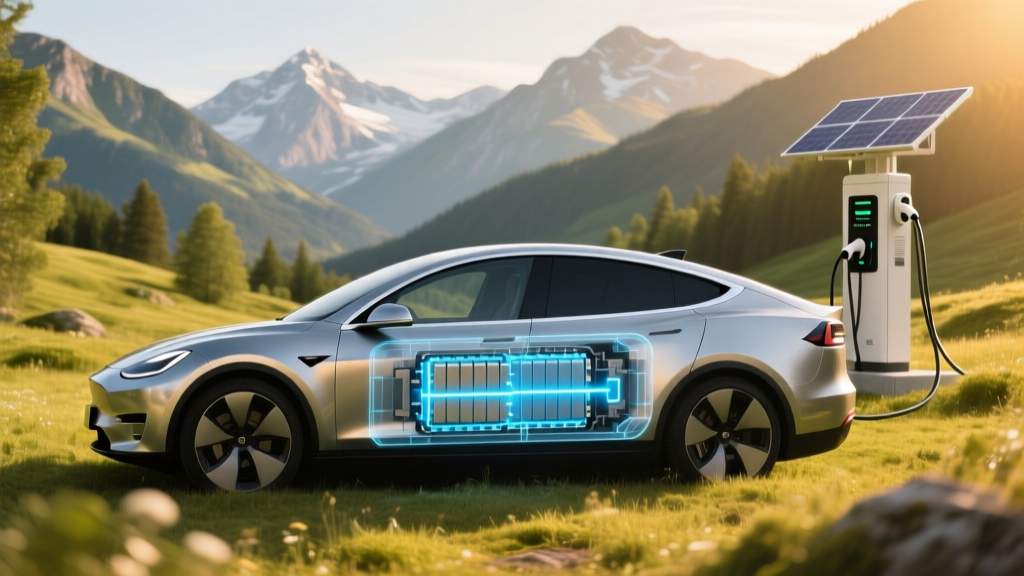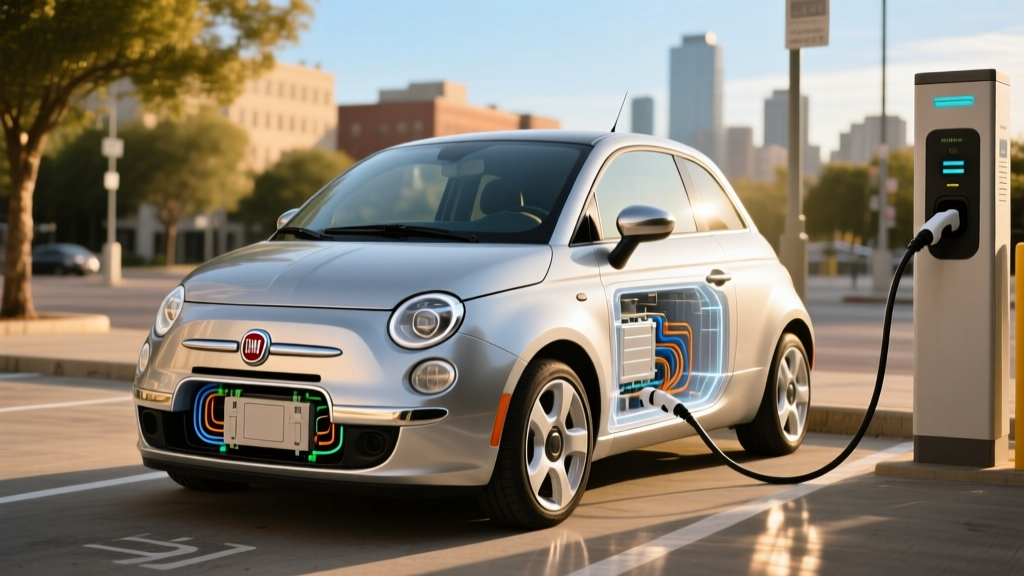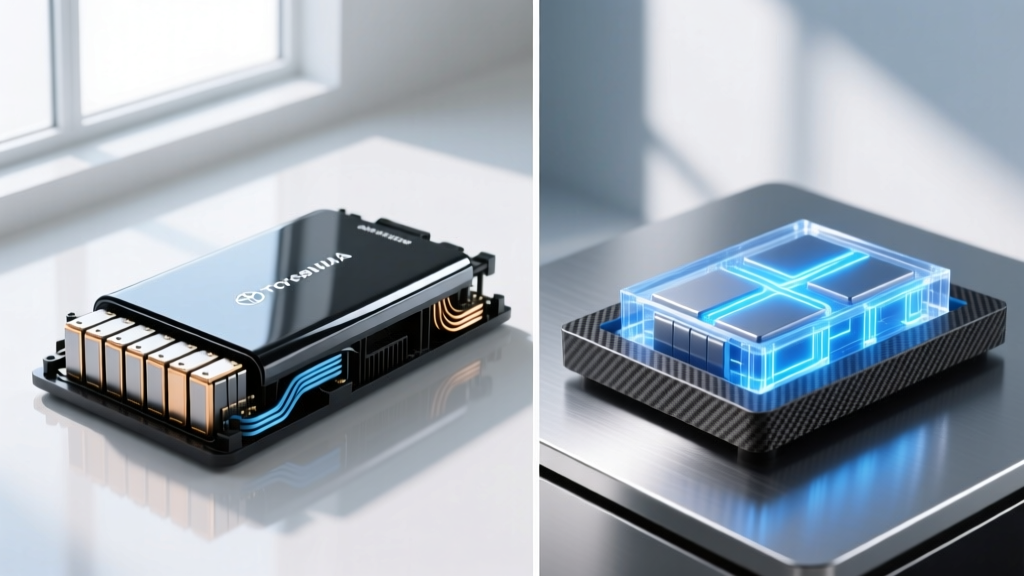
Toyota has been teasing solid-state battery breakthroughs for years, and the automaker now says it will begin production in 2027–2028. The promises are staggering: up to 750 miles of range, 10-minute fast charging from 10% to 80%, and dramatically improved safety. But for buyers shopping for an EV today — or even in the next two to three years — the battery in your car will almost certainly use conventional lithium-ion chemistry with either NMC (nickel manganese cobalt) or LFP (lithium iron phosphate) cells.
This guide breaks down what Toyota's solid-state batteries actually mean for the market, how they compare to the chemistry powering EVs right now, and everything you need to know about EV battery longevity, degradation, warranty coverage, and replacement costs based on real-world data.
What Are Toyota Solid-State Batteries — and When Will They Arrive?
Toyota's announced solid-state battery replaces the liquid electrolyte in conventional lithium-ion cells with a solid material (typically a sulfide-based or oxide-based conductor). This eliminates flammability risk, enables lithium-metal anodes for higher energy density, and allows faster ion transport — meaning faster charging without the thermal stress that degrades today's batteries.
Toyota's published targets for its first-generation solid-state battery include:
- Energy density: ~400 Wh/kg at the cell level (roughly double today's best NMC cells at ~250–290 Wh/kg)
- Range target: Up to 750 km (~466 miles) initially, with a next-gen version targeting 1,200 km (~746 miles)
- Charging speed: 10% to 80% in approximately 10 minutes
- Cycle life: Toyota claims minimal degradation, but has not published verified cycle-count data
The catch is manufacturing. Solid-state cells require entirely new production processes — dry-room assembly, pressure-sintering of solid electrolyte layers, and lithium-metal handling at scale. Toyota has acknowledged that initial production will be low-volume and expensive, likely reserved for premium Lexus models before reaching mainstream Toyota EVs. Industry analysts at BloombergNEF estimate that solid-state batteries won't reach price parity with conventional lithium-ion until the early 2030s.
Today's EV Battery Chemistry: LFP vs. NMC Compared
While solid-state is the future aspiration, every EV you can buy in 2026 uses one of two dominant cathode chemistries. Understanding the trade-offs is essential for choosing the right vehicle.
| Attribute | LFP (Lithium Iron Phosphate) | NMC/NCA (Nickel Manganese Cobalt / Nickel Cobalt Aluminum) |
|---|---|---|
| Energy density (cell-level) | 160–200 Wh/kg | 230–290 Wh/kg |
| Typical pack size | 50–82 kWh (smaller packs, lower range) | 72–131 kWh (larger packs, longer range) |
| Cycle life | 3,000–5,000+ cycles to 80% SoH | 1,500–2,500 cycles to 80% SoH |
| Cold-weather performance | More range loss below freezing (~30–40% at 20°F) | Moderate range loss (~20–30% at 20°F) |
| Fast-charging tolerance | Better — handles repeated DCFC with less degradation | Moderate — frequent DCFC accelerates wear |
| Cost per kWh (2026) | ~$85–$100/kWh | ~$115–$140/kWh |
| Thermal stability / safety | Excellent — very low thermal runaway risk | Good — requires active thermal management |
| SoC estimation accuracy | Flat voltage curve makes SoC harder to estimate | Linear voltage curve — accurate SoC readout |
| Notable vehicles (2026) | Tesla Model 3 RWD, Model Y RWD, Ford Mustang Mach-E Select (Standard Range), BYD Seal, Hyundai Kona Electric (Standard Range) | Tesla Model 3 LR/AWD, Hyundai Ioniq 5, BMW iX, Rivian R1T, Chevrolet Silverado EV |
Which is better? It depends on your use case. LFP is the better choice for daily commuters who charge at home, want maximum battery lifespan, and don't need 300+ miles of range. NMC is better for road-trippers, cold-climate drivers, and anyone who needs maximum range from a single charge. Neither is universally superior — they solve different problems.
How Long Do EV Batteries Actually Last?
The short answer: far longer than most buyers assume. Data from fleet operators, manufacturer reports, and independent testing shows that modern EV batteries are lasting well beyond their warranty periods with manageable degradation.
- Tesla 2025 Impact Report: Model 3/Y batteries retain ~88% capacity at 200,000 miles. Model S/X retain ~85% at 200,000 miles.
- Geotab fleet study (2024, 10,000+ EVs): Average annual degradation across all brands was 1.8% per year — meaning a typical EV retains ~82% State of Health (SoH) after 10 years.
- Taxi-fleet Nissan Leaf data: Early 2011–2015 Leafs (passive air-cooled batteries, no thermal management) showed 20–30% degradation at 100,000 miles. Modern liquid-cooled packs from all major manufacturers have largely eliminated this failure mode.
- Porsche Taycan owner reports: 93–95% SoH after 60,000 miles with frequent DC fast charging, attributed to robust 800V thermal management.
Most EV batteries will outlast the vehicle they're installed in. The average American car is scrapped at around 15–18 years. At 1.8% average annual degradation, a battery would retain roughly 70% capacity at 17 years — still functional, just with reduced range. Catastrophic battery failure (total brick) is extremely rare in modern liquid-cooled packs, affecting well under 1% of vehicles according to warranty claim data.
What Does the Battery Warranty Actually Cover?
Federal law mandates that EV battery warranties cover a minimum of 8 years or 100,000 miles (10 years/150,000 miles in California Air Resources Board states). But the details of what triggers a warranty claim vary by manufacturer.
| Manufacturer | Warranty Period | Capacity Threshold | Notes |
|---|---|---|---|
| Tesla | 8 yr / 120,000 mi (Model 3/Y); 8 yr / 150,000 mi (Model S/X) | 70% SoH | Covers defects + degradation below threshold |
| Hyundai / Kia | 10 yr / 100,000 mi | 70% SoH | Among the longest coverage periods |
| Ford | 8 yr / 100,000 mi | 70% SoH | Covers battery components + capacity loss |
| GM (Chevrolet/Cadillac) | 8 yr / 100,000 mi | 70% SoH (60% for Bolt EV/EUV) | Ultium packs covered; Bolt had recall replacement |
| BMW | 8 yr / 100,000 mi | 70% SoH | Includes thermal management system |
| Rivian | 8 yr / 175,000 mi | 70% SoH | Highest mileage threshold among mainstream brands |
Critical nuance: The warranty triggers only when SoH drops below the stated threshold. If your battery degrades to 71% capacity at year 7, no claim is honored. The warranty also does not cover range loss from normal degradation above the threshold — only a drop below it. Some manufacturers (notably Tesla) will replace only the minimum modules needed to bring SoH back above threshold, not the entire pack.
How Much Does It Cost to Replace an EV Battery?
This is the most common fear among prospective EV buyers — and it's the area most distorted by sensational headlines. Here are real-world replacement costs and the context that matters.
| Vehicle (Model Year) | Pack Size | Chemistry | Full Replacement Cost | When Typically Needed |
|---|---|---|---|---|
| Tesla Model 3 (2024–2026) | 60 kWh (LFP) / 82 kWh (NMC) | LFP or NMC | $12,000–$16,000 | Rarely — most packs outlast vehicle |
| Hyundai Ioniq 5 (2025–2026) | 77.4 kWh | NMC | $14,000–$18,000 | Rarely — 10yr/100k warranty covers early failure |
| Ford F-150 Lightning (2024–2026) | 98 kWh / 131 kWh | NMC | $18,000–$28,000 | Rarely — larger packs degrade more slowly |
| Chevrolet Bolt EV/EUV (2020–2023) | 65 kWh | NMC | $14,000–$16,000 (pre-recall pricing) | Many replaced under recall at no cost |
| Nissan Leaf (2018–2023) | 40 kWh / 62 kWh | NMC (passive cooling) | $8,000–$12,000 | More common — passive cooling accelerates degradation in hot climates |
| Porsche Taycan (2020–2025) | 79.2 kWh / 93.4 kWh | NMC | $25,000–$33,000 | Extremely rare — excellent thermal management |
The critical context: most EV batteries never need full replacement. According to data compiled by Recurrent Auto, which tracks over 15,000 EVs in real-world conditions, fewer than 1.5% of EVs have required battery replacement outside of recalls. The vast majority of EVs will be retired for other reasons (body damage, other component failure, owner upgrade) before the battery reaches end-of-life.
When replacement is needed, it's increasingly modular. Many packs (including Tesla's 4680 structural pack, Hyundai's E-GMP, and GM's Ultium) allow individual module replacement rather than the full pack, reducing costs to $3,000–$8,000 for a partial repair.
Factors That Actually Affect Battery Life
Not all EV batteries age equally. The following factors have the most significant measurable impact on long-term State of Health:
- Extreme heat exposure (highest impact): Sustained ambient temperatures above 95°F accelerate electrolyte decomposition. Vehicles in Phoenix, Las Vegas, and the Middle East show 2–3x faster degradation than those in temperate climates. Mitigation: Garage parking, preconditioning while plugged in, avoid leaving at 100% SoC in heat.
- Sustained high State of Charge: Storing an NMC battery at 100% SoC for days or weeks causes cathode lattice stress. LFP is more tolerant but still benefits from not sitting at 100%. Mitigation: Set daily charge limit to 80% for NMC; 100% is fine for LFP daily use (Tesla recommends this).
- Exclusive DC fast charging: Vehicles that DCFC more than 80% of the time show ~1.5–2x the degradation of those that primarily Level 2 charge, per Geotab fleet data. The heat and high C-rates stress cells. Mitigation: Use Level 2 at home for daily needs; reserve DCFC for road trips.
- Deep discharge cycles: Regularly draining below 10% SoC stresses the anode. Mitigation: Charge before dropping below 15–20%.
- Cold-weather fast charging without preconditioning: Charging a cold battery at high power causes lithium plating on the anode — a permanent, irreversible capacity loss mechanism. Mitigation: Always use the vehicle's navigation-to-charger preconditioning feature (available on Tesla, Hyundai/Kia, BMW, Ford, Rivian).
How to Check and Monitor Battery Health
Most EVs don't expose a direct State of Health percentage in the dashboard. Here's how owners can actually monitor their battery:
Native vehicle tools:
- Tesla: Service Mode (accessible via the software menu) shows a "Battery Health" test that runs a brief diagnostic and reports SoH percentage. This was added in 2024 and is the most direct OEM tool available.
- Hyundai/Kia: The infotainment system's EV menu shows "Battery Condition" as a percentage on 2024+ models.
- BMW: The My BMW app includes a battery health report generated from BMS (Battery Management System) data.
- General: Most vehicles show estimated range at full charge. If your 300-mile EPA vehicle now shows 260 miles at 100% SoC (in similar temperatures), that's roughly a 13% degradation indicator.
Third-party tools:
- Recurrent Auto: Free service that connects to your vehicle's telematics and provides monthly SoH reports benchmarked against similar vehicles. Available for most major brands.
- OBD-II dongles + apps: Tools like OBDeleven (VW/Audi/Porsche), Scan My Tesla, and LeafSpy (Nissan) can read BMS data directly, including cell-level voltage variance, total energy throughput, and precise SoH.
- Dealer diagnostic: Any authorized service center can run a full battery health report. Request one during routine service — it's typically free and takes 15–30 minutes.
Solid-State, Silicon Anode, and What Comes Next
Toyota isn't the only player pushing next-generation battery technology. Here's where the industry stands on emerging chemistries, with realistic timelines:
Solid-state batteries (Toyota, Samsung SDI, QuantumScape, Solid Power): Toyota targets 2027–2028 production. Samsung SDI has announced a 2027 timeline for automotive solid-state cells. QuantumScape's cells are undergoing validation with Volkswagen's PowerCo, with production expected no earlier than 2028. The primary barrier remains manufacturing yield and cost — not cell performance. Expect initial deployment in premium vehicles at significant price premiums.
Silicon-dominant anodes (Sila Nanotechnologies, Group14, Amprius): These replace graphite anodes with silicon, boosting energy density by 20–40% without requiring solid-state electrolytes. Mercedes-Benz has announced a partnership with Group14 for silicon-anode cells in upcoming EQ models. Amprius already ships silicon-anode cells for aviation and defense. Automotive deployment is expected in 2026–2028 as a bridge technology before solid-state matures.
Sodium-ion batteries (CATL, BYD, Faradion): Lower energy density (~140–160 Wh/kg) but dramatically cheaper and free of lithium, cobalt, and nickel. CATL has begun shipping sodium-ion packs for Chinese-market city cars. These are unlikely to appear in US-market vehicles before 2028 but could power budget EVs and stationary storage.
The practical takeaway: if you're buying an EV in 2026 or 2027, you'll be getting proven lithium-ion technology (LFP or NMC) with excellent longevity data. Waiting for solid-state means waiting at minimum until 2028–2029 for limited availability and likely until 2031–2033 for mainstream pricing.
Frequently Asked Questions
How long do EV batteries last in years and miles?
Based on fleet data from Geotab, Recurrent Auto, and manufacturer reports, modern liquid-cooled EV batteries retain 80–90% of original capacity at 150,000–200,000 miles and 10–15 years. Average annual degradation is approximately 1.8% per year. Most batteries will functionally outlast the vehicle.
How much does it cost to replace an EV battery in 2026?
Full pack replacement costs range from $8,000 (Nissan Leaf 40 kWh) to $33,000 (Porsche Taycan 93.4 kWh), with most mainstream EVs (Tesla Model 3, Hyundai Ioniq 5, Ford Mustang Mach-E) falling in the $12,000–$18,000 range. However, fewer than 1.5% of EVs require replacement outside of recalls. Module-level repairs cost $3,000–$8,000.
What does the EV battery warranty cover?
All manufacturers cover battery defects and capacity loss below a threshold (typically 70% SoH) for 8 years/100,000 miles minimum (10yr/100k for Hyundai/Kia, 8yr/175k for Rivian). The warranty does not cover normal degradation above the threshold, and some manufacturers replace only individual modules rather than the full pack.
Should I get an LFP or NMC battery?
Choose LFP if: you charge primarily at home, drive less than 250 miles daily, want maximum cycle life (3,000–5,000 cycles), and live in a moderate climate. Choose NMC if: you need 300+ miles of range, regularly road-trip, live in a cold climate, or want faster DC charging speeds. LFP is the longevity winner; NMC is the range and cold-weather winner.
Will Toyota's solid-state batteries make today's EVs obsolete?
Not in the near term. Toyota's solid-state batteries won't reach production until 2027–2028 at the earliest, initially in limited, premium vehicles at high prices. Price parity with conventional lithium-ion is not expected until the early 2030s. Today's LFP and NMC batteries offer proven reliability, competitive range (250–400+ miles EPA), and declining costs. Buying now does not mean buying obsolete technology.
Does frequent DC fast charging damage my battery?
Exclusively relying on DC fast charging (more than 80% of charge events) accelerates degradation by approximately 1.5–2x compared to Level 2 charging, per Geotab fleet data. Occasional DCFC on road trips has negligible impact. The key is ensuring your vehicle preconditioning system is active before fast charging, especially in cold weather, to prevent lithium plating.
How do I check my EV battery's State of Health?
Methods vary by brand: Tesla offers a Battery Health test in Service Mode; Hyundai/Kia shows Battery Condition in the EV menu; BMW reports via the My BMW app. Third-party services like Recurrent Auto provide free ongoing SoH monitoring. OBD-II tools (LeafSpy, Scan My Tesla, OBDeleven) read BMS data directly. You can also monitor estimated range at 100% SoC over time as a rough indicator.
Sources: EPA fueleconomy.gov, Geotab EV Battery Degradation Study (2024), Recurrent Auto Battery Health Data, Tesla Impact Report 2025, manufacturer warranty documentation. Battery cost estimates based on BloombergNEF 2025 battery price survey and service-center pricing. Tax credit eligibility per IRS §30D — verify current rules before purchase.