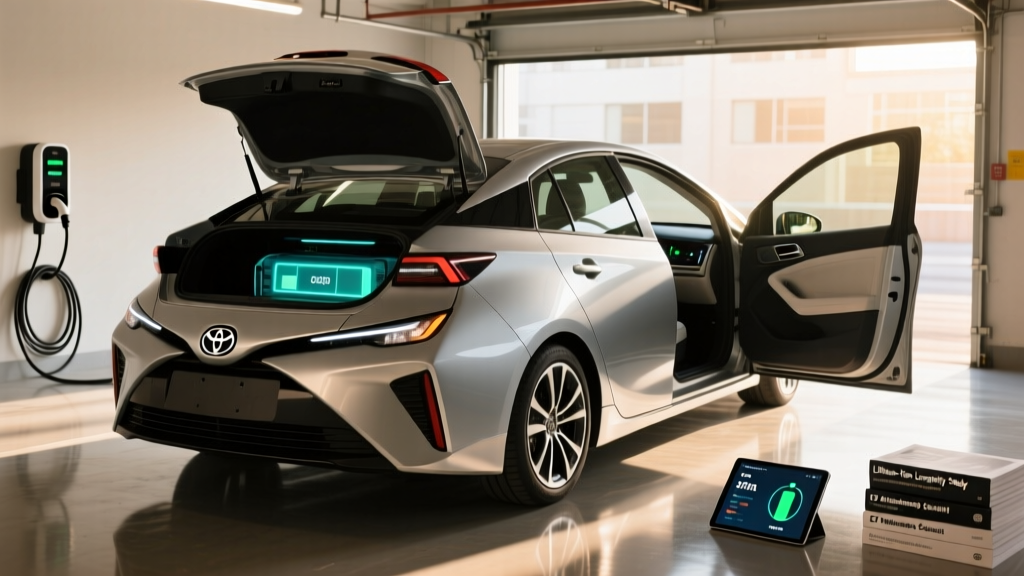
The Toyota Prius has been the benchmark hybrid since 2001, and one question follows every generation: how long does a Prius battery last? The short answer, backed by two decades of fleet data and owner reports, is that Toyota's nickel-metal hydride (NiMH) and lithium-ion hybrid batteries routinely survive 150,000 to 200,000 miles — and many exceed 250,000 miles with proper care. That translates to 12–18 years for the average driver covering 12,000–15,000 miles annually.
But lifespan is only part of the equation. Replacement cost, warranty coverage, degradation patterns, and daily habits all shape what you'll actually experience. This guide breaks down every factor with real numbers, whether you're evaluating a 2026 Prius, a used model, or a Prius Prime plug-in hybrid.
Toyota Prius Battery Chemistry: NiMH, Lithium-Ion, and Where LFP Fits
The 2026 Toyota Prius uses a lithium-ion (Li-ion) traction battery pack, a shift from the nickel-metal hydride (NiMH) chemistry that powered earlier generations. The Prius Prime PHEV also uses Li-ion, with a larger pack to support its extended electric-only range. Understanding chemistry matters because it dictates energy density, cycle life, cold-weather behavior, and eventual replacement cost.
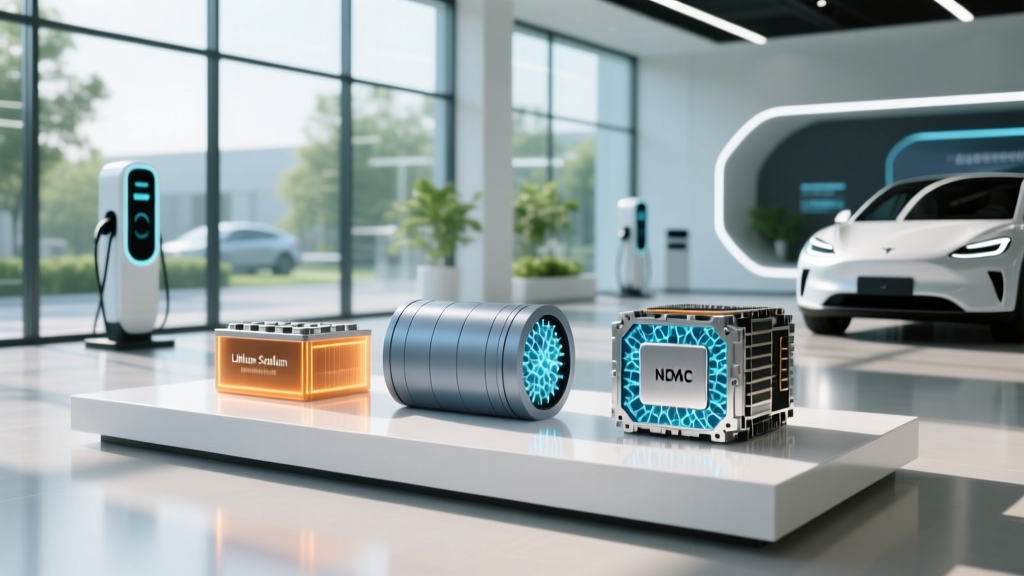
While the Prius lineup currently relies on Li-ion (specifically NMC-type cathodes), the broader EV market is increasingly adopting LFP (lithium iron phosphate) chemistry. Here's how the main chemistries compare across the metrics that matter for hybrid and EV batteries:
| Attribute | NiMH (Legacy Prius) | NMC Li-ion (2026 Prius) | LFP (Select EVs) |
|---|---|---|---|
| Energy Density | Low (~60–80 Wh/kg) | High (~200–260 Wh/kg) | Moderate (~160–200 Wh/kg) |
| Cycle Life | ~500–1,000 cycles | ~1,000–2,000 cycles | ~3,000–5,000+ cycles |
| Cold Performance | Moderate loss | Good with thermal mgmt | Greater loss below 32°F |
| Cost per kWh | Moderate | Higher | Lower (~20–30% less than NMC) |
| Thermal Stability | Good | Good (requires BMS) | Excellent (inherently stable) |
| Used In | 2001–2015 Prius | 2016–2026 Prius / Prime | Tesla Model 3 RWD, Ford Mustang Mach-E Select |
Which is better — LFP or NMC? For a full EV where maximum range is the priority, NMC still wins on energy density. For longevity and cost, LFP's superior cycle life (3,000+ cycles vs. ~1,500 for NMC) makes it ideal for standard-range EVs and frequent daily charging. Toyota has not adopted LFP for the Prius as of 2026, but the chemistry is increasingly common in pure EVs where its weight penalty is more manageable.
Real-World Prius Battery Degradation: What the Data Shows
Unlike a pure EV where battery degradation directly reduces driving range, a standard Prius hybrid's small battery (~1.3 kWh usable in the 2026 model) primarily affects fuel economy. As the pack loses capacity, the gasoline engine runs more often, and MPG drops gradually.
Here's what degradation looks like based on fleet data, owner reports, and testing from sources like fueleconomy.gov and long-term Prius fleet studies:
Typical Prius Hybrid Battery Degradation Curve:
- Year 1–3 (0–45,000 mi): ~2–5% capacity loss. Barely perceptible in daily driving. MPG stays within 1–2 MPG of the 57 EPA combined rating.
- Year 4–7 (45,000–105,000 mi): ~5–12% total loss. You may notice the engine engaging slightly more during low-speed driving. Real-world MPG might dip to 52–54 combined.
- Year 8–12 (105,000–180,000 mi): ~12–20% total loss. More noticeable MPG decline (48–52 combined). The battery still functions but provides less electric assist.
- Year 13+ (180,000+ mi): ~20–30%+ loss. At this stage, some owners opt for replacement. The car remains drivable but with reduced efficiency and potentially rougher engine transitions.
For the Prius Prime PHEV (with a larger ~13.6 kWh battery in the 2026 model), degradation is more directly felt as reduced electric-only range. The EPA rates the 2026 Prius Prime at 44 miles of electric range. Owners typically see 38–42 real-world miles when new, declining to roughly 32–38 miles after 80,000–100,000 miles of use.
Key insight: Toyota's hybrid system is remarkably conservative with battery management. The car never uses the full 0–100% state of charge window — it operates in a roughly 40–80% band. This built-in buffer is the single biggest reason Prius batteries last so long compared to early EVs that cycled closer to their full capacity.
Prius Battery Warranty: What Toyota Covers and for How Long
Toyota provides one of the strongest hybrid battery warranties in the industry. Understanding the exact terms helps you assess risk, especially when buying used.
| Coverage Item | Term |
|---|---|
| Hybrid Battery Warranty | 10 years / 150,000 miles (whichever comes first) |
| Hybrid System Components | 8 years / 100,000 miles |
| Capacity Retention Threshold | Warranty covers failure or significant capacity loss that impairs function (Toyota evaluates on a case-by-case basis; there is no published fixed % threshold like the 70% common in EV warranties) |
| Transferability | Fully transferable to subsequent owners |
| Emissions Warranty (PZEV states) | 15 years / 150,000 miles on hybrid battery in CARB states (CA, NY, MA, and others) |
The 10-year/150,000-mile hybrid battery warranty applies to 2020 and newer Toyota models. For earlier Prius model years (2016–2019), the warranty was 8 years/100,000 miles. If you're buying a used Prius, check the model year to determine which warranty window still applies.
What the warranty covers: Complete battery failure, individual module failure (Toyota can replace individual modules rather than the full pack in some cases), and capacity loss severe enough to trigger a diagnostic fault code. Normal gradual degradation that doesn't trigger a fault is generally not covered — this is standard across the industry.
Pro tip for used buyers: In CARB-adopting states, the 15-year/150,000-mile emissions warranty on the hybrid battery can provide coverage well beyond the standard term. Verify your state's status and the vehicle's registration history.
Prius Battery Replacement Cost: What You'll Actually Pay
Most Prius owners never need a battery replacement — the car is often retired or traded before the pack fails. But when replacement is needed, costs have come down significantly thanks to a mature aftermarket and Toyota's remanufacturing program.
| Option | Cost Range | Notes |
|---|---|---|
| New OEM Battery (Toyota dealer) | $2,500–$4,000 | Full new pack, installed. Varies by model year and generation. |
| Remanufactured OEM Battery | $1,500–$2,500 | Toyota-certified remanufactured pack. Common choice for older models. |
| Aftermarket / Reconditioned Pack | $1,000–$2,000 | Third-party suppliers. Quality varies — check warranty terms. |
| Individual Module Replacement | $300–$800 | If only 1–2 modules are bad. Requires diagnostic to identify weak cells. Not all shops offer this. |
| Prius Prime (PHEV) Battery | $4,000–$6,500 | Larger pack (13.6 kWh). Higher parts cost; fewer aftermarket options. |
For context, a 2026 Toyota Prius LE starts around $29,450 MSRP. A $2,500 battery replacement at 180,000 miles represents less than $0.014 per mile over the vehicle's life — a small fraction of what you'd spend on transmissions, timing belts, or head gaskets in a conventional car over the same distance.
When is replacement typically needed? Most replacements occur between 150,000 and 220,000 miles, or 12–18 years of age. Age can matter as much as mileage — calendar aging degrades cells even in low-mileage vehicles. A 15-year-old Prius with 80,000 miles may still need a battery due to electrolyte breakdown and internal resistance growth.
Factors That Shorten (or Extend) Prius Battery Life
Not all Prius batteries age equally. Your driving habits, climate, and charging practices (for the Prime) can swing lifespan by 30–50%. Here are the factors that matter most:
✅ Habits That Extend Battery Life
- Drive regularly. Batteries degrade faster when sitting idle for weeks. Regular use keeps cells balanced and the battery management system (BMS) active.
- Avoid prolonged storage at extreme SoC. For the Prius Prime, try not to leave the car parked at 100% charge for days. Charge to 80–90% if you won't drive for several days.
- Use moderate climate control. The Prius Prime's battery thermal management benefits from preconditioning while plugged in — use it to reduce thermal stress.
- Keep up with cooling system maintenance. The hybrid battery has its own cooling fan and duct. A clogged filter or failing fan causes heat buildup, accelerating degradation. Clean the battery air intake filter (located near the rear seat) every 15,000–30,000 miles.
- Smooth driving. Aggressive acceleration and hard regenerative braking generate more heat in the battery pack. Moderate driving keeps temperatures in the optimal range.
❌ Habits That Accelerate Degradation
- Frequent DC fast charging (Prius Prime only). The Prime supports Level 2 AC charging. If using any DC capability, limit it to occasional road trips. Repeated high-rate charging heats cells and accelerates capacity loss.
- Extreme heat exposure. Parking in direct sun in 100°F+ climates (Arizona, Texas) without shade or a garage consistently pushes battery temperatures higher. Over years, this adds up.
- Deep discharge cycles. Letting the Prime sit at near-0% charge for extended periods stresses cells. The standard Prius hybrid is largely protected from this by its narrow SoC operating window.
- Ignoring warning lights. A hybrid system warning light can indicate cooling system issues or early cell imbalance. Address it promptly to prevent cascading damage.
The cold-weather question: Cold temperatures temporarily reduce battery performance — you'll see lower electric-only range in the Prime and slightly reduced MPG in the standard Prius during winter. This is temporary performance loss, not permanent degradation. Once the pack warms up (which the car manages automatically), capacity returns. True cold-related permanent damage is rare in Toyota's system thanks to conservative thermal management.
How to Check Your Prius Battery Health (State of Health)
Unlike some EVs that display battery State of Health (SoH) directly on the dash, Toyota doesn't provide a simple SoH percentage readout in the Prius. But you have several ways to assess battery condition:
1. Dealer Diagnostic Scan
Any Toyota dealer can run a hybrid battery health check using Toyota's Techstream diagnostic software. This reads individual module voltages, internal resistance, and overall pack capacity. Ask specifically for a "hybrid battery health report." This is the most thorough option and is often included free during a standard service visit.
2. OBD-II Scanner with Hybrid App
Aftermarket OBD-II dongles paired with apps like Dr. Prius or Hybrid Assistant can read real-time battery data, including individual block voltages, battery temperature, and estimated capacity. The Dr. Prius app includes a "Life Expectancy Test" that performs a controlled discharge cycle and estimates remaining capacity as a percentage. Cost: ~$30–50 for a compatible OBD-II adapter.
3. MPG Tracking
The simplest method: track your fuel economy over time. If your standard Prius consistently delivered 54–57 MPG and has gradually dropped to 48–50 MPG over 100,000+ miles, the battery is losing capacity. A sudden MPG drop (5+ MPG in a short period) suggests a specific module failure rather than gradual degradation.
4. Dashboard Indicators
Watch for the hybrid system warning light, a "Check Hybrid System" message, or unusual behavior like the engine running constantly even when the battery appears charged. These indicate the BMS has detected a fault and the car is protecting the pack.
Beyond the Prius: How Hybrid Batteries Compare to Full EV Batteries
If you're cross-shopping a Prius against a full battery-electric vehicle, battery longevity concerns differ significantly between the two:
- Prius hybrid battery (~1.3 kWh): Small, lightly stressed, buffered heavily. Replacement cost is low ($1,500–$4,000). Degradation affects MPG, not usability.
- Prius Prime PHEV battery (~13.6 kWh): Moderate size, cycled more frequently. Replacement cost is higher ($4,000–$6,500). Degradation reduces electric-only range.
- Full EV battery (60–100 kWh): Large, actively cooled, designed for 1,000–2,000+ cycles. Replacement cost is substantial ($8,000–$20,000+). Degradation directly reduces range. Most modern EVs show 8–15% degradation at 100,000 miles based on fleet data.
The Prius's hybrid architecture gives it a structural longevity advantage: the battery does far less work than an EV's pack. Where an EV battery must deliver all propulsion energy, a Prius battery assists the engine and captures regenerative braking energy — a much gentler duty cycle.
Emerging Battery Technology: What's Next After Li-Ion
Toyota has invested heavily in next-generation battery research, and the company's roadmap points toward meaningful upgrades — though none are available in the 2026 Prius.
Solid-state batteries: Toyota holds over 1,300 patents on solid-state battery technology and has announced plans for limited commercialization in the 2027–2028 timeframe, initially in select EV models. Solid-state cells promise higher energy density (potentially 2× current Li-ion), faster charging, and improved safety due to the elimination of liquid electrolyte. However, manufacturing scale-up and cost remain significant hurdles. This technology is not yet available in any production vehicle.
Bipolar Li-ion: Toyota introduced a bipolar NiMH battery in the 2022 Prius and has since developed a bipolar Li-ion version. This design reduces internal resistance and improves power density within the same physical space. Expect this to appear in future Prius generations, improving electric-assist performance without necessarily increasing pack size.
Silicon anode batteries: Companies like Sila Nanotechnologies and Group14 are developing silicon-dominant anodes that could boost energy density by 20–40%. These are expected to reach production EVs in the 2027–2029 window. For the Prius, this could mean a smaller, lighter battery pack delivering the same performance — or the same size pack with more electric assist.
All of these technologies are forward-looking. For buyers today, the current Li-ion pack in the 2026 Prius offers proven reliability backed by two decades of continuous refinement.
Frequently Asked Questions
How long does a Prius battery last in years and miles?
Most Prius hybrid batteries last 150,000–200,000 miles or 12–18 years. Many exceed 250,000 miles. The Prius Prime PHEV battery follows a similar timeline, though its larger capacity means degradation is more noticeable as reduced electric-only range rather than MPG loss.
How much does it cost to replace a Prius battery?
A new OEM Prius hybrid battery costs $2,500–$4,000 installed at a dealer. Remanufactured options run $1,500–$2,500. The Prius Prime's larger PHEV battery costs $4,000–$6,500. Individual module replacement, when only a few cells are bad, can cost as little as $300–$800.
What does the Toyota hybrid battery warranty cover?
For 2020 and newer models, Toyota covers the hybrid battery for 10 years or 150,000 miles. In CARB states, the emissions warranty extends to 15 years/150,000 miles. The warranty covers battery failure and significant capacity loss that triggers a diagnostic fault code. Normal gradual degradation without a fault code is typically not covered.
Can I check my Prius battery health myself?
Yes. An OBD-II scanner paired with the Dr. Prius or Hybrid Assistant app (~$30–50 for the adapter) can read individual cell voltages, battery temperature, and run an estimated capacity test. Alternatively, any Toyota dealer can perform a full hybrid battery health scan using Techstream software.
Does fast charging hurt the Prius Prime battery?
The Prius Prime primarily charges via Level 1 (120V) or Level 2 (240V) AC charging, which is gentle on the battery. Occasional DC fast charging on road trips won't cause meaningful harm, but making it a daily habit would accelerate degradation due to sustained high cell temperatures. For daily use, Level 2 is ideal.
Is it worth replacing the battery on a high-mileage Prius?
Often, yes. A $2,000–$3,000 battery replacement can extend a well-maintained Prius's life by another 80,000–100,000 miles. Given the car's low operating costs (57 MPG, minimal maintenance), the total cost per mile after replacement remains far below that of a new vehicle. The decision depends on the rest of the car's condition — if the engine, suspension, and body are solid, a battery replacement is a sound investment.
Will a Prius battery degrade if I don't drive the car often?
Yes. Calendar aging affects all lithium-ion and NiMH batteries regardless of mileage. A Prius that sits for months at a time will experience faster degradation than one driven regularly. If you store a Prius Prime, leave it at roughly 50–60% charge and start it (or drive it briefly) every 2–3 weeks to let the BMS balance the cells.