Toyota's Battery Strategy: Beyond the Solid-State Headlines
Toyota's battery technology announcements generate outsized attention, and for good reason. As the world's largest automaker transitions from its hybrid-dominant lineup to a broader BEV portfolio, the chemistry choices and cell architectures it selects ripple across the entire industry. But separating press-release enthusiasm from showroom reality requires a close look at what Toyota is actually shipping today, what's in the pipeline, and how its battery strategy compares to the broader EV market.
This guide breaks down Toyota's current and upcoming battery technology — including the much-discussed solid-state cells — while grounding the conversation in the data every EV buyer needs: degradation curves, warranty coverage, replacement economics, and the LFP-versus-NMC decision that determines real-world ownership experience.
What Toyota Is Shipping Now: Current Battery Chemistry in 2026 Models
As of the 2026 model year, Toyota's battery-electric vehicles primarily use lithium-ion cells with NMC (nickel manganese cobalt) cathode chemistry, supplied through partnerships with Panasonic and its own Prime Planet Energy & Solutions (PPES) joint venture. The bZ4X, Toyota's flagship BEV, carries a 71.4 kWh usable battery pack (NMC) delivering an EPA-estimated 252 miles of range in its FWD configuration.
For its hybrid and plug-in hybrid lineup — which remains Toyota's volume electrification play — the company uses smaller NMC packs: the RAV4 Prime PHEV, for example, uses an 18.1 kWh battery for 42 miles of EPA electric-only range, while the standard RAV4 Hybrid uses a ~1.6 kWh NiMH or lithium-ion pack depending on model year.
Toyota has also begun integrating LFP (lithium iron phosphate) cells into select models for markets where cost sensitivity is paramount, signaling a dual-chemistry strategy similar to Tesla's approach of using LFP in Standard Range variants and NMC in Long Range/Performance trims.
| Model | Battery (kWh usable) | Chemistry | EPA Range / EV Range | Max DC Charge Rate |
|---|---|---|---|---|
| bZ4X FWD | 71.4 kWh | NMC | 252 mi | ~150 kW |
| bZ4X AWD | 71.4 kWh | NMC | 228 mi | ~150 kW |
| RAV4 Prime (PHEV) | 18.1 kWh | NMC (Li-ion) | 42 mi EV-only | N/A (Level 2 only) |
| Prius Prime (PHEV) | 13.6 kWh | NMC (Li-ion) | 44 mi EV-only | N/A (Level 2 only) |
LFP vs NMC: The Chemistry Decision That Shapes Ownership
Understanding Toyota's technology roadmap — and any EV purchase — requires fluency in the two dominant lithium-ion chemistries. Neither is universally superior; each optimizes for different priorities.
| Attribute | LFP (Lithium Iron Phosphate) | NMC/NCA (Nickel-based) |
|---|---|---|
| Energy Density | Lower (~160 Wh/kg cell-level) | Higher (~250-300 Wh/kg cell-level) |
| Cycle Life | 3,000-5,000+ cycles to 80% SoH | 1,000-2,000 cycles to 80% SoH |
| Cold-Weather Performance | Greater range loss below freezing (~30-40%) | Better low-temp conductivity (~20-30% loss) |
| Cost (per kWh) | Lower — no cobalt or nickel | Higher — commodity-sensitive pricing |
| Thermal Stability | Superior — higher runaway threshold | Good, but requires more active thermal management |
| State of Charge Recommendation | Can charge to 100% daily without harm | Best kept at 80% daily; 100% for trips only |
| Typical Use Case | Standard-range, cost-focused, high-mileage fleet | Long-range, performance, cold-climate priority |
Which is better? For a buyer who charges at home nightly, drives under 40 miles daily, and lives in a mild climate, LFP is arguably the smarter long-term bet — you gain cycle life and can charge to 100% without degradation guilt. For road-trip-heavy drivers, cold-climate residents, or anyone who prioritizes maximum range per charge, NMC's energy density advantage matters more. Toyota's dual-chemistry approach acknowledges this reality.
Battery Degradation: What the Data Actually Shows
The fear of rapid battery degradation persists as a top EV purchase barrier, but real-world fleet data tells a more reassuring story. Modern lithium-ion packs with active thermal management degrade far more slowly than early-2010s EVs.
Typical EV Battery Degradation Curve (NMC, liquid-cooled):
- Year 1 / 15,000 mi: ~2-4% capacity loss (initial "break-in" drop)
- Year 3 / 45,000 mi: ~6-9% total loss
- Year 5 / 75,000 mi: ~9-12% total loss
- Year 8 / 120,000 mi: ~12-17% total loss (still above 80% SoH threshold)
- Year 10 / 150,000 mi: ~15-22% total loss depending on usage patterns
LFP cells typically show slower degradation — often 5-10% loss at 150,000 miles — thanks to their inherent cycle-life advantage.
Toyota's own hybrid battery data, accumulated over two decades of Prius production, shows NiMH and lithium-ion hybrid packs routinely exceeding 200,000 miles before falling below 70% capacity. The company's BEV packs, with more aggressive thermal management, are engineered for similar longevity.
According to fueleconomy.gov, most modern EV batteries retain 85-90% of original capacity after 100,000 miles under normal use — a figure consistent with fleet data from Recurrent Auto and Geotab published in recent years.
Toyota's Battery Warranty: What's Covered and What Isn't
Toyota's high-voltage traction battery warranty is competitive with the industry standard and, in some cases, exceeds it. The company backs its BEV and PHEV batteries against both defects and excessive capacity loss.
| Coverage Type | Duration | Mileage Limit | Capacity Threshold |
|---|---|---|---|
| BEV Traction Battery (bZ4X) | 8 years | 100,000 miles | 70% SoH (minimum retention) |
| PHEV/HEV Hybrid Battery | 10 years | 150,000 miles | Varies by model; typically defect + significant capacity loss |
| Battery Defect Coverage | Same as above | Same as above | Any manufacturing defect causing failure |
The 70% capacity retention threshold means Toyota will repair or replace the battery if diagnostic testing confirms it has lost more than 30% of original capacity within the warranty window. In practice, given the degradation data above, a warranty claim for capacity loss alone is uncommon — most packs remain well above 80% SoH at the 8-year mark.
California Air Resources Board (CARB) states receive extended coverage: 10 years / 150,000 miles for BEV batteries, matching the hybrid warranty. This applies in California and states that have adopted CARB standards (including New York, Massachusetts, Washington, and others).
Replacement Costs: The Numbers Behind the Anxiety
Battery replacement cost is the single most cited fear among prospective EV buyers. Context matters: the vast majority of EV batteries outlast the vehicle itself, but understanding worst-case economics is essential for informed ownership.
| Battery Size / Application | Part Cost (Battery Pack) | Labor | Total Estimate | Typical Replacement Trigger |
|---|---|---|---|---|
| 60-75 kWh BEV pack (e.g., bZ4X class) | $8,000–$14,000 | $1,500–$3,000 | $9,500–$17,000 | Physical damage, rare cell failure post-warranty |
| 80-100 kWh BEV pack (large SUV/truck) | $12,000–$20,000 | $2,000–$4,000 | $14,000–$24,000 | Same as above |
| 13-18 kWh PHEV pack (RAV4 Prime, Prius Prime) | $3,500–$7,000 | $800–$1,500 | $4,300–$8,500 | Post-warranty degradation or cell failure |
| 1-2 kWh HEV pack (Prius, Camry Hybrid) | $1,500–$3,500 | $500–$1,000 | $2,000–$4,500 | Common at 150,000-200,000+ mi; well-documented |
Several factors work in the owner's favor. First, cell-level pricing continues to decline — BloombergNEF's 2025 battery price survey reported average pack prices near $115/kWh, down from $200+/kWh just a few years prior. Second, module-level repair (replacing individual cell modules rather than the entire pack) is increasingly available through independent EV shops, reducing out-of-warranty costs by 40-60%. Third, refurbished and remanufactured packs are becoming available for older models at 30-50% below new-pack pricing.
The realistic takeaway: for a vehicle under warranty, battery replacement cost is $0 to the owner. Post-warranty, it's a significant but increasingly rare expense — analogous to an engine rebuild on a gas car that most original owners never face.
Maximizing Battery Life: A Practical Care Checklist
Battery longevity isn't purely a function of chemistry and engineering — owner habits meaningfully influence degradation rate. Here's what the data supports:
- Limit DC fast charging to road trips. Frequent 150+ kW DC sessions accelerate degradation by roughly 1-3% over the battery's life compared to Level 2 home charging. Use fast chargers when needed, but don't make them your daily routine.
- Keep daily State of Charge between 20-80% (NMC). If your Toyota uses NMC chemistry, set the charge limit to 80% for daily driving. Reserve 100% for trips. LFP owners can charge to 100% without concern.
- Precondition in cold weather. Using Toyota's scheduled departure timer to warm the battery while plugged in reduces cold-weather range loss (typically 20-40% below EPA at 20°F) and avoids high-rate charging on a cold pack, which stresses cells.
- Avoid prolonged storage at extreme SoC. If the vehicle will sit unused for weeks, aim for ~50% SoC. Storing at 100% or near 0% accelerates calendar degradation.
- Minimize exposure to extreme heat. Parking in shade or a garage when possible reduces thermal stress. Battery thermal management systems work harder — and consume energy — in sustained 95°F+ conditions.
- Use regenerative braking normally. Moderate regen settings generate less heat in the pack than aggressive one-pedal modes during repeated hard deceleration, though the effect is small on liquid-cooled packs.
How to Check Battery State of Health (SoH)
Toyota does not currently expose a granular SoH percentage directly in the vehicle's infotainment display the way some competitors do. However, owners have several options:
- Toyota app / connected services: Some model years provide battery health status through Toyota's connected services portal, though detail varies by region and subscription tier.
- Dealer diagnostic scan: A Toyota service center can run a high-voltage battery health check that reports SoH percentage. Request this during routine service visits, especially as the vehicle approaches the warranty mileage threshold.
- OBD-II diagnostic tools: Third-party tools like OBDeleven or app-based readers with EV-specific PIDs can read battery management system (BMS) data including SoH, cell voltage variance, and total energy throughput. Compatibility varies by model year.
- Manual range tracking: The simplest method — track your real-world range at a consistent SoC (e.g., miles driven from 80% to 20%) over time. A shrinking range window indicates degradation. Compare against your baseline when the vehicle was new.
Toyota's Solid-State Battery Roadmap: What's Real and What's Forward-Looking
No discussion of Toyota's battery technology is complete without addressing solid-state batteries — the company's most publicized R&D effort. Here's where things stand as of 2026, with clear boundaries between what's available and what's announced.
⚠ Forward-Looking Technology — Not Currently Available
Toyota's solid-state battery cells are not in production vehicles as of 2026. The company has announced a phased commercialization timeline beginning in the late 2020s, but specifications, availability, and pricing remain preliminary. Do not base a current purchase decision on solid-state expectations.
What Toyota has announced:
- First-generation solid-state (announced for ~2027-2028): Targeted at 750 km (~466 miles) of range with a 10-minute 10-80% fast-charge capability. These cells replace the liquid electrolyte with a solid material, enabling lithium-metal or advanced anode designs with higher energy density.
- Second-generation (announced for ~2029-2030): Toyota has referenced a target of 1,000 km (~621 miles) range with further cost reductions.
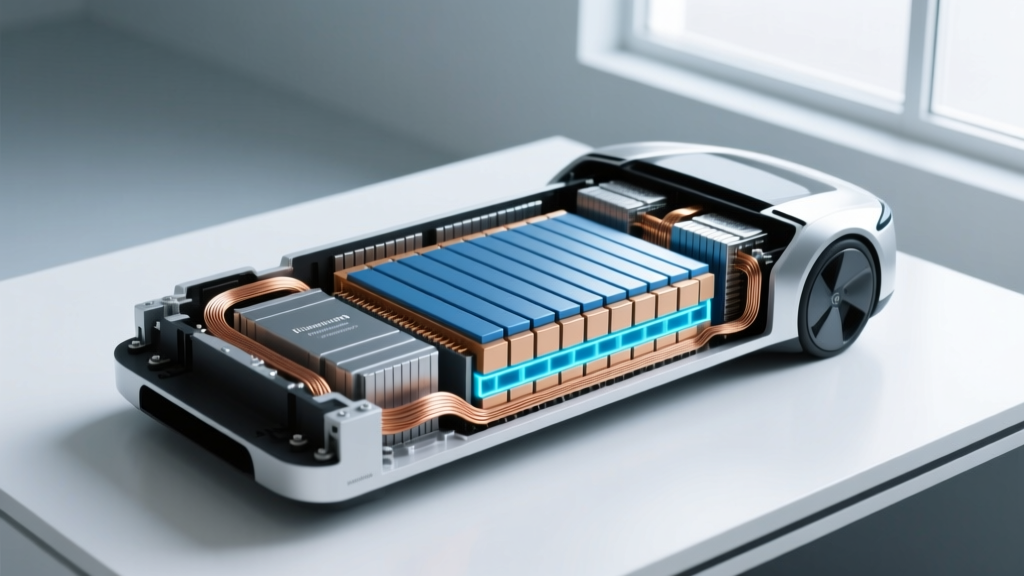
- Bipolar LiFePO4 (LFP) packs: A nearer-term technology Toyota has confirmed for 2026-2027 production models, using a bipolar electrode structure to reduce internal resistance and cost while using proven LFP chemistry. Targeted at 600 km (~373 miles) range for cost-optimized BEVs.
- High-performance NMC with bipolar structure: Also in the 2026-2028 pipeline, aimed at 800+ km range in premium applications.
The solid-state timeline has slipped multiple times since Toyota first discussed it publicly in the early 2020s. Industry analysts note that manufacturing yield, material costs, and scaling challenges remain significant hurdles. Toyota holds over 1,300 solid-state battery patents — more than any other automaker — but patent volume does not guarantee production readiness. For now, buyers should evaluate Toyota's current NMC and LFP offerings on their own merits rather than waiting for a technology that remains 2-4 years from volume production at best.
Frequently Asked Questions
How long do Toyota EV batteries last in years and miles?
Based on current degradation data for liquid-cooled NMC packs, Toyota's BEV batteries are engineered to retain above 70% capacity for 8-10 years and 100,000-150,000 miles — the warranty threshold. Real-world data from similar packs across the industry suggests most retain 80-88% capacity at the 100,000-mile mark under normal use. Toyota's hybrid batteries (Prius, Camry Hybrid) have a well-documented track record of exceeding 200,000 miles before significant capacity loss, supported by a 10-year / 150,000-mile warranty. Most EV batteries outlast the vehicle they're installed in.
How much does a Toyota EV battery cost to replace?
For the bZ4X's 71.4 kWh NMC pack, expect $9,500-$17,000 total (parts + labor) for an out-of-warranty replacement at a dealership. Toyota PHEV packs (RAV4 Prime, Prius Prime) run $4,300-$8,500. Standard hybrid packs (Prius) are $2,000-$4,500 — the most commonly replaced category, typically at 150,000-200,000+ miles. Module-level repair and refurbished packs can reduce these figures by 30-60%. Under warranty, replacement cost to the owner is $0.
What does Toyota's battery warranty actually cover?
Toyota covers the BEV traction battery for 8 years / 100,000 miles (10 years / 150,000 miles in CARB states) against both manufacturing defects and capacity loss below 70% State of Health. PHEV and HEV hybrid batteries carry a 10-year / 150,000-mile warranty. The warranty is transferable to subsequent owners. It does not cover damage from accidents, flooding, or unauthorized modifications.
LFP vs NMC — which Toyota battery chemistry is better for me?
Choose LFP if you charge at home daily, drive under 50 miles per day, live in a mild climate, and want maximum cycle life with the convenience of 100% daily charging. Choose NMC if you need maximum range per charge, regularly drive in freezing temperatures, take frequent road trips, or prioritize performance. Neither is objectively superior — the right choice depends on your driving pattern and climate.
How do I check my Toyota's battery health?
Request a high-voltage battery health check at any Toyota dealer during service visits — they can pull State of Health (SoH) percentage from the BMS. Between visits, track your real-world range at a consistent charge window (e.g., miles from 80% to 20%) and compare against your baseline when new. Third-party OBD-II tools with EV PIDs can also read SoH data, though compatibility varies by model year.
Is Toyota's solid-state battery available now?
No. As of 2026, Toyota's solid-state battery technology remains in pre-production development. The company's announced timeline targets initial commercialization in 2027-2028, with volume production likely later. Current Toyota BEVs and PHEVs use proven NMC lithium-ion cells. Toyota's nearer-term innovation — bipolar LFP packs — may appear in production vehicles sooner, but specific model availability has not been confirmed for the U.S. market.
Sources: U.S. Department of Energy / fueleconomy.gov — EV battery technology overview and efficiency data; Toyota bZ4X official specifications — battery capacity, range, and warranty details; IRS §30D Clean Vehicle Credit — current federal incentive eligibility rules affecting EV purchase decisions.