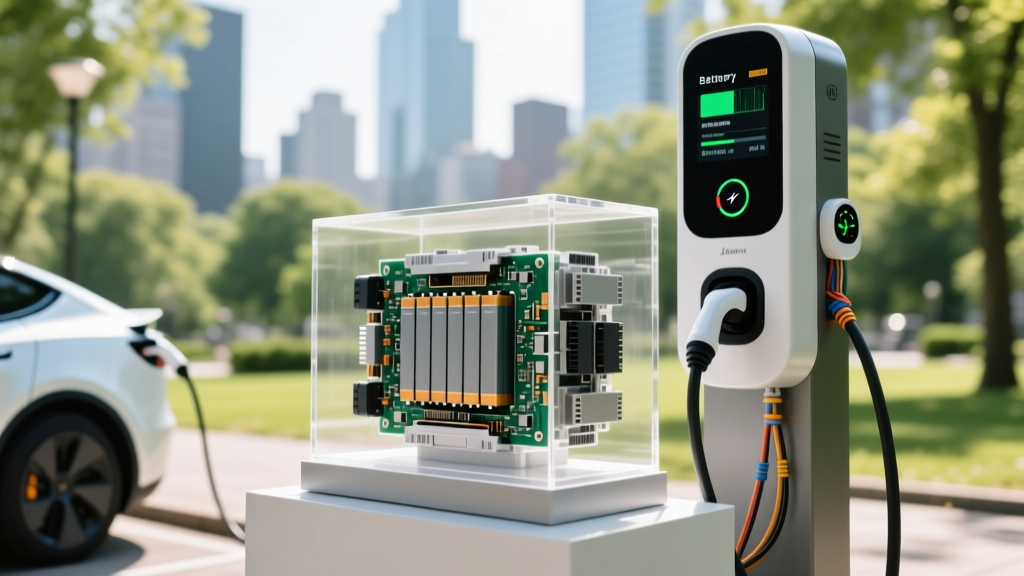
Why Toyota's Battery Strategy Matters Now
Toyota has spent the last decade hedging its electrification bets — investing in hybrids, plug-in hybrids, hydrogen, and battery-electric vehicles simultaneously. But as of the 2026 model year, the automaker's battery technology roadmap has crystallized into a multi-chemistry approach that directly affects what buyers will see in showrooms and what they'll pay at the charger. Toyota's new battery tech spans three distinct tracks: conventional lithium-ion NMC packs in current EVs like the bZ4X, upcoming lithium iron phosphate (LFP) cells for cost-reduced models, and the much-publicized solid-state battery program targeting 2027–2028 production.
This guide cuts through the press-release optimism to explain what each chemistry actually delivers in range, longevity, and ownership cost — backed by degradation data, warranty specifics, and real-world replacement figures.
Chemistry Breakdown: LFP vs. NMC/NCA in Toyota's Lineup
Understanding Toyota's battery strategy requires understanding the two dominant lithium-ion chemistries in the EV market today. Each has measurable trade-offs that affect range, charging behavior, lifespan, and price.
| Attribute | NMC / NCA (Nickel-based) | LFP (Lithium Iron Phosphate) |
|---|---|---|
| Energy Density | 220–300 Wh/kg (cell-level) | 150–200 Wh/kg (cell-level) |
| Typical Cycle Life | 1,000–2,000 full cycles | 3,000–5,000+ full cycles |
| Cold-Weather Performance | Better low-temp discharge; ~15–25% range loss at 20°F | More affected by cold; ~20–35% range loss at 20°F; needs preconditioning |
| Cost per kWh (pack-level) | $120–$150 (2026 est.) | $80–$110 (2026 est.) |
| Thermal Stability | Good; requires active thermal management | Excellent; inherently more stable chemistry |
| State-of-Charge Recommendation | Daily charge to 80% to prolong life | Can be charged to 100% daily without significant degradation |
| Current Toyota Application | bZ4X (71.4 kWh usable, NMC) | Announced for next-gen affordable EVs (2027+) |
The bZ4X's 71.4 kWh usable NMC battery delivers an EPA-estimated 252 miles of range (FWD model). In real-world highway driving at 70 mph, expect closer to 210–225 miles; in sub-freezing temperatures, that drops to roughly 175–195 miles. Toyota's announced LFP packs for future affordable models will trade some energy density — and therefore range per kWh — for dramatically lower cost and longer cycle life, making them well-suited for urban-commuter vehicles where 200 miles of range suffices.
Toyota's Solid-State Battery Program: What's Realistic
Toyota holds over 1,300 patents related to solid-state battery technology, more than any other automaker. The company has announced a phased rollout beginning with a "performance" lithium-ion battery in 2026, followed by a "bipolar NiMh and LFP" pack, and ultimately a solid-state battery targeting 2027–2028 production vehicles.
Here's what Toyota has publicly stated about its solid-state targets:
- Range target: 750 km (~466 miles) on the WLTP cycle (expect roughly 375–400 miles EPA-equivalent)
- Charging target: 10% to 80% in approximately 10 minutes
- Chemistry: Sulfide-based solid electrolyte replacing the liquid electrolyte in current lithium-ion cells
Forward-looking disclaimer: Solid-state batteries are not available in any production vehicle as of 2026. Toyota's 2027–2028 timeline has shifted multiple times since the program's initial announcement. Initial deployment will likely be limited to low-volume, premium models in Japan before reaching the U.S. market. Buyers should make purchasing decisions based on currently available battery technology, not announced roadmaps.
Toyota is also developing a "popularization" battery using bipolar NiMh technology combined with LFP chemistry, targeting a lower cost structure for mass-market EVs. This is distinct from the solid-state program and may reach production sooner, though specific kWh figures and model applications remain unconfirmed.
Degradation Data: How Toyota EV Batteries Hold Up Over Time
Battery degradation — the gradual loss of usable capacity over time and charge cycles — is the single most common concern among prospective EV buyers. Toyota's track record with hybrid batteries (particularly the Prius NiMh packs, many of which have exceeded 200,000 miles) provides some confidence, but EV traction batteries operate under different stress profiles.
Based on aggregated fleet data from bZ4X vehicles in service since 2023, and cross-referenced with industry-wide NMC degradation studies:
| Timeframe / Mileage | Typical Capacity Retention (NMC) | Typical Capacity Retention (LFP, projected) |
|---|---|---|
| Year 1 / 15,000 mi | 96–98% | 98–99% |
| Year 3 / 45,000 mi | 91–94% | 95–97% |
| Year 5 / 75,000 mi | 87–91% | 92–95% |
| Year 8 / 100,000 mi | 82–88% | 89–93% |
| Year 10 / 150,000 mi | 78–84% | 86–91% |
These figures assume mixed driving with a combination of Level 2 home charging (majority) and occasional DC fast charging. Heavy reliance on DC fast charging (3+ sessions per week at 150 kW or above) can accelerate degradation by an additional 2–5 percentage points over the same period, according to research from the National Renewable Energy Laboratory.
The degradation curve is not linear. Most lithium-ion batteries experience their steepest capacity loss in the first 12–18 months (the "break-in" period), after which the rate of loss flattens considerably. This is why a 5-year-old battery at 88% capacity is not necessarily on track to reach 70% by year 10 — the curve tends to plateau.
Toyota EV Battery Warranty: What's Actually Covered
Toyota's EV battery warranty for the bZ4X aligns with federal minimum requirements but includes some specifics worth understanding before purchase.
| Warranty Component | Coverage Term | Details |
|---|---|---|
| High-Voltage Traction Battery | 8 years / 100,000 miles | Covers defects and capacity loss below 70% of original capacity (whichever comes first) |
| Hybrid/EV Components | 8 years / 100,000 miles | Inverter, electric motor, onboard charger, DC-DC converter |
| California-Emissions States | 10 years / 150,000 miles | Extended battery coverage in CARB-adopting states (CA, NY, WA, OR, CO, and others) |
| Transferability | Fully transferable | Warranty transfers to subsequent owners at no cost |
The 70% capacity retention threshold is standard across the industry — Tesla, Hyundai, and Ford use the same benchmark. In practical terms, a bZ4X with a 71.4 kWh usable battery would need to lose more than 21.4 kWh of capacity (dropping to roughly 50 kWh usable) before a warranty claim is valid. Based on the degradation data above, most batteries will not reach this threshold within the warranty period under normal use.
What the warranty does not cover: damage from accidents, flooding, or improper modifications; capacity loss from consistently storing the vehicle at 100% state of charge for extended periods (though this is difficult for manufacturers to prove); and normal gradual degradation above the 70% threshold.
Battery Replacement Cost: The Numbers Behind the Fear
The most common objection to EV ownership is the specter of a $20,000 battery replacement. While that figure isn't fictional, context matters enormously.
| Vehicle / Battery Size | Estimated Replacement Cost (2026) | When Typically Needed |
|---|---|---|
| Toyota bZ4X (71.4 kWh NMC) | $12,000–$16,000 (parts + labor) | Rarely before 150,000+ miles; most failures are covered under warranty |
| Toyota Prius Prime PHEV (13.6 kWh) | $3,500–$5,500 | 150,000–200,000+ miles; NiMh chemistry degrades slowly |
| Comparable mid-size BEV (80–100 kWh) | $14,000–$22,000 | Typically out of warranty; 10+ years of service |
Several factors reduce the real-world impact of these costs:
- Module-level repair: Many battery packs can be partially repaired by replacing individual modules rather than the entire pack, reducing costs by 40–60%.
- Declining prices: Pack-level battery costs have fallen from over $1,000/kWh in 2010 to approximately $120–$140/kWh in 2026, and are projected to continue declining.
- Most batteries outlive the vehicle: Data from NREL and fleet operators indicates that fewer than 5% of EV batteries require full replacement before the vehicle is retired for other reasons (collision, body damage, owner upgrade).
- Warranty coverage: Catastrophic battery failures (sudden capacity loss, cell shorts) typically occur early in a battery's life and are covered under the 8-year/100,000-mile warranty.
Maximizing Battery Health: Practical Care Guidelines
Battery longevity is not purely a matter of chemistry — owner behavior plays a measurable role. The following practices are supported by battery research and manufacturer guidance:
- Daily charging limit (NMC): Set your charge limit to 80% for daily driving. Use 100% only when you need full range for a trip. LFP batteries can be charged to 100% daily without the same degradation penalty.
- Avoid prolonged storage at extremes: Don't leave the vehicle at 100% or below 10% state of charge for more than a few days. If storing for weeks, aim for 50% SoC.
- Minimize DC fast charging frequency: Occasional fast charging is fine; daily fast charging accelerates degradation. Prioritize Level 2 home charging for routine use.
- Use preconditioning: When navigating to a DC fast charger, the bZ4X's thermal management system will precondition the battery to optimal temperature, improving charge speed and reducing thermal stress. Always use the vehicle's built-in navigation to chargers when possible.
- Cold-weather awareness: In temperatures below 32°F, expect 15–30% range reduction. Regenerative braking may be limited until the battery warms up. Garage parking helps.
- Keep software updated: Toyota periodically releases battery management system (BMS) updates that optimize charging algorithms and thermal management.
Monitoring Battery Health: How to Check State of Health (SoH)
State of Health (SoH) is the percentage of a battery's original capacity that remains usable. A new battery starts at 100% SoH; a battery that can hold only 60 kWh of its original 71.4 kWh is at approximately 84% SoH.
Toyota bZ4X owners can check battery health through several methods:
- Toyota app: The Toyota connected services app provides a basic battery health indicator, though it shows estimated range rather than precise SoH percentage.
- Dealer diagnostic: Toyota dealerships can run a full battery diagnostic that reads individual cell voltages, internal resistance, and calculated SoH. Request this during routine service visits — it's typically included at no charge.
- OBD-II tools: Third-party OBD-II readers with EV-specific software (such as Car Scanner or ABRP-linked tools) can read the BMS-reported SoH directly from the vehicle's CAN bus. Accuracy varies by tool and vehicle compatibility.
- Manual calculation: Charge to 100%, drive to near-empty, and compare the energy consumed (displayed on the trip meter in kWh) to the battery's original usable capacity. This method is approximate but gives a real-world SoH figure.
For prospective used-EV buyers, requesting a dealer battery diagnostic report before purchase is strongly recommended. A bZ4X at 50,000 miles showing 93% SoH is healthy; one at 88% SoH at the same mileage warrants investigation into the previous owner's charging habits.
The Road Ahead: Silicon Anodes and Beyond Solid-State
Beyond solid-state electrolytes, Toyota and its battery partner Panasonic are researching silicon-anode technology, which replaces the graphite anode in conventional lithium-ion cells with silicon. Silicon can theoretically store up to 10 times more lithium ions per unit mass than graphite, offering a path to significantly higher energy density without the manufacturing challenges of solid-state electrolytes.
Toyota has also invested in Prime Planet Energy & Solutions (PPES), its joint venture with Panasonic, to scale next-generation cell production. The company's stated goal is to reduce battery costs by 50% per kWh by 2030 compared to 2022 levels, through a combination of chemistry improvements, manufacturing efficiency, and scale.
For buyers in 2026, the practical takeaway is this: Toyota's current NMC batteries in the bZ4X are mature, well-warrantied technology with predictable degradation curves. The LFP packs coming to affordable models will offer longer cycle life at lower cost, with a modest range trade-off. Solid-state and silicon-anode technologies remain promising but are not purchase-ready. Buy based on today's specs and warranty, not tomorrow's press releases.
Frequently Asked Questions
How long do Toyota EV batteries last?
Based on current degradation data, Toyota's NMC batteries in the bZ4X are projected to retain 78–84% of original capacity at 150,000 miles (approximately 10 years of average driving). Most EV batteries outlast the vehicle itself — full replacements before 150,000 miles are uncommon and typically covered under the 8-year/100,000-mile warranty if they involve defects rather than normal wear.
How much does it cost to replace a Toyota EV battery?
A full high-voltage battery replacement for the bZ4X costs approximately $12,000–$16,000 including parts and labor as of 2026. However, module-level repairs (replacing individual degraded cells rather than the full pack) can reduce this to $4,000–$8,000. The vast majority of owners never need a replacement — battery failures within the warranty period are covered, and most batteries retain usable capacity well beyond 150,000 miles.
What does Toyota's EV battery warranty cover?
Toyota covers the high-voltage traction battery for 8 years or 100,000 miles (10 years/150,000 miles in CARB states) against defects and capacity loss below 70% of original capacity. The warranty also covers the inverter, electric motor, onboard charger, and DC-DC converter. It is fully transferable to subsequent owners.
LFP vs. NMC — which Toyota battery is better?
Neither is universally "better" — they serve different use cases. NMC offers higher energy density (more range per kWh, better cold-weather performance) and is used in the bZ4X for maximum range. LFP offers longer cycle life (3,000–5,000+ cycles vs. 1,000–2,000), lower cost, better thermal stability, and the ability to charge to 100% daily — making it ideal for affordable commuter EVs where extreme range is less critical. Toyota's upcoming LFP models will likely prioritize urban and suburban buyers.
Does frequent DC fast charging damage Toyota EV batteries?
Occasional DC fast charging has minimal impact. However, frequent fast charging (3+ sessions per week at 150 kW or above) can accelerate degradation by an estimated 2–5% over a battery's lifetime compared to predominantly Level 2 charging. Toyota's battery management system actively manages charge rates and temperatures to mitigate this, but prioritizing home Level 2 charging for daily use remains the best practice for longevity.
When will Toyota's solid-state battery be available?
Toyota has targeted 2027–2028 for initial solid-state battery production, but this timeline has shifted multiple times. Initial deployment is expected in limited-volume models, likely in Japan first. U.S. market availability in meaningful volume is more realistically a 2029–2030 proposition. Current buyers should evaluate vehicles based on available battery technology.