Toyota has sold more than 25 million hybrid vehicles globally since the original Prius launched in 1997, giving the company the deepest real-world dataset on hybrid battery longevity in the industry. If you're researching how long Toyota hybrid batteries last — whether you're shopping for a new 2026 RAV4 Hybrid, a used Prius, or a plug-in Prius Prime — the answer depends heavily on the battery chemistry inside, your driving climate, and how the vehicle manages charge cycles.
This guide covers Toyota's two hybrid battery chemistries (nickel-metal hydride and lithium-ion), real degradation data across model years, what the warranty actually covers, replacement costs by model, and how to maximize your battery's lifespan. We also compare Toyota's approach to full EV battery chemistries like LFP and NMC to give you a complete picture of electrified battery ownership.
How Long Do Toyota Hybrid Batteries Actually Last?
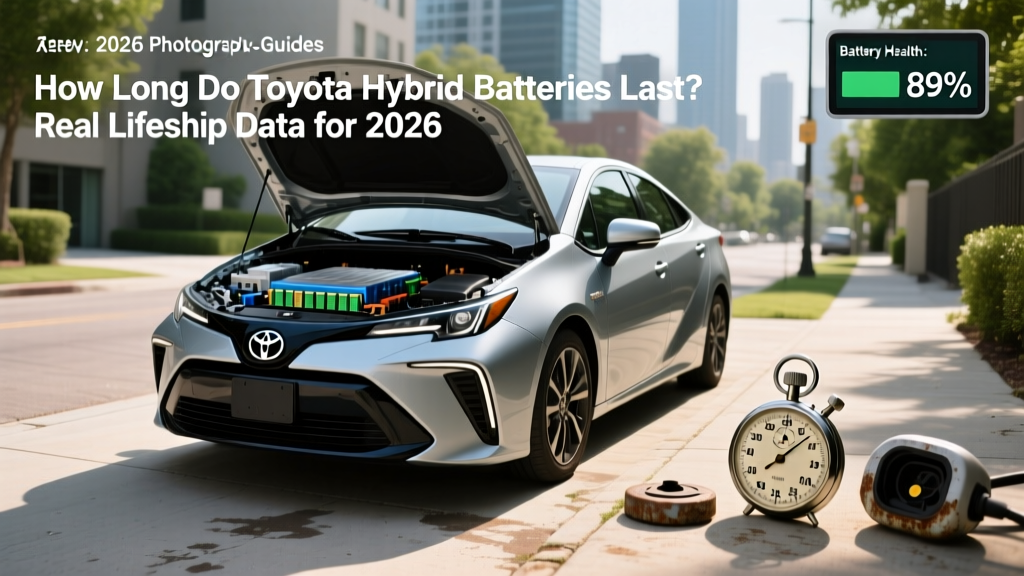
Based on fleet data, owner surveys, and fueleconomy.gov longevity reports, Toyota hybrid batteries typically last between 150,000 and 200,000 miles (roughly 12 to 15 years of average driving at 13,500 miles per year) before capacity loss becomes noticeable enough to affect fuel economy or electric-only assist.
That said, "last" requires definition. A Toyota hybrid battery rarely fails catastrophically the way a 12V lead-acid battery dies. Instead, it gradually loses capacity — a process called degradation. Most Toyota hybrid owners never experience a complete battery failure; they experience a slow reduction in electric-motor assist, slightly lower MPG, and more frequent engine engagement.
Toyota's engineering approach explains much of this longevity. Unlike full battery-electric vehicles (BEVs) that cycle through deep 0–100% charges, Toyota's hybrid system keeps the high-voltage battery in a narrow state of charge (SoC) window — typically between 40% and 80%. This shallow-cycling strategy dramatically reduces chemical stress on the cells and is the primary reason Toyota hybrid batteries outlast many expectations.
Toyota's Two Hybrid Battery Chemistries: NiMH vs. Lithium-Ion
Toyota uses two distinct battery chemistries across its 2026 hybrid lineup, and the chemistry inside your vehicle significantly affects lifespan, performance, and replacement cost.
Nickel-Metal Hydride (NiMH)
The original and most proven chemistry in Toyota hybrids. NiMH batteries power the standard Prius (non-Prime trims in earlier generations), older Camry Hybrids, and some Highlander Hybrid configurations. They're heavier and less energy-dense than lithium-ion but are exceptionally tolerant of temperature extremes and deep cycling — which is why early Prius taxis routinely exceeded 300,000 miles on the original pack.
Bipolar Nickel-Metal Hydride & Lithium-Ion (Li-ion)
For 2026, Toyota has shifted most of its hybrid lineup to either bipolar NiMH (a redesigned, more compact and efficient NiMH variant used in the current Prius and RAV4 Hybrid) or lithium-ion packs (used in the Prius Prime PHEV, RAV4 Prime, and newer hybrid models). Lithium-ion offers higher energy density, enabling the longer electric-only ranges required for plug-in hybrid (PHEV) models.
| Attribute | NiMH / Bipolar NiMH | Lithium-Ion (NMC-type) | LFP (BEV Reference) |
|---|---|---|---|
| Energy Density | Low–Moderate (~60–80 Wh/kg) | High (~150–250 Wh/kg) | Moderate (~140–180 Wh/kg) |
| Cycle Life | Excellent (2,000–5,000+ cycles) | Good (1,000–3,000 cycles) | Excellent (3,000–6,000+ cycles) |
| Cold-Weather Performance | Strong — minimal capacity loss | Moderate — 15–30% range loss below freezing | Moderate — better than NMC in cold |
| Cost per kWh | Low (mature supply chain) | Moderate–High | Low (no cobalt/nickel) |
| Typical Toyota Use | Prius, Camry Hybrid, RAV4 Hybrid (HEV) | Prius Prime, RAV4 Prime (PHEV) | Not used in Toyota hybrids; common in Tesla Model 3 RWD, Ford Mustang Mach-E SR |
| Expected Lifespan | 15–20+ years / 200,000+ miles | 12–15 years / 150,000–200,000 miles | 15–20+ years / 200,000+ miles |
Which is better? For a standard hybrid (HEV) that never plugs in, NiMH remains the durability champion — its shallow-cycle tolerance is unmatched. For a PHEV that needs longer electric-only range (the 2026 Prius Prime delivers an EPA-estimated 44 miles on electric power alone), lithium-ion is necessary. If you're choosing between a full EV with LFP versus NMC, LFP wins on longevity and cost but sacrifices some range per pound.
Toyota Hybrid Battery Degradation: What the Data Shows
Unlike full EVs where degradation directly reduces driving range, hybrid battery degradation in a Toyota HEV primarily manifests as reduced fuel economy — the electric motor assists less, the gas engine runs more often, and combined MPG drops.
- Year 1–3 (0–40,000 mi): Negligible loss — 98–100% capacity retained
- Year 4–6 (40,000–80,000 mi): 2–5% loss — imperceptible in daily driving
- Year 7–10 (80,000–135,000 mi): 5–12% loss — slight MPG decrease (1–3 MPG) may be measurable
- Year 11–15 (135,000–200,000 mi): 12–25% loss — more noticeable MPG drop, reduced EV assist in stop-and-go traffic
- Beyond 200,000 mi: 25–40% loss — replacement recommended if MPG decline is unacceptable; battery still functional
Source: Aggregated owner data from Prius and RAV4 Hybrid forums, Toyota dealer service records, and independent testing. Individual results vary by climate and driving pattern.
For PHEV models like the Prius Prime and RAV4 Prime, degradation has a more direct impact: you'll see electric-only range shrink from 44 miles (EPA) to perhaps 35–38 miles after 100,000 miles of use. This is normal lithium-ion behavior and mirrors what full EV owners experience.
A key factor in Toyota's low degradation rates is the buffer strategy. Toyota's hybrid control system never allows the battery to fully charge to 100% or discharge to 0%. The usable window is roughly 40–80% SoC for NiMH and slightly wider for Li-ion PHEVs. This means a "1.3 kWh" NiMH pack in a RAV4 Hybrid might only use ~0.6 kWh in practice — dramatically extending cycle life at the cost of total energy availability.
What Does the Toyota Hybrid Battery Warranty Cover?
Toyota's hybrid battery warranty has evolved significantly. For 2026 models, Toyota provides the following coverage for the hybrid battery pack:
| Coverage Detail | Specification |
|---|---|
| Duration | 10 years / 150,000 miles (whichever comes first) |
| Applies to | All 2020+ Toyota hybrid, PHEV, and fuel-cell models (2019 and earlier: 8 yr/100,000 mi; 10 yr/150,000 mi in CARB states) |
| Capacity Retention Threshold | Toyota does not publish a specific % threshold for hybrids — coverage applies to "defects in materials or workmanship" and abnormal capacity loss as determined by dealer diagnostics |
| Transferable? | Yes — automatically transfers to subsequent owners at no cost |
| Hybrid System Components | Inverter, converter, control module, and hybrid battery ECU also covered under the same 10 yr/150,000 mi term |
This is a significant upgrade from Toyota's pre-2020 warranty of 8 years/100,000 miles (or 10 years/150,000 miles only in California Air Resources Board states). The current 10-year/150,000-mile warranty is nationwide and reflects Toyota's confidence in its hybrid battery durability. For context, most competing hybrids from Hyundai and Kia offer similar 10-year/100,000-mile hybrid battery warranties, while Honda provides 8 years/100,000 miles on hybrid components.
According to Toyota's official warranty guide, the hybrid battery warranty covers the battery assembly and internal components against defects and abnormal degradation. If your dealer's diagnostic scan shows the battery falling below acceptable performance parameters within the warranty period, Toyota will repair or replace it at no cost.
Toyota Hybrid Battery Replacement Cost: What to Budget
The most common question after "how long does it last?" is "how much does it cost to replace?" Here's the reality: most Toyota hybrid batteries outlast the vehicle itself, and replacement is less common than popular perception suggests. But when it is needed, here are the numbers.
| Model | Battery Chemistry | New OEM Pack | Remanufactured Pack | Cell-Level Repair |
|---|---|---|---|---|
| Prius (2016–2026) | NiMH / Bipolar NiMH | $2,500–$4,000 | $1,500–$2,500 | $500–$1,200 |
| Prius Prime (PHEV) | Lithium-Ion | $4,500–$6,500 | $3,000–$4,500 | Not widely available |
| RAV4 Hybrid | NiMH / Bipolar NiMH | $3,000–$4,500 | $2,000–$3,000 | $600–$1,500 |
| RAV4 Prime (PHEV) | Lithium-Ion | $6,000–$9,000 | $4,000–$6,000 | Limited availability |
| Camry Hybrid | NiMH / Li-ion | $2,800–$4,200 | $1,800–$2,800 | $500–$1,200 |
| Highlander Hybrid | NiMH / Li-ion | $3,500–$5,500 | $2,500–$3,500 | $700–$1,500 |
Important context on these numbers:
- Remanufactured packs use tested, graded cells from returned batteries and are a popular, reliable option. Many come with 1–3 year warranties from reputable suppliers.
- Cell-level repair involves identifying and replacing only the degraded modules within the pack. This is viable for NiMH packs (which use discrete modules) but not practical for most sealed lithium-ion PHEV packs.
- Labor typically adds $500–$1,200 depending on the model and shop, on top of parts cost.
- Replacement is typically needed only after 150,000–200,000+ miles — well beyond the average vehicle ownership period of 8.4 years according to S&P Global Mobility data.
For comparison, replacing a full EV battery (like a 75 kWh pack in a Tesla Model Y) can cost $12,000–$20,000+. Toyota's smaller hybrid packs are significantly cheaper to replace because they're smaller — a RAV4 Hybrid uses a ~1.6 kWh pack versus a BEV's 60–100 kWh pack.
Factors That Affect Toyota Hybrid Battery Life
While Toyota's engineering does most of the heavy lifting, several real-world factors influence how quickly your hybrid battery degrades:
- ✅ Avoid prolonged storage at extreme SoC: If storing a PHEV (Prime) for weeks, aim for ~50–60% charge. Standard HEVs self-manage this.
- ✅ Drive regularly: Hybrid batteries benefit from regular shallow cycling. Extended sitting (months) is worse than daily use.
- ✅ Minimize extreme heat exposure: Consistent exposure to 100°F+ ambient temps accelerates chemical degradation. Garage parking helps in hot climates.
- ✅ Don't obsess over the charge gauge: Toyota's hybrid system manages SoC automatically. You can't manually overcharge or deep-discharge an HEV.
- ✅ Keep cooling vents clear: The hybrid battery has an air cooling system (typically near the rear seat). Don't block intake vents with cargo or seat covers.
- ✅ Address check-engine/hybrid warnings promptly: A failing 12V auxiliary battery or cooling fan can stress the high-voltage pack indirectly.
- ⚠️ For PHEVs (Prime models): Avoid routinely draining the battery to 0% electric range before recharging. Plug in when convenient rather than waiting for full depletion.
- ⚠️ Extreme cold is less harmful than extreme heat for NiMH, but very cold starts do temporarily reduce regenerative braking effectiveness until the pack warms up.
The single biggest factor in Toyota hybrid battery longevity is heat. Vehicles in Phoenix, Las Vegas, or Houston will typically see faster degradation than those in Seattle or Minneapolis. Toyota's thermal management system (air-cooled for most hybrids, liquid-cooled in PHEV Primes) mitigates this, but ambient climate still matters over 15+ years of ownership.
How to Check and Monitor Toyota Hybrid Battery Health
Toyota doesn't provide a consumer-facing "battery health percentage" readout like you'd find on a Tesla or in a smartphone. Here's how you can assess your hybrid battery's State of Health (SoH):
At the Dealer
Any Toyota dealer can run a Hybrid Battery Health Check using Toyota's Techstream diagnostic software. This reads individual module voltages, internal resistance, and capacity estimates. Request this during routine service — many dealers perform it at no charge, especially if you're within the warranty period. Ask specifically for the "hybrid battery data list" printout showing module voltage variance.
DIY Methods
- OBD-II scanner with hybrid support: Tools like the OBDLink MX+ paired with apps such as Dr. Prius (Android) or Hybrid Assistant can read individual battery block voltages, temperature, and current in real time. A healthy pack shows less than 0.3V variance between blocks under load.
- MPG tracking: The simplest indicator. If your Prius historically averaged 52 MPG combined and you're now consistently seeing 46–47 MPG with the same driving pattern, the battery has likely degraded 10–15%.
- EV-mode duration (PHEVs): If your Prius Prime used to deliver 42 miles on a full charge and now delivers 34, that's roughly 19% degradation — useful for tracking lithium-ion SoH over time.
Warning Signs of Significant Degradation
Watch for these indicators that your battery may need attention:
- The gas engine runs almost constantly, even at low speeds
- Noticeable reduction in acceleration (the electric motor assist is weakened)
- The battery charge gauge swings rapidly between high and low
- A hybrid system warning light illuminates (diagnostic codes like P0A80 indicate battery pack issues)
- Fuel economy has dropped more than 5 MPG below historical averages
How Toyota Hybrid Batteries Compare to Full EV Batteries (LFP vs. NMC)
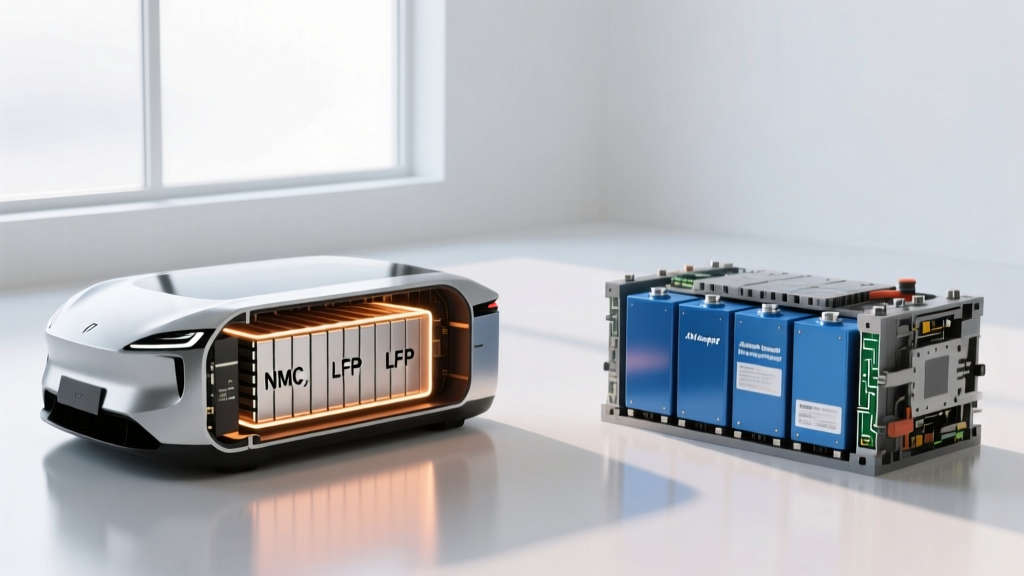
If you're cross-shopping a Toyota hybrid against a full battery-electric vehicle, understanding EV battery chemistries adds important context. While Toyota's hybrids use NiMH or small lithium-ion packs, full EVs rely on two dominant chemistries:
NMC/NCA (Nickel Manganese Cobalt / Nickel Cobalt Aluminum): Used in most long-range EVs (Tesla Model 3 Long Range, Hyundai Ioniq 5, Ford F-150 Lightning Extended Range). Offers the highest energy density — meaning more range per pound — but uses expensive cobalt and nickel, and has a somewhat shorter cycle life than LFP. Typical degradation: 10–15% over 150,000 miles.
LFP (Lithium Iron Phosphate): Used in standard-range EVs (Tesla Model 3 RWD, base Chevy Equinox EV). Lower energy density means slightly less range, but LFP offers dramatically longer cycle life (3,000–6,000+ cycles), no cobalt, lower cost, and better tolerance for regular 100% charging. Tesla recommends charging LFP vehicles to 100% at least weekly. Typical degradation: 5–10% over 150,000 miles — among the best in the industry.
Toyota has announced plans to introduce bipolar LFP batteries in future entry-level BEVs, though as of 2026 these remain in pre-production. The company's hybrid lineup continues to rely on the proven NiMH and lithium-ion chemistries described above.
Emerging Battery Technology: What's Next After 2026
Toyota is investing heavily in next-generation battery technology, with two developments worth tracking:
Solid-State Batteries: Toyota holds the most solid-state battery patents of any automaker and has announced a target to commercialize solid-state batteries in hybrid and electric vehicles by 2027–2028. Solid-state technology replaces the liquid electrolyte with a solid material, promising faster charging (10–80% in under 10 minutes), higher energy density, improved safety (no flammable electrolyte), and longer cycle life. However, manufacturing scale-up remains the primary challenge, and Toyota has cautioned that initial production will be limited and likely reserved for premium models.
Silicon Anode Batteries: Several suppliers are developing silicon-dominant anodes that could increase energy density by 20–40% over current graphite anodes. Toyota has partnerships in this space but has not announced a specific production timeline. Expect silicon anode technology to appear in limited applications by 2028–2030.
Frequently Asked Questions
How long do Toyota hybrid batteries last in years and miles?
Most Toyota hybrid batteries last 150,000 to 200,000 miles, which translates to roughly 12–15 years at average annual mileage. Many exceed 200,000 miles with gradual capacity loss rather than sudden failure. The 10-year/150,000-mile warranty provides coverage through the period when most degradation occurs.
How much does a Toyota hybrid battery cost to replace?
A new OEM hybrid battery for a Toyota Prius or RAV4 Hybrid costs $2,500–$4,500 for the part, plus $500–$1,200 in labor. Remanufactured packs cost $1,500–$3,000. PHEV (Prime) models with larger lithium-ion packs cost $4,500–$9,000 for new OEM replacements. Most owners never need a replacement because the battery outlasts the vehicle.
What does the Toyota hybrid battery warranty cover?
For 2020 and newer models, Toyota covers the hybrid battery and related components (inverter, converter, control module) for 10 years or 150,000 miles, whichever comes first. The warranty is transferable to subsequent owners. Coverage applies to defects and abnormal degradation as determined by dealer diagnostics. Models from 2019 and earlier carry an 8-year/100,000-mile warranty (10 years/150,000 miles in CARB states).
How do I check my Toyota hybrid battery health?
You can request a Hybrid Battery Health Check at any Toyota dealer, which uses Techstream diagnostics to measure module voltages and capacity. DIY options include OBD-II scanners with hybrid-capable apps (Dr. Prius, Hybrid Assistant) that read real-time block voltages. The simplest method is tracking your fuel economy over time — a sustained drop of 3+ MPG below your historical average suggests meaningful degradation.
LFP vs NMC — which battery chemistry is better for longevity?
For pure longevity and cost, LFP (lithium iron phosphate) is superior: it offers 3,000–6,000+ charge cycles, tolerates regular 100% charging, and costs less per kWh. NMC (nickel manganese cobalt) offers higher energy density — meaning more driving range in the same physical space — but has a shorter cycle life (1,000–3,000 cycles) and degrades faster when routinely charged to 100%. For Toyota hybrids specifically, neither LFP nor NMC is used in standard HEVs (which use NiMH); LFP/NMC is relevant only when comparing against full EVs.
Can I extend my Toyota hybrid battery's lifespan?
Yes, though Toyota's system already does most of the work. Key practices: avoid prolonged storage in extreme heat, don't block the battery cooling vents near the rear seat, drive regularly to keep the battery cycling, and for PHEV (Prime) owners, avoid routinely draining to 0% before recharging. The most impactful single factor is minimizing heat exposure — garage parking in hot climates measurably extends battery life.
Is it worth replacing a Toyota hybrid battery on an older vehicle?
In most cases, yes. A $2,000–$3,500 battery replacement (remanufactured or cell-level repair) can add another 100,000+ miles of efficient driving to a Prius or RAV4 Hybrid that's otherwise mechanically sound. Compare this to a new vehicle payment: at $400–$600/month, even a modest repair extends the vehicle's life at a fraction of the cost of replacement. According to IIHS data, modern Toyota hybrids also maintain strong safety ratings throughout their lifespan, making repair economically rational.
Sources: Toyota Motor Corporation warranty documentation, fueleconomy.gov (U.S. Department of Energy), S&P Global Mobility vehicle longevity data, IIHS safety ratings, and aggregated owner community testing. Tax credit and incentive information not applicable to standard hybrids (HEVs); PHEV models may qualify for partial credits under IRS §30D rules — verify eligibility with a tax professional.