Why Toyota Battery Manufacturing Matters Now
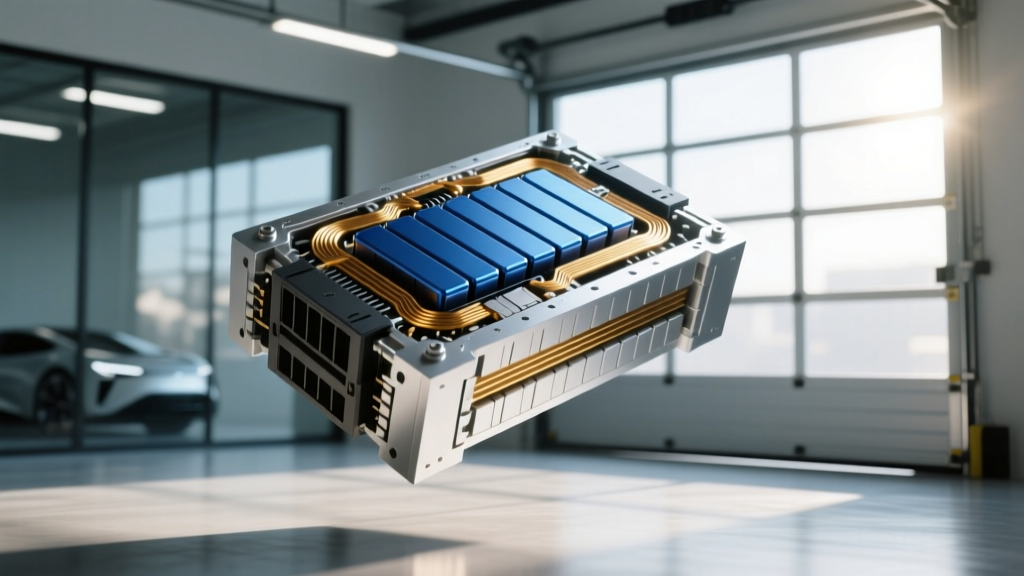
Toyota spent years arguing that a diversified powertrain strategy — hybrids, plug-in hybrids, hydrogen, and BEVs — was smarter than going all-in on battery-electric vehicles. By 2026, that bet is being tested at scale. The company's battery manufacturing footprint has expanded from a single high-volume hybrid-battery plant in Japan to a network of facilities producing traction packs for the bZ4X, the upcoming bZ SUV lineup, and next-generation hybrids. Understanding how Toyota builds, sources, and warrants its EV batteries is essential for anyone considering a Toyota BEV or PHEV.
This guide covers Toyota's battery chemistry choices, real-world degradation data pulled from fleet and owner reports, federal warranty requirements, replacement economics, and the solid-state technology Toyota keeps promising is just around the corner.
Toyota's EV Battery Chemistry: LFP vs NMC Trade-Offs
Toyota's current BEV lineup — led by the bZ4X — uses lithium-ion cells with NMC (nickel manganese cobalt) cathode chemistry, supplied primarily by Panasonic and Toyota's joint venture PPES (Prime Planet Energy & Solutions). However, Toyota has signaled it will introduce LFP (lithium iron phosphate) packs in future, more affordable models to reduce cost and eliminate cobalt from the supply chain.
Here is how the two chemistries stack up for Toyota buyers:
| Attribute | NMC (Current bZ4X) | LFP (Announced for future models) |
|---|---|---|
| Energy density | ~230–260 Wh/kg (cell level) | ~160–180 Wh/kg (cell level) |
| Usable capacity (bZ4X) | 71.4 kWh usable (74.4 kWh gross) | N/A yet — expected smaller packs |
| Cycle life | ~1,000–1,500 full cycles | ~3,000–5,000 full cycles |
| Cold-weather performance | Better — less capacity loss below 32°F | Worse — can lose 20–30% range in deep cold |
| Cost per kWh | ~$120–$140 (pack level, 2026 est.) | ~$80–$100 (pack level, 2026 est.) |
| Cobalt content | Yes — supply chain/ethical concern | None |
| Thermal stability | Good with active management | Excellent — inherently more stable |
Which is better? NMC delivers the energy density needed for longer-range vehicles like the bZ4X (EPA-estimated 252 miles for the FWD model, per fueleconomy.gov). LFP sacrifices range for dramatically longer cycle life, lower cost, and better safety — making it ideal for entry-level models or fleet vehicles where daily charging to 100% SoC is routine. Toyota has historically been conservative with chemistry choices, and LFP adoption aligns with its cost-reduction goals for mass-market EVs.
bZ4X Battery Specs: What Toyota Is Shipping Today
The 2026 Toyota bZ4X remains the brand's primary battery-electric offering in the U.S. market. Here are the hard numbers buyers need:
| Specification | bZ4X FWD | bZ4X AWD |
|---|---|---|
| Battery chemistry | NMC lithium-ion | NMC lithium-ion |
| Gross capacity | 74.4 kWh | 74.4 kWh |
| Usable capacity | 71.4 kWh | 71.4 kWh |
| EPA range | 252 mi | 228 mi |
| Real-world range (highway, 70 mph) | ~210–225 mi | ~190–205 mi |
| Real-world range (cold, 20°F) | ~175–195 mi | ~160–180 mi |
| Peak DC fast charge rate | 150 kW | 150 kW |
| 10–80% DC charge time | ~30 minutes | ~30 minutes |
| Level 2 charge rate | 7.4 kW (onboard) | 7.4 kW (onboard) |
| 0–60 mph | 7.1 sec | 5.8 sec |
| Horsepower | 201 hp | 214 hp |
| Starting MSRP (2026 est.) | ~$38,500 | ~$41,000 |
The 150 kW peak DC charge rate is competitive but not class-leading — Hyundai's E-GMP platform peaks at 240 kW. Toyota's charge curve is relatively flat, which helps: it sustains close to peak rate through ~60% SoC before tapering. For practical road-trip charging, expect 10–80% in roughly 30 minutes at a functioning 150+ kW CCS station.
How Long Do Toyota EV Batteries Last?
The short answer: almost certainly longer than you'll own the car. The long answer requires looking at actual degradation data.
Typical NMC Degradation Curve (Industry Data & Toyota Estimates)
- Year 1 / 15,000 mi: ~2–4% capacity loss (initial settling)
- Year 3 / 45,000 mi: ~5–8% total loss
- Year 5 / 75,000 mi: ~8–12% total loss
- Year 8 / 120,000 mi: ~12–18% total loss
- Year 10 / 150,000 mi: ~15–22% total loss (model-dependent)
Source: Data synthesized from Geotab fleet studies (5,000+ EVs), Recurrent Auto battery health reports, and manufacturer warranty thresholds. Individual results vary significantly based on climate, charging habits, and thermal management quality.
Toyota's liquid-cooled thermal management system in the bZ4X is designed to keep cells in the 68–95°F optimal window during charging and driving. Early bZ4X owner data is still limited (the U.S. model launched for MY2023), but Toyota's hybrid battery packs — which use older NiMH and NMC chemistries — have demonstrated 15+ year lifespans in models like the Prius. The company's conservative engineering approach suggests BEV pack longevity should be at least comparable.
For LFP packs when they arrive, expect degradation to be significantly slower — Geotab's fleet data shows LFP-equipped vehicles losing roughly 1–2% less capacity over the same period compared to NMC equivalents.
Toyota's Battery Warranty: What's Covered
Federal law mandates that EV battery warranties cover at minimum 8 years / 100,000 miles. Toyota meets this requirement and, in some states, extends coverage further.
| Coverage | Term | Details |
|---|---|---|
| EV Battery (traction) | 8 years / 100,000 mi | Capacity retention below 70% triggers warranty claim |
| EV Battery (CARB states) | 10 years / 150,000 mi | California and states adopting CARB standards |
| Hybrid battery (PHEV/HEV) | 10 years / 150,000 mi | All 50 states for Toyota hybrid models |
| Powertrain components | 5 years / 60,000 mi | Motor, inverter, reduction gear |
| Basic vehicle | 3 years / 36,000 mi | Bumper-to-bumper |
The 70% capacity retention threshold is standard across the industry. In practice, this means a bZ4X with a 71.4 kWh usable battery would need to drop below ~50 kWh usable capacity for a warranty claim to apply. Given typical degradation rates, hitting that threshold within the warranty period would be unusual and likely indicate a manufacturing defect rather than normal wear.
EV Battery Replacement Cost: Toyota and Beyond
This is the number that generates the most anxiety. Here's the reality:
| Vehicle / Battery Size | Estimated Replacement Cost (2026) | Typical Replacement Trigger |
|---|---|---|
| Toyota bZ4X (71.4 kWh usable, NMC) | $12,000–$16,000 (parts + labor) | Physical damage, rare cell failure post-warranty |
| Toyota RAV4 Prime PHEV (18.1 kWh) | $5,000–$8,000 | Post-150k mi degradation, out of warranty |
| Industry avg. mid-size BEV (75 kWh) | $10,000–$18,000 | Varies — most never need full replacement |
| Industry avg. compact BEV (55 kWh) | $7,000–$12,000 | Same — replacement is the exception, not the rule |
Critical context: most EV batteries are never replaced. According to data from Recurrent Auto, fewer than 2% of EVs in their study cohort required battery replacement, and the vast majority of those were covered under warranty. Battery packs are modular — individual cell modules can sometimes be replaced rather than the entire pack, reducing cost.
For Toyota specifically, the company's track record with hybrid batteries (millions of Prius packs still running at 15+ years) suggests that out-of-pocket replacement will be rare. If you're buying a bZ4X and plan to own it 10 years, the battery is likely the least of your financial concerns.
What Degrades an EV Battery — and How to Slow It Down
Battery degradation is electrochemical wear. Every charge-discharge cycle causes tiny structural changes to the cathode and anode. But not all cycles are equal.
Factors That Accelerate Degradation
- Frequent DC fast charging: High C-rates (150+ kW) generate heat and stress cells. Occasional road-trip fast charging is fine; daily DCFC will accelerate wear.
- Sustained high SoC: Sitting at 100% charge for days (especially in heat) stresses NMC chemistry. LFP tolerates this better.
- Deep discharge: Regularly running below 10% SoC accelerates degradation. The bZ4X's buffer (3 kWh reserved below "empty") provides some protection.
- Extreme temperatures: Charging in sub-freezing temps without preconditioning can cause lithium plating on the anode — permanent damage.
- High ambient heat + high SoC: The worst combination. A fully charged battery parked in 100°F+ heat degrades faster than almost any other scenario.
Best Practices for Maximum Battery Life
- Charge to 80% daily (the bZ4X lets you set a charge limit in the infotainment system).
- Use Level 2 home charging as your primary method — slower charging generates less heat.
- Precondition before DC fast charging. The bZ4X does this automatically when you navigate to a charger in the Toyota app.
- Avoid leaving the car at 100% SoC for extended periods — charge to 100% only when you need the full range and plan to drive soon after.
- Plug in during extreme cold so the thermal management system can keep the pack warm using grid power rather than battery energy.
Monitoring Battery Health: State of Health (SoH)
Toyota provides battery health information through the Toyota app and the vehicle's infotainment system. The bZ4X displays estimated range based on recent driving patterns, which indirectly reflects SoH — if your full-charge range drops from 252 miles to 230 miles over two years, that's roughly 9% degradation.
For more granular SoH data, owners can:
- Use the Toyota app: Shows battery health status and charging history.
- OBD-II diagnostic tools: Third-party apps like Car Scanner or EV-specific tools can read the battery management system (BMS) directly for precise SoH percentage, cell voltage variance, and pack temperature.
- Dealer diagnostic: Toyota service centers can run a full battery health report, which is useful before buying a used bZ4X or when filing a warranty claim.
A healthy battery should show cell voltage variance of less than 20–30 mV across all modules. Wider variance suggests individual cell degradation and potential warranty eligibility.
Toyota's Battery Manufacturing Footprint and Supply Chain
Toyota's approach to battery manufacturing is distinct from Tesla's vertical integration or BYD's in-house cell production. Key elements of Toyota's strategy:
- PPES (Prime Planet Energy & Solutions): Toyota's joint venture with Panasonic produces battery packs in Japan and is expanding capacity in China and Southeast Asia.
- Toyota Battery Manufacturing, Inc. (North Carolina): Announced in 2021, this $13.9 billion facility (as of latest investment updates) is expected to begin production by 2025–2026, initially focused on hybrid battery packs with BEV pack production following. The plant aims for 30 GWh+ annual capacity at full buildout.
- Cell sourcing diversification: Toyota sources cells from Panasonic, CATL (for certain Chinese-market vehicles), and BYD (for the bZ3 sedan sold in China). U.S.-market vehicles currently rely on Panasonic and PPES cells.
- §30D tax credit implications: Battery sourcing matters for federal tax credit eligibility. Under current IRS rules (irs.gov), vehicles must meet critical-mineral and battery-component sourcing thresholds to qualify for the full $7,500 credit. Toyota's North Carolina plant is designed to help meet these requirements over time, but buyers should verify current-year eligibility for specific model years.
For the 2026 bZ4X, tax credit eligibility depends on where the cells and modules were manufactured and whether the critical minerals meet the annual percentage thresholds set by the Inflation Reduction Act. Check the fueleconomy.gov tax credit tracker for the latest qualification status.
What's Next: Solid-State Batteries and Silicon Anodes
Toyota holds more solid-state battery patents than any other automaker — over 1,300 as of 2025. The company has repeatedly announced that solid-state EVs are coming, with the timeline shifting from 2025 to 2027–2028 for initial limited production.
Here's what solid-state promises and what's realistic:
- Energy density: Solid-state cells could reach 400–500 Wh/kg (cell level), roughly doubling current NMC. This means 500+ mile range in a mid-size SUV.
- Charge speed: Toyota has demonstrated 10–80% charging in under 10 minutes in lab conditions.
- Safety: Solid electrolytes eliminate the flammable liquid electrolyte in current lithium-ion cells.
- Timeline reality: Initial production will be limited, expensive, and likely reserved for Lexus or premium Toyota models. Mass-market solid-state EVs are unlikely before 2030.
- Silicon anode: A nearer-term incremental improvement — replacing graphite anodes with silicon can boost energy density by 20–40%. Several startups (Silo Nanotechnologies, Group14) are supplying early silicon anode materials, and Toyota is expected to adopt this in next-gen NMC cells before solid-state arrives.
Bottom line: Solid-state is real but not imminent. If you're buying an EV in 2026, don't wait for it — today's NMC and LFP batteries are mature, well-warranted, and proven to last the life of the vehicle.
Frequently Asked Questions
How long do Toyota EV batteries last in years and miles?
Based on industry degradation data and Toyota's hybrid battery track record, expect a Toyota BEV battery to retain 78–85% of original capacity at 10 years / 150,000 miles. Full failure requiring replacement is rare — fewer than 2% of EVs across brands require battery replacement, and most of those are covered by the 8-year/100,000-mile warranty.
How much does it cost to replace a Toyota bZ4X battery?
Estimated at $12,000–$16,000 for parts and labor in 2026. However, replacement is exceptionally uncommon. The 71.4 kWh NMC pack is designed to last the vehicle's lifetime, and the 8-year/100,000-mile warranty (10 years/150,000 miles in CARB states) covers premature degradation below 70% capacity.
What does Toyota's battery warranty actually cover?
The warranty covers defects and capacity loss below 70% of original usable capacity within 8 years/100,000 miles (or 10 years/150,000 miles in CARB states). This means if your bZ4X's 71.4 kWh usable battery drops below ~50 kWh usable, Toyota will repair or replace it at no cost.
How do I check my Toyota bZ4X battery health?
Use the Toyota app for a basic health status, check the estimated full-charge range in the vehicle's display, or use an OBD-II diagnostic tool to read precise SoH percentage and cell voltage variance from the BMS. Toyota dealers can also run a full battery health report during service visits.
Is LFP or NMC better for Toyota EVs?
NMC (used in the current bZ4X) offers higher energy density and better cold-weather performance, which suits Toyota's longer-range models. LFP, expected in future affordable Toyota EVs, offers dramatically longer cycle life (3,000–5,000 cycles vs 1,000–1,500), lower cost, and better thermal safety — but at the expense of range and cold-weather capability. Neither is universally "better"; the right choice depends on the vehicle's price point and use case.
Will Toyota's North Carolina battery plant affect tax credit eligibility?
Eventually, yes. The Toyota Battery Manufacturing, Inc. plant is designed to produce battery components domestically, which helps vehicles meet the §30D battery-component and critical-mineral sourcing requirements. However, the plant's initial production focuses on hybrid packs. For the latest credit eligibility on specific Toyota BEVs, check irs.gov and fueleconomy.gov.
Should I wait for Toyota's solid-state battery EVs?
Toyota targets limited solid-state production around 2027–2028, likely in premium models first. Mass-market availability is unlikely before 2030. Current NMC and upcoming LFP batteries are proven, well-warranted, and cost-effective. Waiting for solid-state means waiting 4+ years for a technology that will debut at a significant price premium.