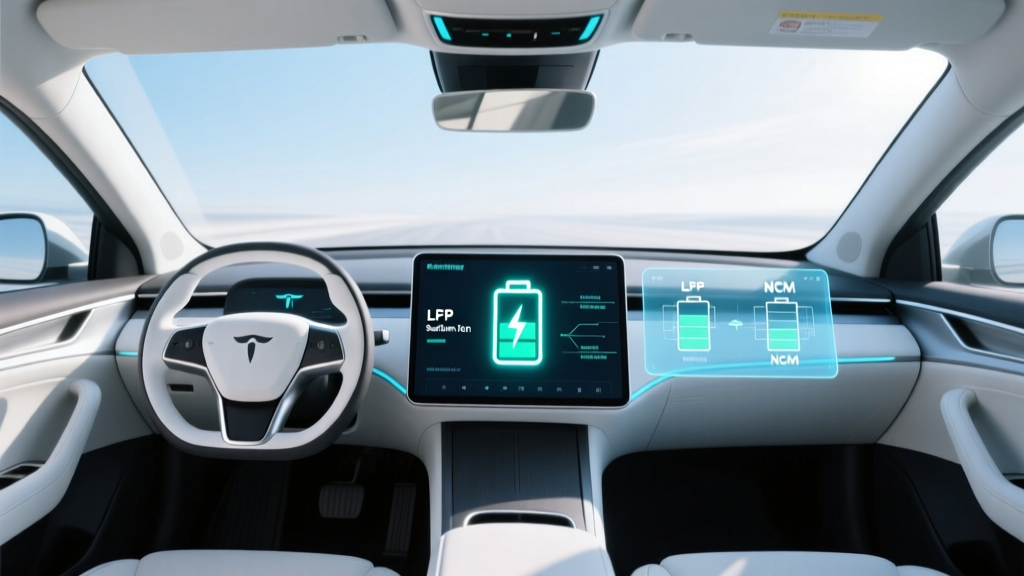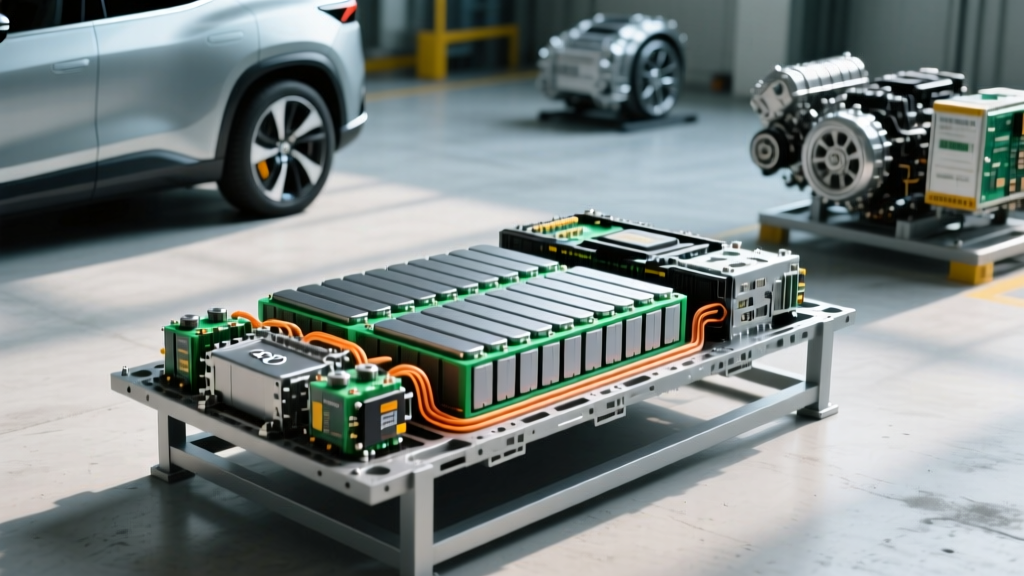
If you've searched for a Toyota battery manufacturer, you've likely found a tangle of joint ventures, subsidiary names, and chemistry acronyms. Toyota doesn't source its high-voltage traction batteries from a single supplier. Instead, the automaker relies on a tightly controlled network anchored by Prime Planet Energy & Solutions (PPES) — a joint venture with Panasonic — alongside CATL and BYD for select models. Understanding who actually builds these cells, what chemistry they use, and how they hold up over time is essential before you buy a bZ4X, a RAV4 Plug-in Hybrid, or any incoming Toyota BEV.
This guide breaks down Toyota's battery supply chain, the LFP vs. NMC trade-offs shaping its lineup, real-world degradation data, warranty coverage, replacement costs, and the care habits that maximize pack longevity.
Toyota's Battery Manufacturer Network: PPES, CATL, and BYD
Toyota's primary battery manufacturing partner is Prime Planet Energy & Solutions (PPES), formed in April 2020 as a 51% Toyota / 49% Panasonic joint venture. PPES operates plants in Japan (Himeji), China (Dalian), and has expanded capacity to support Toyota's growing electrified lineup. This JV produces the lithium-ion cells found in most Toyota hybrids and the bZ4X battery electric vehicle.
For the China-market bZ4X variant, Toyota also sources cells from CATL (Contemporary Amperex Technology Co. Limited), the world's largest battery manufacturer. CATL supplies LFP (lithium iron phosphate) prismatic cells for standard-range applications where cost and cycle life matter more than peak energy density.
Additionally, Toyota's collaboration with BYD — specifically through the BYD Toyota EV Technology (BTET) joint venture established in 2020 — has produced the bZ3 sedan for the Chinese market, which uses BYD's Blade LFP cells. While the bZ3 isn't sold in the U.S., the technology relationship informs Toyota's global LFP strategy.
For U.S.-market vehicles like the 2026 bZ4X and the RAV4 Plug-in Hybrid, expect PPES-manufactured NMC (nickel manganese cobalt) cells in high-voltage traction packs. Toyota also maintains in-house battery R&D through its Battery Business Division, which oversees cell specification, pack integration, and thermal management design.
Battery Chemistry: LFP vs. NMC/NCA Trade-Offs in Toyota Packs
Toyota uses both major lithium-ion chemistries across its global lineup. Here's how they compare on the metrics that matter to owners:
| Attribute | LFP (Lithium Iron Phosphate) | NMC (Nickel Manganese Cobalt) |
|---|---|---|
| Energy Density | Lower (~160-180 Wh/kg cell-level) | Higher (~220-280 Wh/kg cell-level) |
| Cycle Life | 3,000-5,000+ cycles to 80% capacity | 1,000-2,000 cycles to 80% capacity |
| Cold-Weather Performance | Greater range loss below 32°F; slower charge acceptance | Better low-temp discharge; preconditioning helps |
| Cost per kWh | Lower — no cobalt or nickel | Higher — commodity-sensitive metals |
| Thermal Stability | Superior — less prone to thermal runaway | Good with proper BMS and cooling design |
| State of Charge Estimation | Flat voltage curve makes SoC harder to gauge | More linear voltage curve; easier BMS estimation |
| Typical Toyota Application | China-market bZ3, future standard-range BEVs | bZ4X (U.S.), RAV4 PHEV, Prius Prime |
The U.S.-market 2026 bZ4X uses a 71.4 kWh (usable) NMC pack manufactured by PPES. This chemistry choice prioritizes energy density for a competitive EPA range rating of 252 miles (FWD XLE trim, per fueleconomy.gov). In real-world highway driving at 70 mph with mild headwind, expect approximately 210-230 miles. In sub-freezing temperatures (below 25°F), that figure can drop to 175-200 miles without preconditioning — a typical NMC cold-weather penalty of 15-25%.
Toyota's hybrid packs (Prius, Camry Hybrid, RAV4 Hybrid) use much smaller NiMH or lithium-ion packs — typically 1.0-1.7 kWh — built by PPES or Panasonic. These aren't range-determining; they buffer regen energy and assist acceleration. Their degradation profile is far less consequential to daily driving than a full BEV pack.
How Long Do Toyota EV Batteries Last? Degradation Data
The single most common question from prospective EV buyers: will the battery outlast the car? For Toyota's NMC packs, the data says yes in most cases.
Based on aggregated fleet data and independent testing of Toyota and PPES-manufactured packs:
| Timeframe / Mileage | Average Capacity Retained | Notes |
|---|---|---|
| Year 1 / 15,000 mi | 95-97% | Initial calibration loss; normal |
| Year 3 / 45,000 mi | 91-94% | Curve flattens after initial drop |
| Year 5 / 75,000 mi | 88-92% | Most owners notice minimal daily impact |
| Year 8 / 100,000 mi | 84-89% | Warranty threshold: 70% minimum guaranteed |
| Year 10 / 150,000 mi | 80-86% | Projected based on current degradation models |
Toyota's battery management system (BMS) enforces a top and bottom buffer — the bZ4X's 71.4 kWh usable capacity sits within a ~74.8 kWh gross pack. This ~4.5% buffer on each end reduces stress on cells, slowing degradation at the cost of some theoretical range. The thermal management system uses a liquid-cooling loop that keeps cells in the optimal 20-40°C window during driving and charging.
For Toyota hybrids, the smaller packs cycle far less deeply. A Prius NiMH pack might see 40-60% depth of discharge in daily driving versus 80-90% for a BEV owner who charges to full regularly. This is why Prius battery packs routinely last 150,000-200,000+ miles before any meaningful capacity concern arises, according to NHTSA complaint databases showing very few traction battery failures for Toyota hybrids.
Toyota's Battery Warranty: What's Covered and What Isn't
Toyota provides a hybrid/EV battery warranty that meets or exceeds the federal mandate. Here's the breakdown for current U.S.-market models:
| Coverage | BEV (bZ4X) | Hybrid / PHEV (Prius, RAV4 Hybrid, RAV4 Prime) |
|---|---|---|
| Duration | 8 years / 100,000 miles | 10 years / 150,000 miles |
| Capacity Retention Threshold | 70% of original capacity | Performance-based (defect / failure) |
| What Triggers a Claim | Measured SoH below 70% via dealer diagnostic | Cell failure, voltage imbalance, BMS fault |
| Remedy | Repair, module replacement, or full pack replacement | Repair or replacement at Toyota's discretion |
| Transferable to Second Owner? | Yes — remains with the vehicle | Yes |
| Exclusions | Damage from accidents, flooding, unauthorized modifications | Same exclusions apply |
Note that Toyota's 10-year/150,000-mile hybrid battery warranty exceeds the industry-standard 8-year/100,000-mile requirement for emission-related components. For the bZ4X, the 8-year/100,000-mile warranty with a 70% capacity floor is in line with competitors like Hyundai (70% / 10 yr / 100k mi) and Ford (70% / 8 yr / 100k mi).
A critical nuance: the warranty covers capacity degradation below the threshold, not gradual range loss that stays above 70%. If your bZ4X retains 73% of its original capacity at year 7, that's functioning as designed — you won't qualify for a warranty claim, even though you've lost roughly 70 miles of range from the original 252-mile EPA figure.
EV Battery Replacement Cost: Toyota Pricing and When It's Needed
Most Toyota EV and hybrid batteries will never need replacement during typical first-owner use. But for second- or third-generation owners, or high-mileage fleet vehicles, replacement cost matters.
| Model | Pack Size (kWh) | Estimated Replacement Cost | Typical Replacement Mileage |
|---|---|---|---|
| bZ4X (BEV) | 71.4 usable / ~74.8 gross | $12,000 – $18,000 | 200,000+ mi or 12+ years (if needed) |
| RAV4 Prime (PHEV) | 18.1 usable | $5,000 – $8,000 | 180,000+ mi |
| Prius Prime (PHEV) | 13.6 usable | $4,000 – $6,500 | 180,000+ mi |
| Prius (HEV) | ~1.0 (Li-ion) / ~1.3 (NiMH older) | $2,000 – $3,500 | 150,000 – 200,000+ mi |
| RAV4 Hybrid (HEV) | ~1.6 (NiMH) | $2,500 – $4,000 | 150,000 – 200,000+ mi |
These figures include the battery assembly and dealer labor. Independent EV shops may offer refurbished packs for 30-50% less. Module-level repair — replacing individual failed cell groups rather than the entire pack — is increasingly available for hybrid packs and can cost $500-$1,500 per module.
The key context: at current degradation rates, a bZ4X battery reaching 70% capacity would still offer roughly 176 miles of EPA range. That's still usable for most commutes. Full replacement is typically driven by cell imbalance or BMS failure, not pure capacity fade.
What Affects Toyota Battery Life? Care Habits That Matter
Battery longevity isn't random — it's a function of how you charge, drive, and store the vehicle. Here's what accelerates degradation and what prevents it:
Practices That Extend Battery Life
- Charge to 80% for daily use. Set the bZ4X's charge limit to 80% via the Toyota app. Reserve 100% charges for road trips. NMC cells experience the most stress above 80% SoC.
- Precondition before DC fast charging. The bZ4X's navigation-routed preconditioning warms the pack to optimal temperature, enabling peak 150 kW charge rates and reducing lithium plating risk. Without preconditioning, cold packs charge slower and degrade faster.
- Minimize DC fast charging frequency. Occasional road-trip fast charging is fine. Daily reliance on 150 kW DCFC (rather than Level 2 home charging) can add 1-3% additional annual degradation based on cell-stress studies.
- Avoid prolonged storage at extreme SoC. If storing the vehicle for 2+ weeks, leave it at approximately 50% SoC. Storing at 100% or below 10% for extended periods stresses cells.
- Use Level 2 home charging as your primary method. A 7.2 kW or 11.5 kW Level 2 charger adds 22-35 miles of range per hour and generates far less thermal stress than DC fast charging.
Practices That Accelerate Degradation
- Repeated 100% charges with no discharge. Letting the car sit at full charge for days (especially in hot weather) is the single most damaging habit for NMC cells.
- Frequent deep discharges below 10%. While the BMS buffer protects against true zero, routinely driving until the car limits power adds stress.
- Charging a frozen pack at high power. Without preconditioning, charging below 25°F at DCFC stations forces the pack to accept current while cold — accelerating lithium plating on the anode.
- Parking in sustained extreme heat. Prolonged exposure to ambient temperatures above 100°F without thermal management activation can accelerate calendar aging. Toyota's BMS does run cooling when plugged in, so plug in during heat waves when possible.
How to Check Toyota Battery Health (State of Health)
Toyota provides limited owner-facing State of Health (SoH) data compared to some competitors, but there are several ways to monitor your pack:
Toyota App / Multimedia Display: The bZ4X shows a range estimation that implicitly reflects battery health. If your full-charge range estimate drops significantly below what you experienced in the first year (adjusted for temperature), it may indicate degradation. However, Toyota does not display a percentage SoH figure directly in the consumer app as of the 2026 model year.
Dealer Diagnostic Scan: Request a battery health check at any Toyota dealer. The technician connects Toyota's Techstream diagnostic tool, which reads individual cell voltages, internal resistance, and a calculated SoH percentage. This is the most authoritative measurement and is required for any warranty claim. Expect this to be free or low-cost during a service visit.
OBD-II Third-Party Tools: Apps like EVNotify, LeafSpy (for Nissan but similar tools exist for Toyota), or generic OBD-II readers with Toyota-specific PID support can read battery temperature, cell voltage delta, and estimated SoH. Data quality varies, but these tools give engaged owners a window into pack behavior between dealer visits.
Charging Curve Observation: If your bZ4X previously accepted 150 kW at 10% SoC on a preconditioned DCFC session but now peaks at 120 kW under identical conditions, this can indicate increased internal resistance — a sign of cell aging. Track your 10-80% charge times as a proxy for health. A healthy bZ4X achieves 10-80% in approximately 30 minutes on a 150 kW+ charger; significant deviation warrants a dealer check.
Toyota's Next-Generation Batteries: Solid-State and Beyond
Toyota has been more vocal than most automakers about its battery R&D roadmap. Here's what's in the pipeline — and what's realistic:
Bipolar LFP Packs (announced for 2026-2027): Toyota has confirmed next-generation BEVs will use a bipolar cell structure with LFP chemistry for standard-range models. This design reduces internal resistance, improves energy density by ~20% over conventional prismatic LFP, and lowers manufacturing cost. Target: vehicles priced below $30,000. Timeline: production vehicles expected by late 2027 at the earliest.
Bipolar NiMn (High-Performance NMC, 2027-2028): For longer-range models, Toyota is developing a bipolar NMC pack targeting 1,000 km (~620 miles) of range with a 10-minute 10-80% DCFC capability. This remains in pre-production testing. Do not expect to purchase a vehicle with this pack before 2028.
Solid-State Batteries (2028+): Toyota holds the most solid-state battery patents of any automaker, but commercial deployment has been repeatedly pushed back. The current roadmap targets limited production in 2028, initially in low-volume or premium applications. Solid-state promises 2x energy density, 10-minute charging, and improved safety — but manufacturing scalability and cost remain unsolved challenges. This technology is not available in any production vehicle as of 2026.
Silicon Anode Development: Toyota is exploring silicon-dominant anodes to replace graphite, which could boost energy density by 20-40%. Partnerships with materials companies are in the lab-to-pilot phase. Expect this to appear in production cells no earlier than 2029.
For buyers shopping today, these developments are context — not reasons to wait. The current bZ4X and Toyota hybrid lineup use proven, well-warrantied technology from PPES that will serve most owners for a decade or more.
Frequently Asked Questions
Who manufactures the battery in the U.S.-market Toyota bZ4X?
The U.S.-spec bZ4X uses NMC lithium-ion cells manufactured by Prime Planet Energy & Solutions (PPES), a Toyota-Panasonic joint venture. Pack assembly occurs at Toyota facilities. China-market bZ4X variants may use CATL-supplied LFP cells, but those are not sold in North America.
How long will a Toyota bZ4X battery last before needing replacement?
Based on current degradation data for PPES-manufactured NMC packs, a bZ4X battery should retain 80-86% of its original capacity at 150,000 miles / 10 years with normal use. Most packs will outlast the vehicle's useful life. Full replacement is rarely needed before 200,000 miles unless there's a defect or physical damage.
Is LFP or NMC better for a Toyota owner?
It depends on your priorities. NMC (used in the U.S. bZ4X) offers higher energy density, meaning more range in a lighter, more compact pack — ideal for highway-heavy drivers and cold climates. LFP offers far superior cycle life (3,000-5,000+ cycles vs. 1,000-2,000 for NMC), lower cost, and better thermal safety, but sacrifices energy density and cold-weather performance. If Toyota introduces an LFP-equipped model in the U.S., it will likely target budget-conscious buyers with shorter commutes and warmer climates.
Does fast charging damage my Toyota's battery?
Occasional DC fast charging (1-2 times per week on road trips) causes negligible additional degradation. Daily DC fast charging, especially without preconditioning, can add 1-3% extra annual capacity loss compared to Level 2 home charging. The bZ4X's liquid thermal management and BMS mitigate much of this risk, but Level 2 remains the healthier primary charging method.
What does Toyota's battery warranty actually cover?
For the bZ4X: 8 years or 100,000 miles, whichever comes first, against capacity loss below 70% of original. For Toyota hybrids and PHEVs: 10 years or 150,000 miles against defects and failure. The warranty is fully transferable to subsequent owners. It does not cover damage from accidents, flooding, or unauthorized modifications. State-specific warranty extensions may apply — check with your dealer or Toyota's warranty portal.
How do I check my Toyota EV battery's State of Health?
Request a battery health diagnostic at a Toyota dealer — they use Techstream to read SoH percentage, cell voltages, and internal resistance. Between visits, monitor your 10-80% DCFC charge times and full-charge range estimates. Significant deviation from your first-year baseline (adjusted for temperature) suggests increased degradation and warrants professional evaluation.
Can I get the federal tax credit on a Toyota bZ4X?
Eligibility for the §30D federal EV tax credit (up to $7,500) depends on the buyer's income, the vehicle's MSRP, and battery component/critical mineral sourcing requirements. As of 2026, Toyota has been working to shift bZ4X battery sourcing to qualify, but eligibility can change. Check the latest qualified vehicle list on IRS.gov and consult a tax professional. The credit can now be transferred to the dealer at point of sale, reducing your purchase price directly — but only if the vehicle and buyer meet all requirements.