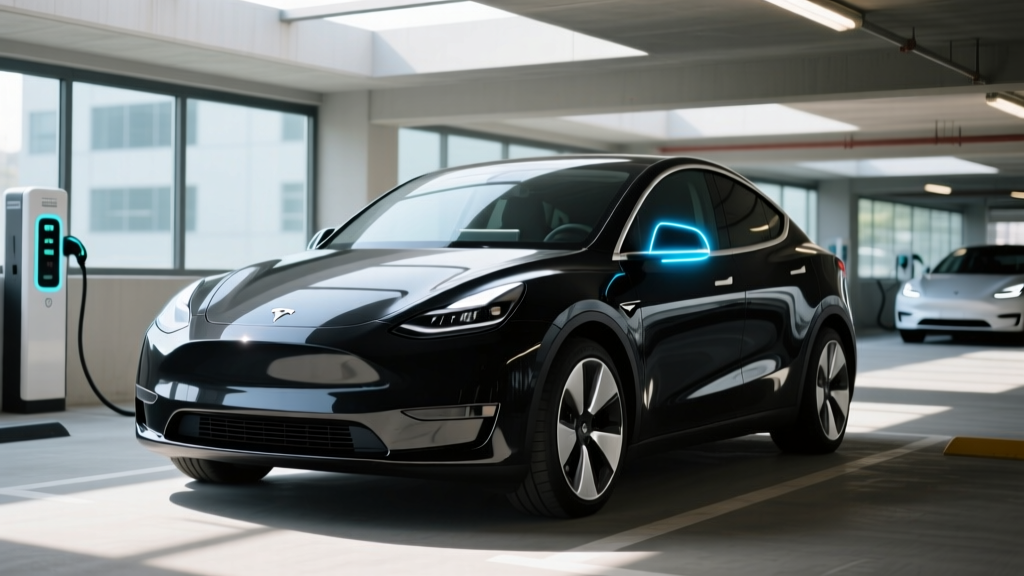
Tesla Sentry Mode is one of the most useful security features in any electric vehicle. It keeps the cameras and onboard computer active while the car is parked, recording nearby threats and sending alerts to your phone. But it comes at a cost: continuous energy draw from the high-voltage traction battery. For owners who park in busy areas or leave their cars for extended periods, understanding exactly how much energy Sentry Mode consumes — and what that means for long-term battery health — is essential.
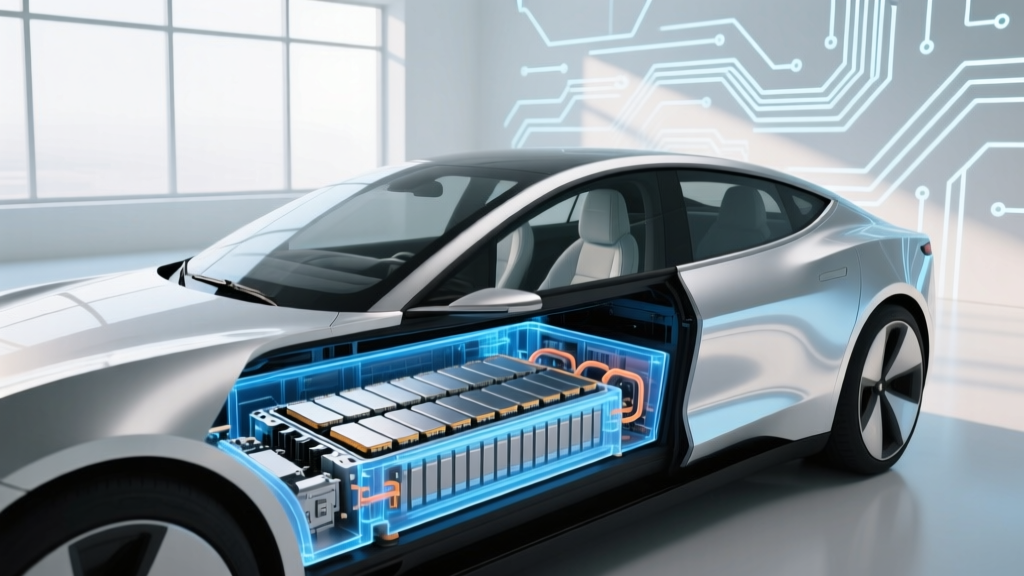
This guide breaks down Tesla Sentry Mode battery usage in precise kWh terms, examines how that parasitic drain interacts with battery degradation over time, and covers everything you need to know about EV battery chemistry, warranties, replacement costs, and care practices in 2026.
How Tesla Sentry Mode Drains the Battery
Sentry Mode keeps the vehicle's cameras, motion sensors, and central computer running even when the car is off and locked. On a Tesla Model 3 or Model Y with the Hardware 4 (HW4) computer, Sentry Mode draws approximately 200 to 300 watts continuously. That translates to roughly 1 to 2 miles of EPA-rated range per hour, depending on the vehicle's efficiency rating (measured in Wh/mi).
To put that in concrete energy terms:
- 8-hour workday: ~1.6–2.4 kWh consumed, equating to roughly 6–10 miles of range lost
- 24-hour parking: ~4.8–7.2 kWh consumed, or about 18–30 miles of range
- Weekend trip (48 hours): ~9.6–14.4 kWh, which is 35–60 miles of range depending on model efficiency
For a Model Y Long Range with a ~75 kWh usable battery and an EPA rating of 320 miles, a full 24-hour Sentry Mode session costs roughly 6–9% of total capacity. That's noticeable but manageable for daily use. The concern arises when Sentry Mode is left active for multi-day airport parking or street parking without charging access.
Does Sentry Mode Accelerate Battery Degradation?
The short answer: minimally, but it depends on your charging habits. Sentry Mode itself doesn't cause unusual degradation — it's simply a slow, steady discharge. The real factor is how you recharge after Sentry Mode has drained the battery.
Battery degradation in lithium-ion cells is driven by three primary mechanisms:
- Calendar aging: Chemical breakdown that occurs over time regardless of use, accelerated by high temperatures and high State of Charge
- Cycle aging: Wear from charge-discharge cycles; deeper cycles (0–100%) cause more wear than shallow ones (40–80%)
- Thermal stress: Extreme heat or cold during charging or discharging accelerates capacity loss
Sentry Mode creates additional shallow discharge cycles. If you normally charge to 80% and Sentry Mode pulls the battery down to 72% over a workday, then you recharge to 80% at home, that's a very shallow micro-cycle. Shallow cycles are far less damaging than deep cycles. The degradation impact of daily Sentry Mode use is estimated at less than 0.5% additional capacity loss per year compared to identical usage without Sentry Mode — a negligible amount relative to normal calendar aging.
However, if Sentry Mode regularly pulls your battery below 20% (say, during extended unplugged parking), and you then DC fast-charge from a low SoC, the combination of deep discharge and high-current charging does increase wear. The best practice is to keep Sentry Mode active only when you have access to charging, or to disable it for multi-day parking situations.
LFP vs NMC/NCA: How Chemistry Affects Sentry Mode Tolerance
Tesla uses two primary battery chemistries across its 2026 lineup, and the chemistry in your vehicle significantly affects how Sentry Mode drain impacts long-term health:
| Attribute | LFP (Lithium Iron Phosphate) | NMC/NCA (Nickel Manganese Cobalt / Nickel Cobalt Aluminum) |
|---|---|---|
| Models (2026) | Model 3 RWD, Model Y RWD | Model 3 Long Range/Performance, Model Y Long Range/Performance, Model S, Model X |
| Energy Density | Lower (~160 Wh/kg cell-level) | Higher (~250 Wh/kg cell-level) |
| Cycle Life | 3,000–5,000+ cycles to 80% capacity | 1,000–2,000 cycles to 80% capacity |
| Recommended Charge Limit | 100% (daily charging to full is recommended) | 80% daily; 100% only for trips |
| Cold-Weather Performance | More range loss in cold (~30–40% reduction at 20°F) | Moderate cold loss (~20–30% reduction at 20°F) |
| Cost | Lower (no cobalt or nickel) | Higher (cobalt/nickel supply costs) |
| Sentry Mode Impact | Very low — LFP tolerates shallow cycling and high SoC well | Low — but avoid letting SoC sit at 100% with Sentry active |
Which is better for Sentry Mode users? LFP batteries are more tolerant of the patterns Sentry Mode creates. Because LFP chemistry is recommended for daily 100% charging, you can park at full charge, let Sentry Mode draw down slightly, and recharge without the high-SoC calendar aging concerns that affect NMC/NCA cells. If you own an NMC/NCA Tesla and use Sentry Mode daily, charge to 80% and let Sentry Mode pull it to ~72–75% — that's an ideal SoC window for longevity.
How Long Do Tesla Batteries Actually Last?
Tesla's battery packs are engineered to outlast the vehicle itself in most cases. Real-world fleet data and Tesla's own Impact Reports show the following degradation trajectory:
- Year 1 / 15,000 miles: ~2–4% capacity loss (initial formation loss)
- Year 3 / 45,000 miles: ~5–8% total loss
- Year 5 / 75,000 miles: ~7–10% total loss
- Year 8 / 120,000 miles: ~10–14% total loss (still above warranty threshold)
- 200,000+ miles: Many packs retain 80–85% original capacity
Sources: Tesla Impact Report 2024, fueleconomy.gov, and independent fleet data from Recurrent Auto.
The key insight is that degradation is non-linear. Most capacity loss occurs in the first 20,000–30,000 miles, after which the curve flattens considerably. A Tesla Model 3 that loses 4% in year one may lose only 1% per year for the next several years. Sentry Mode's contribution to this curve is negligible within these figures.
For LFP-equipped vehicles (Model 3 RWD, Model Y RWD), degradation tends to be even slower, with many owners reporting less than 5% loss at 60,000 miles. LFP's superior cycle life means the battery can handle the micro-cycles Sentry Mode creates for well over a decade without meaningful additional wear.
Tesla Battery Warranty: What's Covered
Tesla's battery and drive unit warranty is one of the strongest in the industry. Here's what the 2026 warranty terms cover:
| Model | Duration | Mileage Limit | Capacity Retention Threshold |
|---|---|---|---|
| Model 3 RWD (LFP) | 8 years | 100,000 miles | 70% |
| Model 3 Long Range / Performance | 8 years | 120,000 miles | 70% |
| Model Y (all trims) | 8 years | 120,000 miles | 70% |
| Model S / Model X | 8 years | 150,000 miles | 70% |
What the warranty covers: If your battery falls below 70% of its original usable capacity within the warranty period (as measured by Tesla's diagnostic tools), Tesla will repair or replace the pack at no cost. The warranty also covers defects in materials and workmanship, and any manufacturing-related failures.
What it does NOT cover: Normal degradation above the 70% threshold, damage from accidents, flooding, or unauthorized modifications. Sentry Mode usage does not void the warranty — it's a factory feature, and Tesla does not restrict its use as a warranty condition.
It's worth noting that very few Tesla owners have needed warranty replacements. According to data from Recurrent Auto, less than 1.5% of Tesla battery packs have been replaced under warranty across all model years. The vast majority of packs retain well above 80% capacity even at 100,000+ miles.
EV Battery Replacement Costs: When and How Much
If your battery degrades beyond the warranty threshold or suffers a failure outside the warranty period, replacement costs are significant — but they've been declining steadily. Here are current 2026 estimates:
| Model | Battery Size (Usable) | Estimated Replacement Cost | Typical Replacement Timeline |
|---|---|---|---|
| Model 3 RWD (LFP) | ~57.5 kWh | $10,000–$13,000 | Rarely needed before 200,000+ mi |
| Model 3 LR / Performance | ~75 kWh | $13,000–$16,000 | Rarely needed before 180,000+ mi |
| Model Y LR / Performance | ~75 kWh | $13,000–$16,000 | Rarely needed before 180,000+ mi |
| Model S / Model X | ~95 kWh | $18,000–$22,000 | Rarely needed before 150,000+ mi |
These figures include the battery pack and labor at a Tesla Service Center. Third-party EV battery repair shops are emerging and can sometimes replace individual modules for $3,000–$7,000 rather than swapping the entire pack. For most owners, the battery will never need replacement — the vehicle will be retired or sold before the pack reaches end-of-life.
How to Check and Maximize Battery Health
Tesla provides several tools for monitoring battery State of Health (SoH), and adopting a few habits can significantly extend your pack's useful life:
Checking State of Health
- In-car range estimate: Compare your displayed range at 100% charge (or extrapolate from a lower SoC) to the original EPA rating. A Model Y LR that originally displayed 320 miles at 100% but now shows 295 miles has experienced roughly 7.8% degradation.
- Tesla app energy graph: The app tracks energy consumption and can show trends over time.
- Third-party tools: Apps like Tessie or Teslamate can log detailed battery data, including estimated SoH percentage based on charge/discharge curves.
- Service Center diagnostic: Tesla can run a full battery health report on request, typically during routine service visits.
- ☐ Set charge limit to 80% for NMC/NCA models (100% for LFP) when using Sentry Mode daily
- ☐ Disable Sentry Mode when parking for 48+ hours without charging access
- ☐ Avoid DC fast-charging from below 10% SoC when possible — charge at home Level 2 first
- ☐ Precondition the battery before fast charging (the car does this automatically when navigating to a Supercharger)
- ☐ Park in shade or garages during hot weather to reduce calendar aging
- ☐ Don't let the car sit at 100% SoC for extended periods (NMC/NCA only — LFP is fine at 100%)
- ☐ Check displayed range at full charge quarterly to track degradation trends
Factors That Affect EV Battery Life Beyond Sentry Mode
While Sentry Mode's impact is minor, several other factors play a much larger role in long-term battery health:
DC Fast-Charging Frequency: Regular use of DC fast charging (150–250 kW) generates significant heat within the battery cells. Tesla's thermal management system mitigates this, but owners who fast-charge more than 3–4 times per week may see 1–2% additional degradation over 5 years compared to primarily Level 2 home charging. According to data from the Idaho National Laboratory, exclusive DC fast charging showed roughly 5% more capacity loss over 50,000 miles compared to Level 2 charging.
Extreme Temperatures: Battery cells degrade faster when exposed to sustained heat above 95°F or when regularly charged in sub-freezing conditions without preconditioning. Tesla's battery thermal management system actively heats and cools the pack, but parking in extreme heat for extended periods still accelerates calendar aging.
State of Charge Habits: For NMC/NCA batteries, the sweet spot is 20–80% SoC for daily use. Storing the car at 100% for weeks at a time causes lithium plating and electrolyte decomposition. LFP batteries don't have this concern — Tesla explicitly recommends charging LFP vehicles to 100% at least weekly to maintain accurate SoC calibration.
Emerging Battery Technology: What's Next
Several next-generation battery technologies are in development that could further reduce degradation concerns:
Solid-State Batteries: These replace the liquid electrolyte with a solid material, offering higher energy density, faster charging, and dramatically improved cycle life. Companies like Toyota, QuantumScape, and Samsung SDI are targeting commercial production between 2028 and 2030. These are not yet available in any production vehicle as of 2026.
Silicon Anode Batteries: Replacing graphite anodes with silicon can increase energy density by 20–40%. Companies like Sila Nanotechnologies and Group14 are supplying silicon anode materials to automakers, with limited production appearing in some 2026–2027 models. Tesla has not announced adoption for its current lineup.
Dry Electrode Manufacturing: Tesla's own dry electrode process (acquired via Maxwell Technologies) promises lower manufacturing costs and potentially improved cell longevity. This technology is gradually being integrated into Tesla's 4680 cell production lines in 2026, with incremental improvements to cycle life expected.
These advancements are forward-looking and should not factor into current purchasing decisions. Today's LFP and NMC/NCA batteries already provide excellent longevity for the vast majority of owners.
Frequently Asked Questions
How much range does Tesla Sentry Mode use per hour?
Sentry Mode consumes approximately 200–300 watts, which equates to about 1–2 miles of EPA-rated range per hour depending on the vehicle's efficiency (Wh/mi rating). Over a 10-hour day, expect roughly 10–20 miles of range loss.
Will Sentry Mode drain my Tesla battery to zero?
No. Tesla automatically disables Sentry Mode when the battery drops below 20% State of Charge. This prevents the feature from stranding you with a fully depleted battery.
Does using Sentry Mode void my Tesla battery warranty?
No. Sentry Mode is a factory-designed feature, and Tesla does not restrict its use as a warranty condition. The 8-year battery warranty covers defects and capacity loss below 70%, regardless of Sentry Mode usage.
Is it better to leave Sentry Mode on or off for battery health?
For battery longevity, the impact is negligible. Sentry Mode's shallow discharge cycles cause minimal additional wear. If you're parking for more than 48 hours without charging access, disable it to preserve range — but for daily use, the security benefit far outweighs the tiny energy cost.
How long do Tesla batteries last before needing replacement?
Most Tesla battery packs retain 80–90% of their original capacity at 150,000 miles. Full replacement is rarely needed before 200,000+ miles, and many packs outlast the vehicle itself. The 8-year warranty provides a safety net in the unlikely event of premature degradation.
How do I check my Tesla battery's State of Health?
Charge your Tesla to 100% (or calculate from a known SoC) and compare the displayed range to the original EPA rating. For more detailed tracking, use third-party apps like Tessie or Teslamate, or request a diagnostic report from a Tesla Service Center.
Does Sentry Mode use more battery in cold weather?
Sentry Mode itself draws the same wattage regardless of temperature. However, in cold weather, the battery management system may also run the battery heater, adding to total energy consumption while parked. Expect 20–40% more total parked energy loss in sub-freezing temperatures compared to mild conditions.