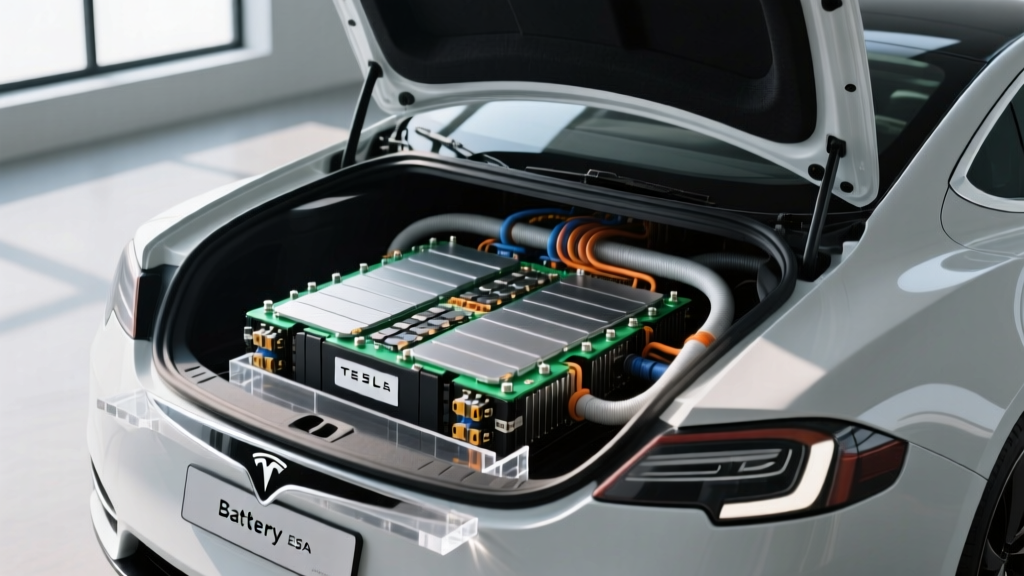
What Sentry Mode Actually Does to Your Tesla's Battery
Tesla Sentry Mode keeps the vehicle's cameras, processors, and thermal management systems running while parked, drawing power continuously from the high-voltage traction battery. For owners who leave it enabled 24/7, the question isn't whether Sentry Mode consumes energy — it clearly does — but whether that persistent drain accelerates battery degradation over the life of the vehicle.
The short answer: Sentry Mode alone won't destroy your battery, but it does add measurable cycle accumulation. Understanding exactly how much, and how that interacts with your specific battery chemistry, is the key to making an informed decision about when to leave it on.
- Typical consumption: ~200–300 watts continuous (varies by ambient temperature and event-trigger frequency)
- 24-hour drain: Roughly 5–7 kWh per day
- Range equivalent: Approximately 15–25 miles of EPA-rated range lost per 24 hours
- Annual energy cost: ~$180–$300 depending on local electricity rates ($0.12–$0.16/kWh average)
These figures assume Sentry Mode is active around the clock. Most owners who disable it at home or during work see 50–70% less phantom drain.
LFP vs. NMC/NCA: Why Your Tesla's Battery Chemistry Matters for Sentry Mode
Tesla currently uses two primary battery chemistries across its lineup, and each responds differently to the kind of low-power, sustained drain that Sentry Mode produces.
| Attribute | LFP (Lithium Iron Phosphate) | NMC/NCA (Nickel-based) |
|---|---|---|
| Vehicles (2025–2026) | Model 3 RWD, Model Y RWD | Model 3 Long Range/Performance, Model Y LR/Perf, Model S, Model X |
| Usable Capacity | ~57.5 kWh (Model 3 RWD) | ~75–100 kWh depending on model |
| Cycle Life | 3,000–5,000+ cycles to 80% SoH | 1,000–2,000 cycles to 80% SoH |
| Energy Density | Lower (~160 Wh/kg cell-level) | Higher (~250–270 Wh/kg cell-level) |
| Cold Performance | More range loss in freezing temps (~30–40%) | Better cold retention (~20–30% loss) |
| Recommended Charge Limit | 100% daily (Tesla recommends periodic full charge for BMS calibration) | 80% daily, 100% only for trips |
| Sentry Mode Impact | Smaller battery = higher % drain per day; but superior cycle life absorbs it well | Larger battery = lower % drain per day; but sitting at high SoC accelerates calendar aging |
| Cost | Lower material cost (no nickel/cobalt) | Higher material cost |
The practical takeaway: If you own an LFP-equipped Model 3 RWD or Model Y RWD, Sentry Mode's 5–7 kWh daily drain represents roughly 9–12% of your usable battery capacity. That sounds significant, but LFP chemistry tolerates deep cycling far better than NMC. If you own a Long Range or Performance variant with NMC/NCA, the percentage drain is smaller (5–8% of a 75+ kWh pack), but the real risk isn't cycling — it's calendar aging from sitting at elevated states of charge for extended periods.
Real Degradation Data: How Much Capacity Do Tesla Batteries Actually Lose?
Tesla's 2024 Impact Report (the most recent published dataset) indicates that Model 3 and Model Y batteries retain approximately 85% of original capacity at 150,000 miles. Model S and Model X packs show roughly 82% retention at the same mileage. These are fleet averages, meaning individual results vary based on charging habits, climate, and usage patterns.
- Year 1 / 15,000 mi: ~2–4% loss (initial formation drop)
- Year 3 / 45,000 mi: ~6–9% total loss
- Year 5 / 75,000 mi: ~8–12% total loss
- Year 8 / 120,000 mi: ~12–17% total loss
- Year 10 / 150,000 mi: ~15–18% total loss
Sources: Tesla Impact Report, fleet telemetry aggregators. LFP packs generally show slower degradation curves than NMC in the first 50,000 miles.
So where does Sentry Mode fit into this picture? A constant 5–7 kWh daily draw adds approximately 1–1.5 equivalent full charge cycles per week for an LFP Model 3, or about 50–75 extra cycles per year. Over five years, that's 250–375 additional cycles. For an LFP battery rated for 3,000+ cycles, this is a marginal addition — perhaps accelerating degradation by 1–2 percentage points over the battery's useful life. For NMC chemistry rated at 1,000–2,000 cycles, the same extra cycling represents a proportionally larger share of total cycle life.
However, the bigger degradation factor for Sentry Mode users isn't cycle count — it's the state of charge at which the battery sits. If you leave Sentry Mode on and your car is parked at 90% SoC for days, you're accelerating calendar degradation. NMC chemistry degrades measurably faster when held above 80% SoC, particularly in warm climates. LFP is more tolerant of high SoC storage, which is partly why Tesla recommends charging it to 100% regularly.
Tesla's Battery Warranty: What's Covered and What Sentry Mode Changes
Tesla's battery and drive unit warranty provides a backstop against premature degradation, but understanding the exact terms is essential for evaluating whether Sentry Mode use could ever put you in warranty-claim territory.
| Model | Warranty Period | Mileage Limit | Capacity Retention Threshold |
|---|---|---|---|
| Model 3 RWD (LFP) | 8 years | 100,000 miles | 70% minimum |
| Model 3 LR / Performance | 8 years | 120,000 miles | 70% minimum |
| Model Y (all trims) | 8 years | 120,000 miles | 70% minimum |
| Model S / Model X | 8 years | 150,000 miles | 70% minimum |
Critical detail: The warranty covers capacity loss below 70% — meaning your 82 kWh usable pack would need to drop below ~57 kWh for a claim. Tesla does not void the warranty for using Sentry Mode; it's a factory feature. However, if telemetry shows the vehicle was consistently stored at extreme SoC levels in high-temperature environments, warranty adjudication could become contentious. In practice, Tesla has honored battery claims broadly, and Sentry Mode use alone has not been cited as a disqualifier.
The 70% threshold is also worth contextualizing: fleet data shows the vast majority of Tesla batteries never reach that threshold within the warranty period under normal use. Even heavy Sentry Mode users would need to combine it with aggressive fast-charging habits and extreme climate exposure to approach warranty-claim territory.
Battery Replacement Costs: Context for the Worst-Case Scenario
If a Tesla battery does require out-of-warranty replacement — which remains uncommon for vehicles under 200,000 miles — here's what the current cost landscape looks like in 2025–2026:
| Model | Battery Size | OEM Replacement (Tesla Service) | Third-Party / Remanufactured |
|---|---|---|---|
| Model 3 RWD | ~60 kWh (LFP) | $12,000–$16,000 | $8,000–$11,000 |
| Model 3 LR / Performance | ~75–82 kWh (NMC) | $14,000–$20,000 | $10,000–$14,000 |
| Model Y | ~60–82 kWh | $13,000–$20,000 | $9,000–$14,000 |
| Model S / X | ~100 kWh | $18,000–$25,000 | $13,000–$18,000 |
These figures include the battery pack and labor but can vary by service center and region. The important context: most Tesla batteries outlast the vehicle's economic life. The average age of a scrapped vehicle in the US is approximately 15 years, and current Tesla battery data suggests 80%+ capacity retention at 200,000 miles for most packs. Replacement is typically needed only after manufacturing defects, physical damage, or extreme edge cases — not from normal use, Sentry Mode included.
Factors That Actually Matter for Battery Longevity (Beyond Sentry Mode)
While Sentry Mode adds cycle accumulation, several other factors have a far larger impact on your battery's long-term State of Health (SoH):
- Avoid sustained high SoC (NMC especially): Parking at 90–100% for days causes more calendar degradation than Sentry Mode cycling. Set charge limits to 80% for daily use on NMC vehicles.
- Minimize DC fast charging when possible: Frequent Supercharging (250 kW) generates sustained high heat. Data from Recurrent Auto shows vehicles that fast-charge more than 90% of the time exhibit slightly faster degradation than those primarily using Level 2.
- Extreme temperature exposure: Battery thermal management helps, but prolonged parking in 100°F+ heat or sub-zero cold without preconditioning stresses the pack. Sentry Mode actually helps here — it keeps the thermal management system active.
- Depth of discharge habits: Running the battery to very low SoC (below 10%) and then letting it sit causes stress. Try to keep the pack between 20–80% for NMC, or don't worry as much with LFP.
- Sentry Mode / phantom drain: A secondary factor. Meaningful over years, but far less impactful than the items above.
One counterintuitive point: Sentry Mode can actually help battery health in extreme climates by keeping the thermal management system engaged. A battery that's thermally regulated degrades slower than one sitting passively in 110°F Arizona heat or -10°F Minnesota cold. The net effect depends on your climate and parking habits.
How to Monitor Your Tesla's Battery Health
Tesla doesn't expose a direct State of Health (SoH) percentage in the vehicle UI, but several methods give you reliable visibility:
Method 1: Manual Range Tracking
Charge your vehicle to 100% (for LFP) or note the projected range at a consistent SoC (for NMC, use 80%). Compare the displayed range to the original EPA-rated range when new. For example, if your Model 3 LR originally displayed 341 miles at 100% and now shows 300 miles at 100%, that's roughly 88% retention — about 12% degradation.
Method 2: Third-Party Apps
Apps like Tessie, Stats, and Scan My Tesla (via OBD-II adapter) can estimate SoH by tracking energy consumed vs. distance traveled over multiple charge cycles. These are approximations but trend reliably over time.
Method 3: Tesla Service Diagnostic
You can request a battery health check through the Tesla app. Service will run a diagnostic that reads the BMS-reported capacity vs. original nameplate capacity. This is the most authoritative reading and the one used for warranty evaluations.
Pro tip: Check SoH every 6 months or every 15,000 miles. Degradation is non-linear — it's steepest in the first 20,000 miles (2–4% loss), then flattens into a slow, gradual decline. If you see sudden drops, that warrants a service visit.
Practical Sentry Mode Settings to Minimize Battery Impact
You don't have to choose between security and battery health. Tesla's Sentry Mode settings offer meaningful control:
- Exclude Home: Disable Sentry Mode automatically when parked at your home address (where risk is typically lowest and the car may sit for 12+ hours).
- Exclude Work: Same for your workplace address.
- Exclude Favorites: Add any frequent, safe parking locations.
- Set SoC threshold: Sentry Mode automatically disables when the battery drops below 20% SoC — this protects against deep discharge.
- Use Dog Mode or Camp Mode selectively: These keep climate running but may be more appropriate than Sentry Mode in some scenarios.
By excluding home and work, most owners reduce Sentry Mode's active time to 2–4 hours per day (errands, restaurant parking, etc.), cutting the daily energy draw from ~6 kWh to ~1–2 kWh and reducing the annual cycle accumulation by 60–70%.
Looking Ahead: Solid-State and Silicon-Anode Batteries
For context on where battery technology is heading — and whether today's degradation concerns will matter in a few years — it's worth noting the emerging technologies in development:
Solid-state batteries replace the liquid electrolyte with a solid material, promising higher energy density, faster charging, and dramatically longer cycle life. Toyota has announced limited production for 2027–2028, but these are expected to debut in low volumes at premium price points. Widespread availability in Tesla-class vehicles remains a 2030+ prospect at earliest.
Silicon-anode batteries (used in limited form by companies like Sila Nanotechnologies) increase energy density by replacing graphite anodes with silicon. These are entering production in 2025–2026 for some EV applications but are still early-stage for full-pack deployment.
Neither technology is currently available in any Tesla vehicle, and neither changes the practical advice for today's owners. Current LFP and NMC chemistries, properly managed, will comfortably last the life of the vehicle for the vast majority of owners.
Frequently Asked Questions
How long do Tesla batteries last in years and miles?
Based on fleet data, Tesla batteries typically retain 80–85% capacity at 150,000 miles and 8–10 years. Many packs reach 200,000+ miles with 75–80% retention. The battery is generally the longest-lasting major component in the vehicle.
Does Sentry Mode void my Tesla battery warranty?
No. Sentry Mode is a factory-designed feature. Tesla does not consider its use as abuse or misuse. The 8-year / 100,000–150,000-mile warranty (depending on model) with a 70% capacity retention threshold remains fully in effect regardless of Sentry Mode usage.
How much does it cost to run Sentry Mode daily?
At a national average electricity rate of ~$0.14/kWh, running Sentry Mode 24/7 costs roughly $0.70–$1.00 per day, or about $250–$365 per year. If you exclude home and work, the cost drops to roughly $60–$120 annually.
Is LFP or NMC better for heavy Sentry Mode use?
LFP handles sustained cycling better due to its 3,000–5,000 cycle life vs. NMC's 1,000–2,000. However, LFP's smaller pack size means Sentry Mode consumes a larger percentage of capacity daily. Overall, LFP's cycle-life advantage outweighs the smaller pack disadvantage for owners who leave Sentry Mode on frequently.
Should I turn Sentry Mode off to save my battery?
For most owners, the battery impact is negligible over a typical ownership period (5–7 years). If you park in high-risk areas, the security benefit outweighs the ~1–2% additional degradation you might see over 100,000 miles. Use the location-exclusion settings to minimize unnecessary drain rather than disabling the feature entirely.
How do I check my Tesla battery's State of Health?
Track your 100% displayed range over time, use third-party apps like Tessie or Stats for SoH estimates, or request a battery health diagnostic through the Tesla app for an official BMS reading.