Tesla's Battery Evolution: Where Things Stand in 2026
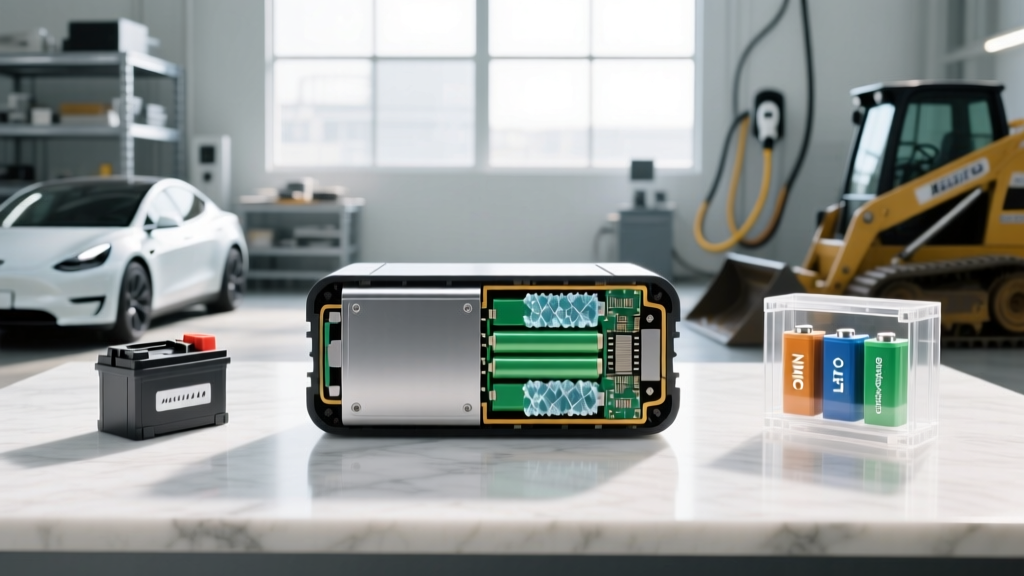
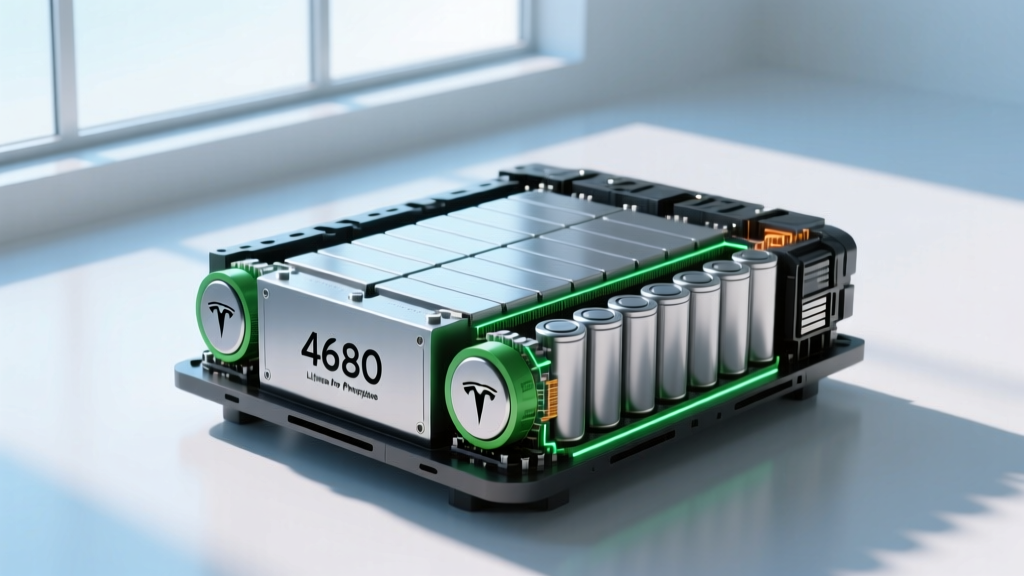
When buyers search for "tesla new battery tech," they're usually trying to answer one practical question: will the battery in a Tesla outlast the car, and what chemistry should they choose? Tesla currently deploys three distinct battery architectures across its lineup — the legacy 2170 cylindrical cells with nickel-manganese-cobalt (NMC) chemistry, the lithium iron phosphate (LFP) prismatic cells in base-range models, and the newer 4680 structural battery pack in select Cybertruck and Model Y configurations. Each has measurable trade-offs in energy density, cycle life, cold-weather performance, and cost that directly affect ownership.
This guide breaks down the chemistry, the real-world degradation data Tesla owners actually see, warranty protections, replacement economics, and what emerging technologies like solid-state and silicon-anode cells realistically mean for buyers in the next few years.
LFP vs NMC vs 4680: Tesla's Chemistry Lineup Compared
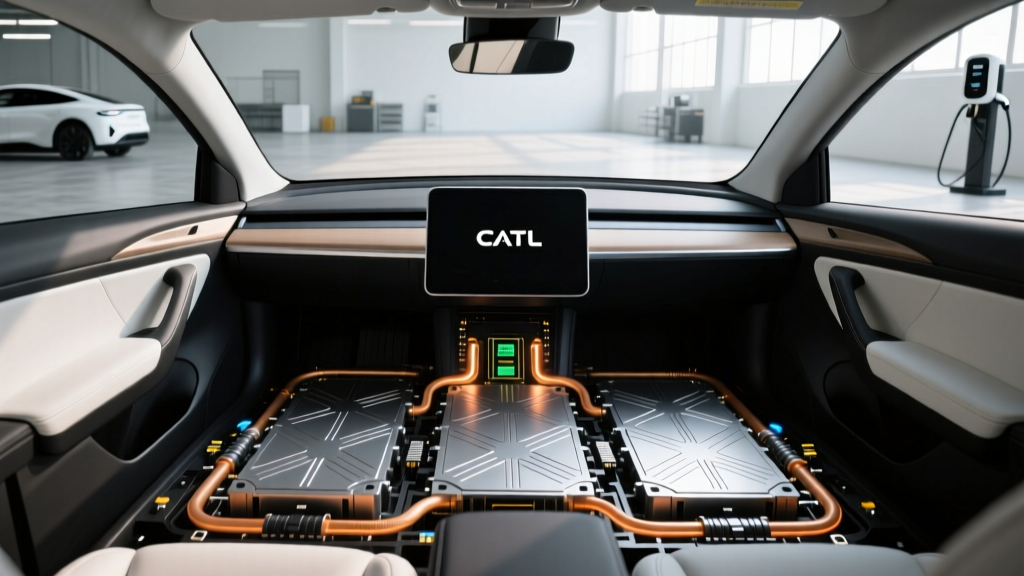
Tesla sources cells from multiple suppliers — primarily CATL (LFP), Panasonic (2170 NMC and 4680), and LG Energy Solution (NMC) — and assigns chemistry by model and trim. Understanding which pack is in the vehicle you're considering is essential because it dictates daily charging habits and long-range suitability.
| Attribute | LFP (Prismatic) | NMC/NCA (2170 Cylindrical) | 4680 Structural (NMC) |
|---|---|---|---|
| Used In | Model 3 RWD, Model Y RWD | Model 3 Long Range/Performance, Model S, Model X | Cybertruck, select Model Y AWD |
| Energy Density | ~160 Wh/kg (lower) | ~260 Wh/kg (higher) | ~240-270 Wh/kg (comparable) |
| Typical Usable Capacity | 57-60 kWh | 75-100 kWh | ~100-123 kWh (Cybertruck) |
| Cycle Life | 3,000-5,000+ cycles | 1,000-2,000 cycles | 1,500-2,500 cycles (est.) |
| Cold Performance | Poor (15-25% range loss below 32°F) | Better (10-15% loss with heat pump) | Moderate (thermal mgmt improved) |
| Recommended Daily Charge | 100% (Tesla recommends weekly 100%) | 80-90% daily, 100% for trips | 80-90% daily, 100% for trips |
| Cobalt Content | None | Low-cobalt NMC | Low-cobalt NMC |
| Relative Cost | Lowest ($/kWh) | Higher | Targeted lower at scale, currently similar |
Real-World Degradation: What Tesla Owners Actually Measure
Tesla publishes an annual Impact Report with fleet-wide battery health data. According to Tesla's Impact Report, Model 3 and Model Y batteries retain approximately 88% of original capacity after 200,000 miles — meaning roughly 12% degradation over what for most owners is 10-15 years of driving. Model S and Model X data shows similar retention of approximately 85-88% at the same mileage threshold.
Independent data from Recurrent Auto, which tracks over 15,000 EVs via connected telemetry, confirms that most modern Tesla packs degrade non-linearly: a steeper initial drop of 2-4% in the first year or 20,000 miles, followed by a much flatter curve. Many Model 3 owners report 5-8% total degradation at 60,000 miles, plateauing around 10-12% by 150,000 miles.
- Year 1 / 15,000 mi: 2-4% capacity loss (initial SEI layer formation)
- Year 3 / 45,000 mi: 5-7% total loss
- Year 5 / 75,000 mi: 7-9% total loss
- Year 8 / 120,000 mi: 10-12% total loss
- Year 12 / 180,000+ mi: 12-15% total loss (most packs still functional)
LFP packs generally show slower degradation curves but may exhibit more voltage-estimation variance requiring regular 100% charges for BMS calibration.
Catastrophic battery failure — where a pack requires full replacement due to defect rather than gradual degradation — is statistically rare. Tesla's own data suggests fewer than 1.5% of packs are replaced under warranty, and that figure includes early-production Roadster and Model S units from 2012-2015.
Tesla Battery Warranty: Coverage Terms by Model
Tesla's battery and drive unit warranty covers the high-voltage traction battery (not the 12V/16V auxiliary battery) against defects and excessive capacity loss. The threshold for a warranty claim is retention below 70% of original capacity during the warranty period.
| Model | Warranty Duration | Mileage Limit | Minimum Capacity Retention |
|---|---|---|---|
| Model 3 RWD (LFP) | 8 years | 100,000 miles | 70% |
| Model 3 Long Range / Performance | 8 years | 120,000 miles | 70% |
| Model Y (all trims) | 8 years | 120,000 miles | 70% |
| Model S / Model X | 8 years | 150,000 miles | 70% |
| Cybertruck | 8 years | 150,000 miles | 70% |
The warranty covers replacement or repair of the battery to bring it back above the 70% threshold. Tesla may use a new, remanufactured, or reconditioned pack at their discretion. Importantly, the warranty does not cover capacity loss from normal degradation above 70% — a pack at 72% health at 119,000 miles in a Long Range model is functioning within spec, even though the owner has lost roughly 28% of original range.
Battery Replacement Cost: When and How Much
For the vast majority of Tesla owners, a battery replacement is never needed during typical ownership. Most packs demonstrably outlast the vehicle's economic life. However, out-of-warranty replacements do occur — usually on high-mileage vehicles, salvage-title rebuilds, or early-production cars with now-obsolete pack designs.
| Model / Pack | Battery Capacity | Estimated Replacement Cost | Typical Trigger |
|---|---|---|---|
| Model 3 RWD (LFP) | ~57-60 kWh | $10,000 - $14,000 | Physical damage, rare defect post-warranty |
| Model 3/Y Long Range (2170 NMC) | ~75-82 kWh | $13,000 - $18,000 | High-mileage degradation, accident damage |
| Model S / Model X (100 kWh) | ~100 kWh | $18,000 - $25,000 | Older packs (2012-2017) reaching end of life |
| Cybertruck (4680 structural) | ~123 kWh | $20,000 - $30,000 (est.) | Limited data; structural pack complicates repair |
These figures include the pack and labor but can vary significantly by service center, region, and whether Tesla uses a new or remanufactured unit. Third-party EV battery repair shops have emerged as a lower-cost alternative, often replacing individual modules or cell groups for $3,000-$8,000 rather than the entire pack — though this may void remaining Tesla warranty coverage.
Factors That Accelerate (or Preserve) Battery Life
Lithium-ion degradation is governed by electrochemistry, not mystery. Five factors dominate:
- State of Charge habits: For NMC packs, keep daily driving between 20-80% SoC. Reserve 100% charges for road trips and charge to 100% only when you'll drive immediately. LFP packs should be charged to 100% at least once weekly for BMS calibration.
- DC fast charging frequency: Occasional Supercharging does not meaningfully harm modern packs — Tesla's thermal management is robust. However, exclusive reliance on 250 kW DC fast charging (vs. Level 2 home charging) can add 1-3% additional degradation over 100,000 miles based on fleet telemetry.
- Extreme temperature exposure: Sustained exposure to ambient temperatures above 100°F or below 0°F accelerates calendar aging. Use Tesla's scheduled charging and preconditioning features to minimize time at high SoC in hot weather.
- Preconditioning: Always enable battery preconditioning when navigating to a Supercharger. This warms the pack to optimal temperature (~95°F) for charging, reducing lithium plating risk and improving charge speed.
- Storage: If storing a Tesla for weeks, set charge limit to 50% and leave plugged in. Avoid storing at 100% or below 10% for extended periods.
- Regen braking: Standard regen does not harm the battery. Tesla's BMS manages charge acceptance rates during regen to prevent over-current stress.
Monitoring Battery Health: How to Check SoH
Tesla does not expose a dedicated "State of Health" percentage in the vehicle's touchscreen the way some competitors do. However, owners can estimate SoH through several methods:
Method 1 — Range calculation: Charge to 100% (or calculate from a known charge percentage). Compare the displayed projected range to the original EPA range for your model. A Model 3 Long Range with an original EPA rating of 341 miles that shows 305 miles at 100% has experienced approximately 10.5% degradation. Note that displayed range is an estimate based on recent consumption and is not perfectly linear — for a more precise reading, use the energy screen's consumption graph.
Method 2 — Third-party apps: Tools like TeslaFi, Tessie, and Stats (iOS) pull data from Tesla's API and track estimated capacity over time by comparing energy added during charges to SoC percentage changes. These provide a more reliable SoH trendline than single-point range readings.
Method 3 — Service mode diagnostic: Tesla service centers can run a full battery health diagnostic that measures actual pack capacity. Owners can request this during service visits. Some owners access Tesla's hidden Service Mode (available on recent software versions) to view detailed battery telemetry including individual module voltage variance — a key indicator of pack health.
Method 4 — OBD-II dongles: Devices like the OBDLink SX paired with apps like Scan My Tesla can read real-time pack data including total energy capacity, cell voltage spread, and pack temperature — providing the most granular SoH picture available without a service visit.
Emerging Battery Tech: Solid-State, Silicon Anode, and Dry Electrode
Tesla's "new battery tech" roadmap extends beyond the current 4680 cell. Here's where next-generation technologies stand as of 2026 — with realistic timelines, not marketing promises:
Dry electrode coating (4680 improvement): Tesla acquired Maxwell Technologies in 2019 specifically for its dry electrode manufacturing process, which eliminates toxic solvents and reduces factory footprint and energy use. Tesla has been gradually implementing dry electrode processes on 4680 anodes at its Austin pilot line, with cathode dry coating still scaling. Full dry-electrode 4680 cells could reduce per-kWh manufacturing cost by 15-20% and improve energy density, but high-volume production of fully dry cells is expected no earlier than 2027-2028.
Silicon anode cells: Replacing graphite anodes with silicon can theoretically boost energy density by 20-40%. However, silicon swells ~300% during lithiation, causing cracking and rapid capacity fade. Companies like Sila Nanotechnologies and Group14 are supplying silicon-composite anode materials to battery manufacturers, and Tesla has tested silicon-anode prototypes. Realistic timeline for production Tesla vehicles: 2028-2030, likely debuting in a next-generation platform rather than retrofitting current models.
Solid-state batteries: Solid-state cells replace the liquid electrolyte with a solid ceramic, polymer, or sulfide separator, promising higher energy density (~400+ Wh/kg), faster charging, and improved safety (no flammable electrolyte). Toyota, Samsung SDI, and QuantumScape have all announced solid-state timelines, with Toyota targeting limited production in 2027-2028. Tesla has not announced a solid-state program, and industry-wide mass production at automotive scale with competitive pricing is not expected before 2030-2032. The U.S. Department of Energy notes that solid-state batteries remain in the development and validation phase for automotive applications.
Frequently Asked Questions
How long do Tesla batteries last in years and miles?
Fleet data shows most Tesla Model 3 and Model Y batteries retain approximately 85-88% capacity at 200,000 miles, which translates to 13-17 years for an average driver. LFP packs may last longer on a cycle-count basis (3,000-5,000+ cycles vs. 1,000-2,000 for NMC), but calendar aging affects all lithium-ion cells regardless of use. Full pack failure requiring replacement is rare — under 1.5% based on Tesla's warranty claim data.
How much does it cost to replace a Tesla battery?
Out-of-warranty replacement ranges from approximately $10,000-$14,000 for a Model 3 RWD LFP pack to $18,000-$25,000 for a Model S/X 100 kWh pack. Cybertruck 4680 structural pack replacement is estimated at $20,000-$30,000 due to the integrated chassis design. Most owners never need a replacement — the pack typically outlasts the vehicle's practical ownership period. Third-party module-level repairs can reduce costs to $3,000-$8,000 in specific failure scenarios.
What does Tesla's battery warranty actually cover?
Tesla covers the high-voltage traction battery against defects and capacity loss below 70% of original capacity for 8 years and 100,000-150,000 miles depending on model. It does not cover normal degradation above 70%, physical damage from accidents, or the 12V/16V auxiliary battery. Tesla may use a remanufactured pack for warranty replacements. The warranty is transferable to subsequent owners.
How do I check my Tesla's battery health?
Charge to 100% and compare displayed range to original EPA range for a rough estimate. For better tracking, use third-party apps like TeslaFi or Tessie that log energy-added vs. SoC change over time. Tesla service centers can run a full capacity diagnostic on request. OBD-II tools like Scan My Tesla provide the most detailed cell-level data.
Is LFP or NMC better for a Tesla?
LFP is better if you prioritize longevity (higher cycle life), lower cost, cobalt-free sourcing, and the simplicity of charging to 100% regularly. NMC is better if you need maximum range per charge (higher energy density), better cold-weather performance, or regularly drive long distances. For most daily commuters who charge at home, LFP offers a compelling ownership experience. For road-trip-heavy drivers in cold climates, NMC Long Range models remain the stronger choice.
Does frequent Supercharging damage Tesla batteries?
Modern Tesla packs with active thermal management handle DC fast charging well. Fleet data suggests exclusive Supercharging adds roughly 1-3% additional degradation over 100,000 miles compared to primarily Level 2 home charging. The bigger risk is sustained high SoC in hot weather, not the charge speed itself. Always enable preconditioning before fast charging to optimize pack temperature.
Will Tesla's new 4680 battery be available in all models?
As of 2026, 4680 cells are used in the Cybertruck and select Austin-built Model Y variants. Tesla has stated the goal of eventually producing 4680 cells at scale for all models, but production yield and volume remain constraints. A full transition across the lineup is unlikely before 2028-2029 at the earliest. The 2170 cell from Panasonic and LFP cells from CATL continue to supply the majority of Tesla's production volume.