The Brief Life of Tesla's Battery Swap Program
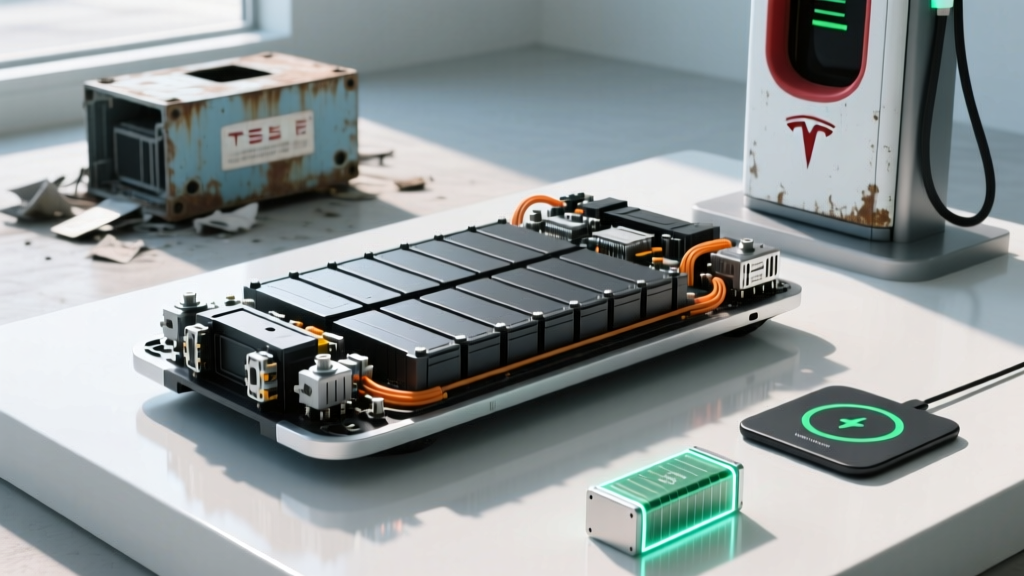
When Tesla demonstrated a 90-second battery swap at a Harris Ranch event in 2013, it seemed like the future of EV refueling. Drivers would pull into a station, a robotic arm would remove the depleted pack, and a fresh one would slide into place—all faster than filling a gas tank. Tesla built a pilot swap station at Harris Ranch, California, and invited a select group of Model S owners to try it.
By 2015, the program was effectively dead. Tesla quietly pivoted away from battery swapping and toward expanding the Supercharger network. The reasons were practical, not technical:
- Cost: Each swap station cost an estimated $500,000 to build and required a large inventory of battery packs—each worth $15,000–$25,000—sitting on shelves.
- Adoption: Of the roughly 200 invitations sent to Model S owners, only about 5% ever used the service. Most drivers preferred waiting 20–30 minutes at a free Supercharger over paying $60–$80 for a swap.
- Logistics: Swapped batteries had to be tracked, charged, balanced, and redistributed. Owners who received a different pack than their original had questions about capacity variance and warranty implications.
- Supercharger speed improved: As Tesla moved from 90 kW to 150 kW to 250 kW (V3) Superchargers, the 20–30 minute charge time eroded the swap advantage. Today's V4 Supercharger architecture peaks at 350 kW on compatible vehicles, adding roughly 200 miles in 15 minutes.
China's Nio has since proven that battery swap can work at scale—with over 2,400 swap stations globally as of late 2025—but the economics require dense urban deployment and government subsidies that don't exist in the U.S. market.
What Tesla Offers Instead: Battery Replacement and Warranty
Rather than swapping batteries at roadside stations, Tesla handles battery failures through its service network. If a pack degrades below the warranty threshold or fails outright, Tesla replaces it—often with a remanufactured unit that meets original specifications.
Tesla Battery Warranty Terms (2026 Models)
| Model | Warranty Period | Mileage Limit | Minimum Capacity Retention |
|---|---|---|---|
| Model 3 RWD (LFP) | 8 years | 120,000 miles | 70% |
| Model 3 Long Range / Performance (NCA) | 8 years | 120,000 miles | 70% |
| Model Y Long Range / Performance | 8 years | 120,000 miles | 70% |
| Model S | 8 years | 150,000 miles | 70% |
| Model X | 8 years | 150,000 miles | 70% |
| Cybertruck AWD / Cyberbeast | 8 years | 120,000 miles | 70% |
The 70% retention threshold means Tesla guarantees your battery will hold at least 70% of its original capacity for the warranty duration. In practice, most Tesla owners never approach this threshold. Data aggregated by Tesla and third-party fleet analyses show typical degradation of 10–12% over 200,000 miles for NCA packs, and even less for LFP chemistry.
Tesla Battery Chemistry: LFP vs. NCA/NMC Trade-Offs
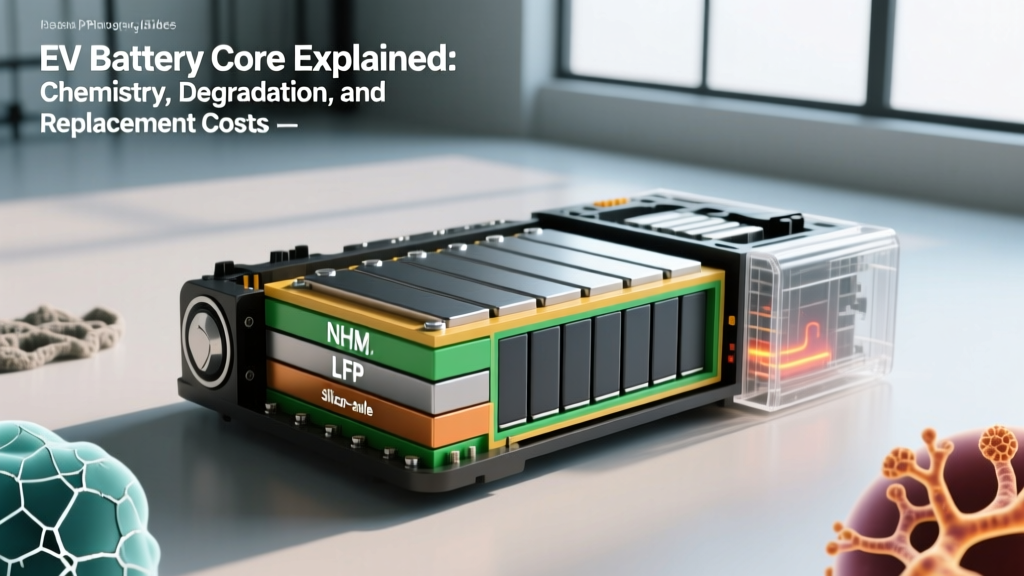
Tesla uses two primary battery chemistries across its 2026 lineup, and the choice between them affects range, charging behavior, longevity, and cost.
LFP vs. NCA/NMC: Chemistry Comparison
| Attribute | LFP (Lithium Iron Phosphate) | NCA/NMC (Nickel-based) |
|---|---|---|
| Energy Density | ~160 Wh/kg (lower) | ~260 Wh/kg (higher) |
| Typical Use in Tesla | Model 3 RWD, Model Y RWD | Long Range, Performance, Model S/X |
| Cycle Life | 3,000–5,000 cycles | 1,000–2,000 cycles |
| Cold Weather Performance | Reduced range in freezing temps; slower charge acceptance | Better cold performance; preconditioning effective |
| Recommended Daily SoC | 100% daily charging OK | 80% daily; 100% for trips only |
| Cost per kWh | Lower (~$100/kWh at pack level) | Higher (~$130–$150/kWh) |
| Thermal Stability | Excellent; lower thermal runaway risk | Good; requires active thermal management |
| Degradation Rate | Slower; ~5–8% over 200k mi | ~10–12% over 200k mi |
Which is better? It depends on your driving pattern. If you commute daily, charge at home, and want to maximize pack life, LFP is the stronger choice—you can charge to 100% regularly without accelerated degradation. If you need maximum range for road trips or live in a cold climate, NCA/NMC packs deliver more miles per kWh and handle freezing temperatures better when preconditioned.
How Long Do Tesla Batteries Actually Last?
Tesla's 2025 Impact Report stated that Model S and X batteries retain approximately 88% of their original capacity at 200,000 miles. Model 3/Y data shows similar or slightly better retention, particularly for LFP-equipped vehicles.
Typical Tesla Battery Degradation Curve
| Mileage | NCA/NMC Retention (avg) | LFP Retention (avg) |
|---|---|---|
| New | 100% | 100% |
| 25,000 mi | ~95% | ~97% |
| 50,000 mi | ~93% | ~95% |
| 100,000 mi | ~90% | ~93% |
| 150,000 mi | ~89% | ~92% |
| 200,000 mi | ~88% | ~91% |
Note: Degradation is non-linear. Most loss occurs in the first 20,000–30,000 miles, after which the curve flattens significantly. Data compiled from Tesla fleet telemetry and third-party tracking via TeslaLogger community databases.
At these rates, a Model 3 Long Range with a 358-mile EPA rating would still deliver approximately 315 miles at 200,000 miles. Real-world range will be lower than EPA in all cases—expect roughly 85–90% of the EPA figure in mixed highway driving, and 70–75% in sustained cold-weather conditions below 30°F.
Tesla Battery Replacement Cost: What to Expect
Out-of-warranty battery replacement is the nightmare scenario most EV skeptics cite. Here are the actual costs based on service invoices shared by Tesla owners and independent repair shops in 2025–2026:
Tesla Battery Replacement Cost Estimates
| Model | Battery Size | Chemistry | Replacement Cost (parts + labor) |
|---|---|---|---|
| Model 3 RWD | ~60 kWh | LFP | $12,000–$14,000 |
| Model 3 Long Range | ~79 kWh | NCA | $14,000–$17,000 |
| Model Y Long Range | ~79 kWh | NCA | $15,000–$18,000 |
| Model S | ~100 kWh | NCA | $18,000–$22,000 |
| Model X | ~100 kWh | NCA | $19,000–$24,000 |
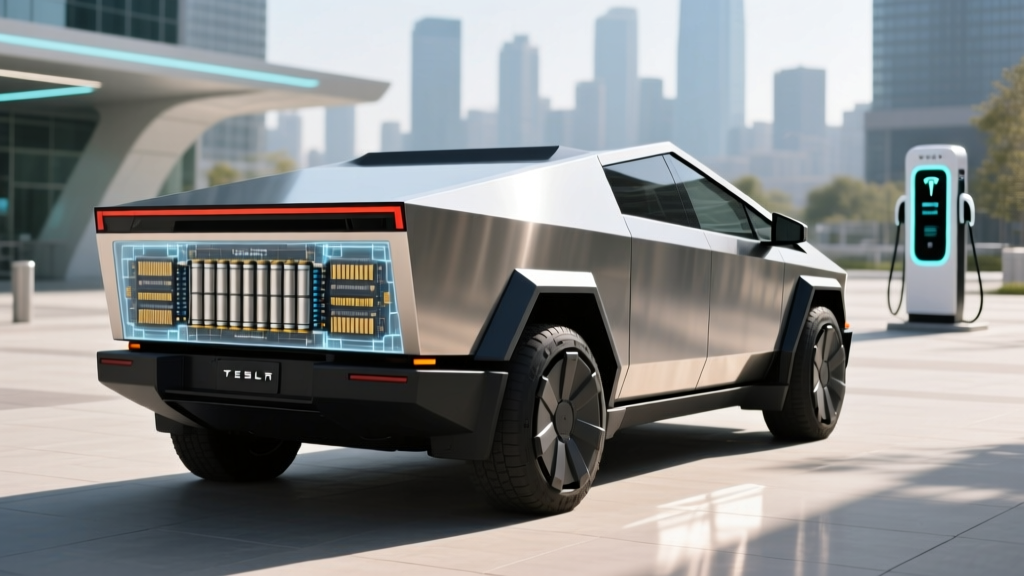
| Cybertruck | ~123 kWh | NCA (4680 cells) | $20,000–$25,000 |
These are out-of-warranty estimates. In-warranty replacements are $0 to the owner. Remanufactured packs may be used and typically cost 15–25% less than new packs.
Context matters here: the vast majority of Tesla owners never pay for a battery replacement. Failure rates before 150,000 miles are well under 2% according to Tesla's published data, and degradation-related replacements are rare because the 70% threshold is seldom breached within the warranty period. For comparison, a gas vehicle's engine or transmission replacement can cost $4,000–$8,000 and occurs more frequently in high-mileage vehicles.
Factors That Accelerate Battery Degradation
Not all miles are equal when it comes to battery wear. The following habits measurably increase degradation rates:
Battery Care Best Practices
- Avoid frequent DC fast charging: Occasional Supercharging is fine, but daily DCFC sessions generate sustained heat that accelerates cell wear. Tesla recommends Level 2 home charging for daily use.
- Don't store at 100% SoC: For NCA/NMC packs, set your daily charge limit to 80%. Reserve 100% for road trips and depart shortly after reaching full charge. LFP packs are exempt—Tesla recommends periodic 100% charges for calibration.
- Avoid deep discharges: Try not to let the pack drop below 10–15% regularly. The low-SoC buffer protects cells, but repeatedly draining to near-zero stresses the chemistry.
- Precondition before fast charging: Navigate to a Supercharger in the Tesla app or in-car nav to trigger battery preconditioning. A warm pack charges faster and with less degradation.
- Park in shade or a garage in extreme heat: Sustained ambient temperatures above 100°F with a high SoC accelerates calendar aging. Tesla's thermal management system runs even when parked, but it draws from the pack.
- Use scheduled charging in cold weather: Set departure times so the car warms the battery just before you drive, reducing cold-soak losses and improving regenerative braking availability.
How to Check Tesla Battery Health (State of Health)
Tesla does not display a dedicated "State of Health" (SoH) percentage in the vehicle UI, unlike some competitors (Hyundai, BMW). However, owners have several ways to assess pack condition:
- Range comparison method: Charge to 100% and note the displayed range. Compare it to the original EPA rating adjusted for your typical conditions. A new Model 3 Long Range shows approximately 346 miles at 100%; if yours shows 310 miles after 60,000 miles, that's roughly 90% retention—normal and healthy.
- Tesla Service diagnostic: Request a battery health report during a service visit. Tesla technicians can pull cell-level voltage data, internal resistance measurements, and a calculated SoH percentage.
- Third-party apps: Tools like TeslaLogger, Tessie, and Stats (iOS) log charging sessions and can estimate SoH by comparing energy added during a known charge event to the expected kWh for that SoC delta.
- OBD-II dongles: Devices like the OBDLink MX+ paired with apps such as Scan My Tesla can read pack voltage, cell imbalance, and nominal full-pack energy (kWh) directly from the CAN bus.
What's Next: Solid-State Batteries and Beyond
The battery industry is actively developing next-generation chemistries, but timelines remain longer than headlines suggest:
- Solid-state batteries: Companies like Toyota, QuantumScape, and Samsung SDI are targeting 2028–2030 for limited production vehicles. Solid-state cells promise 30–50% higher energy density and faster charging, but manufacturing scale-up and cost reduction are unresolved. Tesla has not announced a solid-state roadmap.
- Silicon anode cells: Replacing graphite anodes with silicon can boost energy density by 20–40%. Sila Nanotechnologies and Group14 are in early production with Mercedes and other OEMs, but costs remain high. Tesla's 4680 cells already incorporate some silicon in the anode.
- Sodium-ion batteries: CATL has begun mass-producing sodium-ion cells for lower-range vehicles in China. These offer lower energy density but dramatically lower cost and better cold performance. A potential fit for future base-model Teslas, but not in the current lineup.
None of these technologies are currently available in production Tesla vehicles. The 4680 NCA cells produced at Tesla's Austin and Shanghai gigafactories represent the company's current cutting edge, with incremental chemistry and manufacturing improvements expected annually.
Tesla Battery FAQ
Does Tesla still offer battery swap?
No. Tesla discontinued its battery swap program around 2015 after a limited pilot at Harris Ranch, California. The company invested in the Supercharger network instead, which now exceeds 65,000 stalls globally with V4 architecture delivering up to 350 kW.
How much does a Tesla battery replacement cost out of warranty?
Between $12,000 and $25,000 depending on the model and pack size. Model 3 RWD (LFP) replacements are on the lower end; Cybertruck and Model S/X are on the higher end. Most owners never need an out-of-warranty replacement due to low failure rates and slow degradation.
What does the Tesla battery warranty cover?
Tesla's battery warranty covers defects and capacity loss below 70% for 8 years and 120,000–150,000 miles (varies by model). It does not cover damage from accidents, flooding, or unauthorized modifications. Warranty service may use a new or remanufactured pack.
How do I maximize my Tesla battery's lifespan?
Charge to 80% daily (100% is fine for LFP), use Level 2 home charging instead of daily Supercharging, precondition the battery before fast charging, avoid storing the car at 100% or below 10% SoC for extended periods, and minimize exposure to extreme heat.
LFP or NCA—which Tesla battery is better for longevity?
LFP (lithium iron phosphate) cells degrade more slowly, tolerate daily 100% charging, and have a longer cycle life (3,000–5,000 cycles vs. 1,000–2,000 for NCA). However, LFP packs offer lower energy density (less range per kWh) and reduced cold-weather performance. Choose LFP for commuting and longevity; choose NCA for maximum range and cold-climate driving.
Can I upgrade my Tesla's battery to a larger one?
Tesla does not offer battery upgrades as a service. The pack is structurally integrated into the vehicle, and swapping to a different capacity would require software, cooling, and structural compatibility that Tesla does not support outside of warranty replacements with equivalent-spec packs.