If you're researching Tesla ownership longevity, you've probably encountered two questions on a loop: How long will the battery actually last? and What happens to it when the car is retired? Tesla motors battery recycling has become a cornerstone of the company's supply-chain strategy — but understanding the full lifecycle of a Tesla traction battery requires looking at chemistry, degradation data, warranty protections, and real-world replacement economics. This guide covers all of it with hard numbers.
Tesla Traction Battery Chemistry: LFP vs NMC vs NCA
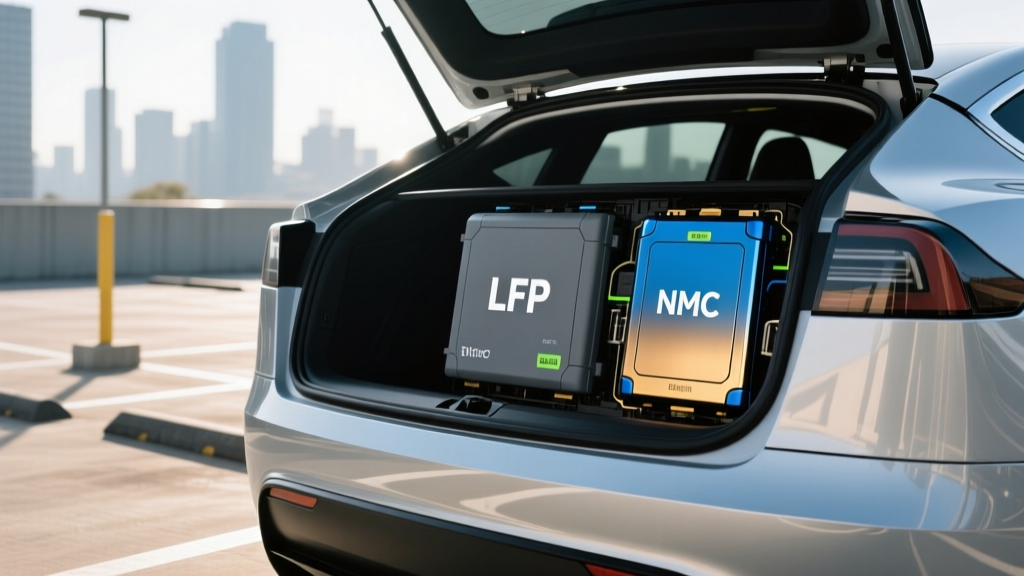
Tesla uses three distinct cathode chemistries across its 2026 lineup, and the choice directly affects your range, charging habits, and long-term degradation profile. Understanding which chemistry is under your floor is the single most important factor in managing battery health.
| Attribute | LFP (Lithium Iron Phosphate) | NMC (Nickel Manganese Cobalt) | NCA (Nickel Cobalt Aluminum) |
|---|---|---|---|
| Models using it | Model 3 RWD, Model Y RWD | Model 3/Y Long Range & Performance | Model S, Model X |
| Energy density | Lower (~160 Wh/kg cell-level) | Higher (~250 Wh/kg cell-level) | Highest (~260+ Wh/kg cell-level) |
| Cycle life | 3,000–5,000+ cycles | 1,000–2,000 cycles | 1,000–1,500 cycles |
| Cold-weather performance | Moderate loss; slower cold charging | Better cold-weather range retention | Better cold-weather range retention |
| Charging to 100% daily | Recommended by Tesla | Not recommended; 80% daily target | Not recommended; 80% daily target |
| Cost per kWh | Lower | Higher | Higher |
| Cobalt content | None | Some (reduced in newer cells) | Minimal |
The practical takeaway: LFP packs sacrifice some energy density (meaning slightly less range in the same physical package) but gain dramatically longer cycle life and the ability to charge to 100% without accelerated degradation. If your commute is under 200 miles round-trip and you want a battery that could realistically outlast 300,000 miles, LFP is the longevity play. NMC and NCA give you more range per charge and better highway/cold-weather performance, but demand more disciplined charging habits.
Real-World Degradation: What the Data Actually Shows
Tesla's own 2025 Impact Report (the most recent published data) states that Model 3 and Model Y batteries retain approximately 85% of original capacity after 200,000 miles. Model S and Model X data shows roughly 88% retention at 150,000 miles. These are fleet averages — individual results vary based on charging behavior, climate, and Supercharging frequency.
Tesla Fleet Degradation Curve (approximate):
- Year 1 / 15,000 mi: ~3–5% loss (initial "formation" drop — normal for all lithium-ion cells)
- Year 3 / 45,000 mi: ~7–9% total loss from new
- Year 5 / 75,000 mi: ~9–12% total loss
- Year 8 / 120,000 mi: ~12–15% total loss
- 200,000 mi: ~15% total loss (fleet average)
The curve flattens significantly after the initial Year 1 drop. Most Tesla owners will never see a sudden "cliff" in capacity — degradation is gradual and linear after the break-in period.
Independent data from TeslaFi and Recurrent Auto (a battery analytics firm that tracks over 10,000 EVs) corroborates these figures. Recurrent's 2025 analysis found that the median Model 3 Long Range at 100,000 miles retains 90–92% of original range, while frequent Superchargers (more than 3 DC fast charges per week) showed an additional 2–3 percentage points of loss compared to primarily Level 2 home chargers.
Tesla Battery Warranty: What's Covered and What Isn't
Tesla's high-voltage traction battery warranty is one of the strongest in the industry, but the details matter — especially the capacity retention threshold.
| Model | Warranty Period | Mileage Limit | Minimum Capacity Retention |
|---|---|---|---|
| Model 3 RWD (LFP) | 8 years | 100,000 miles | 70% |
| Model 3 Long Range / Performance | 8 years | 120,000 miles | 70% |
| Model Y (all trims) | 8 years | 120,000 miles | 70% |
| Model S / Model X | 8 years | 150,000 miles | 70% |
What's covered: Battery failure, manufacturing defects, and capacity dropping below 70% of original within the warranty period. Tesla will repair or replace the pack to bring it above the 70% threshold — not necessarily to 100%.
What's not covered: Normal degradation above 70%, damage from accidents, flooding, or unauthorized modifications, and the 12V auxiliary battery (which is a separate, conventional lead-acid or lithium-ion unit that powers accessories and computers — not the traction battery).
According to Tesla's official warranty documentation, warranty replacement packs may be new or remanufactured, and Tesla retains ownership of the replaced pack — which feeds directly into their recycling stream.
EV Battery Replacement Cost: What Tesla Owners Actually Pay
Out-of-warranty battery replacement is the scenario that generates the most anxiety — and the most inflated numbers online. Here's what the real costs look like in 2026:
| Model | Battery Size (usable) | Chemistry | Replacement Cost Range |
|---|---|---|---|
| Model 3 RWD | ~57.5 kWh | LFP | $10,000 – $13,000 |
| Model 3 Long Range | ~75 kWh | NMC | $13,000 – $16,000 |
| Model Y Long Range | ~75 kWh | NMC | $13,000 – $16,000 |
| Model S | ~95 kWh | NCA/NMC | $18,000 – $22,000 |
| Model X | ~95 kWh | NCA/NMC | $18,000 – $22,000 |
Context that matters: These costs include parts and labor at a Tesla Service Center. Independent EV shops can sometimes source remanufactured packs for 20–30% less. More importantly, the vast majority of Tesla owners will never need an out-of-warranty replacement. Based on Tesla's fleet data, fewer than 1% of packs have required replacement outside of recall campaigns. Most packs outlast the vehicle's useful economic life.
If your pack does fail outside warranty, Tesla's trade-in value for the degraded pack can offset $1,000–$3,000 of the replacement cost, because those cells still hold value for recycling and second-life stationary storage.
How Tesla Motors Battery Recycling Works
Tesla's battery recycling program is not a future aspiration — it's an active, scaled operation integrated into their Gigafactory supply chain. Here's how the process works in practice:
Collection and Triage
When a Tesla battery pack is removed — whether from a crash-damaged vehicle, a warranty replacement, or an end-of-life car — it's shipped to a Tesla-affiliated recycling facility. Tesla has confirmed partnerships with Redwood Materials (founded by former Tesla CTO JB Straubel) and operates internal recycling at Gigafactory Nevada.
Shredding and Hydrometallurgical Recovery
Packs are discharged, disassembled into modules, and shredded. The resulting "black mass" undergoes hydrometallurgical processing (chemical dissolution and separation) to recover critical materials:
- Nickel: ~95% recovery rate
- Cobalt: ~95% recovery rate
- Lithium: ~80–90% recovery rate (improving with newer processes)
- Copper and aluminum: ~98% recovery rate from current collectors and casing
Tesla's 2025 Impact Report claims that none of their retired battery cells go to landfill. Redwood Materials reports that recovered materials are refined to battery-grade specification and fed back into new cell production — creating a closed-loop supply chain that reduces dependence on mined critical minerals.
Why This Matters for the §30D Tax Credit
The federal EV tax credit under IRS §30D includes critical mineral and battery component sourcing requirements that tighten annually. Recycled materials sourced domestically count toward the critical-mineral threshold, which makes Tesla's recycling program strategically important for keeping their vehicles eligible for up to $7,500 in federal credits (subject to MSRP caps of $55,000 for cars and $80,000 for SUVs, plus buyer income limits of $150K single / $300K joint).
Maximizing Your Tesla Battery's Lifespan
Daily Charging Habits:
- NMC/NCA owners: Set charge limit to 80% for daily use. Only charge to 100% when you'll drive immediately (road trips).
- LFP owners: Charge to 100% at least once per week — Tesla recommends this for accurate BMS (Battery Management System) calibration.
- Avoid leaving the car at 0% or below 10% for extended periods (more than a few days).
DC Fast Charging:
- Occasional Supercharging (1–2 times per week) shows negligible additional degradation in fleet data.
- Exclusive DC fast charging (daily, no Level 2) correlates with ~2–4% additional loss over 100,000 miles.
- Always enable battery preconditioning when navigating to a Supercharger — this warms the pack to optimal temperature and reduces charge time and cell stress.
Temperature Management:
- In extreme heat (above 95°F), avoid leaving the car at 100% SoC for days. The thermal management system will run to protect cells, but sustained high-SoC + high-heat accelerates calendar aging.
- In extreme cold (below 20°F), expect 20–30% temporary range loss. This is not degradation — range returns as temperatures warm. Plug in when possible to let the car use grid power for battery heating.
How to Check Your Tesla Battery's State of Health
Tesla does not display a direct State of Health (SoH) percentage in the vehicle UI, which frustrates many owners. Here are the reliable methods to assess your pack's condition:
Method 1: The 100% Range Test
Charge to 100% (or your chemistry's recommended maximum) and note the displayed range. Compare this to the EPA-rated range when new. For example, a 2023 Model 3 Long Range originally rated at 341 miles EPA showing 307 miles at 100% after 40,000 miles indicates roughly 90% SoH — right in line with expected degradation.
Method 2: Third-Party Telematics
Services like TeslaFi and Tessie log charging sessions and can estimate SoH by comparing energy added during a full charge to the pack's original usable capacity. This is more accurate than the range display, which is affected by driving style and temperature.
Method 3: Tesla Service Diagnostic
You can request a battery health check through the Tesla app. Service will run a diagnostic that reads the BMS-reported capacity. This is the most authoritative number but requires a service appointment or mobile ranger visit.
What's Next: Solid-State, Silicon Anodes, and 4680 Cells
Tesla's current 4680 cell format (used in Model Y from Giga Texas and Cybertruck) represents an incremental improvement in energy density and manufacturing cost, but the chemistry remains NMC. Looking ahead:
- Silicon anode cells: Tesla has been testing silicon-dominant anodes that could boost energy density by 15–20%. Timeline: likely in production vehicles by 2028–2029, based on supplier roadmaps. Not currently available.
- Solid-state batteries: Multiple companies (Toyota, QuantumScape, Samsung SDI) have announced prototypes, but no automaker has shipped a solid-state EV at scale. Realistic timeline for Tesla adoption: 2030 or later. Any claims of imminent solid-state Teslas are speculative.
- Sodium-ion cells: CATL and others have begun shipping sodium-ion packs for lower-range vehicles in China. Tesla has not announced sodium-ion adoption for US models.
These technologies are worth tracking, but they should not influence a current purchase decision. Today's NMC and LFP chemistries, properly maintained, are proven to last 200,000+ miles with manageable degradation.
How long do Tesla batteries last in years and miles?
Based on Tesla fleet data and independent tracking, most Tesla batteries retain 85%+ capacity at 200,000 miles. In years, that translates to 13–15 years for an average driver (15,000 miles/year). LFP packs in Model 3 RWD may last longer due to superior cycle life. Very few packs have required replacement due to degradation alone.
How much does it cost to replace a Tesla battery out of warranty?
Out-of-warranty replacement ranges from approximately $10,000 for a Model 3 RWD (LFP, ~57.5 kWh) to $22,000 for a Model S/X (~95 kWh). These costs include parts and labor at a Tesla Service Center. Independent shops may offer remanufactured packs at lower prices. However, fewer than 1% of Tesla owners have needed an out-of-warranty replacement based on available fleet data.
What does the Tesla battery warranty actually cover?
Tesla covers the high-voltage traction battery for 8 years and 100,000–150,000 miles (depending on model) against failure and capacity loss below 70% of original. The warranty does not cover the 12V auxiliary battery, normal degradation above the 70% threshold, or damage from accidents or unauthorized modifications. Replacement packs may be new or remanufactured.
LFP vs NMC in a Tesla — which should I choose?
Choose LFP (Model 3 RWD, Model Y RWD) if you want maximum cycle life, don't mind slightly less range, and want the simplicity of charging to 100% daily. Choose NMC (Model 3/Y Long Range and Performance) if you need the longest per-charge range, better cold-weather performance, and don't mind managing an 80% daily charge limit. Both chemistries will outlast 150,000 miles with proper care.
Does frequent Supercharging damage the battery?
Fleet data shows that exclusive DC fast charging correlates with roughly 2–4% additional degradation over 100,000 miles compared to primarily Level 2 charging. Occasional Supercharging (1–2 sessions per week) shows negligible impact. Always use Tesla's built-in preconditioning when navigating to a Supercharger to minimize cell stress.
What happens to my Tesla battery when the car is retired?
Tesla states that no retired battery cells go to landfill. Packs are sent to recycling partners like Redwood Materials, where nickel, cobalt, lithium, copper, and aluminum are recovered at 80–98% rates and refined back into battery-grade materials. This closed-loop process reduces mining demand and helps Tesla meet critical-mineral sourcing requirements for the §30D tax credit.
Can I check my Tesla's battery health myself?
Yes. The simplest method is charging to 100% and comparing displayed range to the original EPA rating. For more precision, third-party apps like TeslaFi log energy added during charges to estimate SoH. You can also request a formal battery health diagnostic through the Tesla app, which reads the BMS-reported capacity directly.