If you own a Tesla Model Y, are considering buying one, or are evaluating a used example, the high-voltage traction battery is the single most expensive component in the vehicle. Searches around a Tesla Model Y new battery typically stem from one of three concerns: how long the original pack will last, what chemistry Tesla is using in the current model year, and what a full replacement would actually cost out of warranty. This guide addresses all three with current 2026 data, real-world degradation figures, and practical ownership advice.
Tesla Model Y Battery Chemistry in 2026: LFP vs NMC Explained
Tesla currently ships the Model Y with two distinct battery chemistries depending on trim and market. Understanding which one your vehicle has is critical because it dictates charging habits, expected lifespan, cold-weather behavior, and even how you should set your daily charge limit.
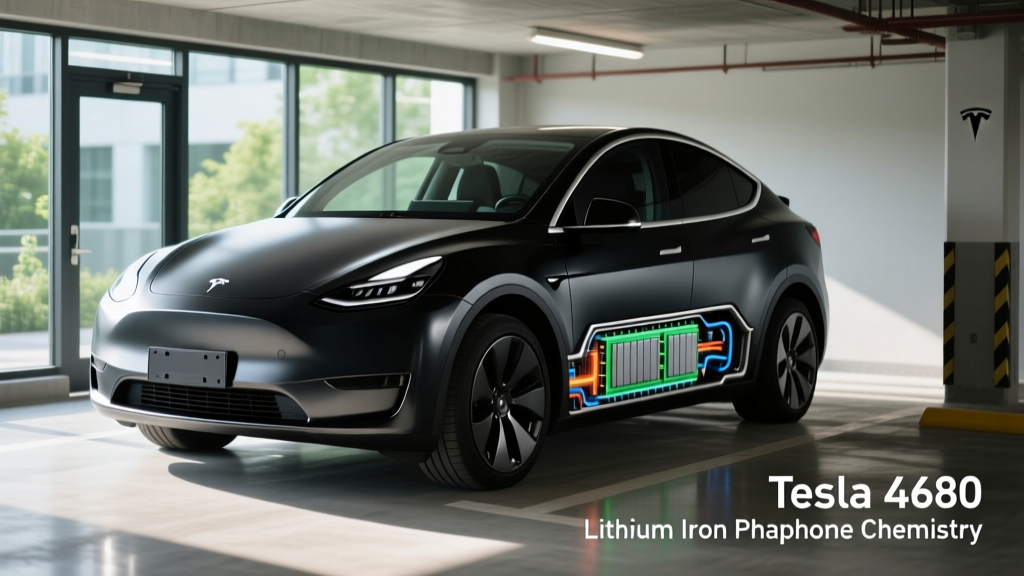
Lithium Iron Phosphate (LFP) cells power the base Model Y (Rear-Wheel Drive and the updated Standard Range variants). LFP chemistry offers superior cycle life, lower raw-material cost, and a reduced risk of thermal runaway. The trade-off is lower energy density — meaning a heavier or physically larger pack for the same kWh — and reduced performance in sub-freezing temperatures. Tesla recommends charging LFP packs to 100% at least once per week to keep the Battery Management System (BMS) calibration accurate.
Nickel Manganese Cobalt (NMC) cells are used in the Long Range and Performance trims. NMC packs deliver higher energy density (more range in a lighter package) and better cold-weather discharge capability, but they degrade faster if routinely held at 100% state of charge. Tesla recommends an 80% daily charge limit for NMC-equipped vehicles, reserving 100% for road trips.
| Attribute | LFP (Base / Standard Range) | NMC (Long Range / Performance) |
|---|---|---|
| Usable Capacity | ~60 kWh | ~75–82 kWh |
| EPA Range (approx.) | 260–280 mi | 310–330 mi |
| Energy Density | Lower (~160 Wh/kg cell) | Higher (~250 Wh/kg cell) |
| Cycle Life | 3,000–5,000+ cycles | 1,500–2,500 cycles |
| Cold-Weather Performance | More range loss below 32°F | Better low-temp discharge |
| Daily Charge Limit | 100% recommended weekly | 80% daily, 100% for trips |
| Thermal Runaway Risk | Very low | Low (managed by BMS/cooling) |
| Relative Cost | Lower | Higher |
Which is better? There is no universal winner. If you commute short distances, have reliable home charging, and live in a mild climate, LFP's longevity and lower cost make it the pragmatic choice. If you regularly drive 300+ miles between charges, tow, or live where winters are harsh, NMC's energy density and cold performance justify the slightly faster degradation curve.
How Long Does a Tesla Model Y Battery Last? Real Degradation Data
Tesla's 2025 Impact Report (the most recent full-year data published) states that Model 3 and Model Y vehicles retain approximately 85% of original battery capacity after 200,000 miles on average. This aligns with independent fleet data from sources like Recurrent Auto, which tracks over 15,000 Tesla vehicles in real-world conditions.
Here is what the degradation curve typically looks like for a Model Y NMC pack:
- Year 1 / ~15,000 mi: 2–5% capacity loss (initial drop, then plateau)
- Year 3 / ~45,000 mi: 6–9% total loss
- Year 5 / ~75,000 mi: 9–12% total loss
- Year 8 / ~120,000 mi: 12–17% total loss
- 200,000+ mi: ~15% average loss per Tesla fleet data
LFP packs tend to show a slightly flatter curve — often retaining 90%+ capacity past 100,000 miles — because the chemistry tolerates full-charge cycles better. However, LFP's BMS can occasionally misreport state of charge if the pack is never fully topped up, leading to phantom range loss that resolves with a 100% charge session.
Key insight: Degradation is not linear. The most rapid loss occurs in the first 10,000–20,000 miles as the solid-electrolyte interphase (SEI) layer stabilizes on the anode. After that, degradation slows significantly. Most Model Y owners will never need a battery replacement during the vehicle's usable life.
Tesla Model Y Battery Warranty: What's Covered and What Isn't
Tesla's high-voltage battery warranty for the Model Y is one of the more straightforward in the industry. Here are the terms as of the 2026 model year:
| Coverage | Duration / Mileage | Capacity Threshold |
|---|---|---|
| Battery (Long Range / Performance — NMC) | 8 years / 120,000 miles | 70% retention minimum |
| Battery (Rear-Wheel Drive — LFP) | 8 years / 100,000 miles | 70% retention minimum |
| Drive Unit | 8 years / 120,000 miles | N/A (functional coverage) |
What this means in practice: If your Model Y's battery degrades below 70% of its original usable capacity within the warranty period, Tesla will repair or replace the pack at no cost. The replacement may be a new or remanufactured unit with at least 70% capacity. Tesla does not cover degradation from abuse (e.g., repeated 100% charges on NMC, flood damage, or aftermarket modifications to the battery system).
The warranty threshold of 70% is industry-standard — matched by Hyundai (10 yr/100,000 mi), Ford (8 yr/100,000 mi), and most others per fueleconomy.gov's EV technology overview. Notably, Tesla's warranty mileage on the RWD LFP trim is lower (100,000 vs. 120,000), which reflects the trim's lower MSRP positioning.
Tesla Model Y New Battery Replacement Cost: 2026 Pricing Reality
Out-of-warranty battery replacement is the scenario that generates the most anxiety. Here are the current cost ranges based on Tesla service center invoices shared by owners and third-party EV repair shops in 2025–2026:
| Pack Type | Battery Cost (Parts) | Labor | Total Estimated |
|---|---|---|---|
| LFP (~60 kWh, RWD) | $10,000–$12,000 | $1,500–$2,500 | $12,000–$15,000 |
| NMC (~75–82 kWh, LR/Perf) | $13,000–$16,000 | $1,500–$3,000 | $14,500–$19,000 |
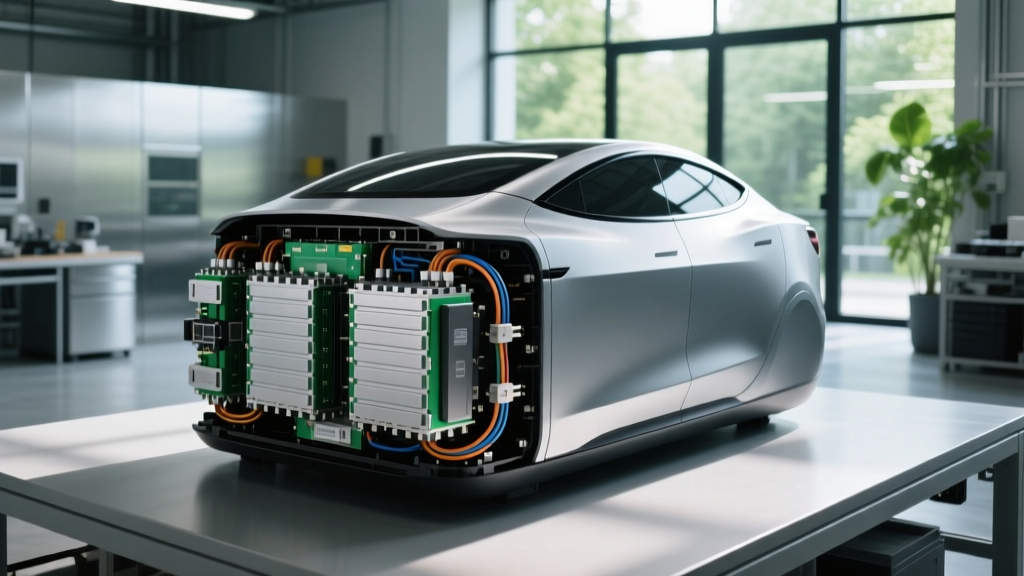
Important context: These figures are for a full pack replacement. In many cases, Tesla can diagnose and replace individual modules within the pack (the Model Y pack contains multiple modules depending on the architecture), which can reduce costs to $3,000–$7,000 for a partial repair. Full pack replacements are relatively rare — most out-of-warranty battery service involves module-level repair or BMS recalibration.
When is replacement typically needed? Based on fleet data, catastrophic battery failure (outside of collision damage) is exceedingly uncommon. Capacity degradation to below 70% generally occurs well past 200,000 miles. Most Model Y vehicles will be retired, traded in, or sold before the battery requires full replacement. The battery is statistically one of the most durable components in the vehicle — far outlasting suspension bushings, window regulators, and even the 12V auxiliary battery (which is a separate, much smaller lithium-ion unit).
Factors That Accelerate Battery Degradation (and How to Avoid Them)
Battery longevity is not purely a function of time and mileage. Charging behavior, temperature exposure, and driving patterns all influence how quickly your Model Y's pack loses capacity.
Battery Care Best Practices for Tesla Model Y Owners
- Avoid sustained 100% SoC (NMC): Set daily charge limit to 80%. Use 100% only for trips and depart shortly after reaching full charge.
- Minimize DC fast charging when possible: Frequent Supercharging at 250 kW generates significant heat. Use Level 2 home charging for daily needs; reserve Supercharging for road trips.
- Precondition in cold weather: Use the Tesla app to warm the battery before driving or charging in sub-40°F conditions. A cold battery charged at high kW suffers lithium plating on the anode.
- Don't let SoC sit at extremes: Avoid leaving the car at 0% or 100% for days. If storing, set to ~50% and leave plugged in so the BMS can maintain thermal management.
- Use Scheduled Departure: This feature warms the battery and cabin using grid power before your commute, reducing the energy drawn from a cold pack.
- Limit exposure to extreme heat: Park in shade or a garage when possible. Sustained ambient temperatures above 95°F accelerate electrolyte decomposition.
Fast-charging frequency matters — but less than you think. A study by the Idaho National Laboratory found that vehicles charged exclusively on DC fast chargers showed only marginally more degradation than those charged exclusively on Level 2 over 50,000 miles — roughly 2–3% additional loss. Tesla's thermal management system (liquid cooling/heating) is effective at mitigating charge-related heat stress. The bigger degradation risk is sustained high SoC combined with high temperatures.
How to Check Your Tesla Model Y Battery Health (SoH)
Tesla does not display a straightforward "State of Health" percentage in the vehicle's interface the way some competitors do. However, there are several reliable methods to assess your pack's condition:
Method 1: Tesla App Energy Graph
Navigate to the Energy section in the Tesla app. Over time, the app tracks your average energy consumption and projected range. A declining range trend at consistent SoC levels indicates capacity loss.
Method 2: Manual Calculation
Charge the vehicle to 100% (for LFP) or 100% on a known test day (for NMC). Note the displayed rated range. Compare it to the EPA-rated range for your specific trim when new. For example, if your Model Y Long Range originally displayed 330 miles at 100% and now shows 295 miles, your approximate SoH is 295/330 = ~89.4%.
Method 3: Third-Party OBD-II Tools
Devices like the OBDeleven or apps such as TeslaFi and Scan My Tesla can pull detailed BMS data, including nominal full-pack kWh, energy remaining, and cell-level voltage imbalance. Cell imbalance greater than 30–50 mV across modules may indicate a degrading module that could benefit from a service visit.
Method 4: Tesla Service Diagnostic
You can request a battery health test through the Tesla app service scheduler. Tesla technicians can run a full diagnostic that provides a capacity report — this is the most authoritative measure and is recommended if you are evaluating a used Model Y for purchase.
Looking Ahead: Solid-State and Silicon-Anode Batteries
Next-generation battery technology is frequently cited as a reason to "wait" before buying. Here is a realistic assessment based on current industry timelines:
Solid-state batteries promise higher energy density (potentially 400+ Wh/kg), faster charging, and near-zero fire risk by replacing the liquid electrolyte with a solid ceramic or polymer layer. Companies like Toyota, QuantumScape, and Samsung SDI have demonstrated prototype cells, but mass production at automotive scale remains challenging. Industry consensus places meaningful solid-state availability in mainstream EVs at 2029–2032 — and likely in premium/low-volume models first.
Silicon-anode batteries (used in limited form in some current cells, including by Tesla's supplier Panasonic) increase energy density by replacing graphite on the anode with silicon, which can hold more lithium ions. Incremental silicon-anode improvements are already shipping in 2026 Model Y cells, yielding small range gains year over year. Full silicon-anode packs are expected in the 2027–2029 timeframe.
Bottom line: If you need a vehicle now, waiting for solid-state is not a practical strategy. Today's LFP and NMC chemistries are mature, well-understood, and demonstrably durable past 200,000 miles. The next meaningful leap will likely arrive in Tesla's next-generation platform, not as a retrofit for current Model Y owners.
Frequently Asked Questions: Tesla Model Y Battery
How long do Tesla Model Y batteries last in years and miles?
Based on Tesla's fleet data and independent tracking by Recurrent Auto, a Model Y battery typically retains ~85% capacity at 200,000 miles. In terms of years, most packs last 15–20 years under normal use before degrading to a level that might warrant replacement. Catastrophic failure is extremely rare.
How much does a new Tesla Model Y battery cost in 2026?
A full out-of-warranty replacement ranges from approximately $12,000 to $19,000 depending on trim (LFP packs are less expensive than NMC). However, most battery service involves partial module replacement at $3,000–$7,000, and full pack replacements are uncommon because most batteries outlast the vehicle's economic life.
What does the Tesla Model Y battery warranty cover?
Tesla covers the battery for 8 years/120,000 miles (Long Range/Performance) or 8 years/100,000 miles (RWD) against defects and capacity loss below 70% of original capacity. It does not cover damage from accidents, flooding, or unauthorized modifications.
Should I charge my Tesla Model Y to 100% every day?
If your Model Y has an LFP battery (Rear-Wheel Drive), Tesla recommends charging to 100% at least once per week for accurate BMS calibration. If you have an NMC battery (Long Range/Performance), limit daily charges to 80% and reserve 100% for trips. Sustained 100% SoC on NMC accelerates degradation.
Does frequent Supercharging damage the Model Y battery?
DC fast charging generates more heat than Level 2 charging, which contributes to slightly faster degradation. However, Tesla's active liquid thermal management system significantly mitigates this. Idaho National Lab testing showed only ~2–3% additional capacity loss over 50,000 miles for exclusive DC fast charging versus exclusive Level 2. Occasional Supercharging on road trips is not a concern; daily Supercharging is suboptimal but not catastrophic.
Can I upgrade my Tesla Model Y to a larger battery?
Tesla does not offer official battery upgrades for existing vehicles. The pack is integrated into the structural floor (especially on 4680-cell vehicles), and swapping to a higher-capacity pack is not supported by Tesla's service network or software. Third-party upgrades are not available and would void the warranty.
How do I check battery health on a used Tesla Model Y before buying?
Request a battery health diagnostic through Tesla Service (can be scheduled via the app). Alternatively, charge to 100%, note the displayed range, and compare to the EPA-rated range when new. Third-party tools like TeslaFi or Scan My Tesla can pull detailed BMS data including nominal full-pack capacity and cell voltage imbalance.
For more on EV battery longevity and federal incentive eligibility, consult the IRS clean vehicle credit page and the Department of Energy's EV technology resources.