The Quick Answer: What Charge Limit Should You Set on a Model Y?
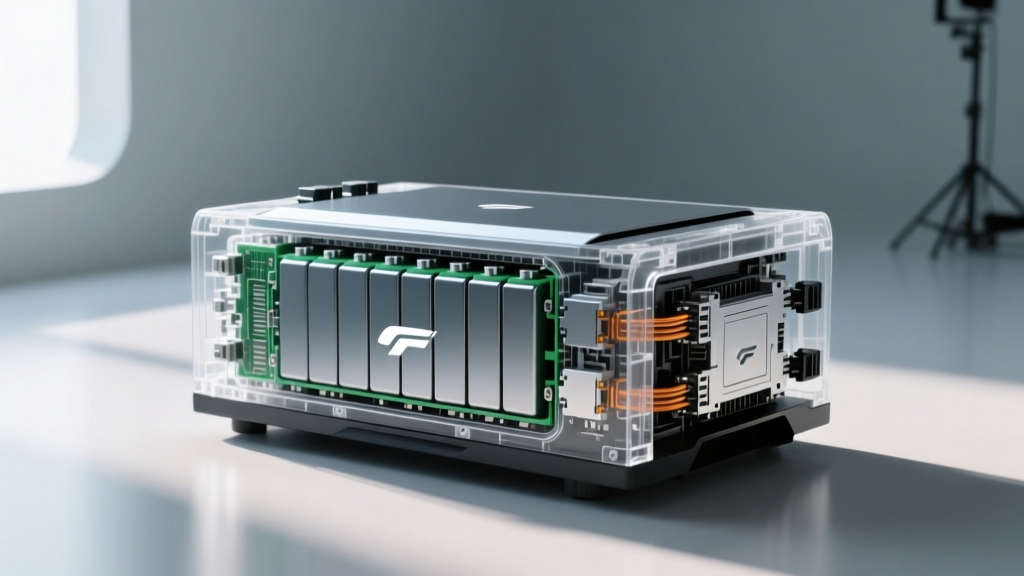
The best daily max charge for a Tesla Model Y depends entirely on which battery chemistry sits under your floor. If your Model Y has a lithium iron phosphate (LFP) pack — standard on the Rear-Wheel Drive (Standard Range) trim since late 2021 — Tesla explicitly recommends charging to 100% at least once per week. If your Model Y Long Range or Performance uses an NMC/NCA (nickel-based) pack, the optimal daily ceiling is 80%, saving 100% only for road trips.
This distinction matters because the two chemistries age differently. Setting the wrong limit long-term accelerates degradation on NMC packs, while never hitting 100% on an LFP pack confuses the battery management system's state-of-charge calibration, leading to range-estimate drift.
| Trim | Chemistry | Battery (usable kWh) | EPA Range | Daily Charge Limit | Base MSRP |
|---|---|---|---|---|---|
| Rear-Wheel Drive | LFP | ~60 kWh | 279 mi | 100% | $44,990 |
| Long Range AWD | NMC/NCA | ~75 kWh | 320 mi | 80% | $48,990 |
| Performance | NMC/NCA | ~75 kWh | 303 mi | 80% | $53,990 |
Real-world note: Expect roughly 5–12% less range than the EPA sticker on sustained highway driving above 70 mph, and up to 20–30% less in sub-freezing weather without preconditioning. These losses affect the traction battery's available energy, not its long-term health, provided you follow the charge-limit guidance above.
LFP vs NMC/NCA: Which Chemistry Does Your Model Y Have, and Why It Matters
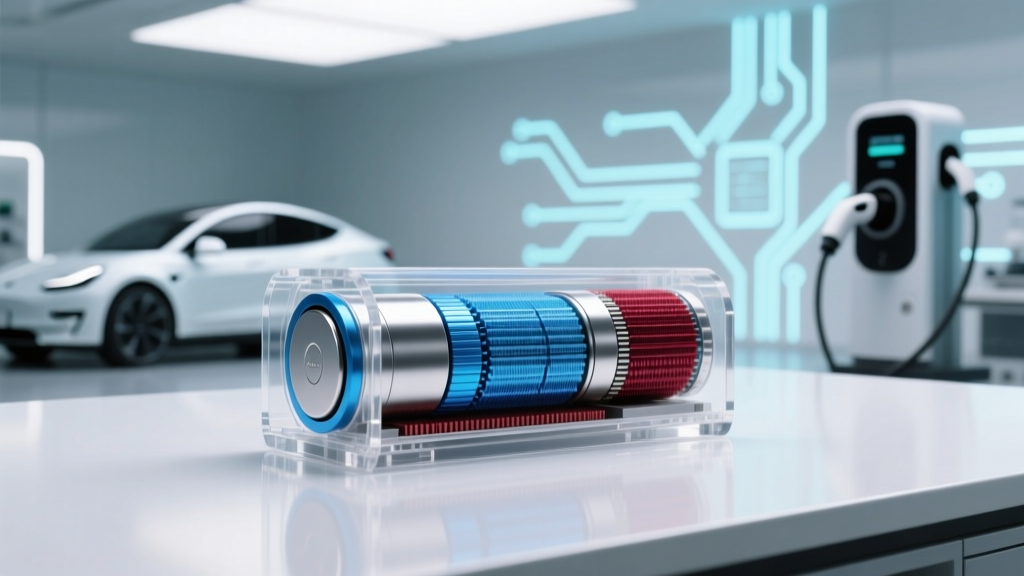
Not every Model Y battery is the same. Since the 2022 model year, Tesla has used two distinct cell chemistries across the lineup, and the charge-limit recommendation flips between them.
| Attribute | LFP (LiFePO₄) | NMC / NCA (Nickel-based) |
|---|---|---|
| Energy Density | Lower (~160 Wh/kg cell-level) | Higher (~250–300 Wh/kg cell-level) |
| Cycle Life | 3,000–5,000+ cycles to 80% SoH | 1,000–2,000 cycles to 80% SoH |
| Recommended Daily SoC | 100% | 80% (100% for trips only) |
| Cold-Weather Performance | Weaker; greater range loss below 32°F | Better low-temp discharge, especially with heat pump |
| Cost per kWh | Lower (no cobalt or nickel) | Higher (commodity-sensitive) |
| SoC Calibration | Needs periodic 100% charge to stay accurate | More linear voltage curve; less calibration drift |
| Typical Trims (2026) | Model Y RWD (Standard Range) | Model Y Long Range, Performance |
Which is better? Neither is universally superior. LFP wins on longevity and cost — ideal for daily commuters who charge at home every night and rarely need the last 20 miles of range. NMC/NCA wins on energy density and cold-weather usability — better for road-trippers, cold-climate drivers, and anyone who needs maximum range from a single charge. If you regularly drive in temperatures below 25°F or take frequent 200+ mile trips, NMC is the more practical choice despite its stricter charge-limit discipline.
Real-World Degradation: What the Data Actually Shows
Tesla publishes fleet degradation data in its annual Impact Report, and third-party aggregators like Recurrent track thousands of vehicles longitudinally. The pattern is consistent across model years:
- Year 1 / 15,000 miles: ~2–5% capacity loss (initial formation period)
- Year 3 / 45,000 miles: ~5–8% total loss
- Year 5 / 75,000 miles: ~8–12% total loss
- Year 8 / 120,000 miles: ~10–15% total loss (NMC); ~5–10% (LFP)
Degradation curve shape: The steepest drop occurs in the first 10,000–20,000 miles as the solid electrolyte interphase (SEI) layer forms on the anode. After that, the curve flattens significantly — degradation becomes nearly linear at roughly 1–1.5% per year for NMC and 0.5–1% per year for LFP under normal use. A 2023 Model Y Long Range at 50,000 miles showing 92–94% State of Health is typical and not cause for concern.
Owners who habitually fast-charge to 100% on NMC packs, or who regularly let the battery sit at 100% SoC in hot weather, can see degradation rates 1.5–2× higher than the fleet average. Conversely, LFP owners who charge to 100% daily at home on Level 2 typically see below-average degradation because the chemistry tolerates high SoC well.
Tesla's Battery Warranty: What's Covered and for How Long
Tesla's battery warranty is straightforward but has a specific threshold you need to understand before filing a claim.
| Component | Coverage | Capacity Retention Threshold |
|---|---|---|
| Battery Pack (all trims) | 8 years / 120,000 miles (Long Range, Performance) 8 years / 100,000 miles (RWD) | Minimum 70% of original capacity |
| Drive Unit(s) | 8 years / 120,000 miles (Long Range, Performance) 8 years / 100,000 miles (RWD) | N/A — covers functional failure |
What this means in practice: If your Model Y Long Range originally had 75 usable kWh and drops below 52.5 kWh (70%) before 8 years or 120,000 miles — whichever comes first — Tesla will repair or replace the pack at no cost. Based on the fleet degradation data above, fewer than 5% of vehicles breach this threshold under normal use. Most Model Y packs will retain 85–90% capacity at the end of the warranty period.
The warranty covers defects and abnormal degradation. It does not cover damage from accidents, flooding, or modifications. Per Tesla's official warranty documentation, the battery is covered as a single unit — Tesla does not replace individual modules under warranty unless a module-level repair resolves the issue.
Battery Replacement Cost: When It's Needed and What It Runs
Most EV batteries outlast the vehicle they're installed in. The average age of a scrapped passenger car in the U.S. is roughly 12 years; a well-maintained Model Y battery should deliver 200,000–300,000+ miles before reaching 70% capacity. That said, out-of-warranty replacements do occur — usually due to physical damage or rare manufacturing defects.
| Scenario | Estimated Cost | Notes |
|---|---|---|
| Full pack replacement (NMC, Long Range/Performance) | $12,000 – $16,000 | Includes parts and labor at a Tesla Service Center |
| Full pack replacement (LFP, RWD) | $8,000 – $12,000 | Lower cell cost due to LFP chemistry |
| Module-level repair (if available) | $3,000 – $7,000 | Tesla may replace individual modules rather than the full pack |
| Refurbished/remanufactured pack | $7,000 – $10,000 | Third-party or Tesla-certified remanufactured option |
When is replacement typically needed? For the vast majority of owners, never during their ownership. Out-of-warranty replacements are most common on vehicles with 150,000+ miles that have experienced above-average degradation from chronic DC fast-charging to 100% or extended high-SoC storage in extreme heat. Physical damage from road debris or flooding is a separate category covered by insurance.
Factors That Accelerate (or Preserve) Battery Life
Battery degradation is not random — it's a function of chemistry, temperature, and how you treat the pack. Here are the variables you control:
Battery Care Checklist for Tesla Model Y Owners
- Set the right charge limit: 80% daily for NMC (Long Range/Performance); 100% for LFP (RWD). Use the Tesla app or in-car slider.
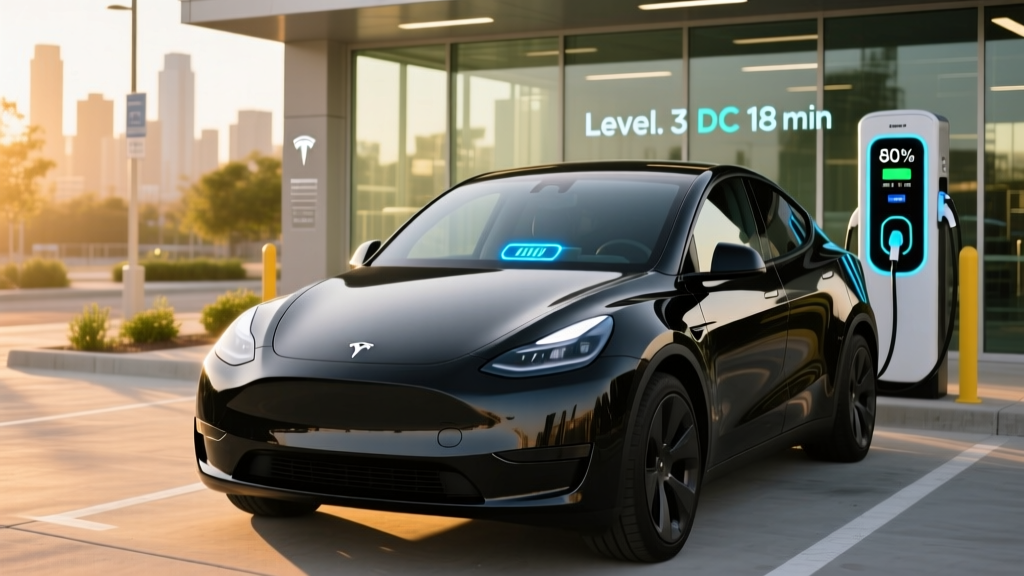
- Avoid frequent DC fast charging: Supercharging is fine for road trips, but daily use of 150–250 kW DC fast charging accelerates degradation by ~1–3% over 5 years compared to Level 2 home charging. Use home Level 2 (7–11.5 kW) as your primary method.
- Don't let the battery sit at 100%: For NMC packs, charge to 100% only when you plan to drive within a few hours. Sitting at full SoC in hot weather is the single most damaging habit.
- Don't let it sit near 0%: Storing a Model Y at very low SoC for weeks can cause cell imbalance and copper dissolution. If storing, set to ~50% and check monthly.
- Use preconditioning: When navigating to a Supercharger, the car automatically warms the pack. In cold weather, precondition while plugged in to reduce energy draw from the battery.
- Park in shade or a garage when possible: Sustained pack temperatures above 95°F accelerate calendar aging. Tesla's thermal management system runs even when parked, but it draws energy and works harder in direct sun.
- Enable Sentry Mode selectively: Sentry Mode keeps the car's computers active, causing ~1–2 miles of range loss per hour. Over months of continuous use, this adds up to extra charge cycles.
The single most impactful habit: home Level 2 charging to the correct limit. Owners who charge at home overnight on a 48-amp (11.5 kW) Level 2 station and follow the chemistry-appropriate SoC limit consistently report the lowest degradation rates in fleet data.
How to Check and Monitor Your Model Y's Battery Health
Tesla does not display a dedicated State of Health (SoH) percentage in the car's interface, but you can estimate it and use third-party tools for more precision.
Method 1: Manual Calculation
Charge your Model Y to 100% (or your normal max for LFP). Note the displayed range. Compare it to the original EPA-rated range for your trim. For example, if your Model Y Long Range originally rated at 320 miles and now shows 290 miles at 100%, your estimated SoH is approximately 290/320 = 90.6%. This method has a margin of error of ±2–3% because the displayed range is influenced by recent driving efficiency.
Method 2: Tesla Service Mode
In the car's software, hold the model name on the "Software" screen for a few seconds to access Service Mode (available on software versions from 2023 onward). Navigate to the battery health section for a more detailed readout, including nominal full-pack energy in kWh.
Method 3: Third-Party OBD-II Tools
Devices like the OBDLink MX+ paired with apps such as Scan My Tesla or TESLalogger can pull real-time BMS (Battery Management System) data, including nominal full charge energy, cell voltage variance, and pack temperature. This is the most accurate method available to owners without a service-center visit.
When to be concerned: If your SoH drops below 85% before 80,000 miles, or if you see cell voltage variance exceeding 50 mV consistently, schedule a Tesla service diagnostic. These can indicate a defective module eligible for warranty repair.
Emerging Battery Tech: What's Coming (and When)
Several next-generation battery technologies are in development that could reshape EV ownership, but none are available in production vehicles as of 2026.
- Solid-state batteries: Companies like Toyota, QuantumScape, and Samsung SDI are targeting 2027–2030 for limited production. Solid-state cells promise 40–50% higher energy density, faster charging, and improved safety (no liquid electrolyte). However, manufacturing scale-up remains the primary bottleneck, and initial deployment will likely be in premium models at high cost.
- Silicon-dominant anodes: Replacing graphite anodes with silicon can boost energy density by 20–40%. Sila Nanotechnologies and Group14 are supplying early silicon-anode materials, but cycle-life challenges at high silicon content remain. Expect incremental adoption in 2027–2029 model-year vehicles.
- Sodium-ion batteries: CATL and BYD are deploying sodium-ion cells in Chinese-market EVs now. These offer lower cost and excellent cold-weather performance but ~30% lower energy density than LFP. U.S. availability in Tesla vehicles is not confirmed and unlikely before 2028.
For current buyers, these timelines mean today's LFP and NMC chemistries will remain the standard for at least 3–5 more years. The batteries in 2026 Model Y vehicles are mature, well-understood, and backed by extensive fleet data — a meaningful advantage over unproven next-gen tech.
Frequently Asked Questions
How long do Tesla Model Y batteries last?
Based on fleet data, most Model Y batteries retain 85–90% capacity at 100,000 miles and 80–88% at 150,000 miles. At the current degradation trajectory, a Model Y battery should deliver 200,000–300,000+ miles before reaching the 70% capacity threshold — well beyond the typical ownership period. According to fueleconomy.gov, the average American driver covers ~13,500 miles per year, meaning a Model Y battery could last 15–22 years at that rate.
Should I charge my Model Y to 100% every day?
Only if you have the LFP battery (Rear-Wheel Drive trim). Tesla recommends 100% at least weekly for LFP to maintain accurate range estimation. For NMC/NCA packs (Long Range, Performance), daily charging to 100% accelerates degradation — set the limit to 80% for daily use and 100% only when you need maximum range for a trip.
Does frequent Supercharging damage the battery?
DC fast charging at 150–250 kW generates more heat and stress than Level 2 charging. Fleet data shows owners who Supercharge daily experience roughly 1–3% more degradation over 5 years compared to those who primarily use home Level 2 charging. Occasional Supercharging on road trips has negligible impact. Tesla's battery preconditioning feature (automatic when navigating to a Supercharger) mitigates some of this stress by warming the pack to optimal temperature before charging begins.
How much does a Tesla Model Y battery replacement cost?
Out-of-warranty full pack replacement runs $8,000–$16,000 depending on chemistry and trim. However, most packs never need replacement during normal ownership. Tesla's warranty covers the battery for 8 years / 100,000–120,000 miles with a 70% capacity retention guarantee, and fleet data shows fewer than 5% of packs breach this threshold under normal conditions.
Can I check my Tesla's battery health myself?
Yes. You can estimate SoH by comparing your 100% displayed range to the original EPA rating, use Tesla's hidden Service Mode for a nominal-energy readout, or connect an OBD-II adapter with an app like Scan My Tesla for detailed BMS data including cell-level voltage variance.
LFP or NMC — which should I choose?
Choose LFP (Model Y RWD) if you charge at home daily, want maximum cycle life, and don't need more than 279 miles of EPA range. Choose NMC (Long Range or Performance) if you drive in cold climates, take frequent road trips, or need the extra range and acceleration. Both chemistries are proven and reliable when charged to their recommended limits.