If you own or are shopping for a Tesla Model Y, the high-voltage traction battery is the single most expensive component in the vehicle. Searches around Tesla battery replacement Model Y spike every time a viral post surfaces showing a five-figure service invoice. The reality is more nuanced: most Model Y battery packs will outlast the car itself, but understanding degradation mechanics, chemistry differences, and warranty coverage is essential for any current or prospective owner.
This guide breaks down exactly what the data shows about Model Y battery longevity, what a replacement actually costs in 2026, how Tesla's warranty protects you, and the daily habits that meaningfully extend pack life.
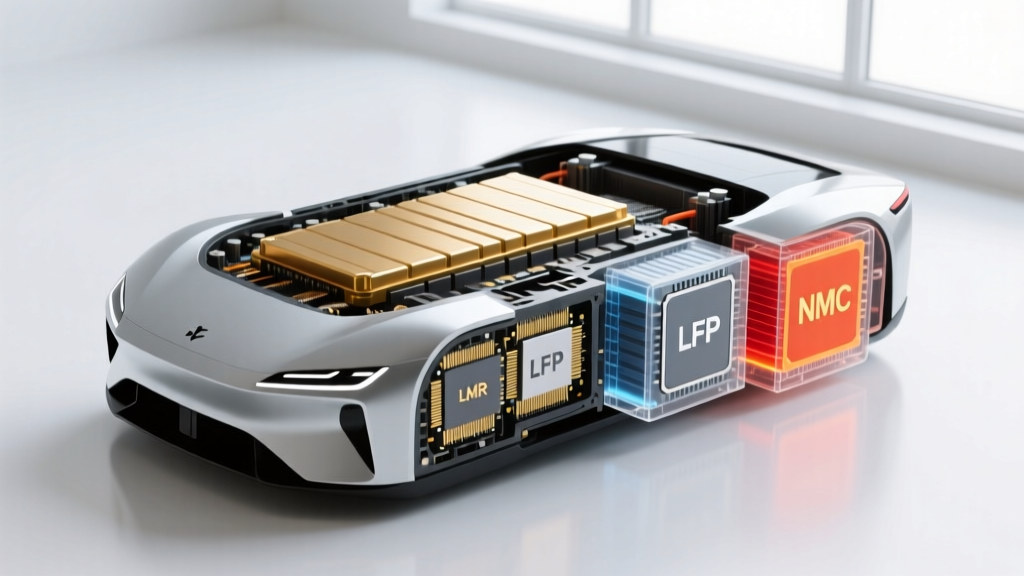
Model Y Battery Chemistry: LFP vs NMC Explained
The Tesla Model Y has been sold with two distinct battery chemistries depending on trim, model year, and market. Understanding which pack is in your vehicle (or the one you're buying) affects range, charging habits, cold-weather performance, and long-term degradation behavior.
Nickel Manganese Cobalt (NMC) packs are used in the Long Range and Performance variants. These cells — primarily supplied by Panasonic and LG Energy Solution — offer higher energy density, which translates to the Long Range's EPA-rated 310+ miles from a ~75 kWh usable pack. NMC chemistry performs better in cold temperatures and supports faster DC charging speeds (peak ~250 kW at V3 Superchargers, 10–80% in approximately 25–27 minutes).
Lithium Iron Phosphate (LFP) packs are used in the Standard Range / Rear-Wheel-Drive Model Y. Supplied primarily by CATL, LFP cells have lower energy density but superior cycle life and thermal stability. The trade-off: reduced EPA range (approximately 260 miles from a ~60 kWh usable pack), slower cold-weather performance, and slightly slower DC fast-charge speeds (peak ~170 kW). However, Tesla recommends LFP owners charge to 100% regularly — something you should avoid with NMC — which partially offsets the range gap in daily use.
| Attribute | NMC (Long Range / Performance) | LFP (RWD / Standard Range) |
|---|---|---|
| Usable Capacity | ~75 kWh | ~60 kWh |
| EPA Range | 310–330 mi (trim dependent) | ~260 mi |
| Energy Density | Higher (more range per kg) | Lower |
| Cycle Life | ~1,500–2,000 full cycles | ~3,000+ full cycles |
| Cold-Weather Range Loss | ~20–30% at 20°F | ~25–35% at 20°F |
| Recommended Daily SoC | 80% (set in app) | 100% (Tesla recommends weekly 100%) |
| Peak DC Fast Charge | ~250 kW | ~170 kW |
| Cost to Replace (est.) | $14,000–$16,000 | $12,000–$14,000 |
Which is better? There is no universal answer. NMC is the choice if you need maximum range, tow frequently, or live in a cold climate. LFP is the more durable, lower-cost option for commuters who charge at home and don't need 300+ miles. LFP's cycle-life advantage means it will likely show less degradation at 150,000+ miles than an equivalently used NMC pack.
How Long Do Tesla Model Y Batteries Actually Last?
Tesla's own 2023 Impact Report stated that Model 3 and Model Y battery packs retain an average of 85% of original capacity after 200,000 miles — meaning roughly 15% degradation over the typical lifetime of the vehicle. Independent fleet data from sources like Recurrent Auto broadly corroborate this, showing most Tesla packs losing 5–8% capacity in the first 50,000 miles, then degrading at a slower, more linear rate.
Here is what the degradation curve typically looks like for an NMC-equipped Model Y Long Range:
- 0–10,000 miles: 2–4% loss (initial settling)
- 25,000 miles: 5–6% loss
- 50,000 miles: 7–9% loss
- 100,000 miles: 10–12% loss
- 150,000 miles: 12–15% loss
- 200,000 miles: 14–17% loss
LFP packs generally show 2–4% less degradation at equivalent mileages. Individual results vary based on charging habits, climate, and Supercharging frequency.
At 15% degradation on a 310-mile EPA-rated Long Range, you'd still have approximately 263 miles of range — a meaningful reduction but not a crisis. Most owners will sell or trade the vehicle before the battery reaches a state that requires replacement.
Tesla Battery Warranty: What's Covered and for How Long
Tesla provides one of the more straightforward battery warranties in the EV market. The coverage differs slightly by variant:
| Variant | Warranty Period | Mileage Limit | Capacity Retention Threshold |
|---|---|---|---|
| RWD (LFP) | 8 years | 100,000 miles | 70% minimum |
| Long Range / Performance (NMC) | 8 years | 120,000 miles | 70% minimum |
What this means in practice: If your Model Y's battery degrades below 70% of its original usable capacity within the warranty period, Tesla will replace or refurbish the pack at no cost. Tesla determines this via diagnostic readouts of the Battery Management System (BMS), not via a third-party test.
What voids the warranty: Damage from flooding, fire, or collision is handled by insurance, not the battery warranty. Unauthorized modifications to the high-voltage system or using non-Tesla-approved charging equipment that causes damage can also void coverage. Simply using Electrify America or other CCS/NACS-compatible DC fast chargers does not void the warranty.
The 70% threshold is important context: a pack would need to lose 30% of its capacity — dropping a 310-mile Long Range to roughly 217 miles — to qualify. Based on current degradation data, very few Model Y packs reach this point within the 8-year/120,000-mile window under normal use.
Tesla Model Y Battery Replacement Cost in 2026
Out-of-warranty battery replacement is the scenario that generates headlines. Here is what the numbers actually look like based on service center reports, owner forums, and third-party EV repair data:
| Component | Cost Range |
|---|---|
| Replacement battery pack (NMC, Long Range/Performance) | $12,000–$14,000 |
| Replacement battery pack (LFP, RWD) | $10,000–$12,000 |
| Labor (Tesla Service Center, 3–5 hours) | $1,500–$2,500 |
| Ancillary parts (coolant, seals, connectors) | $300–$600 |
| Total estimated (NMC) | $14,000–$16,500 |
| Total estimated (LFP) | $12,000–$14,500 |
When is replacement actually needed? Catastrophic failure (manufacturing defect, physical damage) can happen at any mileage but is rare and typically covered under warranty. Gradual degradation to a point where range becomes impractical — say, below 60% capacity — is a 250,000+ mile scenario for most packs. The vast majority of Model Y vehicles will be retired, sold, or totaled in an accident before the battery requires out-of-pocket replacement.
It's worth noting that Tesla increasingly uses module-level repairs rather than full pack replacements when individual cell groups fail. A module replacement can cost $3,000–$5,000 rather than the full pack price, though this depends on the nature of the fault and the pack architecture (the structural battery pack in newer Model Y vehicles is more integrated and may require full replacement more often).
What Degrades a Model Y Battery Faster?
Not all miles are equal when it comes to battery wear. The following factors have measurable impacts on long-term State of Health (SoH):
- Limit DC fast charging to road trips. Frequent Supercharging (multiple times per week) accelerates degradation by 1–3% over 100k miles compared to primarily Level 2 home charging. The high C-rate and heat are the culprits.
- Set daily charge limits correctly. NMC owners: set to 80% for daily use, 100% only before long trips. LFP owners: charge to 100% at least once per week per Tesla's recommendation to keep the BMS calibrated.
- Avoid prolonged high or low SoC. Don't leave an NMC pack sitting at 100% for days. Don't let any pack sit below 10% for extended periods — the 12V system still draws from the traction battery.
- Use Scheduled Departure and preconditioning. Warming the battery before driving in cold weather reduces stress and improves regen efficiency. The Model Y heat pump helps, but preconditioning via the app is still beneficial below 40°F.
- Park in shade or a garage in extreme heat. Sustained battery temperatures above 95°F accelerate calendar degradation. Sentry Mode and cabin overheat protection help but draw energy.
- Don't obsess over avoiding Superchargers entirely. Occasional DC fast charging (1–2 times per week) has a negligible effect. The data shows daily Supercharging is the pattern to avoid.
How to Check Your Model Y Battery Health (SoH)
Tesla does not surface a direct "State of Health" percentage in the vehicle's UI or app, which frustrates many owners. However, there are reliable methods to estimate your pack's condition:
Method 1: Range calculation at 100% charge. Charge your Model Y to 100% (or calculate from your typical SoC). Note the displayed range and compare it to the original EPA rating. If your Long Range shows 275 miles at 100% when it originally rated 310 miles, that's approximately 11% degradation. This method is approximate because the BMS estimates can drift.
Method 2: Third-party apps via Tesla's API. Apps like Tessie, Stats, and TeslaFi pull data from Tesla's owner API and track estimated battery health over time. These tools log energy added vs. SoC change to calculate a more precise capacity estimate. Tessie, for example, provides a battery health score based on accumulated charge/discharge data.
Method 3: Tesla Service diagnostic. You can request a battery health report through the Tesla app or at a Service Center. This reads the BMS's internal capacity measurement, which is more accurate than the range-based estimate. There may be a diagnostic fee if the vehicle is out of warranty and no fault is found.
Method 4: OBD-II dongle with Scan My Tesla. For technically inclined owners, a Bluetooth OBD-II adapter paired with the Scan My Tesla app provides real-time cell voltage data, pack temperature, and BMS-reported capacity. This is the most granular data available without Tesla's proprietary service tools.
Looking Ahead: Solid-State and Silicon-Anode Batteries
Next-generation battery technologies are frequently mentioned in the context of reducing replacement anxiety. Here is where they stand as of 2026:
Solid-state batteries — which replace the liquid electrolyte with a solid conductor — promise higher energy density, faster charging, and improved safety. Toyota has announced limited solid-state EV production for 2027–2028, and QuantumScape continues testing with Volkswagen. However, no solid-state pack is in mass production for any consumer EV as of early 2026. Realistic availability in a Tesla Model Y successor is 2029 at the earliest, and likely later for affordable trims.
Silicon-anode cells — used in limited form by companies like Sila Nanotechnologies — increase energy density by replacing graphite anodes partially with silicon. These are beginning to appear in premium EVs (Mercedes G-Class 580e uses Sila cells) but remain cost-prohibitive for mainstream vehicles. Expect gradual adoption in Tesla's higher-end models before they reach the Model Y platform.
For current Model Y owners, these technologies are not relevant to your purchase or maintenance decisions. The NMC and LFP packs in today's vehicles are mature, well-understood, and — based on all available data — sufficient for the vehicle's practical lifespan.
Frequently Asked Questions
How long do Tesla Model Y batteries last in years and miles?
Based on Tesla's fleet data and independent tracking from Recurrent Auto, the average Model Y battery retains approximately 85% capacity at 200,000 miles. In terms of years, most packs will function well beyond 12–15 years of typical use (12,000–15,000 miles/year). Full battery failure requiring replacement before 150,000 miles is statistically rare and typically covered under the 8-year warranty if it occurs.
How much does it cost to replace a Tesla Model Y battery?
An out-of-warranty full pack replacement for a Model Y Long Range (NMC) costs approximately $14,000–$16,500 including parts and labor at a Tesla Service Center. The LFP pack in the RWD variant is slightly less expensive at $12,000–$14,500. Module-level repairs, when possible, can reduce this to $3,000–$5,000. Most owners will never face this cost, as packs generally outlast the vehicle.
What does the Tesla battery warranty cover?
Tesla covers the Model Y battery for 8 years / 100,000 miles (RWD) or 8 years / 120,000 miles (Long Range/Performance). If the pack degrades below 70% of its original capacity within that period, Tesla replaces or refurbishes it at no charge. The warranty also covers manufacturing defects and drive unit failures. It does not cover damage from accidents, floods, or unauthorized modifications.
How do I check my Model Y battery health?
Tesla does not display a State of Health percentage in the app. The most practical methods are: comparing your 100% charge range to the original EPA rating, using third-party apps like Tessie or TeslaFi that track capacity via Tesla's API, requesting a diagnostic report from Tesla Service, or using an OBD-II adapter with Scan My Tesla for granular cell-level data.
Is LFP or NMC better for the Model Y?
Neither is universally better — it depends on your use case. NMC (Long Range/Performance) offers more range (~310+ mi EPA), better cold-weather performance, and faster DC charging, but requires you to limit daily charging to 80%. LFP (RWD) offers lower range (~260 mi EPA) and slower cold performance, but can be charged to 100% daily, has significantly longer cycle life (3,000+ vs ~1,500–2,000 cycles), and costs less to replace. For commuters with home charging, LFP is arguably the more durable and lower-stress option. For road trippers and cold-climate drivers, NMC is the better fit.
Does frequent Supercharging damage the Model Y battery?
Frequent DC fast charging does accelerate degradation, but the effect is modest. Fleet data shows that owners who Supercharge daily may see 1–3% more capacity loss over 100,000 miles compared to those who primarily use Level 2 home charging. Occasional Supercharging (1–2 times per week or on road trips) has a negligible impact. Tesla's battery management system actively manages charge rates and temperatures to minimize stress during fast charging.
Will a new solid-state battery be available for my Model Y?
Not for the current-generation Model Y. Solid-state batteries remain in pre-production testing as of 2026, with the earliest consumer availability expected around 2028–2029 in limited, premium applications. Retrofitting a future solid-state pack into an existing Model Y is extremely unlikely due to structural pack integration and BMS compatibility. Your current NMC or LFP pack is the one your car will use for its lifetime.