If you own or are considering a used Tesla Model Y, the high-voltage traction battery is the single most expensive component in the vehicle. Searches for "Tesla Model Y battery repair" spike around the 100,000-mile mark — not because mass failures are happening, but because owners want to understand their financial exposure. The reality, backed by fleet data and warranty claims, is that most Model Y batteries outlast the cars they're installed in. But when something does go wrong, the costs and procedures are specific enough that every owner should know them in advance.
This guide breaks down Tesla Model Y battery chemistry, real-world degradation data, warranty coverage, out-of-pocket repair and replacement costs, and the daily habits that extend — or shorten — your pack's useful life.
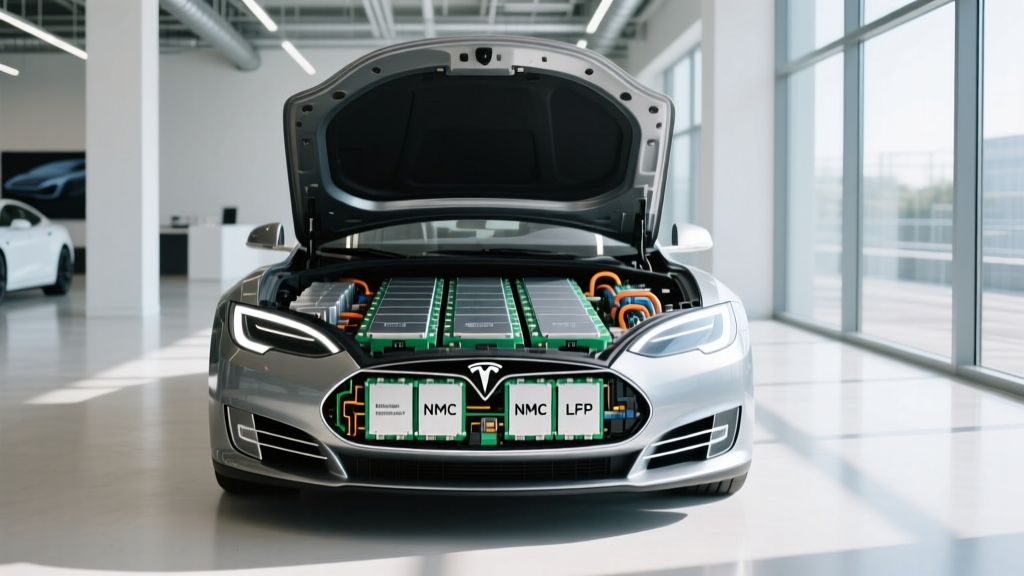
Tesla Model Y Battery Chemistry: LFP vs NMC Explained
The Model Y has been sold with two distinct battery chemistries depending on trim, model year, and manufacturing location. Understanding which chemistry is in your car is the first step in predicting its longevity, charging behavior, and repair economics.
Nickel Manganese Cobalt (NMC) cells — supplied primarily by Panasonic and LG Energy Solution — equip the Long Range and Performance variants. These cells prioritize energy density, enabling the Model Y Long Range's EPA-rated 310+ miles of range from a ~75 kWh usable pack. NMC chemistry delivers strong cold-weather performance and sustained highway efficiency but carries a higher per-kWh material cost and slightly faster long-term degradation.
Lithium Iron Phosphate (LFP) cells — supplied by CATL — power the Standard Range / Rear-Wheel Drive variants (2022 onward for US-market vehicles). LFP packs are heavier and less energy-dense, which is why they're paired with the lower-range trims (~260–270 miles EPA). The trade-off: LFP chemistry offers significantly longer cycle life, better thermal stability, and a lower replacement cost per kWh. Tesla also recommends charging LFP packs to 100% regularly, unlike NMC, which benefits from an 80% daily ceiling.
| Attribute | NMC (Long Range / Performance) | LFP (Standard Range / RWD) |
|---|---|---|
| Usable Capacity | ~75 kWh | ~60 kWh |
| Energy Density | Higher (~250 Wh/kg cell-level) | Lower (~170 Wh/kg cell-level) |
| Cycle Life (to 80% SoH) | ~1,000–1,500 full cycles | ~2,500–3,500+ full cycles |
| Cold-Weather Range Loss | ~20–30% at 20°F | ~25–35% at 20°F (slightly worse) |
| Daily Charge Recommendation | 80% SoC | 100% SoC (weekly minimum) |
| Relative Replacement Cost | Higher ($15,000–$20,000) | Lower ($12,000–$15,000) |
If you're buying a used Model Y and battery longevity is a priority, the LFP-equipped RWD variant offers the longest projected calendar life — often exceeding 300,000 miles before hitting the 70% capacity retention threshold. The trade-off is roughly 50 fewer miles of EPA-rated range and slightly more range loss in freezing temperatures.
Real-World Degradation: What the Data Actually Shows
Tesla's 2024 Impact Report (the most recent comprehensive dataset published by the manufacturer) indicates that Model Y vehicles equipped with NMC packs retain approximately 88% of original capacity at 150,000 miles. LFP-equipped vehicles show even flatter degradation curves, with many fleet operators reporting 90%+ retention at the same mileage.
Independent data from TeslaFi, a popular third-party telemetry aggregator, corroborates these figures across thousands of owner-submitted data points. The typical degradation pattern follows a recognizable curve:
Typical Model Y Degradation Curve (NMC, averaged across fleet data):
- 0–25,000 miles: 2–4% loss (initial formation period — steepest drop)
- 25,000–75,000 miles: 1–2% additional loss (plateau phase)
- 75,000–150,000 miles: 2–4% additional loss (gradual linear decline)
- 150,000–200,000+ miles: 1–2% per 50,000 miles (slow, predictable taper)
Sources: Tesla 2024 Impact Report; TeslaFi fleet aggregation data.
For LFP packs, the initial drop is smaller (1–2%) and the plateau extends further, with many packs showing less than 8% total degradation at 150,000 miles. This is consistent with LFP's inherently longer cycle life and resistance to calendar aging.
What does this mean in practice? A Model Y Long Range that left the factory with 310 miles of EPA-rated range will typically show ~275–285 miles at 100,000 miles — still comfortably adequate for most daily driving and road trips. The battery is not a ticking time bomb; it's a slowly diminishing asset, much like tire tread.
Tesla's Battery Warranty: What's Covered and What Isn't
Tesla's high-voltage battery warranty for the Model Y is one of the more straightforward in the industry, but the details matter when you're filing a claim.
| Component | Duration | Mileage Limit | Capacity Retention Threshold |
|---|---|---|---|
| Battery (Long Range / Performance) | 8 years | 120,000 miles | 70% of original capacity |
| Battery (Standard Range / RWD) | 8 years | 100,000 miles | 70% of original capacity |
| Drive Unit(s) | 8 years | 120,000 miles (LR/Perf) 100,000 miles (RWD) | N/A (functional failure) |
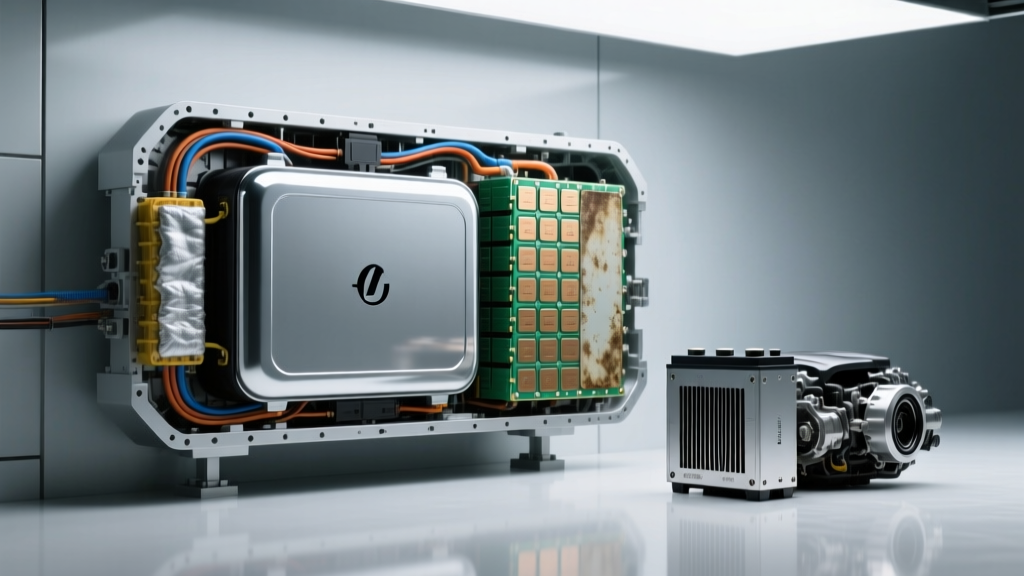
The critical threshold is 70% capacity retention. If your Model Y's battery degrades below 70% of its original usable capacity within the warranty period, Tesla will repair or replace the pack at no cost. In practice, Tesla typically replaces the entire pack rather than performing module-level repairs under warranty, though this can vary by service center and parts availability.
What voids the warranty: Unauthorized modifications to the high-voltage system, physical damage from collisions or flooding, and use of non-Tesla-approved charging equipment that causes electrical damage. Routine DC fast charging does not void the warranty, despite persistent myths.
For full warranty terms, refer to Tesla's official New Vehicle Limited Warranty documentation.
Tesla Model Y Battery Repair and Replacement Costs
When a Model Y battery falls outside warranty coverage — either due to age, mileage, or physical damage — the owner bears the replacement cost. Here's what the current landscape looks like for 2025–2026 model-year vehicles and earlier generations:
| Scenario | Estimated Cost | Notes |
|---|---|---|
| Full pack replacement (NMC, Long Range/Performance) | $15,000–$20,000 | Includes parts + labor at Tesla Service Center |
| Full pack replacement (LFP, Standard Range/RWD) | $12,000–$15,000 | Lower cell cost; labor similar |
| Module-level repair (select independent shops) | $3,000–$7,000 | Not available at Tesla; requires specialist EV shop |
| Refurbished/remanufactured pack | $8,000–$12,000 | Aftermarket option; warranty varies (1–3 years typical) |
A few important nuances:
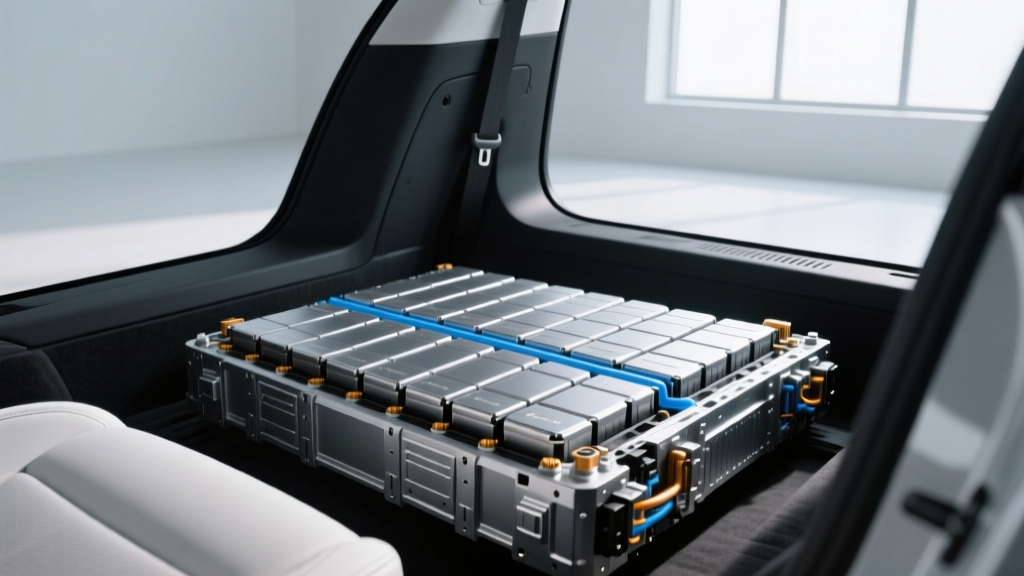
- Tesla rarely performs module-level repairs. Their standard procedure is a full pack swap. This is faster (typically 1–3 days at a service center) but more expensive than the module-level repairs that some independent EV specialists now offer.
- Refurbished packs are becoming viable. Companies like Electrified Garage and Gruber Motors have built reputations for Tesla-specific battery refurbishment. These packs typically use tested, balanced modules from salvaged vehicles and come with 1–3 year warranties.
- Labor is a smaller share of the cost than you'd expect. Most of the expense is the battery itself. Labor for a pack swap typically runs $1,000–$2,500 depending on service center rates.
- Insurance may cover physical damage. If the battery is damaged in a collision, comprehensive or collision coverage typically applies. The high-voltage battery is not excluded from standard auto policies.
The key context: at current degradation rates, most Model Y batteries will not need replacement during the vehicle's practical lifespan. A battery that retains 85% capacity at 150,000 miles and degrades at ~1% per 25,000 miles thereafter will still hold ~75% capacity at 400,000 miles — well beyond the mileage at which most vehicles are retired.
Factors That Accelerate (or Preserve) Battery Life
Not all 100,000-mile Model Y batteries are equal. The following factors have the most measurable impact on long-term State of Health (SoH):
Habits That Preserve Battery Health:
- Charge to 80% daily (NMC) or 100% (LFP). Follow Tesla's in-app recommendation for your specific chemistry.
- Use Level 2 home charging as your primary method. Slow, steady charging generates less heat stress than repeated DC fast charging.
- Precondition before fast charging. The Model Y's navigation-based preconditioning warms the pack to optimal temperature, reducing lithium plating risk during high-rate charging.
- Avoid prolonged storage above 90% or below 10% SoC. If leaving the car for a week or more, aim for ~50% SoC.
- Use Scheduled Departure. This feature times charging completion to coincide with your departure, minimizing time spent at high SoC.
Habits That Accelerate Degradation:
- Exclusive DC fast charging. Fleet data shows vehicles that charge exclusively on Superchargers (250 kW) degrade 2–4% more over 100,000 miles than those primarily using Level 2.
- Regularly draining below 10% SoC. Deep discharges stress the anode and accelerate capacity loss.
- Prolonged exposure to extreme heat. Vehicles routinely parked in 100°F+ environments without shade show measurably faster calendar aging.
- Ignoring firmware updates. Tesla periodically refines battery management algorithms; skipping updates means missing optimization improvements.
How to Check Your Model Y's Battery Health (SoH)
Tesla does not display a direct "State of Health" percentage in the vehicle's interface, but owners have several reliable methods to assess battery condition:
1. In-Car Range Comparison Method: Charge the vehicle to 100% (for LFP) or your normal daily limit and note the projected range. Compare this to the original EPA-rated range for your trim. A Model Y Long Range that originally displayed 310 miles at 100% but now shows 280 miles has approximately 90% SoH. This method is approximate — projected range varies with temperature and recent driving patterns — but it's a useful baseline.
2. TeslaFi or TeslaMate: These third-party telemetry tools (TeslaFi is subscription-based at ~$5/month; TeslaMate is open-source and self-hosted) log every charge session and calculate SoH by comparing energy added during a known charge event to the battery's expected capacity. Over multiple charge cycles, they build a reliable degradation trend line.
3. Tesla Service Diagnostic: You can request a battery health report from a Tesla Service Center. This reads the Battery Management System's (BMS) internal capacity estimate, which is more precise than the dashboard range projection. Some owners receive this data during routine service visits; others request it specifically. The report typically shows current capacity in kWh compared to the pack's original rated capacity.
4. OBD-II Dongle + Scan My Tesla: For technically inclined owners, an OBD-II Bluetooth dongle paired with the Scan My Tesla app (Android) provides real-time access to BMS data including nominal full-pack energy (kWh), cell voltage variance, and pack temperature. The nominal full-pack figure is the most direct SoH indicator available without Tesla's proprietary tools.
When Battery Repair Becomes Necessary: Warning Signs
Gradual degradation is normal and expected. What owners should watch for are signs of abnormal battery behavior that may indicate a cell imbalance, BMS fault, or physical damage:
- Sudden range drops exceeding 10% in a short period (weeks, not months) — may indicate a failed module or cell group.
- Inability to charge above a certain percentage — often a BMS protective response to a detected imbalance.
- Visible error messages such as "Maximum Charge Reduced" or "Battery Performance Limited" persisting across multiple charge cycles.
- Unusual charging speed reductions not explained by temperature or SoC — may signal thermal management system issues affecting the pack.
- Physical damage from road debris, curb strikes, or collision — the Model Y's structural battery pack (in 2022+ Austin-built vehicles) integrates the cells into the chassis, making impact damage a body-shop concern as well.
If any of these occur, schedule a Tesla Service appointment promptly. Early diagnosis of a single failing module can sometimes be addressed before it cascades into a full-pack issue.
Looking Ahead: Solid-State and Silicon-Anode Batteries
Several next-generation battery technologies are in active development that could eventually reach production EVs, though realistic timelines extend well beyond the current Model Y generation:
Solid-state batteries replace the liquid electrolyte with a solid conductor, promising higher energy density (potentially 400+ Wh/kg at the cell level), faster charging, and improved safety. Toyota, Samsung SDI, and QuantumScape are among the companies with announced timelines ranging from 2027–2030 for limited production vehicles. These cells are not expected to be retrofittable into existing Model Y platforms.
Silicon-anode technology — being developed by companies like Sila Nanotechnologies and Group14 — increases the silicon content in the anode to boost energy density by 20–40% over current graphite-dominant anodes. This technology is closer to commercialization, with initial automotive deployments expected in 2026–2028 model-year vehicles from select manufacturers.
For current Model Y owners, these developments are context rather than action items. Your existing NMC or LFP pack is a mature, well-understood technology with predictable economics. The next-generation chemistries will benefit future vehicle purchases rather than current ownership decisions.
Frequently Asked Questions
How long do Tesla Model Y batteries last?
Based on fleet data, a Model Y NMC battery typically retains ~85–88% capacity at 150,000 miles and remains above the 70% warranty threshold well past 200,000 miles. LFP-equipped Model Y variants show even slower degradation, with many packs retaining 90%+ at 150,000 miles. In practical terms, most Model Y batteries will outlast the vehicle's useful life without requiring replacement.
How much does it cost to replace a Tesla Model Y battery?
Out of warranty, a full battery replacement at a Tesla Service Center costs approximately $15,000–$20,000 for NMC packs (Long Range/Performance) and $12,000–$15,000 for LFP packs (Standard Range/RWD). Independent EV specialists can sometimes perform module-level repairs for $3,000–$7,000, and refurbished packs are available for $8,000–$12,000 with limited aftermarket warranties.
What does Tesla's battery warranty cover?
Tesla covers the Model Y battery for 8 years / 120,000 miles (Long Range/Performance) or 8 years / 100,000 miles (Standard Range/RWD), whichever comes first. Coverage applies if the battery degrades below 70% of its original usable capacity, or if it suffers a manufacturing defect or functional failure. Physical damage, unauthorized modifications, and flood damage are excluded.
How do I check my Tesla Model Y's battery health?
The most accessible method is comparing your 100%-charge projected range to the original EPA rating. For more precision, use TeslaFi or TeslaMate to track SoH over multiple charge cycles, request a battery health report from Tesla Service, or use an OBD-II dongle with the Scan My Tesla app to read the BMS nominal full-pack energy figure directly.
Is LFP or NMC better for the Tesla Model Y?
It depends on your priorities. LFP offers longer cycle life (2,500–3,500+ cycles vs. 1,000–1,500 for NMC), lower replacement cost, and the convenience of routine 100% charging. NMC delivers higher energy density (~50 more miles of EPA range), better cold-weather efficiency, and stronger sustained performance. For owners who prioritize maximum battery lifespan and don't need 310+ miles of range, LFP is the more durable choice. For road-trip-heavy drivers in cold climates, NMC's range and cold performance advantages are meaningful.
Does frequent Supercharging damage the Model Y battery?
DC fast charging causes marginally more degradation than Level 2 charging — fleet data suggests 2–4% additional capacity loss over 100,000 miles for exclusive Supercharger users vs. primarily Level 2 users. This is a measurable but modest difference, not a catastrophic one. Tesla's thermal management system actively cools the pack during fast charging to mitigate stress. Occasional Supercharging on road trips has negligible impact; daily exclusive Supercharging accelerates wear slightly but will not cause premature failure.
The Tesla Model Y's battery is engineered to be a long-life component, not a recurring expense. Understanding your specific chemistry, monitoring SoH with the tools available, and following simple charge-hygiene practices will ensure your pack delivers reliable service for the full life of the vehicle. If repair does become necessary, a growing ecosystem of Tesla-specialist shops and refurbished-pack suppliers means you have options beyond a $20,000 dealership invoice.