Understanding Tesla Model Y Battery Capacity and Chemistry
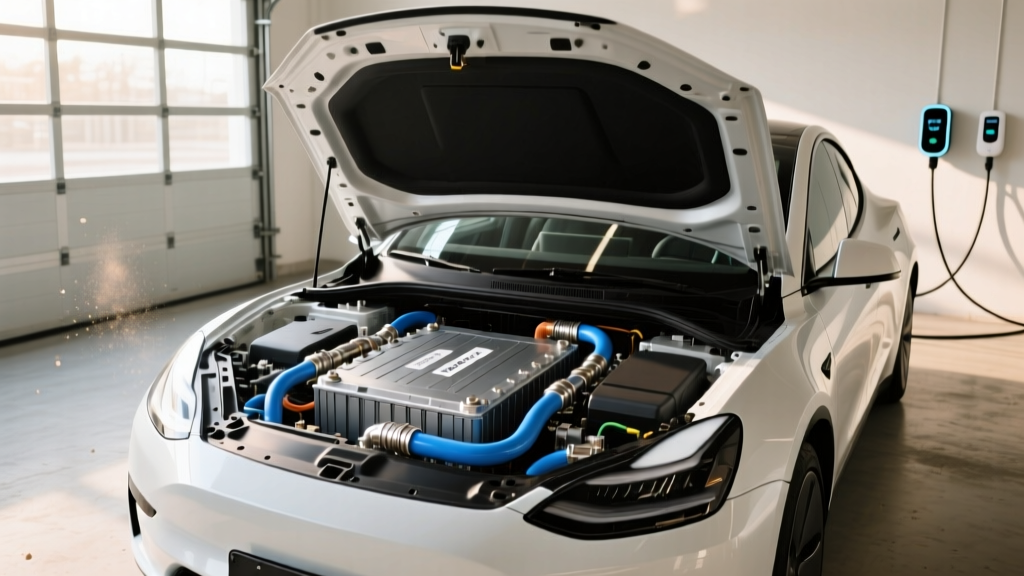
When shopping for a Tesla Model Y in 2026, one of the most critical — and often misunderstood — specifications is the high-voltage traction battery. The Tesla Model Y battery capacity varies by trim, chemistry, and model year, and those differences directly affect your real-world range, charging behavior, and long-term ownership costs.
As of the 2026 model year, the Tesla Model Y is offered with two primary battery chemistries depending on trim:
- Long Range / Performance trims: Nickel Manganese Cobalt (NMC) or Nickel Cobalt Aluminum (NCA) chemistry, with approximately 75–82 kWh usable capacity.
- Standard Range (Rear-Wheel Drive): Lithium Iron Phosphate (LFP) chemistry, with approximately 57–60 kWh usable capacity.
Note: Tesla does not officially publish exact usable kWh figures for every model year. The numbers above are derived from EPA test data, third-party teardowns, and real-world consumption measurements. Always cross-reference with the EPA's official fuel economy site for the latest certified range and efficiency figures.
LFP vs NMC/NCA: Tesla Model Y Battery Chemistry Comparison
| Attribute | LFP (Standard Range) | NMC/NCA (Long Range / Performance) |
|---|---|---|
| Energy Density | Lower (~160 Wh/kg cell-level) | Higher (~250–270 Wh/kg cell-level) |
| Usable Capacity (approx.) | 57–60 kWh | 75–82 kWh |
| Cycle Life | Higher (3,000+ cycles to 80% SoH) | Moderate (1,500–2,000 cycles to 80% SoH) |
| Cold-Weather Performance | Greater range loss in freezing temps (~30–40%) | Better cold performance (~20–30% loss) |
| Recommended Daily Charge | 100% (Tesla recommends periodic full charges) | 80–90% daily; 100% for trips only |
| Cost | Lower (no cobalt or nickel) | Higher (critical mineral content) |
| Thermal Stability | Excellent (inherently safer chemistry) | Good (requires robust thermal management) |
How Long Do Tesla Model Y Batteries Last?
This is the question every prospective EV owner asks, and the data is reassuring. Tesla's own 2024 Impact Report (the most recent comprehensive dataset available) showed that Model Y vehicles retained approximately 85–92% of their original battery capacity after 150,000 miles. That translates to roughly 8–15% degradation over the typical first-owner ownership period.
Typical Tesla Model Y Battery Degradation Curve
Based on aggregated fleet data from Tesla Impact Reports and independent owner tracking (e.g., Teslanomics by Recurrent Auto):
| Mileage | Average Capacity Retained | Approximate Degradation |
|---|---|---|
| 0 miles (new) | 100% | 0% |
| 30,000 miles | 95–97% | 3–5% |
| 60,000 miles | 92–95% | 5–8% |
| 100,000 miles | 88–93% | 7–12% |
| 150,000 miles | 85–92% | 8–15% |
| 200,000 miles | 80–90% | 10–20% |
Note: LFP batteries tend to show slower long-term degradation but may exhibit slightly steeper initial drop-off. NMC batteries degrade faster per cycle but start with more capacity. Individual results vary based on charging habits, climate, and Supercharging frequency.
The degradation curve is not linear. Most capacity loss occurs in the first 10,000–20,000 miles as the battery undergoes initial formation cycles. After that, degradation slows significantly, following a roughly logarithmic curve. Many Model Y owners report losing only 1–2% per year after the initial break-in period.
What Does the Tesla Battery Warranty Cover?
Tesla provides one of the stronger battery warranties in the EV industry, and it's structured to give buyers meaningful protection:
Tesla Model Y Battery & Drive Unit Warranty (2026 Model Year)
| Trim | Warranty Duration | Mileage Limit | Minimum Capacity Retention |
|---|---|---|---|
| Standard Range (RWD, LFP) | 8 years | 100,000 miles | 70% |
| Long Range (AWD, NMC/NCA) | 8 years | 120,000 miles | 70% |
| Performance (AWD, NMC/NCA) | 8 years | 120,000 miles | 70% |
The warranty covers the high-voltage battery against defects and excessive capacity loss below 70% of its original usable capacity within the warranty period. If your Model Y Long Range started with 78 kWh usable and drops below 54.6 kWh within 8 years or 120,000 miles (whichever comes first), Tesla is obligated to repair or replace the battery at no cost to you.
What the warranty does not cover:
- Gradual degradation above the 70% threshold (this is considered normal wear)
- Damage from accidents, floods, fire, or improper modifications
- The 12V auxiliary battery (covered under the separate 4-year/50,000-mile new vehicle warranty)
- Cosmetic issues that do not affect function
Tesla Model Y Battery Replacement Cost: What to Expect
Out-of-warranty battery replacement is the scenario that generates the most anxiety among EV shoppers. Here's the reality: most Tesla Model Y batteries will outlive the vehicle's useful economic life. Full replacement is rare and typically only needed after physical damage, manufacturing defect outside the warranty window, or extreme high-mileage use (200,000+ miles).
Estimated Tesla Model Y Battery Replacement Costs (2026)
| Component | Estimated Cost Range | Notes |
|---|---|---|
| Full Battery Pack (LFP, ~60 kWh) | $8,000–$12,000 | Parts + labor at Tesla Service Center |
| Full Battery Pack (NMC/NCA, ~78 kWh) | $12,000–$16,000 | Parts + labor at Tesla Service Center |
| Individual Module Replacement | $2,000–$5,000 | If only specific modules are degraded or faulty |
| Refurbished/Remanufactured Pack | $6,000–$10,000 | Tesla sometimes offers refurbished units at lower cost |
Sources: Tesla Service Center estimates, independent EV repair shops, and owner reports as of early 2026. Prices vary by region and are subject to change. These figures represent out-of-warranty scenarios.
For context, a Model Y owner driving 15,000 miles per year would reach 120,000 miles at year eight — still within the warranty window for Long Range and Performance trims. The statistical likelihood of needing an out-of-pocket battery replacement during typical ownership is low. Data from Recurrent Auto shows that fewer than 2% of EVs across all brands have required battery replacement outside of recalls or warranty claims.
Factors That Affect Tesla Model Y Battery Lifespan
While modern EV battery management systems (BMS) are highly sophisticated, your daily habits still influence long-term health. Here are the primary factors:
Battery Longevity Best Practices
- State of Charge Habits: For NMC/NCA Model Y trims, keep daily charging between 20–80% or 20–90%. Reserve 100% charges for road trips. LFP owners should charge to 100% at least once per week to allow the BMS to calibrate cell voltages accurately.
- DC Fast Charging Frequency: Occasional Supercharging is fine — Tesla's thermal management system is robust. However, daily DC fast charging at 250 kW generates sustained heat that accelerates degradation over time. If you have home Level 2 charging, use it as your primary method and Supercharge for trips.
- Extreme Temperature Exposure: Prolonged exposure to ambient temperatures above 100°F (38°C) or below 0°F (-18°C) stresses the battery. Use Tesla's scheduled departure feature to precondition the battery while plugged in, which uses grid power rather than battery energy for thermal management.
- Storage at High SoC: Avoid leaving your Model Y parked at 100% SoC for extended periods (weeks). If storing the vehicle, Tesla recommends leaving it plugged in with the charge limit set to 50%.
- Regenerative Braking Settings: Standard regen mode doesn't harm the battery. Tesla's BMS manages charge acceptance during regen to prevent over-current conditions.
How to Check Your Tesla Model Y Battery Health (State of Health)
Tesla does not display a simple "battery health percentage" on the vehicle's touchscreen the way some competitors do. However, there are several methods to assess your Model Y's State of Health (SoH):
1. Range Comparison Method: Charge your Model Y to 100% (or your known full-charge limit) and note the displayed estimated range. Compare this to the EPA-rated range when new. For example, if your 2024 Model Y Long Range originally displayed 310 miles at 100% and now shows 285 miles, that's roughly 92% SoH — or about 8% degradation.
2. Tesla Service Mode (DIY): Some owners access Service Mode on the touchscreen to view detailed battery data, including nominal full-pack energy (kWh). This value represents the BMS's current estimate of total usable capacity. Divide this by the original rated capacity for an approximate SoH percentage. Note: Tesla may restrict Service Mode access in future software updates.
3. Third-Party Apps: Apps like TeslaFi, Tessie, and Stats log charging sessions and can estimate battery health over time by analyzing energy added during charges from known SoC percentages. These are not as precise as a dealer diagnostic but provide useful trend data.
4. Tesla Service Center Diagnostic: If you need an official SoH reading (for a sale, warranty claim, or peace of mind), a Tesla Service Center can run a full battery health diagnostic. This is typically done during routine service visits.
Emerging Battery Technologies: What's Next After the Model Y's Current Cells?
Tesla's current Model Y lineup uses proven, mass-produced lithium-ion chemistries. But the broader EV battery industry is advancing rapidly, and several next-generation technologies are in development:
Solid-State Batteries: These replace the liquid electrolyte with a solid conductor, promising higher energy density (potentially 400+ Wh/kg at the cell level), faster charging, and improved safety. Companies like Toyota, Samsung SDI, and QuantumScape are targeting limited production between 2027–2030. Tesla has not announced a solid-state timeline. Expect these to debut in premium or next-generation platforms, not as retrofits for current Model Y vehicles.
Silicon Anode Batteries: Replacing graphite anodes with silicon can increase energy density by 20–40%. Companies like Sila Nanotechnologies and Group14 are already supplying silicon-dominant anode materials for some EV applications. Tesla's own 4680 cells incorporate incremental silicon content, and future iterations may increase this ratio. Realistic timeline for widespread silicon-anode adoption: 2026–2028 in new vehicle platforms.
Sodium-Ion Batteries: CATL and other Chinese manufacturers have begun producing sodium-ion cells for lower-cost, shorter-range EVs. These are unlikely to appear in the Model Y (which targets the premium crossover segment) but may influence Tesla's future entry-level vehicles.
None of these technologies are available in the 2026 Model Y. Current buyers should make decisions based on today's proven LFP and NMC chemistries, which offer excellent longevity and performance for the price.
Frequently Asked Questions
How long do Tesla Model Y batteries last in real-world use?
Based on fleet data, most Model Y batteries retain 85–92% of their original capacity at 150,000 miles. At an average driving rate of 13,500 miles per year (per FHWA data), that's roughly 11 years of driving before reaching that mileage. Many batteries will outlast the vehicle's body, suspension, and interior components.
How much does it cost to replace a Tesla Model Y battery?
Out-of-warranty full pack replacement ranges from approximately $8,000 (LFP Standard Range) to $16,000 (NMC Long Range/Performance), including parts and labor. However, the vast majority of replacements occur under Tesla's 8-year battery warranty at no cost to the owner. Individual module repairs can cost $2,000–$5,000 if only a portion of the pack is affected.
Does frequent Supercharging damage the Model Y battery?
Occasional Supercharging has minimal impact thanks to Tesla's active liquid thermal management system. However, daily DC fast charging at peak rates (250 kW) does generate sustained heat that accelerates long-term degradation compared to Level 2 home charging. If you Supercharge 2–3 times per week on road trips, the effect is negligible. If you rely on Supercharging daily as your only charging option, expect slightly faster degradation — perhaps an additional 2–4% loss over 100,000 miles compared to primarily Level 2 charging.
Should I charge my Tesla Model Y LFP battery to 100% every day?
Tesla officially recommends charging LFP-equipped Model Y vehicles to 100% at least once per week. This allows the battery management system to accurately calibrate cell voltages and provide reliable range estimates. Daily 100% charging is acceptable for LFP chemistry because it is inherently more stable at high SoC than NMC/NCA. For Long Range and Performance (NMC/NCA) owners, Tesla recommends setting the daily charge limit to 80–90% and reserving 100% for road trips.
LFP vs NMC — which Tesla Model Y battery is better for me?
Choose LFP (Standard Range) if you want lower cost, longer cycle life, the ability to charge to 100% daily without concern, and you primarily drive in moderate climates. Choose NMC/NCA (Long Range/Performance) if you need maximum range (300+ miles EPA), better cold-weather performance, faster DC charging speeds, or the additional power of dual-motor AWD. Neither chemistry is objectively "better" — the right choice depends on your driving patterns, climate, and budget.
What does the Tesla battery warranty actually cover?
Tesla's battery warranty covers defects in materials or workmanship and excessive capacity loss below 70% of original usable capacity within 8 years / 100,000 miles (Standard Range) or 8 years / 120,000 miles (Long Range/Performance). It does not cover gradual degradation above the 70% threshold, damage from accidents or misuse, or the 12V auxiliary battery. For full terms, consult the Tesla New Vehicle Limited Warranty documentation.
Will a future software update improve my Model Y's battery capacity?
Software updates cannot increase physical battery capacity — that's determined by the cells installed at the factory. However, Tesla occasionally refines its BMS algorithms through over-the-air updates, which can slightly improve usable capacity estimates, charging speed curves, or range calculations. These changes are typically marginal (1–3%) and should not be expected as a significant upgrade path.