The Tesla Model S Plaid remains one of the most technically ambitious electric sedans on the road — 1,020 horsepower, a sub-2-second 0-60 mph time, and a 396-mile EPA range. But for buyers spending over $90,000, the real question isn't peak performance; it's how the high-voltage pack holds up over five, eight, or twelve years of ownership. Understanding the Tesla Model S Plaid battery capacity in kWh, its chemistry, degradation trajectory, and warranty coverage is essential before signing the purchase agreement.
This guide breaks down exactly what powers the 2026 Model S Plaid, how that pack ages in real-world conditions, what Tesla's warranty actually covers, and what replacement looks like if you ever need one. We'll also compare the Plaid's NMC architecture against the LFP chemistry found in cheaper EVs, and look at where battery technology is heading next.
Tesla Model S Plaid Battery Capacity (kWh) and Chemistry Explained
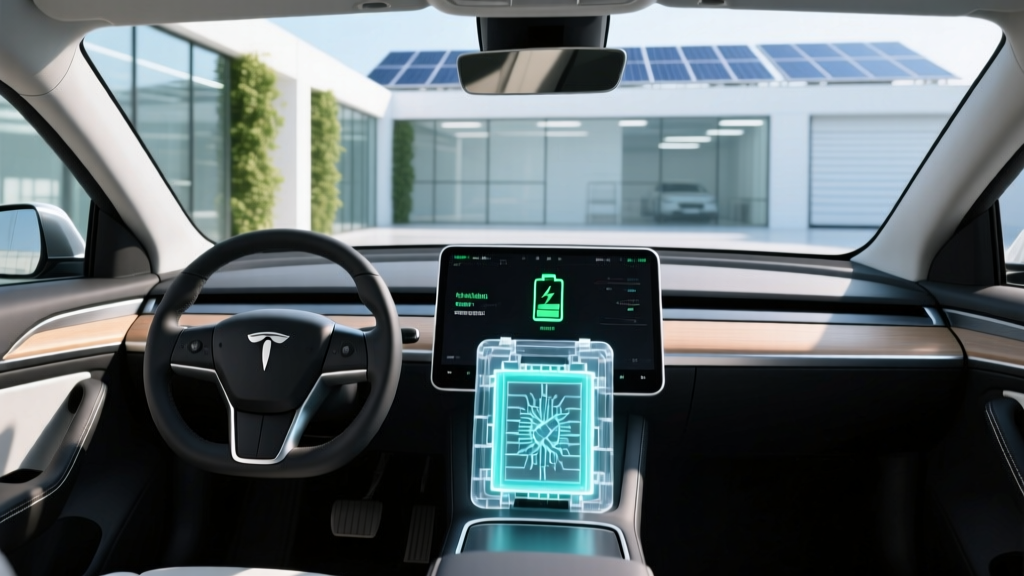
The 2026 Tesla Model S Plaid uses an NMC (nickel-manganese-cobalt) lithium-ion battery pack with a usable capacity of approximately 95 kWh (gross capacity is slightly higher, around 100 kWh, with a software-locked buffer at the top and bottom to protect cell longevity). This pack feeds three electric motors — one front, two rear — producing a combined 1,020 hp.
Tesla has used a structural pack architecture since the 2022 refresh, where the battery casing itself serves as a stressed member of the chassis. This reduces weight and increases torsional rigidity, but it also means a pack replacement is a more involved structural procedure than simply unbolting a module.
NMC chemistry was chosen for the Plaid because it offers the highest energy density among mass-production lithium-ion cells — critical when you need to pack enough kWh for ~400 miles of range while keeping weight manageable for a 1,020-hp performance sedan. The trade-off, as we'll see, is cycle life and cost compared to LFP.
LFP vs NMC/NCA: Which Chemistry Is Right for Your EV?
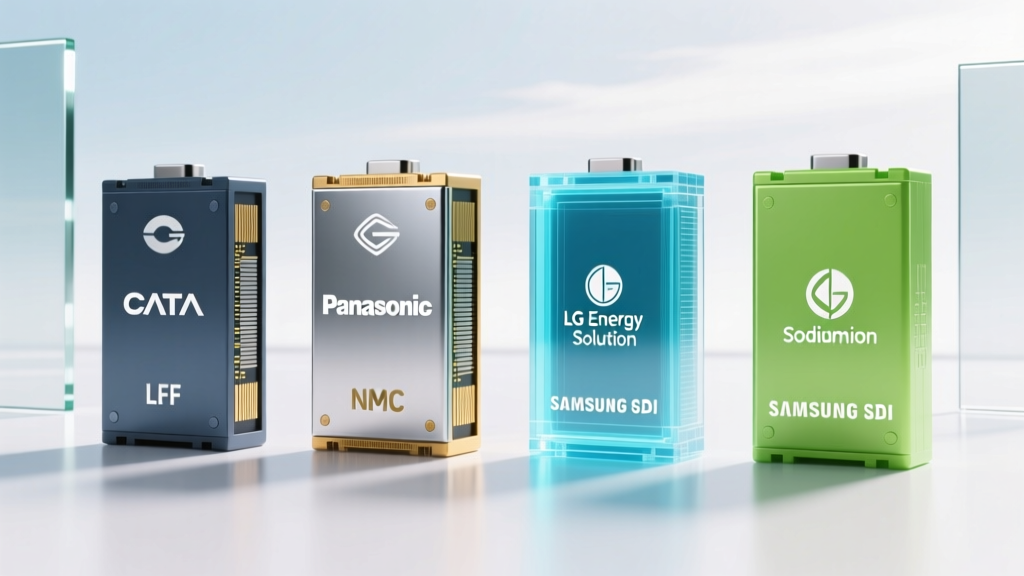
The Model S Plaid's NMC pack sits on one end of the chemistry spectrum. Tesla's Standard Range Model 3 and Model Y variants use LFP (lithium iron phosphate) cells, primarily sourced from CATL. Here's how the two chemistries compare across the metrics that matter for ownership:
| Attribute | NMC / NCA (Model S Plaid) | LFP (Model 3 RWD) |
|---|---|---|
| Energy Density | High (~250 Wh/kg cell-level) | Lower (~170 Wh/kg cell-level) |
| Typical Cycle Life | 1,000–1,500 full cycles | 2,500–4,000+ full cycles |
| Cold-Weather Performance | Better low-temp discharge & charge acceptance | Noticeable range loss below 20°F; slower DC charging when cold |
| Cost per kWh | Higher (cobalt/nickel commodity exposure) | Lower (iron/phosphate are abundant) |
| Recommended Daily SoC | 80% for daily, 100% only for trips | 100% regularly is fine (Tesla recommends at least weekly) |
| Thermal Runaway Risk | Low but higher than LFP | Extremely low — most stable Li-ion chemistry |
| Best Suited For | Long-range, performance, cold-climate vehicles | Daily commuters, fleet, warm-climate, cost-sensitive buyers |
Bottom line: NMC is the right choice for the Model S Plaid because the car's mission — maximum range and maximum power in a luxury sedan — demands energy density that LFP can't yet deliver at this pack size. But if you're cross-shopping a Model 3 RWD for commuting, LFP's superior cycle life and 100% SoC tolerance make it the more pragmatic daily driver.
Real-World Degradation: What the Data Actually Shows
EV battery degradation is not linear. Most NMC packs experience a steeper drop in the first 10,000–20,000 miles (typically 2–4%), then settle into a slow, gradual decline. Based on aggregated fleet data from sources like Teslanomics by Recurrent and owner-reported datasets, here's what Model S/X NMC pack degradation looks like over time:
Typical NMC Degradation Curve (Model S/X Fleet Averages):
- Year 1 / ~15,000 mi: 2–4% capacity loss (initial formation loss)
- Year 3 / ~45,000 mi: 5–7% total loss
- Year 5 / ~75,000 mi: 7–10% total loss
- Year 8 / ~120,000 mi: 10–15% total loss
- Year 10+ / ~150,000+ mi: 12–20% total loss (highly usage-dependent)
For a Model S Plaid with 95 usable kWh, a 10% loss at year 5 means roughly 85.5 usable kWh — translating from ~396 miles of EPA range to an effective ~355 miles. Still ample for most drivers, and well above the warranty threshold.
These figures are fleet averages. Individual results vary significantly based on charging habits, climate, and how often the pack sees extreme SoC states. A Plaid that's regularly DC fast-charged to 100% and track-driven in Arizona heat will degrade faster than one that's garage-kept in Oregon and charged to 80% on Level 2.
Tesla Battery Warranty: What's Actually Covered
Tesla's battery and drive unit warranty for the 2026 Model S Plaid is among the stronger offerings in the luxury EV segment:
| Coverage Area | Terms |
|---|---|
| Battery Pack | 8 years or 150,000 miles, whichever comes first |
| Capacity Retention Threshold | Minimum 70% of original capacity during warranty period |
| Drive Unit(s) | 8 years or 150,000 miles |
| What Triggers a Claim | Battery falls below 70% SoH, or a manufacturing defect causes failure |
| Remedy | Tesla replaces or refurbishes the pack to at least 70% capacity |
| Transferable? | Yes — warranty follows the VIN, not the owner |
What this means practically: For the Plaid's 95 usable kWh pack, the warranty guarantees at least ~66.5 kWh of usable capacity through 150,000 miles or 8 years. If degradation data holds, very few owners will ever hit this threshold under normal use. According to fueleconomy.gov, most modern EV batteries retain well above 80% capacity at the 100,000-mile mark.
However, the warranty does not cover damage from accidents, flooding, improper modifications, or use outside Tesla's guidelines (e.g., persistent 100% SoC storage on NMC). Read the fine print before assuming blanket coverage.
EV Battery Replacement Cost: When and How Much
This is the question that haunts EV forums, but context matters enormously. Here's the reality for the Model S Plaid and comparable large-pack EVs:
| Vehicle / Pack Size | Estimated Replacement Cost (Parts + Labor) | Typical Replacement Timeline |
|---|---|---|
| Tesla Model S Plaid (~95 kWh NMC) | $18,000–$25,000 | Rarely before 200,000 mi; most packs outlast the car's economic life |
| Tesla Model 3 LR (~75 kWh NMC) | $14,000–$18,000 | Same — 200,000+ mi under normal use |
| Tesla Model 3 RWD (~55 kWh LFP) | $10,000–$14,000 | Unlikely within vehicle lifespan given LFP cycle life |
| Ford F-150 Lightning Ext. Range (~131 kWh) | $22,000–$30,000 | Too new for long-term data; warranty covers 8 yr/100k mi |
| Chevy Bolt EV (~65 kWh NMC) | $12,000–$16,000 | Post-recall replacement packs show excellent longevity |
Critical context: Full battery replacement is statistically rare. Most EVs are scrapped, sold, or traded long before the pack fails outright. A 2023 study by Recurrent Auto found that fewer than 1.5% of EVs across major brands required out-of-warranty battery replacements. For the Model S Plaid, the more realistic concern is gradual range reduction — not catastrophic failure.
If you do need a replacement outside warranty, Tesla's refurbished pack program can reduce cost, and third-party EV repair shops are increasingly offering module-level repair (replacing individual cell modules rather than the entire pack) for $5,000–$10,000 depending on the failure.
Factors That Accelerate (or Slow) Battery Degradation
Not all miles are equal when it comes to battery wear. Here's what the electrochemistry actually cares about:
Habits that accelerate degradation:
- Frequent DC fast charging above 150 kW — High C-rates generate heat; sustained heat degrades NMC cathodes. Occasional Supercharging is fine; daily 250 kW sessions are not.
- Storing at 100% SoC for extended periods — NMC cells under high voltage stress degrade faster. If you charge to 100%, drive it within a few hours.
- Storing at very low SoC (below 10%) — Deep discharge can cause copper dissolution in the anode current collector.
- Extreme heat exposure — Sustained pack temps above 104°F (40°C) accelerate calendar aging. Garage parking in hot climates matters.
- Repeated track use without cool-down — The Plaid's 1,020 hp draws enormous current; back-to-back launch cycles generate significant internal heat.
Habits that maximize longevity:
- Charge to 80% daily, 100% only for road trips — Tesla's own in-car charging screen recommends this for NMC.
- Use Level 2 home charging as your primary method — Slower charge rates mean less heat and less stress.
- Keep SoC between 20% and 80% for routine use — The "middle 60%" is the longevity sweet spot.
- Precondition the battery before DC fast charging — The car does this automatically when a Supercharger is set as your navigation destination; it warms the pack for optimal charge acceptance and reduced stress.
- Plug in during extreme cold — The thermal management system will keep the pack in a safe temperature range using grid power instead of battery energy.
How to Monitor Your Model S Plaid Battery Health (SoH)
State of Health (SoH) is the percentage of original capacity your pack retains. Tesla doesn't display a native SoH percentage in the car's UI the way some competitors (like Hyundai's Bluelink or the Leaf's health bars) do. Here's how Plaid owners actually check:
Method 1: Manual calculation. Charge the car to 100% (do this occasionally for calibration, not daily). Note the displayed range. Compare it to the original EPA-rated range of 396 miles. If your 100% display reads 370 miles, your rough SoH is 370/396 = ~93%. This isn't perfectly precise because displayed range also factors in recent driving efficiency, but it's directionally accurate.
Method 2: Tesla Service Mode. Some owners access Service Mode (available in recent software updates) to view more granular battery data, including nominal full-pack energy. This is closer to true SoH but is not officially supported by Tesla and may change with OTA updates.
Method 3: Third-party apps. Services like Tessie, TeslaFi, or Stats log charge session data over time and estimate SoH by tracking how many kWh go into the battery from known SoC percentages. This is the most reliable consumer method — it requires a few months of data logging but gives you a trend line.
Method 4: Tesla Service diagnostic. If you suspect abnormal degradation (approaching the 70% warranty threshold), Tesla Service can run a full pack diagnostic and provide an official capacity reading. This is the only method that matters for a warranty claim.
Emerging Battery Tech: Solid-State, Silicon Anodes, and Realistic Timelines
The Model S Plaid's NMC pack represents the current state of the art, but several next-generation technologies are in development:
Solid-state batteries replace the liquid electrolyte with a solid ceramic or polymer separator, promising higher energy density (potentially 400+ Wh/kg), faster charging, and dramatically improved safety (near-zero thermal runaway risk). Toyota, Samsung SDI, and QuantumScape have all announced prototype cells, but as of 2026, no mass-production vehicle uses a full solid-state pack. Toyota has announced limited production for 2027–2028, but these are expected to debut in low-volume, high-price applications. Realistic widespread availability: 2029–2032.
Silicon-dominant anodes (from companies like Sila Nanotechnologies and Group14) replace graphite with silicon to increase energy density by 20–40% at the cell level. These are already appearing in limited applications (Porsche has signaled silicon-anode adoption for future models) and represent a nearer-term improvement: 2026–2028 for initial production vehicles.
Sodium-ion batteries (CATL, BYD) eliminate lithium entirely, using abundant sodium. They offer lower energy density but dramatically lower cost and excellent cycle life. Expect these in budget EVs and stationary storage before they appear in performance vehicles like the Plaid. Timeline: 2026–2027 for entry-level EVs in China, later for the US market.
What this means for today's Plaid buyer: None of these technologies will retrofit into your existing pack. The NMC cells in the 2026 Plaid are mature, well-understood, and backed by real-world degradation data. Waiting for solid-state means waiting 3–5+ years with no guarantee of pricing or availability. The current pack is a known quantity — which, for a $90,000+ purchase, is actually an advantage.
Frequently Asked Questions
How long do EV batteries last in years and miles?
Modern NMC packs like the one in the Model S Plaid typically retain 80–90% of original capacity at 100,000–150,000 miles (roughly 8–10 years of average driving). Many packs exceed 200,000 miles before dropping below the 70% warranty threshold. LFP packs can last significantly longer — 300,000+ miles — due to superior cycle life. Battery failure before 150,000 miles is rare (under 1.5% of vehicles according to fleet data).
How much does it cost to replace a Tesla Model S Plaid battery?
Out-of-warranty replacement for the ~95 kWh NMC pack runs approximately $18,000–$25,000 including labor at a Tesla Service Center. However, most packs never need full replacement — module-level repairs or refurbished packs can reduce cost. Under warranty (8 years/150,000 miles), replacement is free if capacity drops below 70%.
What does the Tesla battery warranty actually cover?
Tesla guarantees the Model S Plaid battery will retain at least 70% of its original capacity for 8 years or 150,000 miles. If it drops below that threshold, Tesla will replace or refurbish the pack at no cost. The warranty covers manufacturing defects and abnormal degradation but excludes damage from accidents, misuse, or failure to follow charging guidelines. It is fully transferable to subsequent owners.
How do I check my Tesla battery health?
The most reliable consumer method is using a third-party logging app (TeslaFi, Tessie, Stats) that tracks kWh consumed across charge sessions to estimate State of Health over time. You can also compare your 100% displayed range to the original 396-mile EPA figure for a rough estimate. For an official reading, Tesla Service can run a diagnostic — required for any warranty claim.
Is LFP better than NMC for daily driving?
For daily commuting and cost-sensitive buyers, LFP is arguably the better chemistry: it tolerates 100% daily charging, has 2–3x the cycle life, costs less, and is safer. But LFP can't match NMC's energy density, which is why the Model S Plaid — needing ~95 kWh for 396 miles of range and 1,020 hp — uses NMC. The "better" chemistry depends entirely on the vehicle's mission.
Does frequent Supercharging damage the Model S Plaid battery?
Occasional DC fast charging has minimal impact. However, daily use of 250 kW Superchargers — especially without preconditioning — accelerates NMC degradation due to sustained high temperatures and high C-rate stress. Tesla's own data and third-party studies show that vehicles primarily charged on Level 2 (home/work) degrade 2–3% less over 100,000 miles compared to vehicles that rely predominantly on DC fast charging. Use Superchargers for road trips; use Level 2 for daily life.
Can I upgrade the Model S Plaid battery to a future chemistry?
No. The structural pack is integrated into the chassis and is not designed for chemistry swaps. Future packs (solid-state, silicon-anode) will have different form factors, voltages, and thermal management requirements. What you buy is what you keep — which is why understanding the current NMC pack's longevity profile matters before purchase.
Sources: EPA range and efficiency data via fueleconomy.gov; Tesla battery warranty terms via tesla.com/ownership/warranty; degradation data aggregated from Recurrent Auto fleet studies.