The Tesla Model S has been on the road for over a decade, and one question persists among buyers and engineers alike: how does the Tesla Model S battery weight affect the car's efficiency, handling, and long-term value? Understanding the physical mass, chemistry, and aging behavior of these packs is critical whether you're evaluating a new 2026 Model S or a used example from the 2018–2023 era.
This guide dissects the Model S battery from every angle that matters to owners — weight and energy density, NMC vs. LFP chemistry trade-offs, real-world degradation curves, warranty coverage, replacement economics, and daily habits that preserve State of Health (SoH). We'll also look at what's on the horizon with solid-state and silicon-anode cells.
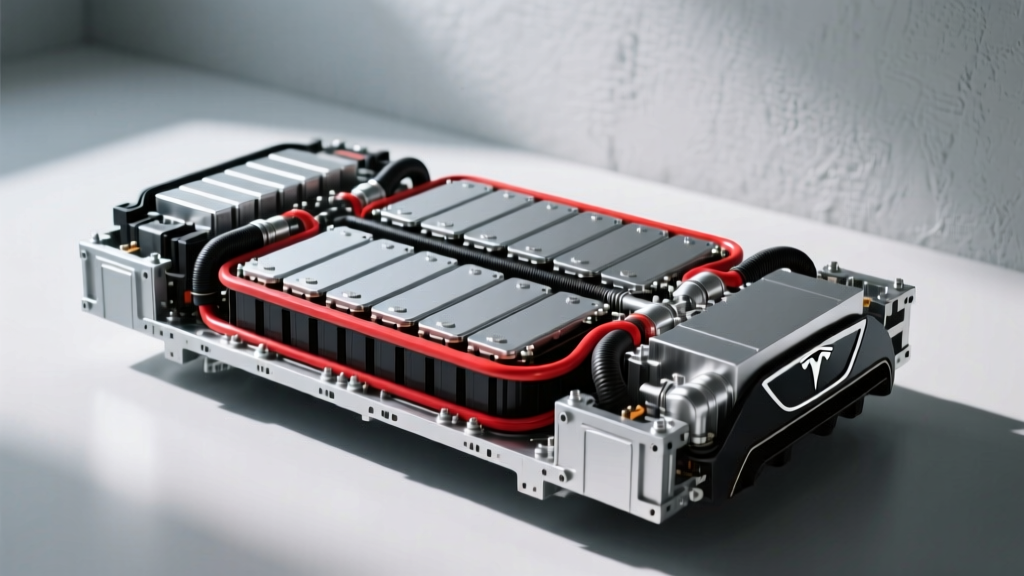
Tesla Model S Battery Weight by Pack Size
The Model S has shipped with several battery configurations over its production run. Battery weight scales directly with usable energy capacity (measured in kWh — kilowatt-hours, the unit of stored energy, distinct from kW, which measures power or charge rate). Heavier packs store more energy and deliver more range, but they also add mass that the suspension and brakes must manage.
| Pack Size (Usable kWh) | Approx. Pack Weight | Model Years / Trims | EPA Range (Current Trim Equivalent) |
|---|---|---|---|
| 60 kWh | ~900 lbs (408 kg) | 2012–2016 (discontinued) | ~208 mi (original EPA) |
| 75 kWh | ~1,050 lbs (476 kg) | 2016–2019 (discontinued) | ~259 mi (original EPA) |
| 90 kWh | ~1,200 lbs (544 kg) | 2015–2017 (discontinued) | ~294 mi (original EPA) |
| 100 kWh | ~1,350 lbs (612 kg) | 2017–present (Plaid/Long Range) | 402 mi (2026 Long Range, fueleconomy.gov) |
For context, the 100 kWh pack in the 2026 Model S Long Range accounts for roughly 25–27% of the vehicle's 4,766-lb curb weight. That low-slung mass gives the Model S its signature planted handling, but it also means the car consumes more energy accelerating and braking than a lighter EV like the Model 3. Expect real-world highway range to land around 330–360 miles at 75 mph in moderate temperatures, and closer to 270–300 miles in sub-freezing conditions due to cabin heating demands and increased battery internal resistance.
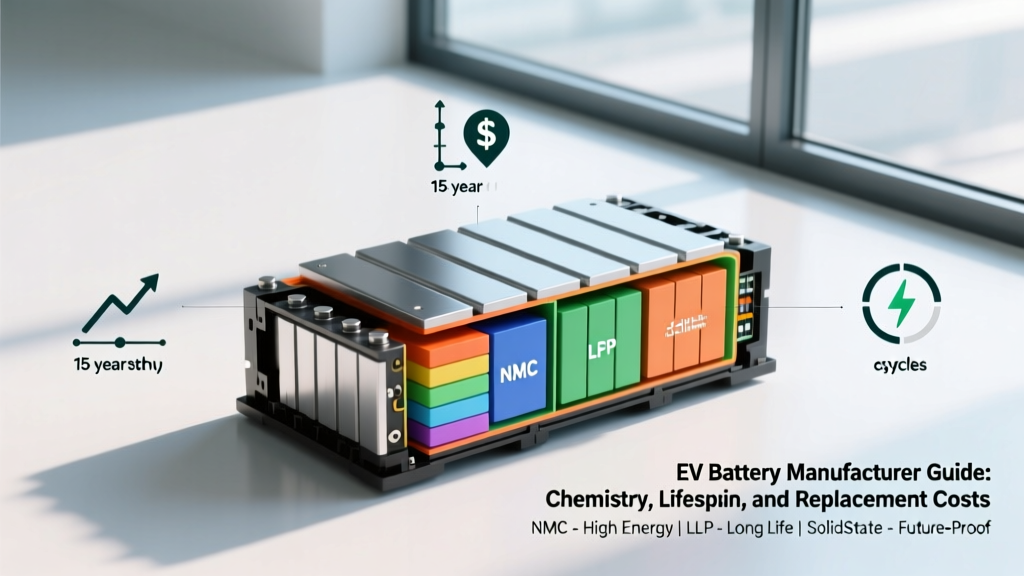
NMC vs. LFP: Which Chemistry Powers the Model S?
The Model S has exclusively used NMC (nickel manganese cobalt) and, in earlier years, NCA (nickel cobalt aluminum) cathode chemistries. Tesla has not offered the Model S with an LFP (lithium iron phosphate) pack — that chemistry is reserved for the Standard Range Model 3 and Model Y, where cost savings matter more than energy density.
Here's how the two chemistries compare on the metrics that affect real ownership:
| Attribute | LFP (Lithium Iron Phosphate) | NMC / NCA (Nickel-Based) |
|---|---|---|
| Energy Density (Wh/kg, cell level) | ~160–180 Wh/kg | ~230–270 Wh/kg |
| Typical Cycle Life | 3,000–5,000 cycles | 1,000–2,000 cycles |
| Cold-Weather Performance | Moderate — slower charging below 32°F | Better — preconditioning mitigates well |
| Cost per kWh (2026 est.) | ~$80–$95/kWh | ~$110–$135/kWh |
| Thermal Stability | Excellent — less prone to thermal runaway | Good — requires active thermal management |
| Recommended Daily SoC | 100% (LFP tolerates full charge) | 80–90% (prolongs life) |
| Used in Model S? | No | Yes — all trims, all years |
Why NMC for the Model S? The flagship sedan demands maximum range in a limited under-floor volume. NMC's ~40% energy-density advantage over LFP lets Tesla pack 100 usable kWh into the skateboard platform without raising the floor or extending the wheelbase. The trade-off is a somewhat shorter cycle life and the need to limit daily charge to 80–90% to minimize cathode degradation.
Real-World Degradation: What the Data Shows
Tesla publishes fleet degradation data in its annual Impact Report, and third-party aggregators like Recurrent Auto have tracked thousands of Model S packs over time. The consistent finding: NMC packs in the Model S degrade roughly 10–12% over the first 150,000 miles, with the steepest loss occurring in the first 20,000–30,000 miles (typically 3–5%), after which the curve flattens significantly.
Typical Model S (100 kWh, NMC) Degradation Curve:
- Year 1 / 15,000 mi: ~3–5% capacity loss (initial formation loss)
- Year 3 / 45,000 mi: ~7–9% total loss
- Year 5 / 75,000 mi: ~9–11% total loss
- Year 8 / 120,000 mi: ~11–14% total loss
- Year 10 / 150,000 mi: ~12–16% total loss
A 2020 Model S Long Range with 100 kWh that originally delivered 402 EPA miles can expect roughly 345–355 miles of range at the 5-year mark, assuming mixed driving and moderate DC fast-charging habits.
Key variables that accelerate degradation beyond these baselines:
- Frequent DC fast charging above 150 kW without preconditioning — heat is the primary enemy of NMC longevity.
- Sustained high State of Charge — regularly parking at 100% SoC for days at a time stresses the cathode.
- Extreme ambient temperatures — prolonged exposure to 100°F+ heat or repeated cold-soaking below 0°F without garage shelter.
- Deep discharge cycles — routinely driving the pack below 10% SoC before recharging.
Tesla's Battery Warranty: What's Covered
Tesla warrants the Model S battery pack against defects and excessive capacity loss. The terms have remained stable across recent model years:
| Component | Duration | Mileage Limit | Capacity Retention Threshold |
|---|---|---|---|
| Battery Pack (Long Range) | 8 years | 150,000 miles | 70% minimum SoH |
| Battery Pack (Plaid) | 8 years | 150,000 miles | 70% minimum SoH |
| Drive Unit(s) | 8 years | 150,000 miles | N/A (defect coverage) |
If your Model S battery falls below 70% State of Health within the warranty window, Tesla will repair or replace it at no cost. In practice, based on the degradation data above, reaching 70% SoH requires roughly 250,000+ miles or extreme abuse — the vast majority of owners will never file a battery warranty claim. For reference, Tesla's official warranty documentation specifies that the warranty transfers to subsequent owners, which supports used-vehicle resale values.
Battery Replacement Cost: When and How Much
Out-of-warranty battery replacement is the scenario that generates the most anxiety among prospective EV buyers. Here's what the numbers actually look like for the Model S in 2026:
| Pack Size | Remanufactured Pack | New OEM Pack | Labor (est.) | Total Range |
|---|---|---|---|---|
| 75 kWh (legacy) | $10,000–$13,000 | $16,000–$19,000 | $1,500–$2,500 | $11,500–$21,500 |
| 100 kWh (current) | $13,000–$16,000 | $20,000–$24,000 | $1,500–$2,500 | $14,500–$26,500 |
When is replacement actually needed? Catastrophic battery failure (internal short, coolant intrusion) is rare and typically occurs under warranty. Gradual degradation to the point where range is no longer practical — say, below 60% SoH — usually takes 200,000–300,000 miles. Most Model S vehicles are retired or traded in long before the pack reaches that point. The fear of a sudden $20,000 bill at 50,000 miles is not supported by fleet data.
For out-of-warranty owners, third-party shops like Electrified Garage and independent EV specialists now offer module-level repairs — replacing only the degraded modules within a pack for $3,000–$6,000 rather than swapping the entire unit.
Maximizing Battery Health: An Owner's Checklist
If you own or plan to own a Model S, these habits measurably extend pack life:
- Set daily charge limit to 80–90% for NMC packs. Use 100% only when you need full range for a road trip.
- Enable scheduled departure preconditioning — this warms the battery before driving and before Supercharger sessions, reducing lithium-plating risk in cold weather.
- Minimize DC fast charging above 150 kW when a Level 2 home charger is available. Reserve Supercharging for road trips, not daily top-offs.
- Avoid leaving the car at very low SoC (below 10%) for extended periods. Plug in when you get home, even if you don't need a full charge.
- Use Tesla's built-in battery health monitoring — navigate to Controls > Service > Battery Health Test (available on 2022+ software builds) to run a SoH diagnostic without visiting a service center.
- Garage the vehicle when possible in extreme heat. Sustained battery temperatures above 104°F (40°C) accelerate calendar degradation.
- Keep tires properly inflated and alignment checked — excess rolling resistance forces the battery to work harder, generating more heat per mile.
How to Check State of Health (SoH)
Tesla provides several ways to assess your pack's condition:
- In-car Battery Health Test (2022+ vehicles): Runs a controlled discharge/charge cycle and reports SoH as a percentage.
- TeslaFi or Tessie third-party apps: These log every charge session and calculate SoH trends over time by comparing energy added vs. SoC change.
- Manual calculation: Charge from a known low SoC (e.g., 10%) to a known high SoC (e.g., 90%), note the kWh added on the charger display, and compare to the expected usable capacity (e.g., 80% of 100 kWh = 80 kWh for a new pack; if you only added 72 kWh, SoH ≈ 90%).
- Service center diagnostic: Tesla can run a full pack scan showing individual module voltage variance and internal resistance — the most thorough method.
Emerging Battery Tech: What's Next After NMC
While the current Model S uses proven NMC cells, the broader EV industry is developing next-generation chemistries that could reshape battery weight, longevity, and cost within the next five to ten years:
Solid-state batteries replace the liquid electrolyte with a solid ceramic or polymer, enabling lithium-metal anodes that could push energy density past 400 Wh/kg (cell level). Toyota, Samsung SDI, and QuantumScape have all announced pilot production timelines in the 2027–2030 window, but commercial availability in a production vehicle at scale remains unproven. Expect solid-state packs to debut in limited luxury applications before reaching mainstream pricing.
Silicon-anode cells (used in limited form by companies like Sila Nanotechnologies) boost energy density by 15–25% over graphite anodes. These are already appearing in some 2025–2026 model-year EVs in partnership with major cell suppliers. For the Model S, a silicon-anode upgrade could theoretically reduce pack weight by 150–200 lbs while maintaining the same 100 kWh capacity — or increase capacity within the same physical footprint.
Sodium-ion batteries offer lower cost and excellent cycle life but significantly lower energy density (~120–150 Wh/kg), making them suitable for city EVs and stationary storage rather than long-range sedans like the Model S.
None of these technologies are available in the Model S today, and Tesla has not announced a chemistry transition for its flagship sedan. Current buyers should purchase based on today's proven NMC technology rather than waiting for next-generation cells that remain 3–5+ years from mass production.
Frequently Asked Questions
How long do Tesla Model S batteries last in years and miles?
Based on fleet data, a Model S NMC battery typically retains 85–90% of its original capacity after 150,000 miles (roughly 10 years of average driving). Many packs exceed 200,000 miles before degrading below 80% SoH. The 8-year / 150,000-mile warranty with a 70% retention threshold provides a conservative safety net, but most packs outlast the vehicle's practical service life.
How much does it cost to replace a Tesla Model S battery?
Out-of-warranty replacement costs range from approximately $11,500 (remanufactured 75 kWh pack with labor) to $26,500 (new 100 kWh pack with labor). Module-level repairs at independent shops can cost $3,000–$6,000. However, total pack replacement is rarely needed — most degradation is gradual, and catastrophic failure is uncommon and usually covered under warranty.
What does the Tesla battery warranty actually cover?
Tesla's battery warranty covers defects in materials and workmanship, plus capacity loss below 70% State of Health, for 8 years or 150,000 miles (whichever comes first) on the Model S. The warranty transfers to subsequent owners. It does not cover damage from accidents, flooding, unauthorized modifications, or neglect (e.g., leaving the car unplugged at 0% SoC for months).
How do I check my Model S battery health?
Use the in-car Battery Health Test (Controls > Service) on 2022+ vehicles, monitor trends via third-party apps like TeslaFi or Tessie, or perform a manual calculation by comparing kWh added during a known SoC window against the pack's expected usable capacity. A Tesla service center can also run a full module-level diagnostic.
LFP vs. NMC — which is better for the Model S?
For the Model S specifically, NMC is the correct choice because the car demands maximum energy density to achieve 400+ miles of EPA range. LFP offers longer cycle life and lower cost but lacks the energy density to power a heavy luxury sedan for that distance without an impractically large and heavy pack. LFP is better suited to lighter, more affordable vehicles where daily 100% charging is convenient and 250–300 miles of range suffices.
Does frequent Supercharging damage the Model S battery?
Occasional Supercharging (road trips, a few times per month) has minimal impact on battery health. Daily Supercharging at high power (250 kW) without preconditioning, however, accelerates degradation due to sustained heat. For daily use, Level 2 home charging at 7–11.5 kW is gentler and recommended. Always enable battery preconditioning when navigating to a Supercharger — the car will warm the pack to the optimal charging temperature before you arrive.
How much does the Tesla Model S battery weigh compared to other EVs?
The 100 kWh Model S pack weighs approximately 1,350 lbs (612 kg). For comparison, the Ford F-150 Lightning's extended-range pack (~131 kWh usable) weighs roughly 1,800 lbs, while the Tesla Model 3 Long Range's ~75 kWh pack weighs around 1,050 lbs. The Model S pack weight is proportional to its capacity and sits within the expected range for a 400+ mile luxury sedan.