If you're researching Tesla Model S battery life, you're likely weighing one of the most expensive components on any electric vehicle. The Model S has been on sale since 2012, making it one of the longest-running EVs with real-world longevity data. That track record gives buyers and owners something rare: actual evidence about how these high-voltage traction batteries age over hundreds of thousands of miles.
This guide breaks down the chemistry inside the Model S battery pack, real-world degradation curves, what Tesla's warranty actually covers, the true cost of an out-of-warranty replacement, and the daily habits that meaningfully extend pack life. We'll also separate today's lithium-ion reality from tomorrow's solid-state promises.
What Chemistry Is Inside the Tesla Model S Battery?
The 2026 Tesla Model S uses nickel-based lithium-ion cells — specifically a nickel-cobalt-aluminum (NCA) and nickel-manganese-cobalt (NMC) blend depending on the production batch and supplier (Panasonic remains the primary cell partner for Model S). This is fundamentally different from the lithium iron phosphate (LFP) chemistry Tesla uses in the rear-wheel-drive Model 3 and Model Y Standard Range.
The current Model S Long Range carries a usable battery capacity of approximately 100 kWh (gross pack size slightly higher to account for the buffer). The Model S Plaid uses a structurally similar pack with a revised thermal management system to handle sustained high-power output.
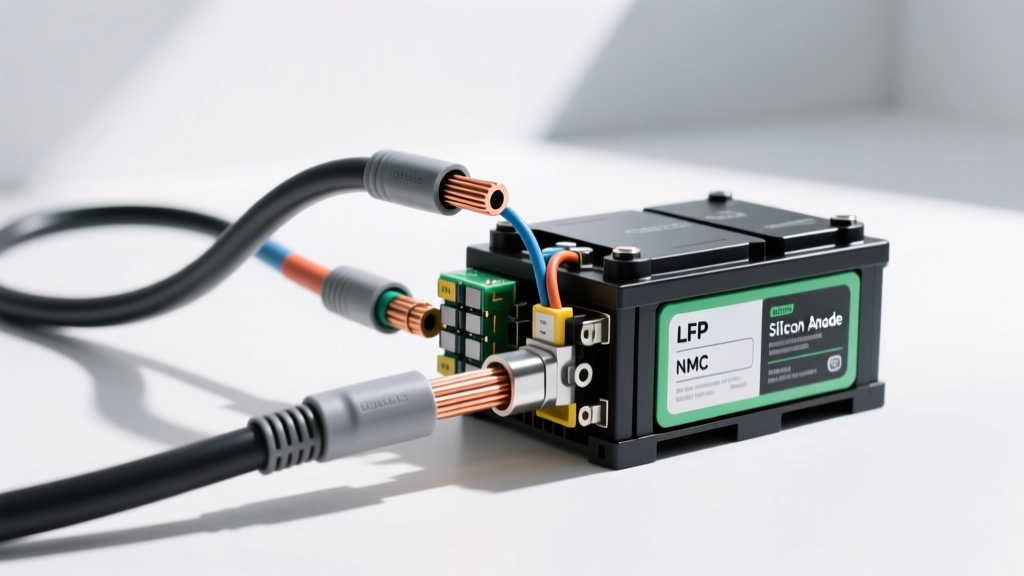
Understanding why Tesla chose NCA/NMC for the Model S — and LFP for cheaper models — requires looking at the trade-offs head-to-head:
| Attribute | NMC / NCA (Model S) | LFP (Model 3 RWD) |
|---|---|---|
| Energy Density | ~260 Wh/kg (cell level) — enables 400+ mi range in a sedan | ~170 Wh/kg — heavier for same kWh, better suited to smaller packs |
| Cycle Life | ~1,000–1,500 full cycles to 80% SoH | ~3,000–5,000 full cycles to 80% SoH |
| Cold-Weather Performance | Better low-temp conductivity; less range loss below 32°F | More sluggish in cold; greater range penalty without preconditioning |
| Cost per kWh | Higher — cobalt and nickel are expensive commodities | Lower — iron and phosphate are abundant and cheap |
| Charging Recommendation | Daily charge to 80–90%; 100% only for trips | Tesla recommends charging to 100% regularly for calibration |
| Thermal Runaway Risk | Slightly higher; requires robust BMS and cooling | Inherently more stable chemistry |
The takeaway: NMC/NCA gives the Model S its 405-mile EPA range and strong cold-weather usability, but it demands more careful state-of-charge management than LFP. If you're buying a Model S specifically for long-distance range and performance, this chemistry trade-off is the correct one.
How Long Do Tesla Model S Batteries Actually Last?
Tesla publishes fleet degradation data in its annual Impact Report, and third-party owners have compiled extensive logs. Here's what the numbers show for Model S packs:
Typical Model S Battery Degradation Curve (NMC/NCA packs):
- Year 1 / ~15,000 miles: 2–4% capacity loss (initial formation loss is normal for all lithium-ion cells)
- Year 3 / ~45,000 miles: 5–8% total loss
- Year 5 / ~75,000 miles: 8–12% total loss
- Year 8 / ~120,000 miles: 10–15% total loss (within the 70% warranty threshold)
- Year 10+ / 150,000–200,000 miles: 12–20% total loss for well-maintained packs
The degradation curve is not linear. Most capacity loss happens in the first 20,000–30,000 miles as the solid electrolyte interphase (SEI) layer forms on the anode. After that, degradation slows considerably — often to less than 1% per year under moderate use.
A 2023 Tesla Impact Report stated that Model S and Model X vehicles retained approximately 88% of their original range after 200,000 miles on average. That's a meaningful data point: at 405 EPA miles, 88% retention still gives you roughly 356 miles of range — more than most EVs deliver when brand new.
Real-world caveats matter. Owners in hot climates (Arizona, Texas, the Middle East) who frequently DC fast-charge and regularly sit at 100% state of charge see faster degradation — closer to 15–18% loss at 100,000 miles. Cold-climate owners who garage their vehicles and charge to 80% daily often report less than 10% loss at the same mileage.
Tesla Model S Battery Warranty: What's Covered?
Tesla's battery warranty for the Model S is among the more straightforward in the industry, but the details matter when you're filing a claim.
| Model | Warranty Period | Mileage Limit | Capacity Retention Threshold |
|---|---|---|---|
| Model S Long Range (2026) | 8 years | 150,000 miles | 70% minimum (whichever comes first) |
| Model S Plaid (2026) | 8 years | 150,000 miles | 70% minimum (whichever comes first) |
Key warranty details that owners frequently misunderstand:
- The 70% threshold is the trigger, not the expectation. Tesla will replace or repair the pack if usable capacity drops below 70% of the original kWh within 8 years or 150,000 miles. Most packs never reach this threshold under normal use.
- "Repair" may mean module replacement, not a full new pack. Tesla can replace individual modules within the pack to bring capacity above 70%. You may not receive a brand-new battery.
- The warranty covers defects and abnormal degradation, not damage. Flood damage, collision damage, or modifications that compromise the pack void coverage.
- Transferability: The battery warranty transfers to subsequent owners, which supports resale value on used Model S vehicles.
For full warranty terms, always refer to Tesla's current New Vehicle Limited Warranty documentation, as terms can shift between model years.
Tesla Model S Battery Replacement Cost: What to Budget
Out-of-warranty battery replacement is the number-one anxiety for prospective EV buyers. Let's put real numbers to it.
| Scenario | Estimated Cost | Context |
|---|---|---|
| Full pack replacement (out of warranty, Model S 100 kWh) | $15,000–$22,000 | Includes parts, labor, and diagnostics at a Tesla Service Center |
| Module-level repair (out of warranty) | $5,000–$10,000 | Replaces degraded or failed modules rather than the full pack |
| Refurbished/remanufactured pack | $10,000–$14,000 | Third-party or Tesla-refurbished pack; availability varies |
| Under warranty | $0 | If capacity drops below 70% within 8 yr/150k mi or a defect is found |
Important context: according to fleet data and service records, the vast majority of Model S batteries never require full replacement. The packs are engineered with a substantial buffer (typically 5–8 kWh above the stated usable capacity) that absorbs degradation over time. A pack that has degraded 15% still has meaningful range and may last another 100,000+ miles before approaching the 70% threshold.
When replacements do occur out of warranty, they are most common on early 2012–2015 Model S vehicles (60 kWh and 85 kWh packs) that have now accumulated 150,000–250,000 miles. The newer 100 kWh packs introduced in 2016–2017 and the refreshed 2021+ architecture have shown improved longevity, likely due to better thermal management and cell chemistry refinements.
If you're buying a used Model S outside of warranty, budget $15,000–$20,000 as a worst-case reserve. But statistically, you're more likely to replace the drive unit, air suspension, or touchscreen before the battery fails catastrophically.
What Actually Degrades a Model S Battery? Key Factors
Not all miles are created equal when it comes to battery aging. The following factors have the most measurable impact on your Model S pack's long-term health:
1. State of Charge Habits
Sitting at 100% state of charge for extended periods accelerates electrolyte decomposition and cathode degradation in NMC/NCA cells. Tesla's onboard software defaults to an 80% daily charge limit for this reason. Charging to 100% is fine when you're about to drive — it's the prolonged storage at full charge that causes harm. Conversely, regularly draining below 10% stresses the anode.
2. DC Fast-Charging Frequency
Supercharging at 250 kW generates significant heat within the cells. While the Model S thermal management system is among the best in the industry (liquid cooling with active preconditioning on navigation to a Supercharger), exclusive reliance on DC fast charging has been correlated with slightly faster degradation — roughly 1–3% more loss at 100,000 miles compared to predominantly Level 2 home charging, based on fleet data analyses.
3. Extreme Temperatures
Prolonged exposure to ambient heat above 95°F accelerates chemical aging. Cold below 20°F doesn't permanently damage the pack but temporarily reduces available capacity and increases charging resistance. The Model S heat pump (standard on current models) and battery preconditioning mitigate both scenarios, but a garage in Phoenix is worth more than any software update.
4. Calendar Aging
Even a Model S that sits unused degrades. Lithium-ion cells undergo slow chemical reactions regardless of cycling. A pack stored at 50% SoC in moderate temperatures will lose roughly 1–2% capacity per year from calendar aging alone. Storage at 100% SoC in heat can triple that rate.
Model S Battery Care Checklist:
- Set daily charge limit to 80% (or 90% for NMC/NCA — check your in-car recommendation)
- Charge to 100% only when departing on a trip; don't let the car sit at 100% overnight
- Use Level 2 home charging (11.5 kW on the Model S onboard charger) as your primary method
- Enable Scheduled Departure to precondition the battery before Supercharging
- Avoid leaving the car at low SoC (below 10%) for more than a few days
- Garage the vehicle when possible, especially in extreme heat
- Update firmware regularly — Tesla refines BMS algorithms over-the-air
How to Check Your Model S Battery Health (State of Health)
Tesla does not expose a direct State of Health (SoH) percentage in the vehicle's UI the way some manufacturers do. Here are the methods owners use to estimate remaining capacity:
In-car range comparison: Charge to 100% and note the displayed range. Compare this to the original EPA rating (405 miles for the 2026 Long Range). If your 100% charge shows 370 miles, your estimated SoH is roughly 370/405 = 91.4%. Note: the displayed range at 100% can fluctuate with temperature and recent driving patterns, so average this over several full charges for accuracy.
Third-party OBD-II tools: Devices like the OBDLink MX+ paired with apps such as Scan My Tesla or TeslaFi can read the Battery Management System's internal nominal full-pack energy value (in kWh). This gives a more precise SoH reading than the range estimate. For example, if the BMS reports 88 kWh nominal full-pack energy on a pack that was originally ~100 kWh usable, your SoH is approximately 88%.
Tesla Service diagnostic: You can request a battery health check at a Tesla Service Center. They'll pull the full pack log, including module-level voltage variance, which can identify weak modules before they cause a warranty-worthy drop.
TeslaFi or Stats apps: Many owners use TeslaFi (a third-party data-logging service) to track their charge sessions, energy added vs. SoC gained, and estimated degradation over time. This gives a rolling SoH estimate that smooths out temperature-related noise.
Future Battery Tech: What's Coming for the Model S?
Current lithium-ion NMC/NCA cells are approaching their theoretical energy-density limits. Several next-generation technologies are in development, but realistic timelines matter:
Silicon-dominant anodes: Companies like Sila Nanotechnologies and Group14 are producing silicon-carbon composite anode materials that can boost energy density by 20–40%. These are beginning to appear in limited production cells as of 2025–2026 but are not yet in high-volume automotive packs. Expect broader adoption in EVs by 2028–2030.
Semi-solid-state batteries: Manufacturers like QuantumScape and Samsung SDI are developing cells with solid or semi-solid electrolytes that promise higher energy density, faster charging, and improved safety. QuantumScape has demonstrated prototype cells to automotive partners, but mass production at automotive scale remains unproven. Realistic timeline for production EVs: 2028–2032.
Full solid-state batteries: Toyota, Nissan, and others have announced solid-state prototypes, but the manufacturing challenges — particularly maintaining intimate electrode-electrolyte contact over thousands of cycles — remain significant. Mass-market solid-state EVs are unlikely before 2030 at the earliest, and more likely 2032–2035 for broad availability.
None of these technologies are available in the 2026 Model S. Tesla's own 4680 cell (used in the Cybertruck and some Model Y variants) represents an incremental improvement in manufacturing cost and energy density but is still fundamentally NMC lithium-ion chemistry. The Model S currently uses 2170-format cells from Panasonic, not 4680s.
Frequently Asked Questions
How long do Tesla Model S batteries last in years and miles?
Based on Tesla's fleet data and third-party tracking, most Model S NMC/NCA packs retain 85–90% of their original capacity after 150,000–200,000 miles (roughly 10–12 years of average driving). Many early Model S vehicles have surpassed 200,000 miles on their original packs with 12–18% degradation. Full pack failure before 150,000 miles is uncommon and typically covered under the 8-year/150,000-mile warranty.
How much does it cost to replace a Tesla Model S battery?
An out-of-warranty full pack replacement for a 100 kWh Model S typically costs $15,000–$22,000 at a Tesla Service Center, including parts and labor. Module-level repairs range from $5,000–$10,000. Refurbished packs from third-party shops can cost $10,000–$14,000. Under warranty, replacement is $0 if capacity drops below 70% within 8 years or 150,000 miles.
What does the Tesla Model S battery warranty cover?
Tesla covers the Model S battery for 8 years or 150,000 miles (whichever comes first) against defects and capacity loss below 70% of original capacity. The warranty transfers to subsequent owners. It does not cover damage from accidents, flooding, or unauthorized modifications. Tesla may repair via module replacement rather than installing a brand-new pack.
Should I charge my Model S to 100% every day?
No. For NMC/NCA chemistry (which all current Model S vehicles use), Tesla recommends setting the daily charge limit to 80% or 90%. Charge to 100% only when you need the full range for a trip and plan to drive shortly after reaching full charge. Prolonged storage at 100% SoC accelerates degradation. This is different from LFP-equipped Model 3 RWD vehicles, where Tesla recommends regular 100% charges for cell balancing.
Does frequent Supercharging damage the Model S battery?
Exclusive reliance on DC fast charging is associated with slightly faster degradation — roughly 1–3% more capacity loss at 100,000 miles compared to predominantly Level 2 charging. However, Tesla's thermal management system and battery preconditioning (activated when navigating to a Supercharger) substantially mitigate heat damage. Occasional Supercharging on road trips has negligible impact; daily Supercharging as your only charging method will modestly accelerate aging over the pack's lifetime.
LFP vs NMC — which battery chemistry is better for the Model S?
NMC/NCA is the correct chemistry for the Model S's mission: maximum range (405 mi EPA), strong cold-weather performance, and high power output (Plaid). LFP offers superior cycle life and lower cost but has lower energy density, making a 400+ mile sedan impractical without excessive weight. LFP is better suited to shorter-range, lower-cost vehicles where the weight penalty is manageable and the owner charges to 100% daily. Neither chemistry is universally "better" — they serve different vehicle segments.
Can I monitor my Model S battery degradation at home?
Yes. The simplest method is charging to 100% and comparing displayed range to the original EPA figure. For more precision, use an OBD-II adapter (like OBDLink MX+) with Scan My Tesla or TeslaFi to read the BMS-reported nominal full-pack energy in kWh. Tracking this value monthly gives you a reliable degradation trend line. Tesla Service can also run a full diagnostic on request.
For official EPA range and efficiency data on the Model S, see fueleconomy.gov. For current federal EV tax credit rules that may apply to new or used Model S purchases, consult the IRS §30D clean vehicle credit page — note that the Model S exceeds the $55,000 sedan MSRP cap for the new-vehicle credit but may qualify under used-vehicle provisions if purchasing pre-owned.