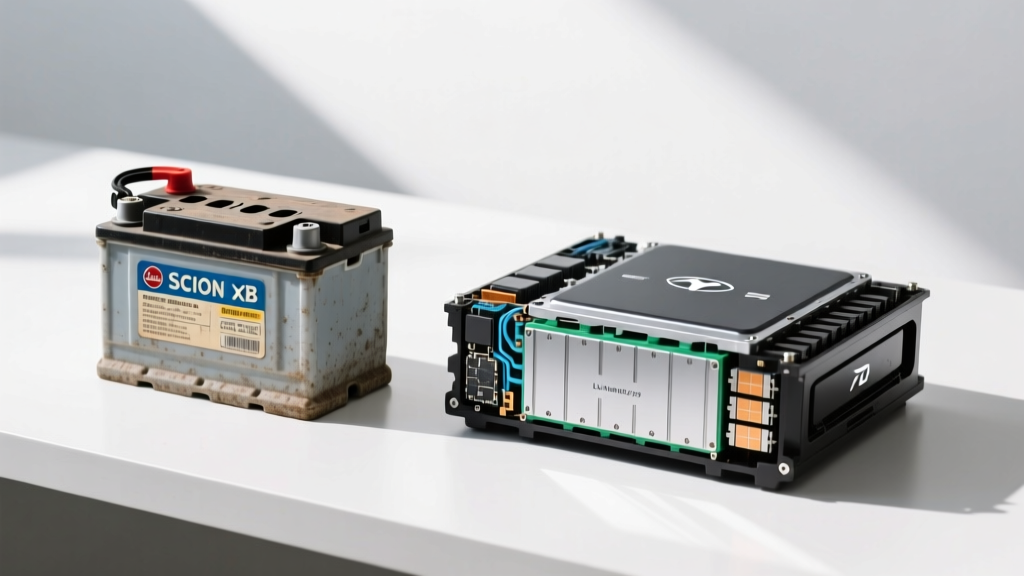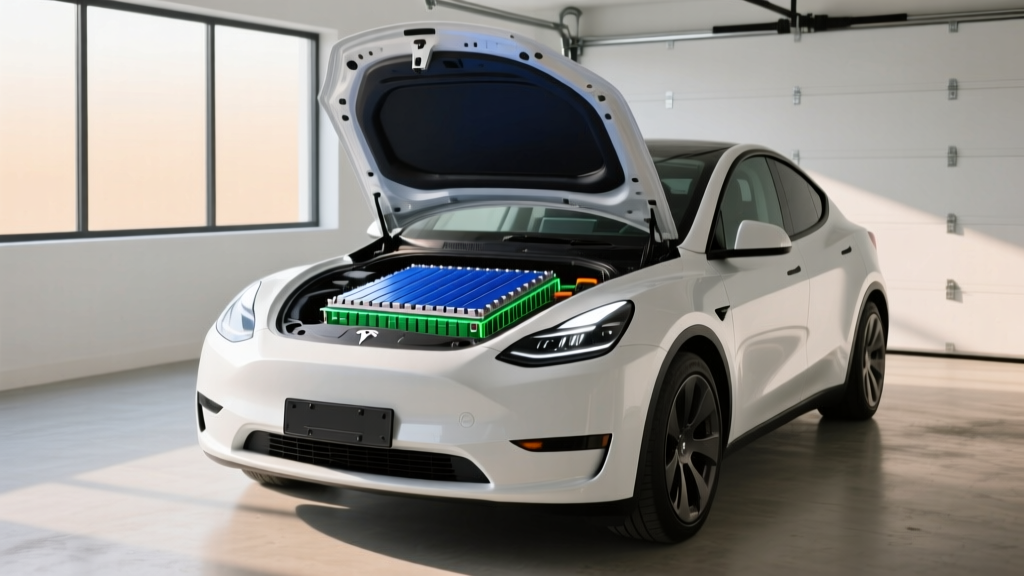
Understanding the Battery Capacity of Tesla Model S
When evaluating the battery capacity of Tesla Model S, buyers encounter a landscape that has shifted significantly since the sedan's debut. As of the 2025–2026 model year, the Model S Long Range ships with a usable battery capacity of approximately 95 kWh (gross ~100 kWh), utilizing a nickel-manganese-cobalt (NMC) lithium-ion architecture. The performance-oriented Model S Plaid carries a similar pack size, tuned for higher discharge rates to support its 1,020 horsepower output.
The distinction between gross and usable capacity matters. Tesla, like most automakers, buffers the top and bottom of the battery's state of charge to protect longevity. That means a "100 kWh" pack does not deliver 100 kWh to the motors — the usable window sits closer to 95 kWh, which directly translates to the EPA-rated 402 miles of range on the Long Range trim and approximately 396 miles on the Plaid, per fueleconomy.gov.
NMC vs LFP: Which Chemistry Powers the Model S — and Why
The Model S uses NMC (nickel-manganese-cobalt) chemistry across all current trims. This is a deliberate choice: NMC offers higher energy density than LFP (lithium iron phosphate), which is critical for a large luxury sedan targeting 400+ miles of range. However, the chemistry trade-offs extend well beyond energy density.
LFP chemistry — used in the Tesla Model 3 Rear-Wheel Drive and Model Y Standard Range — offers a longer cycle life (3,000+ full cycles vs ~1,500–2,000 for NMC), better thermal stability, and lower raw-material cost. But LFP packs are heavier per kWh and perform worse in extreme cold, making them less suitable for a flagship vehicle chasing maximum range and performance.
| Attribute | LFP (Lithium Iron Phosphate) | NMC/NCA (Nickel-based) |
|---|---|---|
| Energy Density | ~160 Wh/kg (lower) | ~250–280 Wh/kg (higher) |
| Cycle Life | 3,000–5,000 cycles | 1,500–2,000 cycles |
| Cold-Weather Performance | Reduced; higher internal resistance | Better low-temp discharge |
| Cost | Lower (no cobalt/nickel) | Higher (critical minerals) |
| Thermal Stability | Excellent; lower runaway risk | Good; requires active management |
| SoC Recommendation | Can charge to 100% regularly | Best kept at 80–90% daily |
| Used In (Tesla) | Model 3 RWD, Model Y SR | Model S, Model X, Model 3 LR/Perf |
How Long Do Tesla Model S Batteries Last? Degradation Data
Battery degradation is the single largest concern among prospective EV buyers — and the area where real-world data most effectively dispels fear. According to Tesla's own 2023 Impact Report (the most comprehensive fleet data published), Model S and Model X batteries retain approximately 88% of their original capacity after 200,000 miles. That translates to roughly 12% loss over a distance that exceeds the average American driver's needs for 15+ years of ownership.
The degradation curve is not linear. Most lithium-ion packs experience a steeper drop in the first 20,000–30,000 miles (typically 2–5%), followed by a much slower, nearly linear decline for the remainder of the battery's life. This pattern holds across NMC chemistries from multiple manufacturers.
- 10,000 miles: ~2–3% capacity loss
- 50,000 miles: ~5–7% capacity loss
- 100,000 miles: ~8–10% capacity loss
- 150,000 miles: ~10–12% capacity loss
- 200,000 miles: ~12–15% capacity loss
Source: Tesla Impact Report fleet data, corroborated by independent analysis from Recurrent Auto (2024 dataset of 10,000+ Tesla vehicles).
For a Model S Long Range with a 402-mile EPA rating, 12% degradation at 200,000 miles means approximately 354 miles of remaining range — still more than most drivers need in a single charge session.
Tesla Battery Warranty: What's Covered and for How Long
Tesla provides one of the more straightforward battery warranties in the industry, though the details matter when you're evaluating long-term ownership risk.
| Component | Coverage Period | Mileage Limit | Retention Threshold |
|---|---|---|---|
| Battery Pack | 8 years | 150,000 miles | Minimum 70% capacity retention |
| Drive Unit(s) | 8 years | 150,000 miles | Functional operation |
The 70% retention threshold is the trigger point: if your Model S battery drops below 70% of its original capacity within 8 years or 150,000 miles (whichever comes first), Tesla will replace or refurbish the pack at no cost. In practice, fleet data shows that very few Model S vehicles hit this threshold within the warranty window. The warranty covers manufacturing defects and abnormal degradation but does not cover damage from accidents, flooding, or unauthorized modifications.
It's worth noting that the 8-year/150,000-mile battery warranty is consistent across Model S and Model X. The Model 3 Rear-Wheel Drive (with its LFP pack) carries an 8-year/100,000-mile warranty, while Model 3 Long Range and Performance versions match the 8-year/120,000-mile terms. Always verify current warranty terms on Tesla's official warranty page before purchase, as terms can shift by model year.
EV Battery Replacement Cost: When and How Much
The question "how much does it cost to replace a Tesla Model S battery?" generates more anxiety than perhaps any other EV ownership topic. Context is essential: most EV batteries outlast the vehicles they're installed in, and full pack replacements remain rare.
| Vehicle / Pack Size | Estimated Cost (Parts + Labor) | Typical Replacement Trigger |
|---|---|---|
| Tesla Model S / Model X (~100 kWh) | $12,000–$20,000 | Cell failure, coolant intrusion, extreme degradation past warranty |
| Tesla Model 3 / Model Y (~75 kWh LR) | $10,000–$16,000 | Same as above |
| Tesla Model 3 RWD (~60 kWh LFP) | $7,000–$12,000 | Same as above |
| Ford Mustang Mach-E (~91 kWh ext.) | $14,000–$22,000 | Same as above |
| Hyundai Ioniq 5 (~77.4 kWh) | $10,000–$15,000 | Same as above |
Several important caveats apply to these figures. First, Tesla service centers increasingly perform module-level repairs rather than full pack replacements. A Model S pack contains multiple modules; if one module develops a fault, it can be replaced individually for $2,000–$5,000, restoring the pack to functional health. Second, third-party EV repair shops are emerging as a lower-cost alternative, often sourcing refurbished packs from salvaged vehicles for 30–50% less than OEM new-pack pricing. Third, battery costs have declined roughly 80% since 2013 on a per-kWh basis, and this trend continues — meaning a replacement in 2034 will likely cost substantially less than today's estimates.
When is replacement actually needed? The most common triggers are physical damage (collision, ground strike), coolant system failure leading to cell corrosion, and — rarely — manufacturing defects that manifest outside the warranty window. Gradual capacity loss alone almost never necessitates a full replacement; a Model S at 80% capacity after 250,000 miles remains a perfectly functional vehicle with ~320 miles of range.
Factors That Affect Model S Battery Life
Not all miles are created equal when it comes to battery wear. The following factors have measurable impacts on how quickly a Model S pack degrades over time.
- Daily charge limit: Set to 80–90% for NMC chemistry. Reserve 100% charges for road trips. Tesla's own software recommends this in the charge settings menu.
- Avoid deep discharge: Try not to let the pack drop below 10–15% regularly. Storing the vehicle near 0% for extended periods accelerates degradation.
- DC fast charging: Occasional Supercharging is fine — Tesla's thermal management system is robust. However, daily DC fast charging (3+ times per week exclusively) has been correlated with 1–3% additional degradation over 100,000 miles vs primarily Level 2 charging.
- Extreme heat: Sustained ambient temperatures above 100°F (38°C) stress lithium-ion cells. If you live in a hot climate, park in shade or a garage when possible. Tesla's thermal management system actively cools the pack, but reducing exposure helps.
- Extreme cold: Cold weather doesn't degrade the battery permanently, but it temporarily reduces range and slows charging. Always use preconditioning (the car does this automatically when a Supercharger is set as your navigation destination) to warm the pack before fast charging.
- Storage: If storing the Model S for more than two weeks, leave it plugged in with the charge limit set to 50%. This is the optimal state of charge for long-term cell health.
The single most impactful habit is avoiding prolonged high state of charge. Research published in the Journal of The Electrochemical Society confirms that NMC cells stored at 100% SoC at elevated temperatures degrade 2–3× faster than cells held at 50% SoC. Tesla's recommendation to charge to 90% daily (rather than 100%) is not conservative caution — it reflects genuine electrochemical benefit.
How to Check and Monitor Battery Health (State of Health)
Tesla does not expose a direct State of Health (SoH) percentage in the vehicle's interface the way some competitors do. However, Model S owners have several methods to assess their battery's condition:
Method 1: Range estimation comparison. Charge to 100% and note the displayed range. Compare this to the original EPA rating (402 miles for the 2025–2026 Long Range). A displayed 100% range of 370 miles after 50,000 miles suggests approximately 8% degradation. Note that the displayed range is an estimate based on recent driving patterns and can fluctuate — it's a rough indicator, not a precise measurement.
Method 2: Third-party diagnostic apps. Tools like Tessie, Teslamate (self-hosted), and Stats (iOS) can pull battery data via Tesla's API and calculate a more precise SoH figure by analyzing energy consumed vs distance traveled over multiple full charge cycles. Recurrent Auto also offers a free battery health report for Tesla owners who share anonymized data.
Method 3: Tesla Service diagnostic. During a service visit, Tesla technicians can run a full battery health diagnostic that provides module-level voltage readings and an official SoH assessment. This is the most accurate method but requires a service appointment.
For prospective used-vehicle buyers, requesting a Tesla Service battery health report before purchase is strongly recommended. It's the only way to verify that the pack is within normal degradation parameters and that no individual modules are underperforming.
Looking Ahead: Solid-State and Next-Generation Battery Technology
The battery landscape is evolving rapidly, though timelines for next-generation technologies remain longer than headlines suggest. Here's where things stand as of 2026:
Solid-state batteries — which replace the liquid electrolyte with a solid material for higher energy density and improved safety — are in limited production from Toyota (for select models) and are being tested by multiple manufacturers. However, mass-market availability in vehicles like a future Model S remains estimated at 2028–2032. Cost per kWh is currently 2–4× higher than conventional lithium-ion.
Silicon-dominant anodes — which increase energy density by replacing graphite anodes with silicon — are being commercialized by companies like Sila Nanotechnologies and are expected to appear in production EVs by 2027–2028. This technology could add 10–20% more energy density to existing form factors.
4680 cell improvements — Tesla's larger-format 4680 cells, already in production for Model Y, are expected to eventually reach Model S. These cells offer lower manufacturing cost and improved thermal characteristics, though energy density gains over the current 2170 cells in Model S are incremental (~5–10%).
None of these technologies should factor into a current purchase decision. Today's NMC packs in the Model S are mature, well-understood, and backed by extensive fleet data showing 15+ year usable lifespans. The battery in a 2026 Model S is not a compromise waiting for future tech — it is a proven, data-validated component.
Frequently Asked Questions
How long do EV batteries last in years and miles?
Based on current fleet data, most EV batteries — including the Tesla Model S pack — retain 80–88% of their original capacity after 200,000 miles or 15–20 years of typical use. Battery "end of life" is generally defined as 70% capacity retention, and reaching that point typically takes 250,000+ miles for NMC packs under normal usage patterns. Most EV batteries outlast the vehicle's body, suspension, and interior.
How much does an EV battery cost to replace?
A full out-of-warranty replacement for a Tesla Model S battery pack ranges from $12,000 to $20,000 including labor. However, module-level repairs (replacing individual failed modules rather than the entire pack) typically cost $2,000–$5,000. Battery replacement costs have been declining steadily and are expected to continue falling. Full replacements remain rare — most packs never require one.
What does the Tesla battery warranty cover?
Tesla's battery warranty for Model S covers 8 years or 150,000 miles (whichever comes first) with a minimum 70% capacity retention guarantee. If the battery drops below 70% within that window, Tesla will replace or refurbish it at no cost. The warranty covers manufacturing defects and abnormal degradation but excludes physical damage, environmental damage, and unauthorized modifications.
How do I check and maximize my Tesla's battery health?
To check health, compare your 100% displayed range to the original EPA rating, use third-party apps like Tessie or Teslamate for SoH analysis, or request a Tesla Service diagnostic. To maximize health, charge to 80–90% daily (for NMC), avoid storing at 0% or 100% for extended periods, precondition before DC fast charging, and minimize exposure to extreme heat when parked.
LFP vs NMC — which battery chemistry is better?
Neither is universally "better" — they serve different priorities. NMC (used in Model S) offers higher energy density for maximum range and better cold-weather performance, at a higher cost and shorter cycle life. LFP (used in Model 3 RWD) offers longer cycle life, lower cost, and better thermal stability, but weighs more per kWh and allows Tesla to recommend regular 100% charging. For a flagship sedan targeting 400+ miles, NMC is the correct engineering choice. For a daily commuter prioritizing longevity and cost, LFP excels.
Does frequent Supercharging damage the Model S battery?
Occasional Supercharging has minimal impact on battery health thanks to Tesla's active thermal management system, which cools the pack during DC fast charging. However, exclusive reliance on DC fast charging (never using Level 2) has been correlated with slightly higher degradation rates in fleet studies — roughly 1–3% additional loss over 100,000 miles. For daily use, Level 2 home charging is gentler on the cells. Use Superchargers for road trips without concern.
Sources: U.S. Department of Energy / fueleconomy.gov, Tesla New Vehicle Limited Warranty, IRS §30D Clean Vehicle Credit. Battery degradation data referenced from Tesla Impact Report and Recurrent Auto fleet analysis. All specifications reflect 2025–2026 model year. Tax credit eligibility subject to MSRP caps, buyer income limits, and battery sourcing requirements — consult a tax professional.