If you own or are considering a used Tesla Model S 70D — the dual-motor variant produced roughly between 2015 and 2016 with a 70 kWh (nominal) battery pack — the question of what happens when that pack ages out is urgent. The Tesla Model S 70D battery swap is one of the most searched legacy-EV service topics, and for good reason: these cars are now approaching or exceeding a decade on the road, and their original lithium-ion packs are entering the phase where capacity loss becomes noticeable in daily driving.
This guide breaks down exactly what a battery replacement involves for the 70D, the NMC chemistry inside it, real-world degradation figures, what the warranty still covers in 2026, and how to maximize whatever life remains in your pack — or decide whether a swap is worth it versus trading up.
The Tesla Model S 70D Battery: Specs and Chemistry
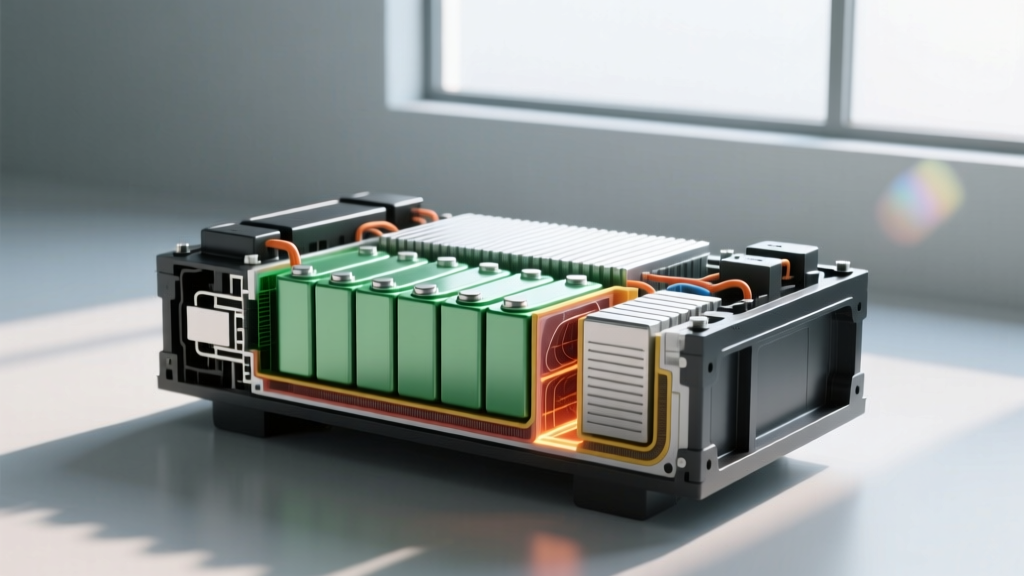
The Model S 70D used a Panasonic-manufactured lithium-ion pack based on Nickel Manganese Cobalt (NMC) chemistry in a 18650 cylindrical cell format. The nominal capacity was approximately 70 kWh, with usable capacity closer to 66.5 kWh when new. This pack powered dual motors producing a combined 328 horsepower, delivering a 0–60 mph time of 5.2 seconds and an original EPA-rated range of 240 miles.
NMC was Tesla's standard chemistry for nearly all Model S and Model X variants through the 2010s. It prioritizes energy density — packing more kWh into a smaller, lighter enclosure — over the cycle life and thermal stability that Lithium Iron Phosphate (LFP) offers. Understanding this trade-off is essential if you're evaluating a battery swap or considering whether to keep the car long-term.
| Attribute | NMC (Your 70D Pack) | LFP (Modern Model 3 RWD) |
|---|---|---|
| Energy Density | High (~250 Wh/kg cell-level) | Moderate (~170 Wh/kg cell-level) |
| Typical Cycle Life | 1,000–1,500 full cycles | 2,000–3,000+ full cycles |
| Cold-Weather Performance | Better low-temp discharge | Greater range loss below freezing |
| Recommended Daily SoC | 80% (to slow degradation) | 100% (LFP benefits from full charges) |
| Cost per kWh (2026) | ~$130–$150 | ~$90–$110 |
| Thermal Stability | Good; requires active cooling | Excellent; inherently more stable |
The practical takeaway for 70D owners: your NMC pack was designed for range and performance, but it demands more careful charging habits than modern LFP packs to minimize long-term degradation. Charging to 100% regularly, leaving the car at high state of charge in hot weather, or frequent DC fast charging all accelerate capacity loss in NMC chemistry.
How Long Do EV Batteries Actually Last? Degradation Data
The most common question from 70D owners is straightforward: how many miles or years before the pack needs replacement? The answer depends heavily on usage patterns, but we have substantial real-world data from Tesla's fleet and independent testing.
According to Tesla's own impact reports and fleet data aggregated by sources like Tesla's Impact Report, the average Model S/X battery retains approximately 88–90% of its original capacity at 150,000 miles. Degradation is not linear — it follows a curve where the most significant loss (typically 3–5%) occurs in the first 25,000–30,000 miles, then slows considerably.
Typical NMC Degradation Curve (Model S 70D, average use):
- Year 1 / 15,000 mi: ~95–97% State of Health (SoH) — initial drop
- Year 3 / 45,000 mi: ~91–93% SoH
- Year 5 / 75,000 mi: ~88–90% SoH
- Year 8 / 120,000 mi: ~84–87% SoH
- Year 10 / 150,000 mi: ~80–85% SoH (varies widely)
Note: Cars that were routinely charged to 100%, frequently Supercharged, or regularly exposed to extreme heat may see 5–10% additional loss. Conversely, cars charged to 80% daily and garage-kept in moderate climates often outperform these averages.
For a 70D originally rated at 240 miles EPA, an 85% SoH translates to roughly 204 miles of range — still functional for most commutes, but noticeably reduced for road trips. Most EV batteries do not "die" suddenly; they gradually lose capacity until the reduced range no longer meets the owner's needs.
Tesla Battery Warranty: What's Still Covered in 2026?
The Model S 70D originally shipped with Tesla's battery warranty of 8 years or unlimited miles (for Model S/X, unlike the mileage-limited Model 3/Y warranty). That warranty guarantees the battery will retain at least 70% of its original capacity over the coverage period.
For a 2015–2016 Model S 70D, that 8-year window has now expired for virtually all vehicles as of 2024–2025. This means any battery replacement in 2026 will be an out-of-pocket expense unless you purchased an extended service agreement.
| Model / Era | Warranty Duration | Mileage Limit | Minimum Capacity Retention |
|---|---|---|---|
| Model S 70D (2015–2016) | 8 years | Unlimited | 70% |
| Model S/X (2020+) | 8 years | 150,000 miles | 70% |
| Model 3/Y Long Range (2026) | 8 years | 120,000 miles | 70% |
| Model 3 RWD / LFP (2026) | 8 years | 100,000 miles | 70% |
The warranty covers defects and excessive degradation (below 70% SoH) but does not cover damage from accidents, flooding, or modifications. Tesla typically replaces a warrantied pack with a remanufactured unit of equivalent or greater capacity — not a brand-new pack.
Tesla Model S 70D Battery Swap: Replacement Cost Breakdown
Here is the number most 70D owners are searching for: what does an out-of-warranty battery replacement actually cost in 2026? Based on service invoices shared by owners, independent EV repair shops, and Tesla Service Center quotes, the range is significant.
| Scenario | Battery Pack | Labor | Total Estimated Cost |
|---|---|---|---|
| Tesla Service Center (remanufactured 70 kWh) | $12,000–$14,000 | $1,500–$2,500 | $13,500–$16,500 |
| Tesla Service Center (remanufactured 90 kWh upgrade*) | $15,000–$18,000 | $1,500–$2,500 | $16,500–$20,500 |
| Independent EV shop (used/salvage pack) | $7,000–$10,000 | $1,000–$2,000 | $8,000–$12,000 |
| Third-party rebuilt pack | $9,000–$12,000 | $1,000–$2,000 | $10,000–$14,000 |
*Tesla has occasionally offered capacity upgrades during replacement when original pack configurations are no longer in production. Availability varies and is not guaranteed.
A few critical notes on these figures. First, Tesla no longer manufactures the original 70 kWh pack configuration, so replacements are typically remanufactured units — packs assembled from tested, graded cells harvested from returned batteries. These are reliable but not "new." Second, the independent-shop route can save thousands, but it may void any remaining Tesla service support and requires a technician experienced with high-voltage Tesla systems. Third, a used 70D in good condition currently trades for roughly $15,000–$22,000 depending on mileage and condition, which means a full-price Tesla Service battery swap can approach or exceed the car's market value — a calculation every owner must weigh honestly.
Factors That Accelerate Battery Degradation
Not all 70D packs age equally. The spread between a well-maintained pack at 90% SoH and a poorly treated one at 75% SoH — both at 100,000 miles — comes down to specific behaviors and conditions.
Battery Life Killers (avoid these with NMC packs):
- Routine 100% charging: NMC cells degrade fastest when held at high voltage. Set your daily charge limit to 80% and only charge to 100% immediately before a road trip.
- Frequent DC fast charging: Supercharging generates significant heat. Occasional use is fine, but daily Supercharging accelerates degradation measurably. Level 2 home charging at 7–11 kW is the longevity sweet spot.
- High SoC + high heat: Leaving a fully charged car parked in 95°F+ heat is one of the worst things for NMC chemistry. If you must park in heat, keep SoC at 50–60%.
- Deep discharge cycles: Regularly driving the battery below 10% SoC stresses cells. Try to keep the floor around 15–20%.
- Ignoring thermal management: The Model S liquid cooling system maintains battery temperature, but coolant should be checked during service intervals. A failing cooling loop will accelerate degradation.
The flip side is also true: owners who charge to 80% daily, use Level 2 predominantly, and avoid extreme SoC levels routinely report 70D packs at 88–92% SoH past 100,000 miles — well above the 70% warranty threshold that Tesla originally guaranteed.
How to Check Your Model S 70D Battery Health
Tesla does not display a State of Health percentage on the vehicle's touchscreen the way some competitors (like Hyundai or BMW) do. But there are several reliable methods to assess your 70D's battery condition.
Method 1: The Range Calculation. Charge your 70D to 100% and note the displayed rated range. Compare this to the original EPA rating of 240 miles. If your 100% charge shows 210 miles, your approximate SoH is 210 ÷ 240 = 87.5%. This is a rough estimate — displayed range is affected by temperature, recent driving style, and software calibration — but it's a useful baseline.
Method 2: Third-Party Diagnostic Apps. Tools like TeslaFi, TeslaMate, or Scan My Tesla (using an OBD-II adapter compatible with the Model S) can pull detailed battery data including estimated capacity in kWh, cell voltage imbalance, and historical degradation trends. These give a more precise SoH reading than the dashboard range estimate.
Method 3: Tesla Service Diagnostic. A Tesla Service Center can run a full battery health test that measures actual usable capacity against the original specification. This is the most authoritative measurement and typically takes 1–2 hours. Some service centers will provide this reading free if you're discussing a potential warranty claim; otherwise, expect a diagnostic fee of $100–$200.
Method 4: Cell Imbalance Check. Through diagnostic apps, you can view individual module voltages. A healthy pack shows module voltages within 10–20 mV of each other at rest. Imbalances exceeding 50 mV may indicate weak modules that could trigger future degradation acceleration or error codes.
Beyond the 70D: Emerging Battery Technology
If you're weighing whether to invest in a 70D battery swap or put that money toward a newer EV, it's worth understanding where battery technology is heading — while keeping expectations grounded in realistic timelines.
Silicon-dominant anodes are already entering production in limited applications, replacing graphite anodes to increase energy density by 20–40%. Companies like Sila Nanotechnologies and Group14 are supplying silicon-anode materials to battery manufacturers, with initial automotive deployments expected in the 2026–2028 timeframe. This means more range from a physically smaller pack, but it will not retroactively benefit your 70D.
Solid-state batteries — which replace the liquid electrolyte with a solid conductor — promise higher energy density, faster charging, and improved safety. Toyota, Samsung SDI, and QuantumScape have all demonstrated prototype cells, but mass production at automotive scale remains, by the most optimistic estimates, 2028–2030 for limited production vehicles, with broad availability likely not until the early 2030s. No solid-state battery is available for any production vehicle as of 2026, and retrofitting one into a Model S 70D is not feasible due to completely different pack architecture, BMS protocols, and thermal management requirements.
The practical implication: your 70D will always use NMC lithium-ion technology. The question is whether that pack — replaced or original — gives you enough range and reliability to justify keeping the car versus upgrading to a modern EV with LFP chemistry, better efficiency, and a fresh warranty.
Should You Swap the Battery or Trade Up? A Decision Framework
The economics of a Tesla Model S 70D battery swap depend on your specific situation. Here is a practical framework:
Consider the battery swap if:
- Your 70D is otherwise in excellent condition (clean interior, good suspension, updated MCU2 or aftermarket screen, no major drive unit issues).
- You found an independent shop offering a tested used pack for under $12,000 total.
- You rely on the car daily and the reduced range from degradation is genuinely impacting your routine.
- You plan to keep the car for 3+ more years after the swap.
Consider trading up if:
- The total swap cost exceeds $16,000 — approaching the car's resale value.
- Your 70D has other aging components (drive unit whine, air suspension leaks, outdated MCU1 with slow navigation).
- You want modern features: LFP battery longevity, heat pump efficiency, NACS native charging, updated ADAS hardware (HW4).
- A new or used Model 3, Model Y, or competitor EV qualifies for the §30D federal tax credit, reducing effective cost substantially.
Remember that the §30D credit for new EVs in 2026 has MSRP caps ($55,000 for sedans, $80,000 for SUVs/trucks), buyer income limits ($150K single / $300K joint AGI), and critical-mineral/battery-sourcing requirements that vary by model. The used-EV credit (§25E) offers up to $4,000 on vehicles under $25,000 — which actually makes a used Model 3 with an LFP pack an interesting alternative to a 70D with a costly fresh battery. Always verify current eligibility on IRS.gov before making purchase decisions.
Frequently Asked Questions
Can Tesla upgrade my 70D to a larger battery during a swap?
In some cases, Tesla Service has offered larger remanufactured packs (such as 90 kWh) when the original 70 kWh configuration is unavailable. However, this is not a guaranteed or standardized upgrade path, and it may require software reconfiguration. Ask your Service Center directly about current availability — policies change as parts inventory shifts.
Will a new battery reset my 70D's range to the original 240 miles?
A remanufactured pack should restore range close to original specification, though typically not to a perfect 100% of the day-one EPA rating. Expect 225–240 miles at 100% SoC depending on the pack's actual tested capacity. Real-world highway range will still be approximately 10–15% lower than the rated figure, consistent with all EVs.
Is it safe to use a third-party shop for a Tesla battery replacement?
It can be, provided the shop has documented experience with Tesla high-voltage systems (400V architecture). The risk is that improper handling can damage the BMS (Battery Management System), cooling connections, or high-voltage contactors. Additionally, Tesla may refuse to service a vehicle that has had non-OEM high-voltage work performed. Get references, ask about warranty on the used pack, and confirm the shop carries appropriate liability insurance.
How does Supercharging affect my 70D battery long-term?
DC fast charging at Tesla Superchargers (up to 150 kW for the 70D on V2 stalls) generates substantial heat in the pack. Tesla's thermal management system mitigates this, but frequent Supercharging — multiple times per week — is associated with slightly higher degradation rates. Data from fleet studies suggests heavy Superchargers may see 2–4% additional capacity loss over 100,000 miles compared to Level 2-only chargers. Occasional Supercharging for road trips has negligible impact.
My 70D shows less range after a software update — is my battery degrading faster?
Tesla periodically adjusts the range calculation algorithm via over-the-air updates. A sudden drop in displayed range after an update usually reflects a recalibration of the estimate, not an actual overnight capacity loss. To track true degradation, log your 100% charge range over time using TeslaFi or a similar tool rather than reacting to single update events.
What happens to the old battery after a swap?
Tesla recycles or remanufactures returned packs. Cells with sufficient remaining capacity are graded and reassembled into remanufactured replacement packs. Cells that no longer meet automotive standards may be repurposed for stationary energy storage (like Megapack or Powerwall applications) or recycled for raw materials. Tesla reports recycling over 90% of battery materials by weight through partners like Redwood Materials.