The Viral Claim vs. the Field Data
Search forums or social media long enough and you'll encounter the claim that Tesla Model 3 and Y batteries are failing catastrophically — sudden range cliff-drops, brick-mode failures, and five-figure replacement bills that total the car. The headlines make for compelling content. But when you look at actual fleet data, warranty claim rates, and owner-reported degradation curves, the picture is far more nuanced and, frankly, far less alarming.
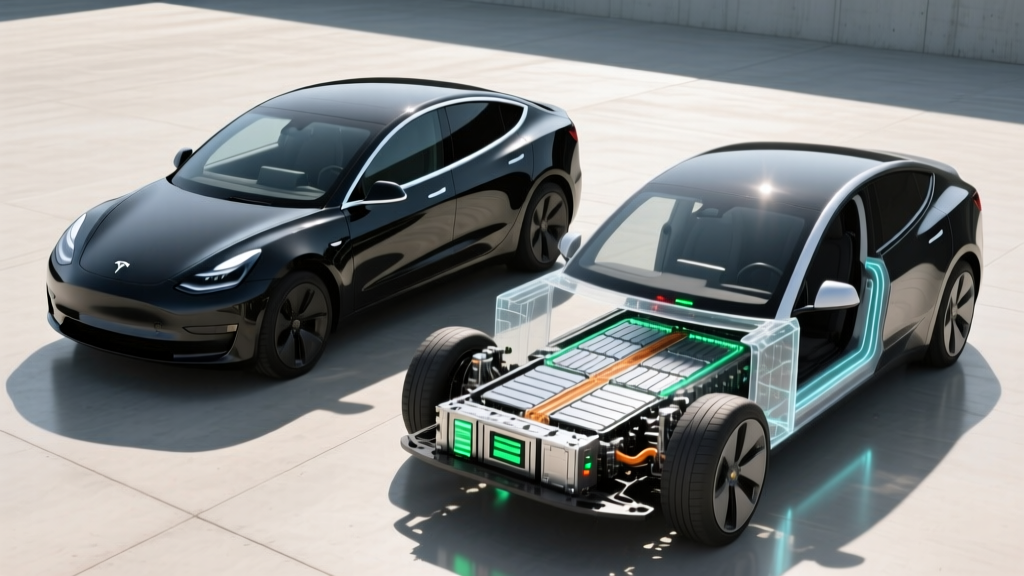
The high-voltage traction batteries in the Model 3 and Model Y — whether the lithium iron phosphate (LFP) packs in Standard Range/Rear-Wheel Drive variants or the nickel-manganese-cobalt (NMC) packs in Long Range and Performance trims — are among the most monitored and data-rich battery systems on any consumer vehicle. Tesla's fleet of millions of vehicles generates continuous State of Health (SoH) telemetry, and third-party studies from Recurrent Auto and other battery analytics firms have published large-sample degradation curves that tell a consistent story: catastrophic failure is statistically rare, while gradual, predictable capacity loss is the norm.
This guide breaks down what the data actually shows, explains the chemistry differences that matter, walks through warranty coverage and real replacement costs, and gives you the practical habits that maximize pack life over 200,000+ miles.
What Chemistry Is in Your Model 3 or Y?
Tesla uses two distinct battery chemistries across the Model 3 and Model Y lineup, and understanding which one is in your car (or the one you're shopping for) is the single most important factor in predicting long-term behavior.
| Attribute | LFP (Lithium Iron Phosphate) | NMC / NCA (Nickel-based) |
|---|---|---|
| Found in | Model 3 RWD, Model Y RWD (Standard Range) | Model 3 Long Range/Performance, Model Y Long Range/Performance |
| Usable capacity | ~57–60 kWh | ~75–82 kWh |
| Energy density | Lower (~160 Wh/kg cell-level) | Higher (~250–270 Wh/kg cell-level) |
| EPA range | 272 mi (Model 3 RWD) | 341–363 mi (Model 3 LR / Performance) |
| Cycle life | 3,000–5,000+ cycles to 80% SoH | 1,000–2,000 cycles to 80% SoH |
| Cold-weather performance | More range loss in freezing temps (~30–40%) | Better cold performance (~20–30% loss) |
| Daily charging to 100% | Recommended by Tesla | Not recommended; 80% daily limit preferred |
| Cost per kWh (pack-level) | Lower (~$100–120/kWh) | Higher (~$130–160/kWh) |
| Thermal runaway risk | Extremely low | Low but higher than LFP |
What this means practically: LFP packs sacrifice range and cold-weather efficiency for dramatically longer cycle life and the ability to charge to 100% daily without accelerating degradation. If you see a Model 3 RWD with 150,000 miles and 94% retained capacity, that's the LFP chemistry doing exactly what it was designed to do. NMC packs deliver more range per pound but require more careful state-of-charge management to maximize longevity.
How Long Do Tesla Model 3 and Y Batteries Actually Last?
Based on aggregated fleet data from Recurrent Auto and Tesla's own impact reports, here is what degradation looks like in practice:
Typical Model 3/Y Degradation Curve (NMC Long Range, fleet average):
- Year 1 / 15,000 miles: ~3–5% capacity loss (initial settling)
- Year 3 / 45,000 miles: ~7–10% total loss
- Year 5 / 75,000 miles: ~10–12% total loss
- Year 8 / 120,000 miles: ~12–15% total loss
- Year 10+ / 150,000–200,000 miles: ~15–20% total loss (varies significantly by usage patterns)
LFP variants (RWD): Degradation is slower — typically 5–8% total loss over 100,000 miles, with many packs retaining 92–95% capacity at that milestone.
The degradation curve is not linear. Most capacity loss occurs in the first 20,000–30,000 miles as the solid electrolyte interphase (SEI) layer stabilizes on the anode. After that, the curve flattens considerably. A Model 3 Long Range that shows 93% SoH at 40,000 miles is tracking normally and is likely to retain 85%+ at 120,000 miles.
When do catastrophic failures happen? Manufacturing defects that cause sudden cell-group imbalance or internal shorts typically manifest early — within the first 30,000 miles and well within warranty coverage. These are warranty replacements, not out-of-pocket disasters. The rate of such failures across the Model 3/Y fleet is estimated at well under 1% based on NHTSA complaint data and third-party fleet analyses. For context, that's a lower failure rate than many conventional automatic transmissions experience over the same mileage.
What Does the Tesla Battery Warranty Actually Cover?
Tesla's battery and drive unit warranty is one of the more straightforward in the industry, but the details matter — especially the capacity retention threshold.
| Trim / Configuration | Warranty Period | Mileage Limit | Minimum Capacity Retention |
|---|---|---|---|
| Model 3 RWD (LFP) | 8 years | 100,000 miles | 70% |
| Model 3 Long Range / Performance (NMC) | 8 years | 120,000 miles | 70% |
| Model Y RWD (LFP) | 8 years | 100,000 miles | 70% |
| Model Y Long Range / Performance (NMC) | 8 years | 120,000 miles | 70% |
Key details:
- What's covered: Battery replacement or repair if usable capacity drops below 70% of original within the warranty period, plus any manufacturing defects (cell imbalance, BMS failure, coolant intrusion, internal shorts).
- What's not covered: Damage from accidents, flooding, improper modifications, or use of non-approved charging equipment. Cosmetic issues and minor range variation within the 70% threshold are not covered.
- Transferability: The warranty transfers automatically to subsequent owners — important for used Model 3/Y buyers checking remaining coverage.
- Which ever comes first: The 8-year or mileage limit, whichever is reached first. A high-mileage driver hitting 120,000 miles in 5 years would see warranty expire at that point.
The 70% threshold is consistent with most EV manufacturers. A Model 3 Long Range with an original EPA range of 341 miles would need to drop below ~239 miles of usable range to trigger a warranty claim — a level of degradation that fleet data shows is extremely rare within the 8-year/120,000-mile window under normal use.
How Much Does a Tesla Model 3 or Y Battery Replacement Cost?
This is where fear-mongering peaks and context is most needed. Yes, an out-of-warranty battery replacement is expensive. But the probability of needing one is low, and the costs have been declining.
| Model / Pack | Battery Size | Part Cost (Est.) | Labor | Total (Out of Warranty) |
|---|---|---|---|---|
| Model 3 RWD (LFP, CATL) | ~57–60 kWh | $6,500–$8,500 | $1,500–$2,500 | $8,000–$11,000 |
| Model 3 Long Range (NMC) | ~75–82 kWh | $9,000–$13,000 | $1,500–$2,500 | $10,500–$15,500 |
| Model Y RWD (LFP) | ~57–60 kWh | $7,000–$9,000 | $1,500–$2,500 | $8,500–$11,500 |
| Model Y Long Range (NMC) | ~75–82 kWh | $10,000–$14,000 | $1,500–$2,500 | $11,500–$16,500 |
Critical context:
- Most owners never pay this. Based on fleet degradation data, the vast majority of Model 3/Y packs retain well above 70% capacity through the 8-year warranty period. Packs that do fall below threshold during warranty are replaced at no cost.
- Module-level repair is increasingly common. Tesla service centers and qualified third-party shops can diagnose and replace individual battery modules rather than the entire pack, reducing costs to $2,000–$5,000 in many cases.
- Refurbished packs are available. Tesla's own remanufactured battery program and third-party suppliers offer packs at 30–50% below new pricing.
- When is replacement typically needed? For packs that see normal use (mix of Level 2 home charging and occasional DC fast charging, moderate SoC habits), replacement is uncommon before 180,000–250,000 miles. Many early Model 3 owners (2018–2019) are now at 100,000–150,000 miles with original packs still at 85%+ SoH.
Five Factors That Accelerate (or Preserve) Battery Life
What degrades an EV battery faster:
- Frequent DC fast charging at high power: Regularly using 250 kW Superchargers generates significant heat in the cells. Occasional road-trip use is fine; daily fast-charging as your primary routine accelerates degradation by an estimated 1–3% over the pack's life compared to Level 2 dominance. Tesla's battery preconditioning for navigation-routed Supercharger stops mitigates this partially, but sustained high-C-rate charging still stresses NMC chemistry.
- Sustained high state of charge (NMC packs): Sitting at 100% SoC for days or weeks — especially in hot climates — stresses NMC cathodes. Tesla recommends 80% daily charge limit for Long Range and Performance models for this reason.
- Deep discharge cycles: Regularly running the pack below 10% SoC and letting it sit depleted stresses the anode. If you must store the car, Tesla recommends 50% SoC.
- Extreme heat exposure: Ambient temperatures above 95°F (35°C) combined with high SoC is the worst-case scenario for calendar degradation. Garage parking in hot climates meaningfully extends pack life.
- Aggressive acceleration habits: Repeated high-current draws (Performance mode launches, frequent hard acceleration) generate internal cell heating. Occasional use is fine; daily drag-racing is not.
What preserves battery health:
- Level 2 home charging as your primary method: 7–11 kW charging generates minimal heat and is the gentlest way to add energy.
- 20–80% SoC window for NMC; 100% is fine for LFP: Follow Tesla's in-app recommendations for your specific chemistry.
- Precondition before fast charging: Always navigate to a Supercharger via the Tesla app or in-car nav so the battery thermal management system warms the pack to optimal charging temperature.
- Drive it regularly: Batteries prefer moderate, regular cycling over long idle periods. A car driven 30 miles daily degrades more gracefully than one sitting for weeks at a time.
- Use Scheduled Departure: Tesla's scheduled charging and departure features let the car charge to your target just before you leave, minimizing time spent at high SoC.
How to Check Your Tesla's Battery Health (SoH)
Tesla does not display a single "State of Health" percentage in the vehicle UI the way some competitors do. But you have several reliable methods to assess your pack's condition:
Method 1: The Range Calculation
Charge your Model 3 or Y to 100% (LFP) or your normal daily maximum and extrapolate. If your Model 3 Long Range shows 280 rated miles at 100% versus the original 341, that's approximately 82% retained capacity. Note: Tesla's displayed rated miles can fluctuate based on recent driving efficiency and temperature, so average several full-charge readings over a few weeks for accuracy.
Method 2: Third-Party Apps
Apps like Tessie, Stats, and TeslaFi pull telemetry from Tesla's API and calculate estimated SoH by comparing actual energy added during charges against displayed range gains. These are more precise than the dashboard method and track degradation trends over time. Many owners find Tessie's battery health report particularly useful for monitoring month-over-month changes.
Method 3: Tesla Service Diagnostic
If you suspect abnormal degradation (a sudden range cliff rather than gradual loss), a Tesla service center can run a full battery health diagnostic that measures individual module voltage balance, internal resistance, and actual usable kWh capacity. This is the most authoritative measurement and is what Tesla uses to determine warranty eligibility.
What to watch for:
- Normal: Gradual 1–2% loss per year after the initial settling period.
- Abnormal (seek service): Sudden 5%+ drop in displayed range over a short period, large module imbalance warnings, or the car entering a reduced-power "turtle mode" unexpectedly.
What About Future Battery Tech? Solid-State and Beyond
If you're shopping for a Model 3 or Y today, you may wonder whether waiting for next-generation battery technology makes sense. Here is a realistic timeline:
- Solid-state batteries: Promised to offer 2x energy density, faster charging, and near-zero degradation. Toyota, Samsung SDI, and QuantumScape have demonstrated prototype cells, but mass production for consumer vehicles remains 2028–2030 at the earliest, likely debuting in premium models at significant cost premiums. Tesla has not announced a solid-state timeline.
- Silicon-dominant anodes: Companies like Sila Nanotechnologies and Group14 are replacing graphite anodes with silicon to boost energy density by 20–40%. These are beginning to appear in limited production (Mercedes G-Wagon EV, some consumer electronics) but face cycle-life and swelling challenges that delay broad automotive adoption to 2027–2029.
- 4680 cell maturation: Tesla's in-house 4680 cells (currently in some Model Y variants from Giga Texas) are improving yield and energy density incrementally. These are evolutionary, not revolutionary — expect 5–10% cost and efficiency gains over coming years rather than a step-change.
- Sodium-ion batteries: CATL and others are producing sodium-ion cells for lower-cost, lower-range applications. These may appear in future base-model Teslas but are not in any announced Model 3/Y variant.
Bottom line: None of these technologies are available in a Model 3 or Y you can buy today. The current LFP and NMC packs are mature, well-understood, and — based on all available data — lasting well beyond 150,000 miles with gradual, manageable degradation. Waiting for solid-state means waiting 3–5+ years with no guarantee of affordable availability.
So, Are Tesla Model 3 and Y Batteries Failing Catastrophically?
The data says: no, not at any rate that should deter a purchase. Catastrophic failures — sudden, out-of-warranty battery brick events — occur at rates well under 1% across the fleet. The far more common experience is gradual capacity loss of 10–15% over 8 years and 100,000+ miles, most of which is covered by Tesla's warranty if it exceeds 30%.
The viral stories are real in isolated cases — manufacturing defects, coolant leaks, or physical damage — but they are statistically rare and almost always resolved under warranty. For the overwhelming majority of owners, the Model 3 and Model Y battery pack outlasts the rest of the car's useful life.
If you're buying new, choose LFP (RWD) for maximum longevity and daily-charge convenience, or NMC (Long Range) for maximum range with slightly more careful SoC management. If you're buying used, check SoH via the methods above and verify remaining warranty. Either way, the battery should be the least of your concerns.
Frequently Asked Questions
How long do Tesla Model 3 and Y batteries last in miles?
Based on fleet data, most Model 3 and Y battery packs retain above 80% of original capacity at 150,000–200,000 miles. LFP packs in RWD models often exceed 200,000 miles with 85%+ retention. Catastrophic failure before 150,000 miles is rare (well under 1% of the fleet).
How much does it cost to replace a Tesla Model 3 or Y battery?
Out-of-warranty replacement costs range from approximately $8,000–$11,000 for LFP (RWD) packs to $10,500–$16,500 for NMC (Long Range/Performance) packs, including parts and labor. However, most owners never need an out-of-warranty replacement, and module-level repairs can reduce costs to $2,000–$5,000 in many cases.
What does the Tesla battery warranty cover?
Tesla covers the battery and drive unit for 8 years / 100,000 miles (RWD) or 8 years / 120,000 miles (Long Range/Performance), whichever comes first. Coverage includes replacement if usable capacity drops below 70% of original, plus any manufacturing defects. The warranty transfers to subsequent owners.
How do I check my Tesla battery's State of Health?
Charge to 100% and compare displayed rated miles to the original EPA figure, use third-party apps like Tessie or TeslaFi for API-based SoH tracking, or request a full diagnostic from a Tesla service center. The service-center diagnostic is the most accurate and is used for warranty determinations.
LFP vs NMC — which Tesla battery is better?
It depends on your priorities. LFP (in RWD models) offers longer cycle life, daily 100% charging capability, lower cost, and lower thermal runaway risk — but less range (~272 mi EPA) and worse cold-weather performance. NMC (in Long Range/Performance) delivers more range (~341–363 mi EPA) and better cold performance, but requires 80% daily charge limits and has a shorter cycle life. For most daily commuters, LFP is the more durable choice. For road-trip-heavy drivers, NMC's range advantage is worth the extra care.
Does frequent Supercharging damage my Tesla's battery?
Occasional DC fast charging (road trips, a few times per month) has minimal impact. Daily Supercharging as your primary charging method can accelerate degradation by an estimated 1–3% over the pack's life due to sustained high-heat exposure. Tesla's battery preconditioning feature, activated when navigating to a Supercharger, mitigates this by warming the pack to optimal temperature before charging begins. For daily use, Level 2 home charging at 7–11 kW is significantly gentler on the cells.
Is it safe to charge my Tesla to 100% every day?
For LFP battery models (Model 3 RWD, Model Y RWD): yes — Tesla explicitly recommends charging to 100% at least once per week, and daily 100% is fine. LFP chemistry is not stressed by full charge the way NMC is. For NMC models (Long Range, Performance): no — Tesla recommends an 80% daily charge limit and saving 100% for trips when you need the full range.