Why the Tesla Model 3 LFP Battery Is Different From Other EVs
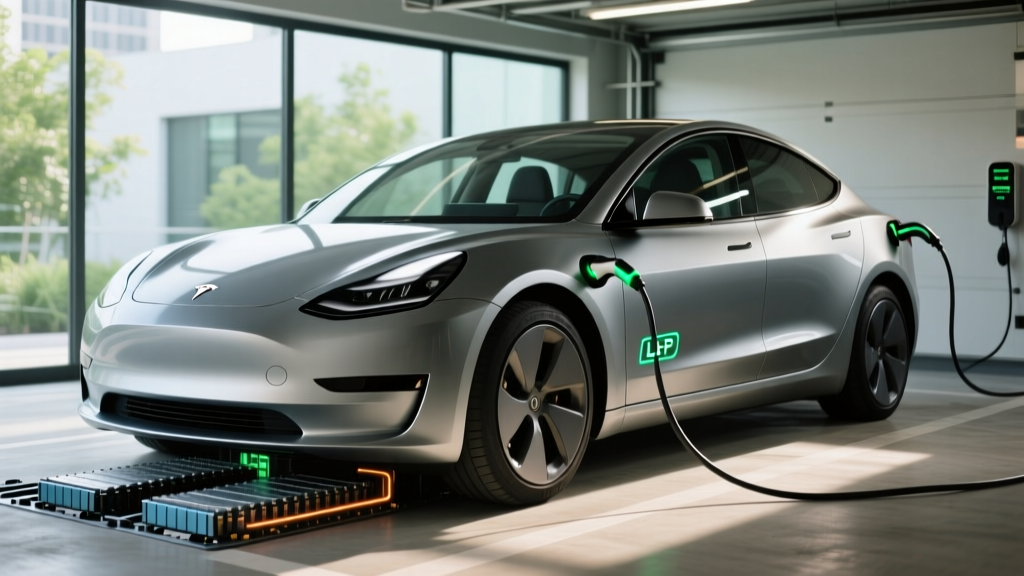
If you own or are shopping for a Tesla Model 3 Rear-Wheel Drive (RWD), you're driving with a lithium iron phosphate (LFP) battery pack — a chemistry fundamentally different from the nickel-based NMC/NCA cells found in Long Range and Performance trims. That difference affects how you charge, how the battery ages, what range you can expect in winter, and even how you should think about daily state-of-charge (SoC) habits.
As of the 2025–2026 model years, the Tesla Model 3 RWD uses an LFP pack with approximately 60 kWh of usable capacity, delivering an EPA-estimated 272 miles of range. The Long Range variant, by contrast, uses an NMC/NCA pack with roughly 75 kWh usable and an EPA rating of 341 miles. Understanding what that chemistry swap means in practice is the single most important thing a Model 3 buyer can do to maximize battery life and ownership satisfaction.
EPA sticker: 272 miles. Expect ~240–255 miles in mixed highway driving at 70 mph. In freezing temperatures (below 32°F), plan for 190–220 miles depending on cabin heat usage and preconditioning. LFP's lower energy density and cold-weather sensitivity mean the gap between sticker and reality is wider than with NMC packs.
LFP vs NMC/NCA: The Chemistry Trade-Offs Explained
LFP (lithium iron phosphate) and NMC (nickel manganese cobalt) / NCA (nickel cobalt aluminum) are the two dominant lithium-ion chemistries in passenger EVs. Neither is universally "better" — they optimize for different priorities.
| Attribute | LFP (Model 3 RWD) | NMC/NCA (Model 3 LR/Perf) |
|---|---|---|
| Energy Density | Lower (~160 Wh/kg cell-level) | Higher (~250–280 Wh/kg cell-level) |
| Cycle Life | 3,000–5,000+ full cycles | 1,000–2,000 full cycles |
| Thermal Stability | Excellent — less prone to thermal runaway | Good, but requires more active thermal management |
| Cold-Weather Performance | Weaker — more range loss below freezing | Better cold-weather retention |
| Cost per kWh | ~20–30% cheaper to manufacture | Higher cost due to nickel/cobalt |
| Daily Charge Recommendation | 100% SoC regularly (even daily) | 80% SoC daily; 100% only for trips |
| SoC Estimation Accuracy | Flatter voltage curve — harder for BMS to estimate | Steeper voltage curve — more accurate BMS readings |
| Typical Use Case | Standard-range, entry-level trims | Long-range and performance trims |
The headline trade-off: LFP gives you dramatically longer cycle life and better safety margins, but sacrifices energy density (meaning a heavier pack for the same range) and cold-weather performance. For a daily commuter who charges at home, LFP's longevity advantage is enormous. For a road-tripper in Minnesota winters, NMC's cold-weather edge matters more.
How Long Does the Tesla Model 3 LFP Battery Last?
The short answer: almost certainly longer than you'll own the car. LFP cells are rated for 3,000–5,000+ full charge-discharge cycles before reaching 80% of original capacity. At the Model 3 RWD's ~272-mile EPA range, even 3,000 cycles translates to over 800,000 miles of theoretical driving. In practice, calendar aging and partial cycles mean real-world degradation follows a more moderate curve — but LFP's longevity advantage over NMC is well-documented.
Real-World Degradation Data Points
Tesla's own Impact Reports have shown that their fleet-wide battery data indicates approximately 12–15% degradation at 200,000 miles for NMC/NCA packs. LFP packs, which were introduced in the Model 3 RWD starting in late 2021 (for the 2022 model year in North America), have less long-term fleet data, but early indicators and cell-level testing suggest:
- Year 1 (10k–15k miles): ~2–4% capacity loss — initial settling typical of all lithium-ion chemistries
- Year 3 (36k–50k miles): ~5–8% total loss — degradation curve flattens significantly
- Year 5 (60k–80k miles): ~7–10% total loss — LFP's slow linear degradation phase
- Year 8 (100k+ miles): ~10–14% total loss — still well above the 70% warranty threshold
Independent testing by researchers and fleet operators has shown LFP cells retaining over 90% capacity after 2,000 cycles under moderate conditions. The key qualifier: these numbers assume reasonable thermal management and avoidance of extreme SoC storage for extended periods.
Tesla's Battery Warranty: What's Actually Covered
Tesla provides a battery and drive unit warranty that covers capacity retention below a defined threshold. For the Model 3 RWD with the LFP battery, the terms are:
| Trim | Duration | Mileage Limit | Minimum Capacity Retention |
|---|---|---|---|
| Model 3 RWD (LFP) | 8 years | 100,000 miles | 70% |
| Model 3 Long Range (NMC) | 8 years | 120,000 miles | 70% |
| Model 3 Performance (NMC) | 8 years | 120,000 miles | 70% |
The warranty covers defects and excessive capacity loss — meaning if your LFP pack drops below 70% of its original usable capacity within 8 years or 100,000 miles (whichever comes first), Tesla will repair or replace it at no cost. Note that the RWD trim's mileage limit is 20,000 miles shorter than the Long Range/Performance warranty, reflecting the lower MSRP and different use-case expectations.
What the warranty does not cover: cosmetic issues, damage from accidents or flooding, or capacity loss from aftermarket modifications. Normal degradation above the 70% threshold is considered expected wear.
EV Battery Replacement Cost: What Model 3 Owners Should Budget
Out-of-warranty battery replacement is the single biggest financial fear among prospective EV buyers. Here's what the numbers actually look like for a Model 3 LFP pack in 2026:
| Pack Type | Approximate Capacity | Parts Cost | Labor | Total Estimated Range |
|---|---|---|---|---|
| Model 3 RWD (LFP) | ~60 kWh | $8,000–$12,000 | $1,500–$3,000 | $9,500–$15,000 |
| Model 3 LR/Perf (NMC) | ~75 kWh | $12,000–$16,000 | $1,500–$3,000 | $13,500–$19,000 |
Important context: the vast majority of EV batteries never need replacement during typical ownership. Tesla's fleet data consistently shows that fewer than 1% of battery packs are replaced under warranty, and out-of-warranty replacements at this cost level are rare for vehicles under 200,000 miles. LFP's superior cycle life makes replacement even less likely for Model 3 RWD owners who follow basic care practices.
When replacements do occur, they're typically prompted by manufacturing defects (covered under warranty) or physical damage (covered by insurance) rather than end-of-life degradation.
How to Maximize Your Model 3 LFP Battery Health
LFP batteries have a unique care profile. The advice you hear for NMC owners — "never charge to 100%" — is actually wrong for LFP. Here's what the data and Tesla's own guidance support:
LFP Battery Care Checklist
- Charge to 100% regularly. Tesla recommends setting your charge limit to 100% for the Model 3 RWD and charging to full at least once per week. This helps the battery management system (BMS) recalibrate — LFP's flat voltage curve makes SoC estimation difficult, and periodic full charges prevent "phantom" range loss from BMS drift.
- Don't store at 0% or 100% for weeks. While daily 100% charging is fine, leaving the car sitting at 100% SoC for extended periods (2+ weeks without driving) accelerates calendar aging. If storing, aim for ~50–60% SoC.
- Minimize DC fast charging in extreme heat. Supercharging generates significant heat. In summer, precondition your battery (the car does this automatically when navigating to a Supercharger) and avoid repeated same-day fast charges when ambient temps exceed 95°F.
- Use Level 2 home charging as your primary method. A 240V / 32A Level 2 charger (7.7 kW) adds roughly 30–35 miles of range per hour and is gentler on the pack than daily DC fast charging.
- Precondition in cold weather. Use the Tesla app to start climate and battery preconditioning 15–20 minutes before departure. This reduces the energy draw from the pack during your initial miles and improves regenerative braking availability.
- Don't obsess over avoiding fast charging. Occasional Supercharging (2–3 times per week or less) has a negligible impact on LFP degradation. The chemistry is robust enough that moderate fast-charging habits won't meaningfully shorten pack life.
Monitoring Your Battery's State of Health (SoH)
Tesla doesn't expose a direct "State of Health" percentage in the vehicle UI the way some competitors do. However, you can estimate SoH using these methods:
- Tesla app energy graph: Track your rated range over time. If your 100%-charge rated range has dropped from 272 miles to 255 miles over two years, that's roughly a 6% loss — consistent with normal LFP degradation.
- Third-party tools: Apps like TeslaFi or Tessie log detailed charge data and can estimate SoH by comparing energy added during a full charge (in kWh) to the pack's original usable capacity.
- Service mode (limited): Some Model 3 owners access limited battery health data through Tesla's service mode, though the available fields vary by software version.
- BMS recalibration: If your displayed range seems inconsistent, perform a manual recalibration: charge to 100%, let the car sit for 2–3 hours (balanced), then drive normally. Repeat once a month.
Looking Ahead: Solid-State and Silicon Anode Batteries
The next generation of EV battery technology — solid-state batteries and silicon-anode cells — promises higher energy density, faster charging, and potentially even longer cycle life. However, realistic timelines matter:
- Silicon-anode batteries: Already entering limited production (e.g., Sila Nanotechnologies partnerships). Expect broader availability in passenger EVs by 2028–2030, initially in premium trims.
- Solid-state batteries: Toyota, Samsung SDI, and QuantumScape are targeting 2027–2029 for initial production, but mass-market availability at competitive pricing is more likely 2030–2032. These remain announced/preliminary timelines.
For current Model 3 RWD owners, the practical implication is straightforward: LFP technology is mature, proven, and will remain competitive for the life of your vehicle. Waiting for solid-state is not a rational reason to delay an EV purchase today — the timelines are long, and early solid-state packs will carry a significant price premium.
Frequently Asked Questions
Should I charge my Tesla Model 3 LFP to 100% every day?
Tesla recommends charging the LFP-equipped Model 3 RWD to 100% at least once per week. Daily 100% charging is acceptable and actually beneficial for BMS calibration. Unlike NMC batteries, LFP chemistry does not suffer significant calendar-aging acceleration at high SoC under normal daily-use conditions.
How does cold weather affect the LFP battery's range?
LFP batteries experience greater range loss in cold temperatures than NMC packs. Expect 20–30% range reduction in freezing conditions (below 32°F) and up to 35–40% loss in sub-zero temperatures. Preconditioning via the Tesla app significantly mitigates this by warming the pack before departure.
Is the LFP battery in the Model 3 safer than NMC?
LFP chemistry is inherently more thermally stable than NMC/NCA. LFP cells are significantly less prone to thermal runaway — the chain reaction that causes battery fires. This is one reason LFP is preferred for stationary energy storage. That said, Tesla's NMC packs include extensive fire-prevention engineering, and real-world fire incidents remain extremely rare across both chemistries.
Will frequent Supercharging damage my LFP battery?
Occasional Supercharging has a minimal effect on LFP degradation. The chemistry's robust cycle life (3,000–5,000+ cycles) means that even regular fast charging — say, 2–3 sessions per week — will not meaningfully shorten the pack's lifespan within typical ownership periods. The bigger degradation risk is sustained exposure to extreme heat, which Tesla's thermal management system actively mitigates.
Does the federal EV tax credit apply to the Model 3 RWD with LFP?
Under current IRS §30D rules, the Model 3 RWD may qualify for up to $7,500 in federal tax credits, subject to buyer income caps ($150k single / $300k joint), the vehicle's MSRP falling under the $55,000 sedan cap, and battery component/critical mineral sourcing requirements that change annually. The LFP cells in the Model 3 RWD are sourced from CATL (China), which can affect critical-mineral credit eligibility depending on the tax year. Always verify current eligibility on IRS.gov and consult a tax professional before purchasing.
What happens if my LFP battery degrades past 70% within the warranty period?
If verified degradation drops your pack below 70% of original capacity within 8 years or 100,000 miles, Tesla will replace or refurbish the battery at no cost. In practice, LFP packs are extremely unlikely to hit this threshold under normal use — the chemistry's cycle life and Tesla's thermal management make sub-70% degradation within warranty a rare edge case.