The DC Fast Charging Degradation Myth vs. Reality
For years, a pervasive myth in the electric vehicle community has suggested that using DC Fast Charging (DCFC) networks will rapidly destroy your EV battery. The fear of accelerated degradation keeps many new EV owners tethered to slow Level 1 or Level 2 home chargers, avoiding public fast-charging stations at all costs. But how much truth is there to this anxiety? Does blasting electrons into a battery pack at 250 kW or 350 kW genuinely compromise its long-term health?
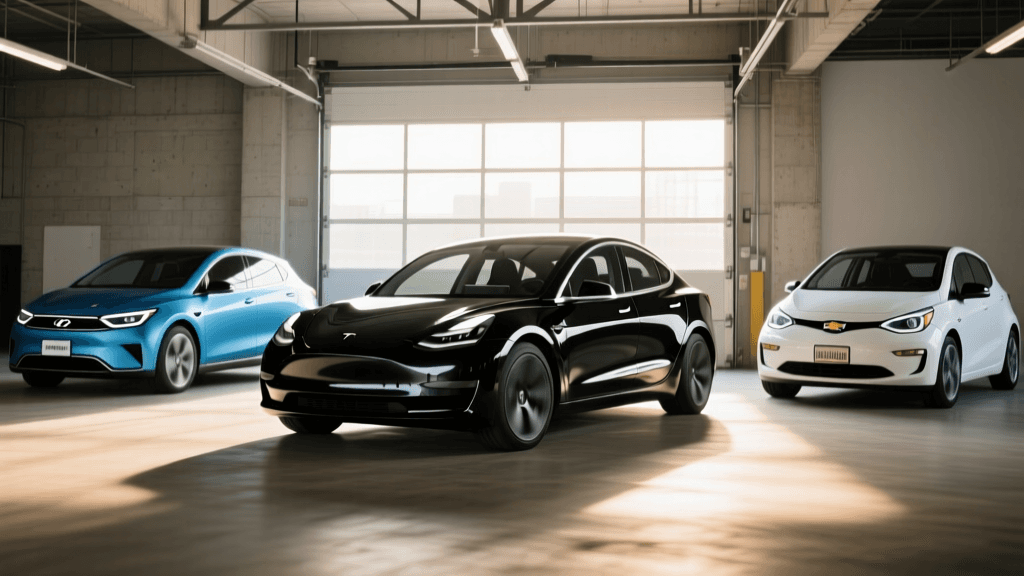
To answer this, we are putting three of the most popular and architecturally distinct EVs on the market to the ultimate head-to-head product showdown: the Tesla Model 3, the Hyundai Ioniq 5, and the Chevrolet Bolt EV. By analyzing their distinct battery chemistries, thermal management systems, and charging architectures, we can definitively map out how fast charging affects EV battery degradation long-term. According to extensive fleet data analyzed by Geotab's EV Battery Health report, vehicles subjected to high frequencies of DC fast charging do show a slightly accelerated degradation curve compared to those primarily using Level 2 AC charging. However, modern thermal management heavily mitigates this, making the vehicle's specific hardware the ultimate deciding factor.
Contender 1: Tesla Model 3 (Long Range & Standard Range)
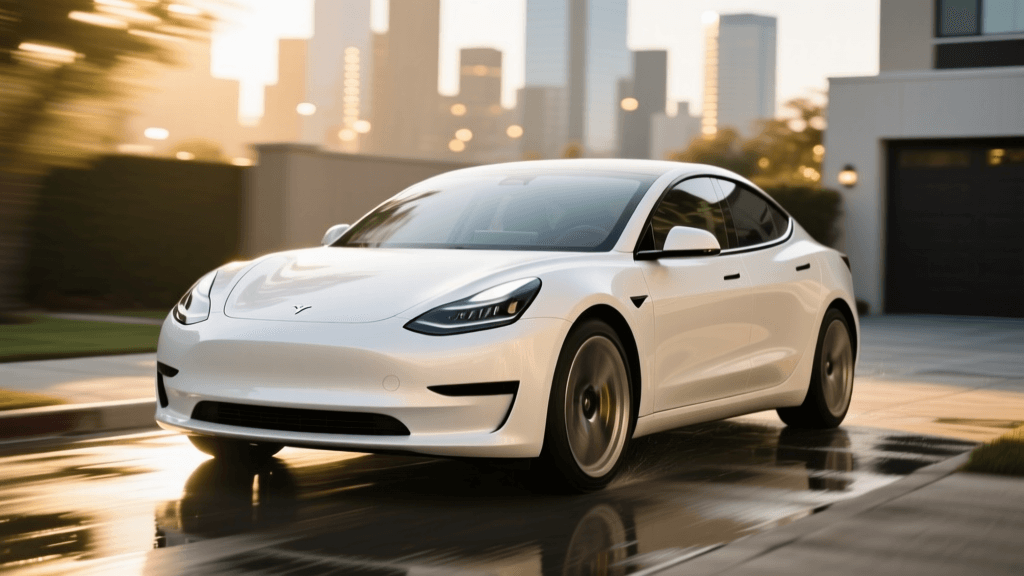
The Tesla Model 3 remains the gold standard for EV efficiency and charging infrastructure integration. Tesla’s proprietary Supercharger network is renowned for its reliability, but the vehicle's internal hardware is what truly dictates battery longevity under high-stress DCFC sessions. The Model 3 utilizes an advanced active liquid thermal management system, featuring the highly efficient "Octovalve" heat pump and manifold system introduced in recent refreshes. This system actively pulls heat away from the battery cells during a 250 kW V3 Supercharging session and routes it to cabin heating or dissipates it via the front radiators.
Furthermore, Tesla offers two distinct battery chemistries in the Model 3 lineup. The Long Range and Performance models use Nickel-Cobalt-Aluminum (NCA) cells supplied by Panasonic, which are energy-dense but slightly more sensitive to high-state-of-charge heat stress. Conversely, the Standard Range (RWD) models increasingly use Lithium Iron Phosphate (LFP) cells from CATL. LFP chemistry is inherently more stable, highly resistant to thermal runaway, and far more tolerant of the heat generated by DC fast charging. Because LFP cells do not suffer from the same cathode degradation mechanisms as NCA or NMC cells at high temperatures, the Model 3 RWD is practically bulletproof against fast-charging degradation, provided the active cooling system is engaged.
Contender 2: Hyundai Ioniq 5 (800V E-GMP Architecture)
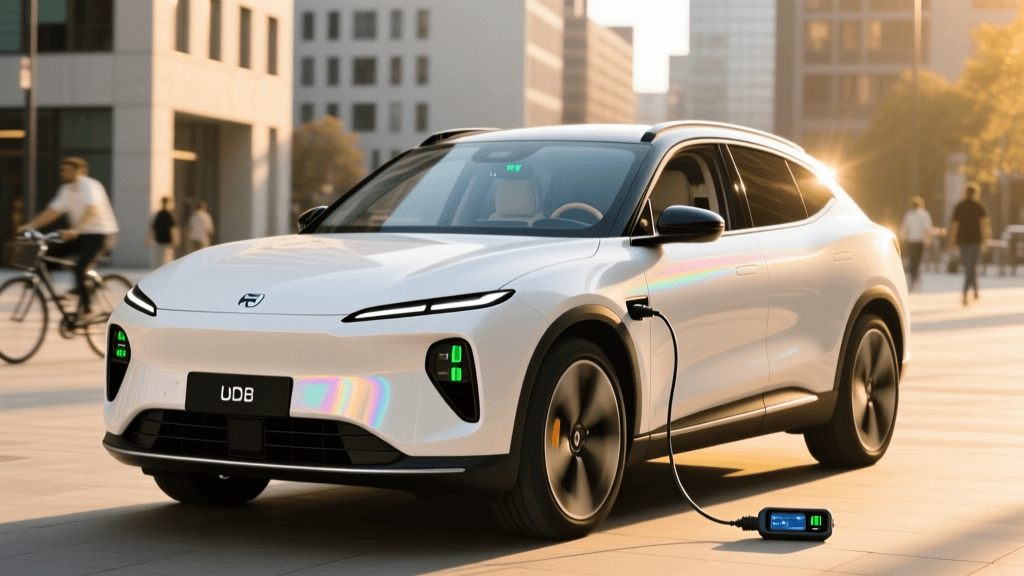
Hyundai approached the fast-charging degradation problem from an electrical engineering perspective. The Ioniq 5 is built on the Electric-Global Modular Platform (E-GMP), which natively supports an 800-volt electrical architecture. Why does this matter for battery health? Power (Watts) equals Voltage multiplied by Current (Amps). By doubling the voltage to 800V, Hyundai can achieve blistering 350 kW charging speeds while keeping the electrical current (Amps) relatively low. Lower current means significantly less resistive heat generated within the battery pack's busbars and cells.
Paired with a robust active liquid cooling system and SK On’s Nickel-Manganese-Cobalt (NMC) battery cells, the Ioniq 5 is uniquely positioned to handle repeated 10% to 80% DCFC sprints with minimal thermal stress. While NMC chemistry is generally more prone to Solid Electrolyte Interphase (SEI) layer thickening under high heat than LFP, the Ioniq 5’s ability to keep the pack cool via its 800V low-current advantage heavily suppresses this degradation pathway. Furthermore, crowd-sourced data from Recurrent Auto's long-term battery study demonstrates that modern EV batteries with advanced thermal controls are far more resilient than early critics claimed, with most retaining over 90% of their original capacity after 100,000 miles, even with regular fast-charging habits.
Contender 3: Chevrolet Bolt EV (The Passive Cooling Baseline)
To understand the true impact of fast charging on battery degradation, we must include a historical baseline: the Chevrolet Bolt EV (2017-2022). Unlike the Tesla and Hyundai, the Bolt EV was designed with a passive air-cooling system rather than an active liquid-cooling loop. It relies on the ambient air and the vehicle's HVAC system to indirectly manage battery temperatures. Its 65 kWh LG Chem NMC battery pack is robust for daily Level 2 driving, but it struggles immensely under the thermal load of DC fast charging.
When subjected to back-to-back 50 kW DCFC sessions (the Bolt's maximum charge rate), the battery pack heats up rapidly. Without liquid cooling to wick the heat away, the battery management system (BMS) is forced to aggressively throttle charging speeds to prevent thermal damage. If an owner repeatedly forces DCFC sessions in hot climates without allowing the pack to cool, the prolonged exposure to elevated temperatures accelerates electrolyte breakdown and cathode micro-cracking. The Bolt serves as a vital cautionary tale in our showdown: fast charging only destroys batteries when the vehicle lacks the thermal hardware to manage the resulting heat.
Head-to-Head Data: Degradation Rates Under Heavy DCFC Use
The following table illustrates estimated battery degradation at 100,000 miles for owners who utilize DC Fast Charging for 50% or more of their total charging needs, compared to those who primarily use Level 2 home charging.
| Vehicle Model | Battery Chemistry | Thermal Management | Max DCFC Rate | Est. Degradation (100k mi, 50%+ DCFC) | Est. Degradation (100k mi, L2 Only) |
|---|---|---|---|---|---|
| Tesla Model 3 LR (NCA) | NCA (Panasonic) | Active Liquid (Octovalve) | 250 kW | 9% - 11% | 7% - 9% |
| Tesla Model 3 RWD (LFP) | LFP (CATL) | Active Liquid | 170 kW | 5% - 7% | 4% - 6% |
| Hyundai Ioniq 5 | NMC (SK On) | Active Liquid (800V) | 350 kW | 8% - 10% | 6% - 8% |
| Chevrolet Bolt EV | NMC (LG Chem) | Passive / Air | 55 kW | 13% - 16% | 8% - 10% |
*Note: Data represents aggregated estimates based on fleet telematics, crowd-sourced battery health reports, and thermal stress modeling. Individual results will vary based on climate and charging habits.
The Science of Heat: Why Chemistry and Cooling Matter
To truly understand the data above, we must look at the microscopic science of lithium-ion degradation. The primary enemy of DC fast charging is not the speed itself, but the heat it generates. When high current is forced into a battery, internal resistance creates thermal energy. If this heat is not removed by an active liquid cooling system, it accelerates the growth of the Solid Electrolyte Interphase (SEI) layer on the anode. A thickened SEI layer traps lithium ions, permanently reducing the battery's usable capacity.
Even more dangerous is lithium plating. If you initiate a DC fast-charging session when the battery is cold (below 40°F / 4°C) without proper preconditioning, the lithium ions cannot intercalate into the graphite anode fast enough. Instead, they plate onto the surface as metallic lithium. This not only causes immediate, irreversible capacity loss but can also form dendrites—microscopic spikes that can pierce the separator and cause internal short circuits. Vehicles like the Tesla Model 3 and Ioniq 5 use advanced BMS algorithms to heat the battery before accepting high DC currents, virtually eliminating this risk.
Actionable Advice: How to Fast Charge Without Frying Your Pack
Regardless of whether you drive a high-end 800V Ioniq 5 or a liquid-cooled Tesla, adopting smart charging habits will maximize your battery's lifespan. Here is your actionable guide to preserving battery health while relying on the fast-charging network:
- Always Precondition: Never plug into a DCFC in freezing weather without preconditioning. In a Tesla, simply enter the Supercharger into the navigation system to trigger automatic battery heating. In the Ioniq 5, enable the "Battery Preconditioning" feature in the EV settings menu before arriving at the charger.
- The 20-80% Rule (For NCA/NMC): Fast charging generates the most heat when the battery is nearly full due to increased internal resistance. Limit your DCFC sessions to the 20% to 80% state-of-charge window. The final 20% takes just as long as the first 50% and generates disproportionate heat.
- The LFP Exception: If you own a Tesla Model 3 RWD with an LFP battery, you must charge to 100% at least once a week for BMS cell-balancing calibration. However, try to do this on a Level 2 home charger. If you must DCFC to 100%, drive the vehicle immediately afterward to cool the pack down; do not let it sit at 100% in a hot parking lot.
- Avoid Consecutive DCFC Sessions: On long road trips, the battery will naturally get hot. If possible, space out your 250 kW or 350 kW charges with highway driving, which forces ambient air through the vehicle's radiators, assisting the liquid cooling loop in shedding pack heat.
Final Verdict: Which EV Handles Fast Charging Best?
In this head-to-head showdown of DC fast charging degradation, the Tesla Model 3 RWD (LFP) takes the crown for absolute long-term resilience. The inherent thermal stability of LFP chemistry, combined with Tesla's active liquid cooling, makes it virtually immune to the traditional degradation pitfalls of high-speed charging. For those needing longer range, the Hyundai Ioniq 5 secures a very close second place; its brilliant 800V architecture minimizes resistive heat, allowing it to swallow 350 kW charges safely without cooking its NMC cells. The Chevrolet Bolt EV, while an incredible value proposition for city driving, clearly shows the limitations of passive cooling when subjected to the rigors of the fast-charging lifestyle. Ultimately, DC fast charging will not ruin your modern EV battery—provided your vehicle has the thermal hardware to keep its cool.