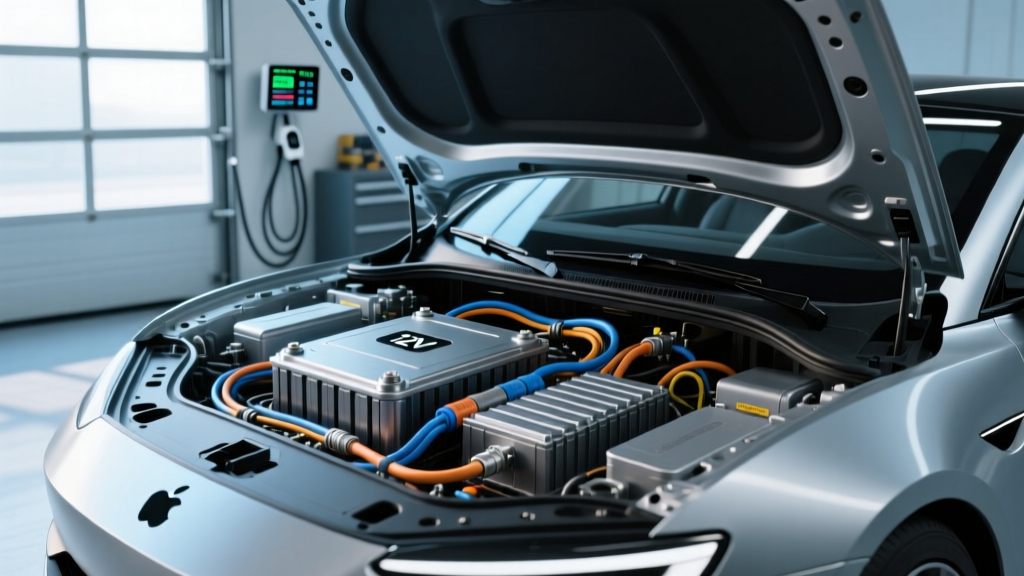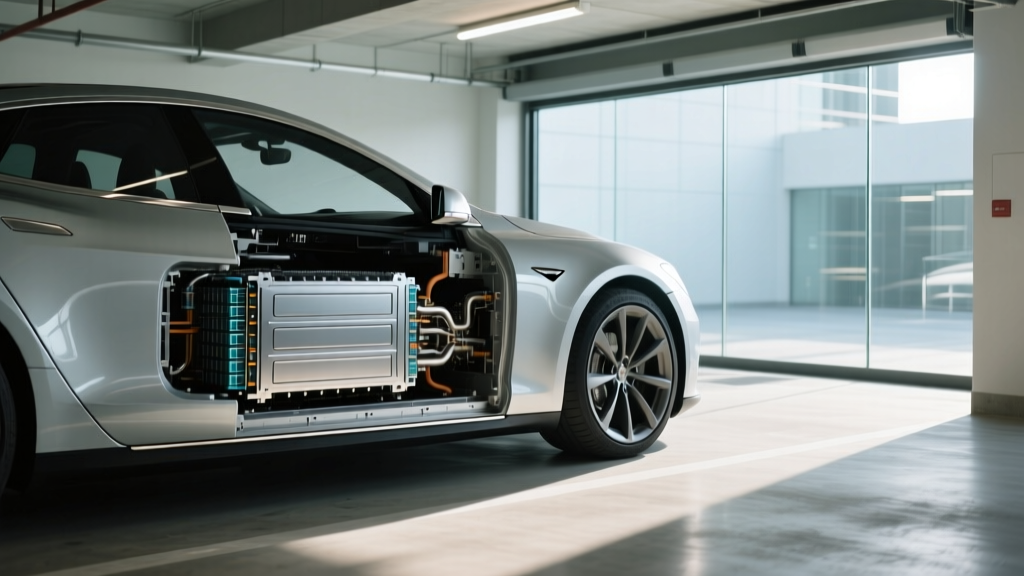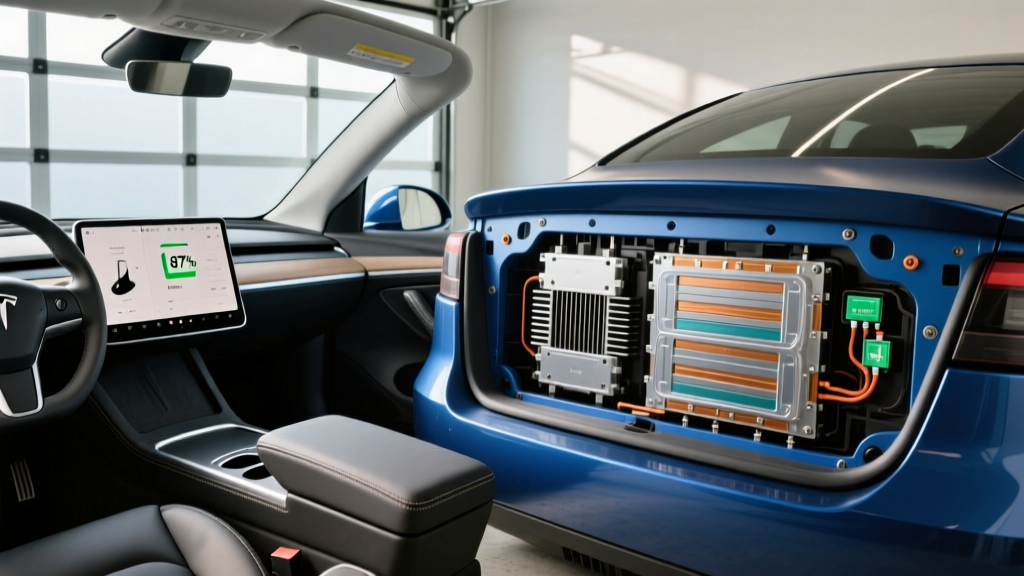
If you're researching the battery life of a Tesla Model 3, you're asking the single most important ownership question. The high-voltage traction battery is the most expensive component in the vehicle, and its longevity directly determines how long the car remains practical and what it will be worth at resale. Unlike the 12V auxiliary battery (which powers accessories and is a separate, inexpensive item), the traction battery stores the energy that actually drives the wheels — and it's engineered to last the life of the vehicle.
But "last the life of the vehicle" needs real numbers. Below, we break down exactly what Tesla Model 3 owners can expect from their batteries across chemistry types, model years, driving habits, and climates — backed by fleet data, Tesla's own warranty terms, and independent testing.
How Long Does a Tesla Model 3 Battery Actually Last?
Based on aggregated fleet data from sources like Tesla's annual Impact Report and independent analysis by Recurrent Auto, the Tesla Model 3 battery typically retains 85–92% of its original capacity after 100,000 miles. At 200,000 miles, most packs still hold 75–85% of original capacity. These figures vary depending on which chemistry your Model 3 uses and how it has been charged and driven.
In calendar years, most Model 3 batteries reach the 200,000-mile mark between 12 and 18 years of average driving (roughly 12,000–15,000 miles/year). Catastrophic battery failure — where the pack needs full replacement — is rare. According to Tesla's Impact Report, fewer than 1% of Model 3 batteries have required replacement due to failure before 200,000 miles.
• Year 1 / 15,000 mi: ~96–98% capacity retained (initial drop is steepest)
• Year 3 / 45,000 mi: ~93–95% retained
• Year 5 / 75,000 mi: ~90–93% retained
• Year 8 / 120,000 mi: ~86–90% retained
• Year 12 / 180,000 mi: ~80–86% retained
Source: Aggregated fleet data from Recurrent Auto and Tesla Impact Report. Individual results vary based on chemistry, charging habits, and climate.
The degradation curve is not linear. Most capacity loss occurs in the first 20,000–30,000 miles (the "break-in" period), after which the curve flattens significantly. This pattern holds across both LFP and NMC chemistries, though LFP packs tend to show slightly less early degradation.
LFP vs. NMC: Which Battery Chemistry Does Your Model 3 Have?
Tesla currently sells the Model 3 with two distinct battery chemistries, and which one you get depends on the trim. Understanding this distinction is critical because it affects charging habits, cold-weather performance, and long-term longevity.
LFP (Lithium Iron Phosphate) is used in the base Model 3 (Rear-Wheel Drive). LFP cells are less energy-dense, which is why the base trim has a slightly smaller usable battery (~57.5 kWh) and lower EPA range (272 miles for the 2025 model year). However, LFP offers superior cycle life and can safely be charged to 100% daily without accelerating degradation.
NMC (Nickel Manganese Cobalt) — specifically Tesla's variant sometimes called NCA (Nickel Cobalt Aluminum) in Long Range and Performance trims — provides higher energy density. The Long Range Model 3 carries a ~75 kWh usable pack delivering 363 miles EPA. NMC batteries should ideally be kept between 20–80% for daily use to maximize lifespan, reserving 100% charges for road trips.
| Attribute | LFP (Base RWD) | NMC/NCA (Long Range / Performance) |
|---|---|---|
| Energy Density | Lower (~160 Wh/kg cell-level) | Higher (~250 Wh/kg cell-level) |
| Typical Usable Capacity | ~57.5 kWh | ~75 kWh |
| Cycle Life (to 80% SoH) | 3,000–5,000+ cycles | 1,500–2,500 cycles |
| Daily Charge Recommendation | 100% OK (Tesla recommends periodic 100%) | 20–80% for daily; 100% for trips |
| Cold-Weather Performance | More range loss in cold (~15–25% at freezing) | Moderate cold loss (~10–20% at freezing) |
| Cost (Manufacturing) | Lower (no cobalt/nickel) | Higher |
| EPA Range (2025 Model 3) | 272 mi (RWD) | 363 mi (Long Range AWD) |
| Degradation Profile | Slower, flatter curve | Slightly steeper early loss, then stable |
Which is better? For longevity, LFP wins on paper — its cycle life is roughly double that of NMC. If you plan to keep the car 10+ years or drive high annual mileage, the base RWD with LFP may age more gracefully. But if you need maximum range per charge (for road trips or long commutes), the NMC-equipped Long Range is the practical choice. Neither chemistry is "bad" — they serve different use cases.
Tesla Model 3 Battery Warranty: What's Covered
Tesla's battery warranty is one of the more straightforward in the industry. Per Tesla's New Vehicle Limited Warranty, coverage is as follows:
| Trim | Warranty Duration | Mileage Limit | Minimum Capacity Retention |
|---|---|---|---|
| Model 3 RWD (LFP) | 8 years | 100,000 miles | 70% |
| Model 3 Long Range AWD | 8 years | 120,000 miles | 70% |
| Model 3 Performance | 8 years | 120,000 miles | 70% |
What this means in practice: If your Model 3 battery drops below 70% of its original capacity within the warranty period, Tesla will repair or replace it at no cost. The 70% threshold is industry-standard (Hyundai offers 70% over 10 years/100,000 miles; GM offers 60% over 8 years/100,000 miles for some models).
The warranty covers defects and excessive degradation but does not cover damage from accidents, flooding, or unauthorized modifications. Importantly, the warranty is transferable to subsequent owners, which supports resale value.
Real-world data suggests that very few Model 3 batteries fall below 70% within the warranty window. Fleet data from Recurrent Auto indicates that the average Model 3 at 100,000 miles retains roughly 88–92% capacity — well above the warranty threshold. The 70% line is a safety net, not an expectation.
How Much Does It Cost to Replace a Tesla Model 3 Battery?
This is the question that generates the most anxiety, so let's put it in context. Full battery replacement for a Tesla Model 3 out of warranty currently ranges from $12,000 to $16,000 depending on the pack size and whether it's an LFP or NMC unit. This figure includes the battery pack, labor, and associated diagnostics. Here's the breakdown:
| Model 3 Variant | Battery Pack Size | Estimated Replacement Cost (Out of Warranty) | Typical Replacement Timeline |
|---|---|---|---|
| RWD (LFP) | ~57.5 kWh | $12,000–$14,000 | Rarely before 250,000+ mi |
| Long Range AWD (NMC) | ~75 kWh | $14,000–$16,000 | Rarely before 200,000+ mi |
| Performance (NMC) | ~75 kWh | $14,000–$16,000 | Rarely before 200,000+ mi |
Context that matters: These costs are only relevant if the battery falls below 70% capacity after the 8-year warranty expires. Given current degradation data, most Model 3 batteries will still hold 75–85% capacity at 200,000 miles — meaning the car may be retired for other reasons (body wear, suspension, electronics, or simply owner preference for a newer vehicle) before the battery needs replacement.
Battery costs have also been declining steadily. Between 2010 and 2025, lithium-ion battery pack prices fell from roughly $1,200/kWh to under $130/kWh at the cell level (per BloombergNEF data). By the time a current Model 3 battery actually needs replacement in the 2030s, costs are expected to be significantly lower — potentially $8,000–$10,000 for a full pack.
Some owners opt for module-level repair instead of a full pack replacement. Tesla's battery packs consist of multiple modules, and if only one or two modules show degraded cells, a service center may replace individual modules for $2,000–$5,000 rather than the entire pack. This option depends on pack architecture and service-center capability.
Five Factors That Accelerate (or Preserve) Battery Life
Not all Model 3 batteries age identically. The spread in fleet data — some packs at 92% after 100,000 miles, others at 85% — comes down to how the car is used and charged. Here are the factors with the biggest impact:
1. State of Charge (SoC) Habits
For NMC batteries (Long Range/Performance), regularly charging to 100% and letting the car sit at full charge accelerates degradation. Tesla's own recommendation is to set daily charge limits to 80% and only charge to 100% when you'll drive immediately. For LFP batteries (RWD), Tesla actually recommends charging to 100% at least once a week to allow the battery management system (BMS) to recalibrate — LFP cells have a very flat voltage curve, so the BMS needs full-charge reference points.
2. DC Fast Charging Frequency
Occasional Supercharging (1–2 times per week) has minimal measurable impact on battery health. However, daily DC fast charging — especially at high power (250 kW V3 Superchargers) — generates sustained heat that accelerates cell wear over time. Owners who rely exclusively on public fast charging (no home Level 2) tend to see slightly higher degradation: roughly 2–4% more loss at 100,000 miles compared to predominantly Level 2 home charging.
3. Extreme Temperatures
Batteries degrade faster when regularly exposed to extreme heat (above 95°F/35°C) or extreme cold (below 10°F/-12°C) while at high state of charge. Tesla's thermal management system actively heats and cools the pack, which mitigates this significantly — but parking in shade in Arizona or a garage in Minnesota still helps. Cold weather also temporarily reduces range (not permanent degradation): expect 15–30% range reduction at freezing temperatures, which recovers as temperatures rise.
4. Driving Style and Regen Braking
Aggressive acceleration and frequent high-speed driving generate more heat in the battery cells. Using regenerative braking (especially Tesla's "Standard" regen mode) reduces wear on the mechanical brakes and recaptures energy efficiently. The impact on battery degradation is modest — roughly 1–2% difference at 100,000 miles between conservative and aggressive drivers — but it compounds over time.
5. Software Updates and BMS Calibration
Tesla periodically pushes over-the-air updates that refine battery management algorithms. These updates can slightly adjust usable capacity buffers and charging profiles. Keeping your Model 3 on the latest software ensures you benefit from these optimizations. For LFP owners, periodic 100% charges (as recommended) keep the BMS calibration accurate, preventing "phantom" range loss from miscalculation.
- NMC owners: Set daily charge limit to 80%. Charge to 100% only before road trips and drive immediately.
- LFP owners: Charge to 100% at least once per week for BMS calibration.
- All owners: Use home Level 2 charging as your primary method. Limit DC fast charging to road trips or when necessary.
- Hot climates: Park in shade or a garage when possible. Avoid leaving the car at 100% SoC in high heat.
- Cold climates: Use preconditioning (scheduled departure) to warm the battery before driving. Plug in when parked in extreme cold.
- Long-term storage: If storing for 2+ weeks, leave the car plugged in with charge limit set to 50%.
- Software: Keep OTA updates current for the latest BMS improvements.
How to Check Your Tesla Model 3 Battery Health (SoH)
Tesla does not display a single "battery health percentage" on the vehicle's touchscreen the way some competitors do. However, there are several methods to assess your State of Health:
Method 1: Range Calculation
Charge your Model 3 to 100% (or your known daily limit) and note the displayed range. Compare this to the original EPA range for your trim. For example, if your Long Range Model 3 originally showed 363 miles at 100% and now shows 330 miles, that's approximately 91% SoH. Keep in mind that displayed range is affected by temperature, recent driving style, and tire condition — so this method gives an approximation, not a lab measurement.
Method 2: Tesla Service Diagnostic
You can request a battery health check through the Tesla app. A service technician can run a remote diagnostic that evaluates cell-level data and provides a more accurate SoH reading. This is the most reliable method short of a full physical inspection.
Method 3: Third-Party Tools
Apps like TeslaFi and Stats (for Tesla) log detailed battery data via the vehicle's API, including energy added during charges vs. range gained. Over time, these tools can calculate degradation trends with reasonable accuracy. Recurrent Auto also offers a free battery health report for participating owners that benchmarks your pack against their fleet database.
Method 4: OBD-II Scanners
Some aftermarket OBD-II tools (like the OBDLink MX+ paired with apps such as Scan My Tesla) can read real-time battery data including cell voltages, pack temperature, and calculated SoH. This is more technical but provides granular insight for enthusiasts.
What's Next: Solid-State Batteries and Future Tech
Looking beyond current lithium-ion technology, several advances are in development that could eventually reach the Model 3 platform:
Solid-state batteries replace the liquid electrolyte with a solid material, promising higher energy density (potentially 400+ Wh/kg), faster charging, and improved safety. Companies including Toyota, Samsung SDI, and QuantumScape have announced prototype solid-state cells, but mass production at automotive scale remains estimated for 2028–2032. These are not available in any production vehicle as of 2026.
Silicon anode technology (used in limited form in some current cells) increases the silicon content in the anode to boost energy density. Tesla's 4680 cell format already incorporates some silicon, and incremental improvements are expected in coming model years.
Sodium-ion batteries are emerging as a lower-cost alternative for entry-level EVs, though with lower energy density than LFP. CATL and BYD have begun limited production, primarily for the Chinese market. A sodium-ion Model 3 is possible in the future but has not been announced.
For current buyers, these technologies are forward-looking context, not purchasing factors. The lithium-ion batteries in today's Model 3 are mature, well-understood, and demonstrably long-lasting based on hundreds of thousands of real-world data points.
Frequently Asked Questions
How long do Tesla Model 3 batteries last in years?
Based on fleet data, most Tesla Model 3 batteries retain 75–85% capacity at 200,000 miles, which translates to approximately 13–18 years of average driving. The battery is designed to outlast most other vehicle components. Catastrophic failure is rare — Tesla reports fewer than 1% of packs require replacement before 200,000 miles.
Is it expensive to replace a Tesla Model 3 battery?
Out-of-warranty replacement currently costs $12,000–$16,000 depending on the pack. However, most batteries never need replacement during typical ownership. The 8-year/100,000–120,000-mile warranty covers excessive degradation (below 70% capacity), and costs are expected to decline further as battery manufacturing scales.
Does frequent Supercharging damage the Model 3 battery?
Occasional Supercharging has minimal impact. Daily exclusive reliance on DC fast charging may add 2–4% more degradation at 100,000 miles compared to home Level 2 charging. Tesla's thermal management system actively cools the pack during fast charging to mitigate heat damage. For best longevity, use Level 2 home charging as your primary method.
Should I buy the LFP or NMC Model 3 for battery longevity?
If maximum battery lifespan is your top priority, the LFP-equipped RWD model has a higher cycle life (3,000–5,000 cycles vs. 1,500–2,500 for NMC) and can be charged to 100% daily without concern. However, you trade range (272 mi vs. 363 mi EPA) and all-wheel-drive capability. For most buyers, the NMC Long Range offers the better balance of range and longevity when charged to 80% daily.
How do I know if my Model 3 battery needs service?
Signs include a noticeable drop in displayed range at full charge (beyond normal temperature-related variation), unexpected range loss while parked, or a warning message on the touchscreen. You can request a remote battery health diagnostic through the Tesla app at any time. The 8-year warranty covers degradation below 70% capacity.
Does cold weather permanently damage the battery?
No. Cold weather causes temporary range reduction (15–30% at freezing temperatures) due to increased internal resistance and energy used for cabin/pack heating. This range recovers as temperatures rise. Permanent degradation from cold is minimal because Tesla's thermal management system warms the pack during charging and driving. Parking in a garage and using preconditioning further reduces any cold-weather impact.
The battery life of a Tesla Model 3 is one of the best-documented topics in the EV space, thanks to Tesla's large fleet and active owner community. The data is clear: with reasonable charging habits, the battery will outlast most owners' time with the vehicle. The warranty provides a strong safety net, and replacement costs — while significant — are declining and rarely needed during the car's practical life.