Tesla Model 3 Battery Capacity kWh by Trim (2026)
The Tesla Model 3 lineup uses two distinct battery chemistries depending on trim, and the usable kWh figures matter far more than the marketing labels suggest. Here is the current breakdown for the 2026 model year:
| Trim | Battery Chemistry | Usable Capacity (kWh) | EPA Range | Peak DC Fast Charge | 10–80% Time | Base MSRP |
|---|---|---|---|---|---|---|
| Model 3 Rear-Wheel Drive | LFP (Lithium Iron Phosphate) | ~57.5 kWh | 272 mi | 170 kW | ~25 min | $38,990 |
| Model 3 Long Range RWD | NMC (Nickel Manganese Cobalt) | ~75 kWh | 363 mi | 250 kW | ~20 min | $42,490 |
| Model 3 Long Range AWD | NMC | ~75 kWh | 341 mi | 250 kW | ~20 min | $47,490 |
| Model 3 Performance | NMC | ~75 kWh | 315 mi | 250 kW | ~20 min | $54,990 |
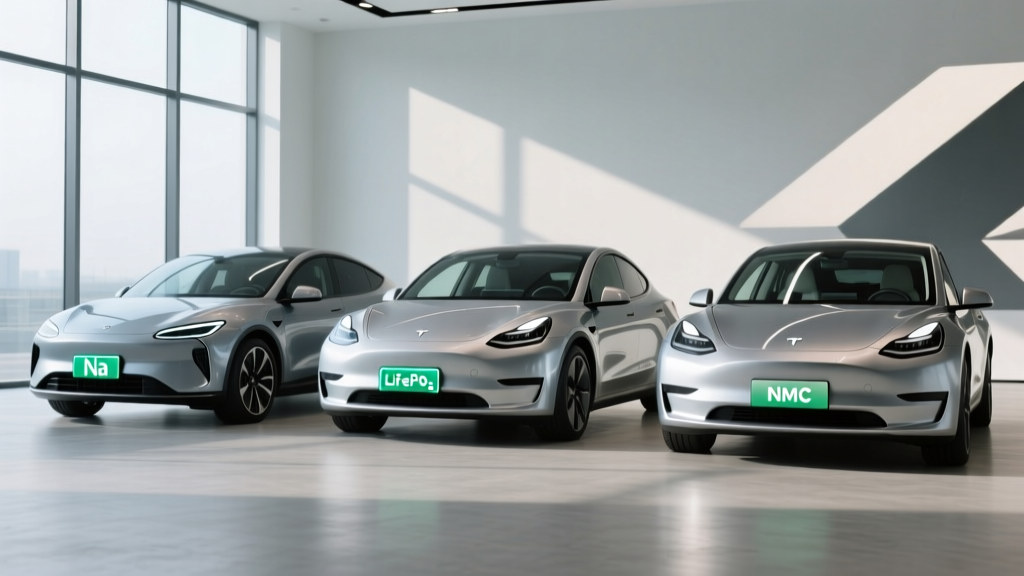
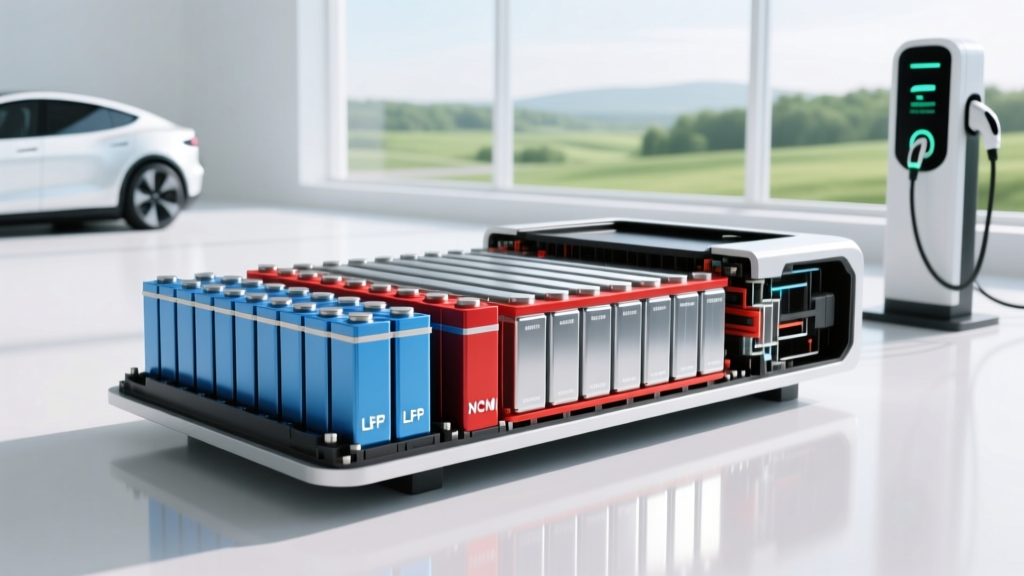
The critical distinction is not just capacity — it is chemistry. Tesla sources LFP cells (primarily from CATL) for the base RWD model and NMC/NCA cells (from Panasonic and LG Energy Solution) for Long Range and Performance trims. This choice affects everything from daily charging habits to long-term degradation behavior.
LFP vs NMC: Which Battery Chemistry Is Better?
There is no universally "better" chemistry — the right choice depends on your driving pattern, climate, and ownership horizon. Here is how the two stack up in the Model 3:
| Factor | LFP (Base RWD) | NMC/NCA (Long Range / Performance) |
|---|---|---|
| Energy Density | Lower (~160 Wh/kg cell-level) | Higher (~250–270 Wh/kg cell-level) |
| Cycle Life | 3,000–5,000+ cycles to 80% SoH | 1,500–2,500 cycles to 80% SoH |
| Daily Charging Recommendation | Charge to 100% regularly (Tesla recommends it) | Limit to 80% for daily use; 100% for trips only |
| Cold-Weather Performance | More range loss in freezing temps (15–30% reduction common) | Better cold-weather retention (~10–20% reduction) |
| Cost | Lower cell cost; contributes to lower vehicle MSRP | Higher cell cost due to nickel/cobalt content |
| Thermal Stability | Superior — less prone to thermal runaway | Good, but requires more active thermal management |
| State-of-Charge Accuracy | Flatter voltage curve makes SoC estimation harder; periodic 100% charges help recalibrate BMS | More linear voltage curve; BMS estimation is more consistent |
The practical takeaway: If you can charge at home daily, drive under 250 miles round-trip, and live in a mild climate, the LFP Model 3 RWD offers exceptional longevity and simpler charging habits. If you need maximum range, frequently drive in cold weather, or regularly take road trips where 363 EPA miles matters, the NMC Long Range is the stronger fit. According to fueleconomy.gov, the efficiency gap between trims is notable — the RWD achieves 132 MPGe combined while the Long Range AWD lands at 125 MPGe combined, partly due to weight and drivetrain differences.
How Long Do Tesla Model 3 Batteries Actually Last?
Tesla's battery packs are engineered to outlast the typical ownership cycle of the vehicle. Real-world fleet data and third-party studies paint a reassuring picture, but the numbers vary by chemistry and usage pattern.
- Year 1 / 15,000 mi: ~2–4% capacity loss (initial formation loss; steepest part of the curve)
- Year 3 / 45,000 mi: ~5–7% total loss (degradation rate slows significantly)
- Year 5 / 75,000 mi: ~7–10% total loss for NMC; ~5–8% for LFP
- Year 8 / 120,000 mi: ~10–14% total loss for NMC; ~7–10% for LFP
- 200,000 mi milestone: Tesla's 2023 Impact Report cited fleet data showing an average of ~12% degradation at 200,000 miles for Model 3/Y NMC packs
Sources: Tesla Impact Reports, Recurrent Auto battery fleet data, recurrentauto.com
The degradation curve is not linear. Most capacity loss occurs in the first 20,000–30,000 miles as the battery undergoes initial electrochemical formation. After that, the rate flattens considerably. An LFP pack, with its inherently longer cycle life, can theoretically endure 3,000–5,000 full charge cycles before reaching 80% State of Health (SoH). At 57.5 kWh usable and ~4 mi/kWh, that equates to roughly 690,000–1,150,000 miles of theoretical cycle life — far beyond the mechanical life of the car itself.
NMC packs have lower cycle-life ratings (1,500–2,500 cycles to 80% SoH), but at 75 kWh and ~4 mi/kWh, even 1,500 cycles translates to 450,000 miles. In practice, most Model 3 vehicles are retired or totaled for collision damage long before the battery reaches end-of-life.
What the Tesla Battery Warranty Covers
Tesla provides a battery and drive unit warranty that is among the more straightforward in the industry. Here are the current terms for the 2026 Model 3:
| Trim | Warranty Period | Mileage Limit | Minimum Capacity Retention | What's Covered |
|---|---|---|---|---|
| Model 3 RWD (LFP) | 8 years | 100,000 miles | 70% | Battery replacement or repair if SoH drops below 70%, or defect/failure |
| Model 3 Long Range / Performance (NMC) | 8 years | 120,000 miles | 70% | Battery replacement or repair if SoH drops below 70%, or defect/failure |
The 70% retention threshold is the trigger for a warranty claim. If your Model 3 Long Range shows 52.5 kWh usable (70% of 75 kWh) before 8 years or 120,000 miles, Tesla will replace or repair the pack at no cost. In reality, warranty claims for capacity loss alone are exceedingly rare — the vast majority of claims involve manufacturing defects or cell-module failures rather than gradual degradation.
Note that the warranty does not cover damage from flooding, fire (non-battery-origin), aftermarket modifications, or improper charging equipment. It also does not cover cosmetic corrosion or range reduction from tire/wheel changes. Per Tesla's official warranty documentation, the coverage transfers to subsequent owners, which supports resale value.
EV Battery Replacement Cost: When and How Much
Battery replacement is the single largest potential expense in EV ownership, but it is important to contextualize the risk. The overwhelming majority of Model 3 batteries never require replacement during normal ownership. When they do, here is what the costs look like as of 2026:
| Battery Pack | Capacity | Replacement Cost (Parts + Labor) | Typical Trigger |
|---|---|---|---|
| Model 3 RWD (LFP) | ~57.5 kWh | $10,000–$14,000 | Module failure out of warranty; rare |
| Model 3 Long Range / Performance (NMC) | ~75 kWh | $13,000–$18,000 | Module failure or severe degradation out of warranty |
These figures reflect out-of-warranty replacement through Tesla Service Centers. Third-party EV battery specialists can sometimes perform module-level repairs (replacing individual cell groups rather than the entire pack) for $3,000–$7,000, though this voids any remaining Tesla warranty and may affect insurance coverage.
For context, a Model 3 owner who drives 12,000 miles per year will accumulate 96,000 miles in eight years — well within the warranty period. The likelihood of needing a paid replacement during typical first- or second-owner use is low. The replacement cost becomes relevant primarily for high-mileage fleet vehicles, third owners purchasing out-of-warranty examples, or vehicles that suffer physical battery damage.
Factors That Affect Model 3 Battery Longevity
Battery degradation is driven by electrochemical stress. Understanding the stressors lets you manage them without sacrificing practicality.
- State of Charge (SoC) habits: For NMC trims, set the daily charge limit to 80%. Reserve 100% charges for road trips, and avoid leaving the car at 100% for extended periods. For LFP, Tesla recommends charging to 100% at least once per week to recalibrate the BMS.
- DC fast charging frequency: Occasional Supercharging has minimal impact. However, daily DC fast charging at 170–250 kW accelerates calendar and cycle degradation by ~1–3% over 100,000 miles compared to Level 2 home charging. Use Level 2 as your primary charging method.
- Extreme temperature exposure: Lithium-ion cells degrade faster when held at high temperatures (>95°F / 35°C) at high SoC. In hot climates, avoid parking at 100% SoC in direct sun for days. In cold climates, use the Tesla app to precondition the battery before driving and before Supercharging — preconditioning warms the cells to ~30°C, enabling faster charging and reducing lithium plating risk.
- Storage: If storing the vehicle for more than two weeks, set SoC to 50% and leave it plugged in with the charge limit set appropriately. The vehicle's vampire drain and thermal management system draw power even when parked.
- Regenerative braking: Using regen (including one-pedal driving) does not harm the battery. The charge current from regen is well within safe C-rate limits.
The single most impactful habit is avoiding sustained high SoC in hot weather. A Model 3 Long Range parked at 100% SoC in a Phoenix summer for several days undergoes more calendar degradation than one driven 30,000 miles with normal charging habits. Tesla's battery management system (BMS) actively manages cell temperatures and balancing, but it cannot fully offset the physics of lithium-ion chemistry under thermal stress.
How to Check and Monitor Battery Health (SoH)
Tesla does not expose a direct State of Health percentage in the vehicle's UI, but owners have several methods to estimate remaining capacity:
- Tesla App range display: Set the display to "Rated" (EPA) range. Charge to 100% and note the displayed range. Compare it to the original EPA rating (e.g., 363 mi for Long Range AWD). A new Long Range showing 340 mi at 100% suggests roughly 6% degradation. Note: LFP owners must charge to 100% regularly for this method to be accurate, as the BMS can drift at partial SoC.
- Third-party apps: Tools like Tessie, Stats for Tesla, or Teslamate (for advanced users with a Raspberry Pi setup) log charge sessions and estimate SoH by comparing energy added during a full charge to the pack's nominal capacity.
- Service Mode (limited): Tesla's in-car Service Mode provides some battery information, though detailed SoH metrics are not always displayed. A Tesla Service Center can run a full battery health diagnostic upon request.
- OBD-II dongles: Devices like the OBDLink SX paired with apps such as Scan My Tesla can read real-time battery data including nominal full pack capacity (kWh), energy remaining, and cell voltage variance.
For NMC owners, the most reliable home test is to charge from 10% to 100% on a Level 2 charger and note the total kWh delivered (your charger's app or meter should display this). If your 75 kWh pack accepts only 65 kWh from 10–100%, factoring in ~2% charging losses, your SoH is approximately 88%. Repeat this test every six months to track the degradation curve.
Emerging Battery Technology: What's Next Beyond 2026
Several next-generation battery technologies are in development, but none are currently available in production Model 3 vehicles. Here is a realistic assessment:
- Silicon-anode cells: Companies like Sila Nanotechnologies and Amprius are developing silicon-dominant anodes that could increase energy density by 20–40%. Limited production has begun in niche applications, but automotive-scale deployment in a Model 3 successor is not expected before 2028–2030. These cells promise more range per kilogram but face cycle-life and cost challenges.
- Solid-state batteries: Toyota, Samsung SDI, and QuantumScape are the most prominent developers. Toyota has announced a solid-state battery targeting 750 km (466 mi) range with 10-minute fast charging, with initial production planned for 2027–2028 in limited luxury models. Mass-market solid-state EVs are unlikely before 2030–2032. Solid-state cells replace the liquid electrolyte with a solid material, improving safety and energy density, but manufacturing scalability remains the primary bottleneck.
- Sodium-ion batteries: CATL has begun limited production of sodium-ion cells for low-cost, short-range EVs in China. These offer lower energy density than LFP but use no lithium, cobalt, or nickel. A sodium-ion Model 3 variant is not announced and may never reach the U.S. market, but the chemistry could appear in a future compact Tesla model.
For current buyers, these technologies are forward-looking context, not purchase factors. The LFP and NMC cells in today's Model 3 are mature, well-understood, and backed by extensive fleet data. Waiting for solid-state is not a practical strategy if you need a vehicle now.
Frequently Asked Questions
How long do Tesla Model 3 batteries last in years and miles?
Based on fleet data, most Model 3 batteries retain 85–90% of their original capacity after 8 years or 120,000 miles. LFP packs typically show less degradation than NMC over the same period. The battery is designed to last the mechanical life of the vehicle — 200,000+ miles is achievable with normal care.
How much does a Tesla Model 3 battery cost to replace?
Out-of-warranty replacement runs $10,000–$14,000 for the LFP pack and $13,000–$18,000 for the NMC Long Range/Performance pack through Tesla Service. Third-party module-level repairs can cost $3,000–$7,000 but void remaining warranty coverage.
What does the Tesla battery warranty cover?
Tesla warrants the Model 3 battery for 8 years / 100,000 miles (RWD) or 8 years / 120,000 miles (Long Range/Performance), guaranteeing a minimum of 70% capacity retention. If the battery falls below this threshold or has a manufacturing defect, Tesla repairs or replaces it at no cost.
How do I check my Tesla Model 3 battery health?
Charge to 100% and compare the displayed EPA range to the original rating. Third-party apps like Tessie or Teslamate estimate SoH from charge-session data. For NMC packs, measuring kWh added during a 10–100% Level 2 charge gives the most accurate home estimate.
Is LFP or NMC better for a Tesla Model 3?
LFP offers longer cycle life, lower cost, and the convenience of regular 100% charging — ideal for daily commuting with home charging. NMC delivers higher energy density (more range per kWh), better cold-weather performance, and faster DC charging — better for road trips and cold climates. Neither is universally superior; the right choice depends on your driving pattern.
Does frequent Supercharging damage the battery?
Occasional Supercharging has minimal impact. Daily DC fast charging accelerates degradation by roughly 1–3% over 100,000 miles compared to Level 2 charging. Tesla's BMS manages charge rates and temperatures during Supercharging to limit stress, but consistent Level 2 home charging remains gentler on the cells long-term.