Why Tesla Megapack Battery Chemistry Matters for Every EV Owner
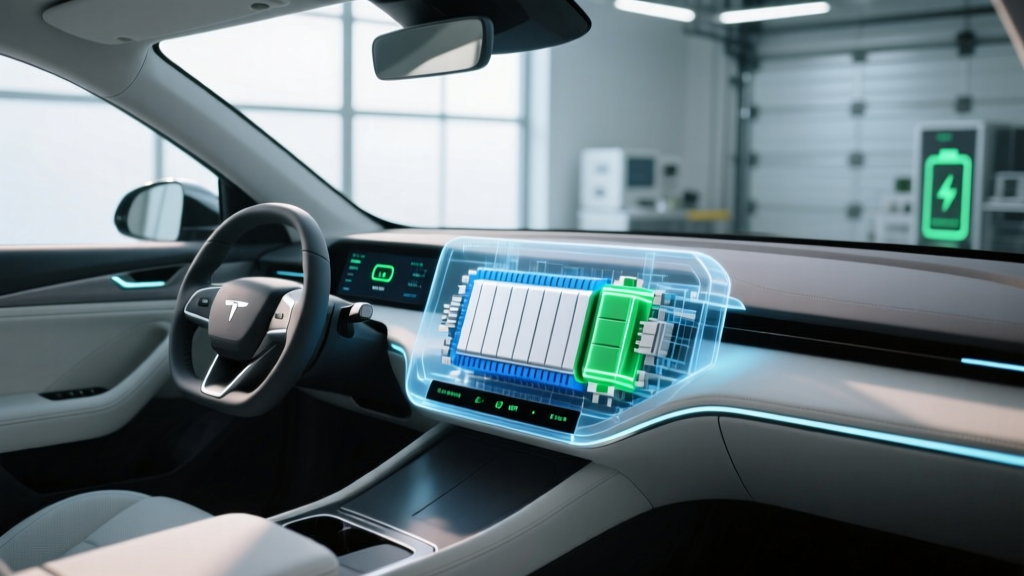
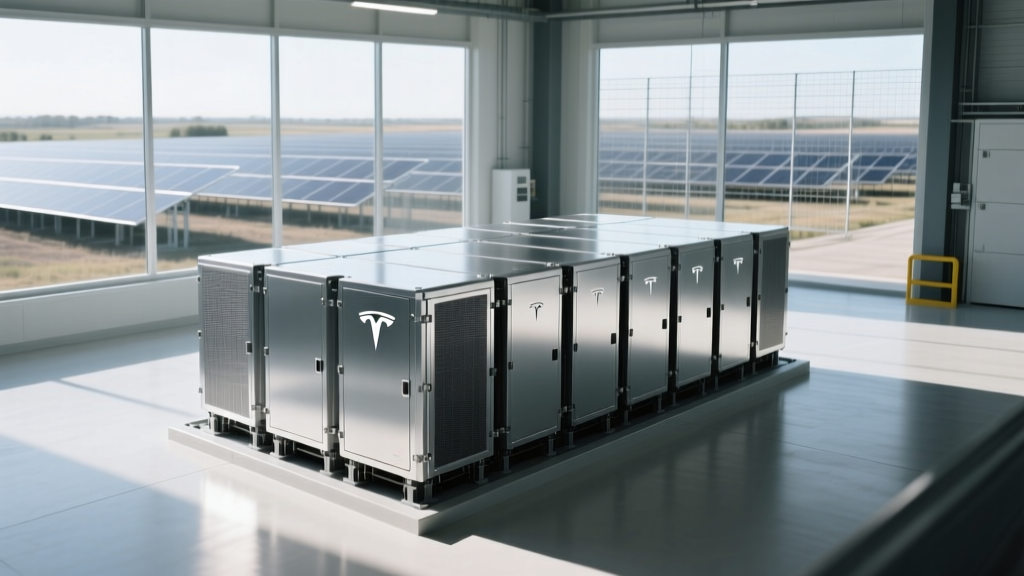
When Tesla deployed its first Megapack utility-scale storage systems, the industry paid attention—not just for the multi-megawatt-hour capacity, but for the battery chemistry inside. The Tesla Megapack battery chemistry relies primarily on lithium iron phosphate (LFP), the same cell architecture now found in the Model 3 Standard Range and Model Y Rear-Wheel Drive. Understanding what powers grid-scale storage tells consumer EV buyers exactly what they're getting under their own car's floor: a battery engineered for longevity and cost efficiency over raw energy density.
This guide breaks down LFP and NMC/NCA chemistries with hard data on degradation, warranty terms, replacement costs, and daily habits that extend or shorten pack life. Whether you drive a Tesla, a Hyundai Ioniq 5, or are shopping for your first EV, the chemistry inside the pack determines how your car ages over 100,000+ miles.
LFP vs NMC/NCA: The Chemistry Trade-Off Matrix
Two dominant lithium-ion chemistries power modern EVs and large-scale storage like the Megapack. Each has distinct strengths rooted in molecular structure.
| Attribute | LFP (LiFePO₄) | NMC/NCA (Nickel-based) |
|---|---|---|
| Energy Density (cell-level) | ~160–180 Wh/kg | ~220–300 Wh/kg |
| Typical Cycle Life | 3,000–6,000+ cycles | 1,000–2,500 cycles |
| Cost per kWh (cell) | ~$55–$75 | ~$85–$115 |
| Cold-Weather Performance | Moderate loss (~25–35% at 20°F) | Better low-temp conductivity (~15–25% loss) |
| Thermal Stability | Excellent (runaway ~270°C) | Good (runaway ~210°C) |
| Optimal Daily SoC | 100% acceptable | 80–90% recommended daily |
| Cobalt/Nickel Dependency | None (iron + phosphate) | High (supply-chain sensitive) |
| Common Applications | Tesla Megapack, Model 3 SR, Model Y RWD, BYD Blade | Long-range EVs, performance trims, Porsche Taycan, Rivian |
Bottom line: LFP wins on cycle life, cost, safety, and daily convenience (you can charge to 100% without accelerated degradation). NMC/NCA wins on energy density—critical for 350+ mile range targets in a compact pack. Tesla chose LFP for the Megapack because grid storage prioritizes 20-year cycle life over weight savings, the same logic that makes LFP ideal for standard-range consumer EVs.
How Long Do EV Batteries Last? Real Degradation Data
The fear of a dead battery pack at 60,000 miles persists, but real-world data tells a different story. Modern EV batteries are engineered to outlast the vehicle's structural and mechanical components.
Observed Degradation Curves (Aggregated Fleet Data):
- Year 1 / 15,000 miles: 2–4% capacity loss (initial formation loss)
- Year 3 / 45,000 miles: 5–8% total loss
- Year 5 / 75,000 miles: 7–11% total loss
- Year 8 / 120,000 miles: 10–15% total loss (typical warranty threshold)
- Year 10 / 150,000 miles: 12–18% total loss (LFP packs often lower)
Tesla's own 2024 Impact Report showed Model 3/Y packs retaining approximately 85% capacity at 150,000 miles. Independent fleet data from Recurrent Auto, which tracks over 15,000 EVs, confirms that most packs lose roughly 5–10% in the first 50,000 miles, then degradation flattens significantly—a phenomenon engineers call the "degradation knee.Only rarely do packs fall below 70% state of health before 200,000 miles under normal use.
LFP chemistries tend to degrade more linearly and slowly than NMC, which is precisely why Tesla selected LFP for the Megapack—daily 100% charge/discharge cycles at grid scale demand 5,000+ cycle durability. Consumer LFP packs (Model 3 RWD, Model Y RWD) show similar longevity advantages, with some fleet vehicles exceeding 200,000 miles at 88%+ retained capacity.
Battery Warranty Terms: What's Actually Covered
Federal law effectively mandates that manufacturers warrant EV batteries for a minimum of 8 years / 100,000 miles (10 years / 150,000 miles in CARB states like California). Here's how major warranties stack up:
| Manufacturer | Duration | Mileage | Capacity Threshold |
|---|---|---|---|
| Tesla (Model 3/Y LFP) | 8 years | 100,000 mi (120k for LR) | 70% retention |
| Hyundai / Kia | 10 years | 100,000 mi | 70% retention |
| Ford (Mach-E, F-150 Lightning) | 8 years | 100,000 mi | 70% retention |
| GM (Ultium platform) | 8 years | 100,000 mi | 70% retention |
| BMW (iX, i4) | 8 years | 100,000 mi | 70% retention |
| Rivian | 8 years | 120,000 mi | 70% retention |
What triggers a warranty claim: If your battery's state of health (SoH) drops below the stated threshold within the time/mileage window, the manufacturer replaces or refurbishes the pack at no cost. Most warranties cover defects and abnormal degradation but exclude damage from accidents, flooding, or unauthorized modifications. Read the fine print: some warranties prorate coverage in later years.
EV Battery Replacement Cost: When and How Much
Out-of-warranty battery replacement is the single largest ownership cost fear. Here's what it actually costs in 2026—and how rarely it's needed.
| Vehicle / Pack Size | Battery kWh | Replacement Cost (Parts + Labor) | Typical Replacement Trigger |
|---|---|---|---|
| Tesla Model 3 RWD (LFP) | ~60 kWh | $10,000–$14,000 | Rare before 200k mi; usually post-warranty |
| Tesla Model Y LR (NMC) | ~75 kWh | $13,000–$18,000 | Cell imbalance or physical damage |
| Ford F-150 Lightning Ext. Range | ~131 kWh | $22,000–$30,000 | Fleet use, high-cycle duty |
| Hyundai Ioniq 5 | ~77.4 kWh | $12,000–$16,000 | Rare before 150k mi |
| Chevrolet Bolt EV/EUV | ~65 kWh | $9,000–$13,000 | Post-recall replacement era |
| Tesla Megapack (utility) | ~3.9 MWh per unit | $250,000–$400,000 | Grid-scale lifecycle; modular swap |
Context that matters: Fewer than 2–3% of EVs on the road have required a full pack replacement outside of recall campaigns, according to Recurrent Auto's longitudinal study. Most EVs are scrapped or sold with their original battery still functional at 75%+ SoH. When replacement is needed, it's typically due to manufacturing defects caught under warranty, physical damage, or coolant intrusion—not simple wear-out.
Five Factors That Accelerate Battery Degradation
Battery chemistry sets the ceiling, but your habits determine how close you get to it. Here are the five biggest degradation accelerators, ranked by impact:
- Sustained high state of charge (NMC/NCA only): Storing an NMC pack at 100% SoC for days accelerates electrolyte oxidation. LFP owners can safely charge to 100% daily—Tesla explicitly recommends it for calibration.
- Frequent DC fast charging above 150 kW: High C-rates generate heat. Occasional Supercharging is fine; daily 250 kW sessions without preconditioning can add 1–2% extra annual loss. Tesla's navigation-based battery preconditioning mitigates this significantly.
- Extreme heat exposure: Ambient temperatures above 95°F combined with high SoC are the most damaging combination. Garage parking in hot climates extends pack life measurably. Active thermal management (liquid cooling) in modern EVs largely prevents this.
- Deep discharge cycles: Regularly draining below 10% SoC stresses the anode. Keep daily use between 20–80% for NMC, 15–100% for LFP.
- Cold-weather fast charging without preconditioning: Charging a frozen pack at high power causes lithium plating—a permanent, irreversible capacity loss. Always precondition before winter DC fast charges.
How to Check and Monitor Your Battery's State of Health
State of Health (SoH) is the percentage of original capacity your battery retains. A new pack is 100% SoH; at 70% SoH, you've lost 30% of original range. Here's how to track it:
In-Vehicle Methods
- Tesla: Service mode (accessible via the software menu) displays calculated SoH and individual module voltage balance. Third-party apps like Tessie or TeslaFi log SoH trends over time from the vehicle's API.
- Hyundai/Kia: The EV menu in the instrument cluster shows battery health percentage on newer models (2024+).
- OBD-II scanners: Tools like the OBDeleven or dedicated EV scanners (e.g., Grizzl-E diagnostic adapter) can read BMS-reported SoH on most brands.
Manual Calculation Method
Charge to 100%, drive to near-empty, and compare the kWh consumed (from the trip meter or charging app) to the pack's original usable capacity. If your 75 kWh pack now accepts only 65 kWh on a full charge, SoH ≈ 87%. This method is most accurate when performed at moderate temperatures with a Level 2 charger.
Emerging Battery Technology: Solid-State and Beyond
Next-generation chemistries promise transformative improvements, but timelines remain measured. Here's what's real versus what's still in the lab:
- Solid-state batteries: Toyota, Samsung SDI, and QuantumScape are targeting 2027–2029 production. Promised benefits include 500+ mile range, 10-minute charging, and no liquid electrolyte (eliminating fire risk). Status: Pilot production; not yet available in any consumer vehicle as of 2026.
- Silicon-dominant anodes: Companies like Sila Nanotechnologies and Group14 are replacing graphite anodes with silicon composites, boosting energy density 20–40%. Early deployments appear in the Mercedes G-Class 580e and select 2026 models. Status: Limited production, scaling through 2027–2028.
- Sodium-ion batteries: CATL and BYD are producing sodium-ion cells for lower-cost, lower-energy-density applications (city cars, grid storage). Energy density ~120–150 Wh/kg with excellent cold performance. Status: Available in select Chinese-market vehicles; US adoption expected 2027+.
- LFP improvements: CATL's second-generation LFP cells (2025–2026) push energy density to ~200 Wh/kg, narrowing the gap with NMC while retaining cycle-life advantages. This chemistry likely powers future Megapack iterations and more Tesla standard-range models.
For buyers in 2026, today's LFP and NMC chemistries are mature, well-understood, and backed by extensive degradation data. Waiting for solid-state means waiting 3–5 years for initial availability, with premium pricing and limited model adoption for years after.
Frequently Asked Questions
How long do EV batteries actually last in years and miles?
Most modern EV batteries retain 75–85% of original capacity at 150,000 miles (roughly 10–12 years of average driving). LFP packs, like those in the Tesla Model 3 RWD and Megapack, often exceed 85% retention at 200,000 miles. Full failure before 200,000 miles is statistically rare—fewer than 3% of packs require out-of-warranty replacement according to fleet data from Recurrent Auto.
How much does it cost to replace an EV battery?
Out-of-warranty replacement ranges from $9,000 (Chevrolet Bolt) to $30,000 (Ford F-150 Lightning extended range), with most mid-size EVs falling in the $12,000–$16,000 range including labor. However, most batteries outlast the vehicle itself, and warranty coverage (8 years/100,000 miles minimum) absorbs replacement costs for premature failures. Tesla Megapack utility-scale replacements run $250,000–$400,000 per unit but are modular and managed under long-term service agreements.
What does the EV battery warranty actually cover?
Battery warranties guarantee that the pack will retain a minimum percentage of original capacity (typically 70%) over a set period (8 years/100,000 miles for most brands; 10 years/100,000 for Hyundai/Kia). If SoH drops below the threshold, the manufacturer replaces or refurbishes the pack at no charge. Warranties cover defects and abnormal degradation but typically exclude accident damage, flood damage, and unauthorized modifications. Check your specific warranty document for prorated coverage in later years.
How do I check my EV's battery health?
Most modern EVs display battery SoH through the infotainment system or a hidden service menu. Tesla owners can access detailed battery data through service mode or third-party apps like Tessie and TeslaFi. OBD-II scanners with EV-specific software can read BMS data on most brands. For a manual check, charge to 100%, record the kWh added from near-empty, and compare to the pack's original usable capacity.
LFP vs NMC: which battery chemistry is better for me?
Choose LFP if you prioritize longevity, lower cost, daily 100% charging convenience, and maximum thermal safety—and you don't need 350+ miles of range. LFP powers the Tesla Model 3 RWD, Model Y RWD, and Megapack. Choose NMC/NCA if you need maximum range in a lighter pack (Long Range and Performance trims), better cold-weather efficiency, or faster peak charging speeds. For most daily commuters and home-charging owners, LFP is the pragmatic choice. For road-trip-heavy drivers in cold climates, NMC's energy density and low-temperature conductivity justify the trade-offs in cycle life and daily charging discipline.
Does frequent Supercharging / DC fast charging damage my battery?
Occasional DC fast charging has minimal impact—Tesla's own fleet data shows negligible difference between vehicles that Supercharge frequently and those that primarily use Level 2. However, daily high-power charging (250 kW+) without battery preconditioning, combined with high ambient heat, can add 1–3% extra degradation over 100,000 miles. Modern BMS systems and navigation-based preconditioning (standard on Tesla, Hyundai, and others) significantly mitigate this. For longest pack life, use Level 2 home charging as your primary method and DC fast charging for road trips.
Why does Tesla use LFP in the Megapack?
The Tesla Megapack battery chemistry uses LFP because grid-scale storage demands 5,000+ charge cycles over 20+ years of daily operation. LFP's superior cycle life, thermal stability, zero-cobalt supply chain, and tolerance for 100% daily SoC make it the optimal chemistry for stationary storage where weight and volume are less constrained than in a vehicle. The same logic extends to Tesla's standard-range consumer vehicles: when you don't need maximum energy density, LFP delivers longer life at lower cost.
Sources: Tesla Impact Report, Recurrent Auto Battery Degradation Study, U.S. Department of Energy / fueleconomy.gov.