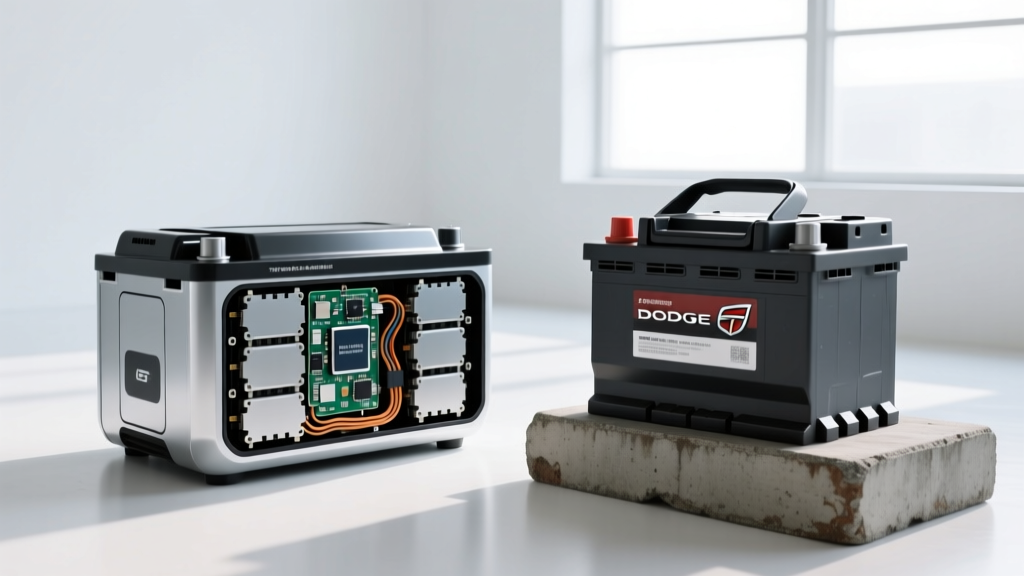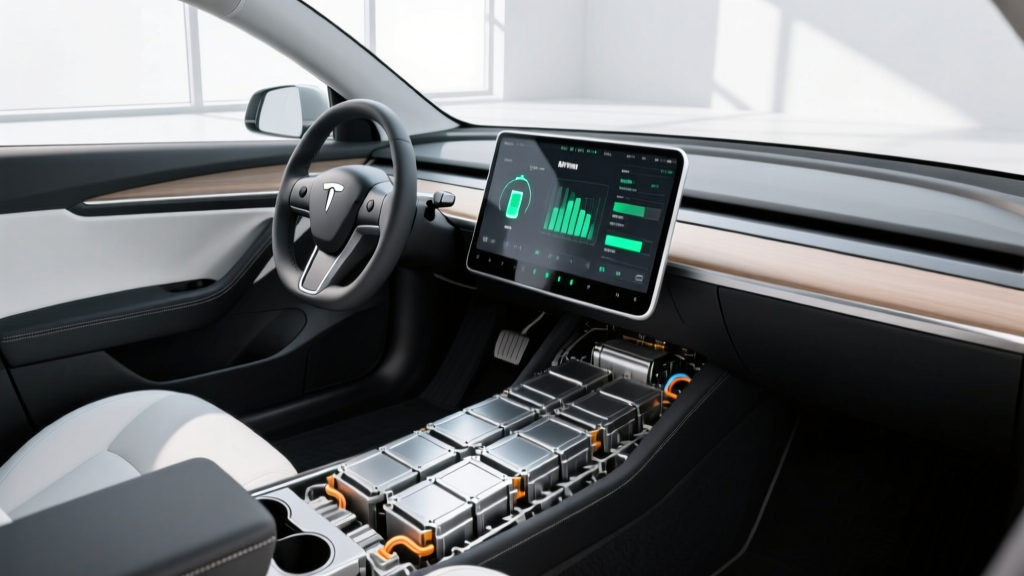
If you've ever wondered where does Tesla get their lithium, the answer is no longer a single country or a single mine. By 2026, Tesla has diversified its lithium supply chain across multiple continents and battery chemistries, fundamentally changing what sits under the floor of a Model 3, Model Y, or Cybertruck. Understanding where Tesla sources its lithium — and how that sourcing connects to battery chemistry, longevity, and replacement cost — is essential for any buyer evaluating the long-term ownership equation.
This guide traces Tesla's lithium supply chain, breaks down the two dominant chemistries (LFP and NMC/NCA) with hard data on degradation and cycle life, explains warranty coverage, and gives you a practical framework for maximizing battery health over 150,000+ miles.
Tesla's Lithium Supply Chain in 2026
Tesla sources lithium from a portfolio of suppliers spanning Australia, South America, China, and increasingly, North America. The company has signed long-term offtake agreements with major producers and is investing in domestic refining capacity to reduce dependence on Chinese processing.
Key lithium sources for Tesla:
- Albemarle (USA/Australia): One of Tesla's longest-standing suppliers, Albemarle operates spodumene mines in Western Australia (Greenbushes, via its Talison joint venture) and brine extraction in Chile's Salar de Atacama. Albemarle's U.S. refining operations in Nevada supply battery-grade lithium hydroxide.
- Livent (now Arcadium Lithium, USA/Argentina): Following the 2024 merger of Livent and Allkem, Arcadium Lithium supplies lithium from brine operations in Argentina and refining capacity in the United States.
- Ganfeng Lithium (China/Australia/Argentina): A major global supplier, Ganfeng provides lithium compounds processed from both Australian spodumene and South American brine. Tesla has used Ganfeng-sourced material for both NMC and LFP cells.
- Piedmont Lithium (USA): Tesla signed an agreement with Piedmont for spodumene concentrate from its Tennessee project, supporting domestic supply chain goals. Production timelines have shifted multiple times, but Piedmont represents Tesla's bet on U.S.-sourced hard-rock lithium.
- Liontown Resources (Australia): Tesla signed a five-year offtake agreement for spodumene concentrate from Liontown's Kathleen Valley operation in Western Australia, with deliveries ramping through the mid-2020s.
The critical nuance: lithium mining and lithium refining are different steps. Australia dominates hard-rock (spodumene) mining, while China controls roughly 60-65% of global lithium refining capacity. Tesla's strategy has been to lock up raw material supply while pushing refining closer to its Gigafactories in Texas and Nevada.
LFP vs NMC/NCA: The Chemistry Decision
Tesla uses two primary cathode chemistries across its lineup, and the lithium source is only part of the story. The cathode chemistry determines energy density, cycle life, cold-weather behavior, and cost.
| Attribute | LFP (Lithium Iron Phosphate) | NMC/NCA (Nickel Manganese Cobalt / Nickel Cobalt Aluminum) |
|---|---|---|
| Energy Density | ~160-180 Wh/kg (cell-level) | ~220-260 Wh/kg (cell-level) |
| Cycle Life | 3,000-5,000+ cycles to 80% SoH | 1,000-2,000 cycles to 80% SoH |
| Cold Performance | Greater range loss below 32°F; slower charge acceptance when cold | Better low-temp discharge; preconditioning helps both |
| Cost | Lower — no nickel or cobalt; iron and phosphate are abundant | Higher — nickel and cobalt are expensive and supply-constrained |
| Thermal Stability | Excellent — inherently more resistant to thermal runaway | Good with active thermal management; higher energy = more risk if damaged |
| Charging to 100% | Recommended periodically for BMS calibration | Generally advised to charge to 80-90% daily for longevity |
| Tesla Models Using | Model 3 RWD, Model Y RWD (Standard Range) | Model 3/Y Long Range & Performance, Model S, Model X, Cybertruck |
The practical takeaway: If you drive a Tesla Standard Range (RWD) model, you likely have an LFP pack — heavier but far more durable over thousands of cycles, and cheaper to produce. Long Range and Performance trims use NMC/NCA for maximum range and acceleration, accepting a modestly shorter cycle life and higher cost.
How Long Do EV Batteries Last? Real Degradation Data
The most common buyer fear — "I'll need a $20,000 battery at 100,000 miles" — is not supported by fleet data. Tesla's own impact reports and third-party analyses from sources like Tesla's Impact Report and independent trackers show far better retention than most owners expect.
Tesla Battery Degradation — Observed Fleet Data (NMC/NCA packs, Model S/X/3 LR):
- Year 1 / ~15,000 miles: 2-4% capacity loss (initial formation loss)
- Year 3 / ~45,000 miles: 5-7% total loss
- Year 5 / ~75,000 miles: 7-10% total loss
- Year 8 / ~120,000 miles: 10-14% total loss
- 200,000 miles (high-mileage fleet samples): 12-18% total loss
Note: LFP packs in Standard Range models show even slower degradation curves, often retaining 90%+ capacity past 150,000 miles due to the chemistry's superior cycle life.
The degradation curve is non-linear: the steepest drop occurs in the first 10,000-20,000 miles (calendar aging and initial SEI layer formation on the anode), then the curve flattens significantly. A well-maintained Tesla battery at 150,000 miles may still hold 85-88% of its original capacity — translating to an EPA-estimated 310-mile Long Range Model 3 retaining roughly 265-275 miles of range.
Tesla Battery Warranty: What's Covered
Tesla's battery and drive unit warranty is one of the most straightforward in the industry, but the details matter when you're evaluating a high-mileage used purchase or planning long-term ownership.
| Model | Warranty Period | Mileage Cap | Minimum Capacity Retention |
|---|---|---|---|
| Model 3 RWD (LFP) | 8 years | 100,000 miles | 70% |
| Model 3 Long Range / Performance | 8 years | 120,000 miles | 70% |
| Model Y (all trims) | 8 years | 120,000 miles | 70% |
| Model S / Model X | 8 years | 150,000 miles | 70% |
| Cybertruck | 8 years | 120,000 miles | 70% |
What the warranty covers: If your battery falls below 70% of its original usable capacity within the warranty period (whichever limit — time or miles — comes first), Tesla will repair or replace the pack to bring it back to at least 70% retention. The warranty also covers manufacturing defects and complete failures.
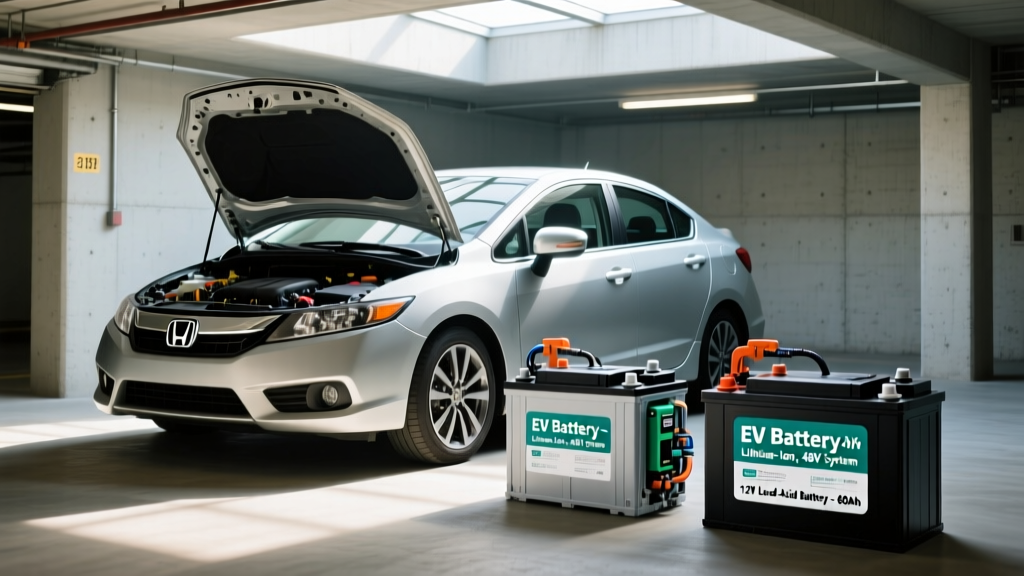
What it does not cover: Normal degradation above the 70% threshold, damage from accidents, flooding, or unauthorized modifications, and cosmetic issues. Importantly, Tesla's warranty applies to the high-voltage traction battery — not the 12V (or 16V lithium-ion) auxiliary battery that powers accessories and computers, which has its own shorter warranty period.
For full warranty terms, always verify against Tesla's official warranty documentation, as terms can shift by model year and region.
Battery Replacement Cost: When and How Much
Out-of-warranty battery replacement is the scenario that generates the most anxiety. Here's the reality based on service data and industry estimates as of 2026:
| Model | Battery Size (Usable kWh) | Chemistry | Estimated Replacement Cost |
|---|---|---|---|
| Model 3 RWD | ~57-60 kWh | LFP | $10,000 - $13,000 |
| Model 3 Long Range | ~75-82 kWh | NMC | $13,000 - $16,000 |
| Model Y Long Range | ~75-82 kWh | NMC | $13,000 - $16,000 |
| Model S / X | ~95-100 kWh | NMC/NCA | $18,000 - $22,000 |
| Cybertruck | ~123 kWh (est.) | NMC (4680 cells) | $18,000 - $25,000 |
When is replacement actually needed? Very rarely before 200,000 miles for most owners. The fleet data shows that even at 200,000 miles, most Tesla packs retain 80-88% capacity. Complete pack failures (cell shorts, BMS faults) are uncommon and usually surface under warranty. The scenario where you'd pay out of pocket — a pack degrading below 70% after 8 years and 120,000+ miles — typically involves high-mileage drivers who may be ready to trade vehicles anyway.
Tesla has also increasingly moved toward module-level repairs rather than full pack replacements. A single degraded or faulty module can sometimes be replaced for $3,000-$5,000 rather than swapping the entire pack. The 4680-cell structural pack in the Cybertruck and newer Model Y vehicles complicates this, as the cells are integrated into the vehicle structure, potentially raising labor costs.
Factors That Affect Battery Life (and What You Can Control)
Battery degradation is driven by a combination of calendar aging (time and temperature) and cycle aging (charge/discharge use). Here's what the data shows matters most:
Battery Longevity Checklist
- Daily charge limit: Set to 80% for NMC/NCA packs (Tesla's in-car recommendation). LFP packs should be charged to 100% at least once per week for accurate BMS state-of-charge calibration.
- Avoid prolonged storage at 100% SoC: Sitting at full charge for days accelerates electrolyte decomposition, particularly in hot climates. If you must charge to 100% for a road trip, time it so you depart shortly after reaching full.
- DC fast charging frequency: Occasional Supercharging (1-2 times per week) shows minimal impact on degradation. Daily DC fast charging, especially at peak rates of 250 kW, adds modestly to degradation — fleet data suggests ~1-2% additional loss over 100,000 miles vs. primarily Level 2 charging.
- Extreme heat exposure: Sustained ambient temperatures above 95°F accelerate calendar aging. Tesla's active thermal management (liquid cooling) mitigates this substantially, but parking in shade or a garage in Arizona or Texas summers still helps.
- Extreme cold: Cold doesn't permanently damage the battery, but charging a frozen pack without preconditioning can cause lithium plating on the anode. Always use the Tesla app to precondition the battery before charging in sub-30°F weather.
- Regenerative braking: Using regen (even at High settings) does not meaningfully increase degradation. The charge currents from regen are far lower than DC fast charging.
How to Check and Monitor Battery Health (SoH)
Tesla does not expose a direct "State of Health" percentage in the vehicle's UI the way some competitors do, but owners have several methods to estimate remaining capacity:
- Projected range at 100%: Charge the vehicle to 100% and note the displayed range. Compare this to the original EPA-rated range. If your Model 3 Long Range originally showed 358 miles at 100% and now shows 315, that's roughly 88% retention. Note: Tesla's displayed range uses a fixed energy-per-mile calculation, not real-time conditions.
- Tesla Service Mode (hidden): Some owners access Service Mode (tap the "Software" label on the car info screen multiple times) to view nominal full pack energy (NFP), which provides a more precise kWh reading of current capacity.
- Third-party apps: Tools like TeslaFi, Tessie, or Stats (iOS) log charge sessions and calculate SoH trends over time by comparing energy added during charges to the expected capacity. These are more reliable than a single snapshot because they average across multiple data points.
- OBD-II dongles: Devices like the OBDLink MX+ paired with apps such as Scan My Tesla can read BMS-reported pack health data directly from the CAN bus, giving you nominal remaining capacity in kWh.
For used-EV buyers, requesting a pre-purchase battery health report from a Tesla Service Center is advisable. Tesla can pull detailed pack logs showing capacity, charge history, and cell balancing data.
Emerging Battery Tech: Solid-State and Silicon Anodes
The next generation of battery technology promises higher energy density, faster charging, and longer cycle life — but timelines remain fluid and production-scale availability is still ahead.
Solid-state batteries: Companies like QuantumScape, Toyota, and Samsung SDI are developing solid-state cells that replace the liquid electrolyte with a solid ceramic or polymer separator. Benefits include higher energy density (potentially 350-400 Wh/kg at cell level), reduced fire risk, and faster charging. However, manufacturing challenges — particularly achieving consistent solid-electrolyte interfaces at scale — mean commercial EV deployment is realistically 2028-2030 at the earliest, and likely in limited-production or premium models first. Tesla has not announced a solid-state program; its R&D focus remains on optimizing the 4680 form factor.
Silicon-dominant anodes: Replacing graphite anodes with silicon (or silicon-carbon composites) can boost energy density by 20-40% because silicon can store roughly 10x more lithium ions per unit mass. Companies like Sila Nanotechnologies and Group14 are supplying early production silicon-anode materials. Tesla's 4680 cells already incorporate incremental silicon content in the anode. Expect gradual increases in silicon loading through the late 2020s rather than a sudden step-change.
Sodium-ion batteries: For lower-cost, shorter-range applications, sodium-ion chemistry (using abundant sodium instead of lithium) is entering production in China via CATL and BYD. Tesla has not adopted sodium-ion, but it represents a potential future option for entry-level models where range is less critical and cost is paramount. Energy density is roughly 120-160 Wh/kg — adequate for city-focused vehicles with 150-200 miles of range.
All of these technologies should be considered forward-looking and not currently available in production Tesla vehicles. The LFP and NMC/NCA chemistries described above remain the standard through at least 2028.
Frequently Asked Questions
Does Tesla mine its own lithium?
Not directly, but Tesla has taken steps toward vertical integration. The company holds lithium claims in Nevada and has invested in refining partnerships, but as of 2026, Tesla primarily sources lithium through offtake agreements with established miners like Albemarle, Ganfeng, Liontown, and Arcadium Lithium. Tesla's Austin-based lithium refining facility, announced in 2023, is expected to begin partial production in the late 2020s, processing spodumene concentrate into battery-grade lithium hydroxide.
Why does Tesla use LFP in Standard Range models?
LFP (lithium iron phosphate) is cheaper to produce because it contains no nickel or cobalt — two of the most expensive and supply-constrained battery metals. LFP also offers superior cycle life (3,000-5,000+ cycles) and better thermal stability. The trade-off is lower energy density, meaning a heavier pack for the same range. For Standard Range models where maximum range is not the priority, LFP is the economically rational choice and allows Tesla to price these trims lower.
Will frequent Supercharging ruin my Tesla battery?
No, but it does add modestly to long-term degradation. Fleet data comparing primarily home-charged (Level 2) vehicles to frequently Supercharged vehicles shows roughly 1-2% additional capacity loss over 100,000 miles for heavy DC fast-charging users. Tesla's battery thermal management system actively cools the pack during Supercharging to limit heat-related stress. For most owners who Supercharge on road trips and use Level 2 at home, the impact is negligible.
What happens if my Tesla battery degrades to 65% capacity?
If this occurs within the warranty period (8 years / 100,000-150,000 miles depending on model), Tesla is obligated to repair or replace the battery to bring retention back to at least 70%. If it occurs outside the warranty period, you'd pay out of pocket for replacement or module repair. However, real-world fleet data shows that reaching 65% capacity is extremely rare before 250,000+ miles for most chemistries and usage patterns.
How does Tesla's lithium sourcing affect the §30D federal tax credit?
Under current IRS §30D clean vehicle credit rules, eligibility for the full $7,500 credit depends on meeting critical minerals and battery component sourcing thresholds that increase annually. For 2026, a growing percentage of critical minerals (including lithium) must be extracted or processed in the U.S. or a free-trade-agreement partner country. Tesla's sourcing from Australia (an FTA partner) and its investments in U.S. refining support credit eligibility, but the specific qualification varies by model, trim, and battery batch. Always verify current eligibility on the IRS website or with a tax professional before relying on the credit in your purchase decision. Income caps ($150K single / $300K joint for new vehicles) and MSRP caps ($55K sedans / $80K SUVs and trucks) also apply.
Can I upgrade my Tesla to a larger or newer battery later?
Tesla does not offer official battery upgrades for existing vehicles. While the physical pack form factors have changed over the years (from 18650 to 2170 to 4680 cells), retrofitting is not supported by Tesla's service network. Some third-party shops have explored pack swaps, but this voids any remaining warranty and introduces compatibility challenges with the BMS and powertrain software. Plan your battery size at purchase.