Why Tesla Built Its Own Lithium Refinery
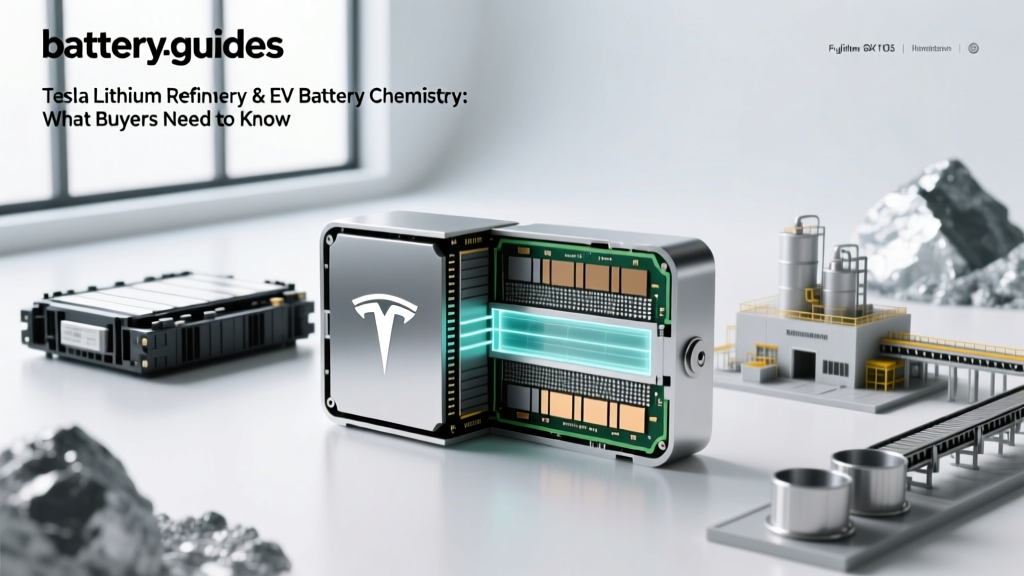
For years, the electric vehicle industry has depended on a handful of overseas processors to turn raw spodumene and brine into battery-grade lithium hydroxide. Tesla's decision to build a domestic lithium refinery in Robstown, Texas, represents a strategic shift: controlling the most constrained node in the battery supply chain. The facility is designed to process raw spodumene concentrate into lithium hydroxide monohydrate (LiOH·H₂O), the compound used in high-nickel NMC and NCA cathodes.
For EV shoppers, this matters more than it might seem. The source and processing of lithium directly affects which battery chemistry ends up in your vehicle, whether that vehicle qualifies for the §30D federal tax credit (which includes critical-mineral sourcing requirements), and the long-term cost trajectory of battery packs. As of 2026, the Texas refinery is ramping production capacity, and Tesla has signaled it intends to supply both its own cells and potentially third-party automakers.
But chemistry choice — not just lithium source — is what determines your real-world ownership experience. Let's break down what's actually inside modern EV battery packs, how long they last, and what it costs when they eventually need attention.
LFP vs. NMC vs. NCA: The Chemistry Breakdown
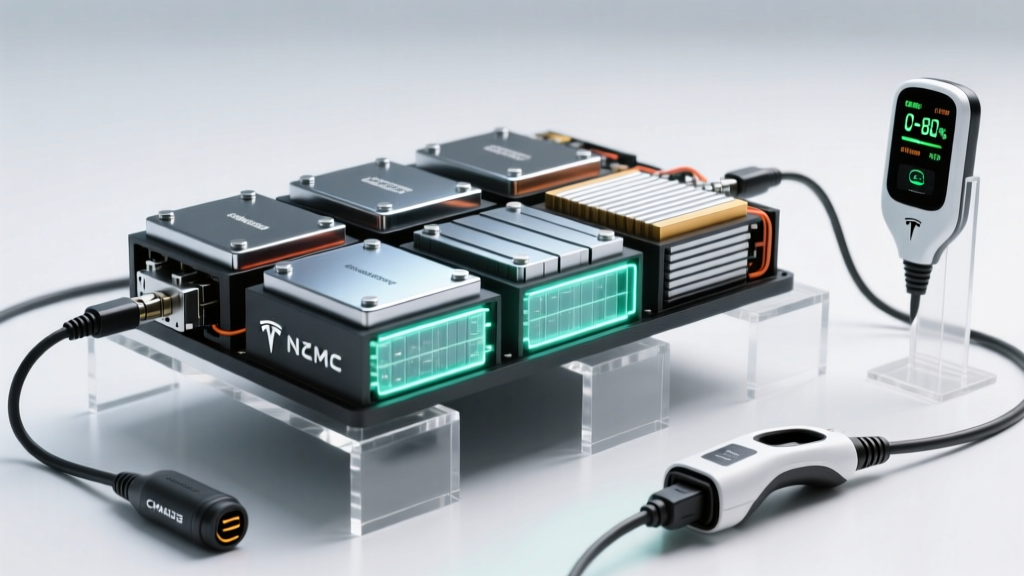
Not all lithium-ion batteries are the same. The cathode chemistry dictates energy density, lifespan, cold-weather behavior, and cost. Tesla uses two primary chemistries across its lineup: Lithium Iron Phosphate (LFP) for standard-range models and Nickel Manganese Cobalt / Nickel Cobalt Aluminum (NMC/NCA) for long-range and performance variants. Other automakers follow a similar split.
| Attribute | LFP (LiFePO₄) | NMC / NCA |
|---|---|---|
| Energy Density | ~160–180 Wh/kg (cell-level) | ~220–300 Wh/kg (cell-level) |
| Typical Cycle Life | 3,000–5,000+ cycles to 80% SoH | 1,000–2,000 cycles to 80% SoH |
| Cold Performance | Moderate — more range loss below 32°F | Better low-temp discharge efficiency |
| Cost per kWh | Lower — no cobalt or nickel | Higher — commodity-exposed metals |
| Thermal Stability | Excellent — higher runaway threshold | Good — requires more active management |
| Recommended Daily Charge | 100% SoC is fine | 80% SoC for daily; 100% for trips |
| Common Applications | Tesla Model 3 RWD, Model Y RWD, many Chinese-market EVs | Tesla LR/Performance, Hyundai Ioniq 5/6, Ford F-150 Lightning Extended |
| Cobalt Content | None | Low to moderate (trending lower) |
The practical takeaway: If you drive a predictable daily commute and want maximum battery longevity with minimal babysitting, LFP is the stronger choice. If you need maximum range per charge and regularly take long highway trips, NMC/NCA packs deliver the energy density that makes 320+ EPA miles feasible in a sedan.
Tesla's Texas lithium refinery specifically targets the lithium hydroxide needed for NMC/NCA cells. LFP cells, by contrast, use lithium carbonate — a different (and generally cheaper) chemical pathway. This means the refinery's output feeds directly into Tesla's long-range and performance vehicles, while LFP supply continues to flow primarily from established processors in China and Chile.
How Long Do EV Batteries Actually Last?
The short answer: longer than most buyers expect. The traction battery in a modern EV is engineered to outlast the vehicle's conventional service life. Data aggregated from fleet operators, owner surveys, and manufacturer filings paints a clear picture.
Real-World Degradation Data Points
- Tesla 2025 Impact Report: Model 3/Y vehicles retained an average of ~88% battery capacity after 200,000 miles. Model S/X retained approximately 85% over the same distance.
- Recurrent Auto (2024 fleet study): Across 15,000+ EVs monitored, median range loss was 5–8% after 3 years / 60,000 miles, with most degradation occurring in the first 12–18 months before stabilizing.
- Taxi/fleet data (high-mileage): Tesla Model 3 units used in ride-hailing have surpassed 300,000 miles on original packs with ~75–80% State of Health (SoH).
- Nissan Leaf (passive-cooled, older gen): Earlier 24/30 kWh packs showed 15–25% loss at 80,000 miles — a cautionary example of how thermal management matters.
Sources: Tesla Impact Reports, Recurrent Auto battery health data, fueleconomy.gov
Degradation is not linear. Most lithium-ion packs experience a steeper capacity drop in the first year or two (roughly 2–5%), then settle into a very slow, nearly flat decline for years. This "knee" in the degradation curve means a pack that has lost 8% after two years is not on track to lose 8% every two years thereafter.
Battery Warranty: What's Actually Covered
Every major automaker backs its high-voltage traction battery with a warranty that far exceeds the powertrain coverage on a conventional vehicle. The federal minimum is 8 years / 100,000 miles for emissions-related components, and EV makers have largely adopted this as the battery warranty baseline — with California Air Resources Board (CARB) states often requiring 10 years / 150,000 miles.
| Manufacturer | Warranty Period | Mileage Cap | Capacity Threshold |
|---|---|---|---|
| Tesla (Model 3/Y) | 8 years | 100,000–120,000 mi (varies by trim) | 70% retention |
| Tesla (Model S/X) | 8 years | 150,000 mi | 70% retention |
| Hyundai / Kia | 10 years | 100,000 mi | 70% retention |
| Ford (F-150 Lightning) | 8 years | 100,000 mi | 70% retention |
| GM (Ultium platform) | 8 years | 100,000 mi | 70% retention |
| BMW | 8 years | 100,000 mi | 70% retention |
| Rivian | 8 years | 175,000 mi (R1T/R1S) | 70% retention |
Critical detail: The warranty guarantees the battery will retain at least 70% of its original usable capacity. If your 75 kWh pack drops below 52.5 kWh of usable energy within the warranty window, the manufacturer must repair or replace it — typically with a refurbished unit that meets the same threshold. This is a capacity warranty, not a "complete failure" warranty. A battery that still holds 72% at 95,000 miles is functioning within spec, even if the range reduction is noticeable.
EV Battery Replacement Cost: What to Budget
Out-of-warranty battery replacement is the single most expensive repair an EV can require. However, context is essential: the vast majority of EV batteries never need replacement during the original owner's tenure, and pack prices have declined steadily as manufacturing scales.
| Vehicle / Pack Size | Battery Capacity | Estimated Replacement Cost |
|---|---|---|
| Tesla Model 3 RWD (LFP) | ~60 kWh | $8,000 – $12,000 |
| Tesla Model Y Long Range (NMC) | ~75 kWh | $12,000 – $16,000 |
| Tesla Model S / X (NCA) | ~100 kWh | $15,000 – $22,000 |
| Ford F-150 Lightning Extended | ~131 kWh | $20,000 – $30,000 |
| Hyundai Ioniq 5 (Standard Range) | ~58 kWh | $8,000 – $11,000 |
| Chevrolet Silverado EV (Large Pack) | ~200 kWh | $25,000 – $38,000 |
These figures include the pack itself plus labor at a dealership or authorized service center. Independent EV shops and refurbished packs can reduce costs by 20–40%. Module-level repair — replacing individual failed modules within a pack rather than the entire assembly — is increasingly available for $2,000–$6,000 depending on the vehicle and the number of modules affected.
When is replacement typically needed? Most traction batteries that require attention do so after 150,000–250,000 miles, and many never need replacement at all. Early failures (under 50,000 miles) are rare and typically covered under warranty. The vehicles most at risk of out-of-warranty replacement costs are high-mileage fleet vehicles and first-generation EVs with passive thermal management.
Factors That Accelerate Battery Degradation
Not all miles are equal when it comes to battery wear. Understanding the stressors lets you make informed trade-offs between convenience and longevity.
Battery Care Checklist: Maximize Pack Life
- Avoid sustained 100% SoC (NMC/NCA): Store and commute at 80% or below. Charge to 100% only when you'll drive immediately. LFP owners can charge to 100% regularly — Tesla recommends it for accurate BMS calibration.
- Limit DC fast charging to road trips: Occasional Supercharging or Electrify America sessions are fine. Daily reliance on 150+ kW DC charging accelerates degradation by ~1–3% over the pack's life compared to Level 2 home charging.
- Precondition before fast charging: Tesla's navigation system does this automatically. For other EVs, use the departure timer or preconditioning feature to bring the pack to ~95–104°F before a DC session. A cold pack charges slower and suffers more lithium plating stress.
- Avoid extreme SoC in extreme heat: A pack sitting at 100% SoC in 105°F ambient temperature is under maximum calendar-aging stress. If parking in hot climates for extended periods, leave the pack at 50–60%.
- Use Level 2 as your daily charger: A 7.2–11.5 kW home Level 2 charger adds 25–44 miles of range per hour and generates far less thermal stress than DC fast charging. See the DOE's EV technology overview for charging-level details.
- Don't baby it too much: The difference between meticulous and normal care is typically 3–5% additional capacity retention over 10 years. Drive the car.
Monitoring Battery Health: State of Health (SoH)
State of Health is expressed as a percentage: a new pack is 100% SoH, and a degraded pack that holds 85% of its original capacity is at 85% SoH. Here's how to check it across common platforms:
- Tesla: The in-car Service menu (available on 2023+ software) includes a Battery Health test that runs over several days and reports SoH percentage. Third-party tools like Tessie or TeslaFi can estimate SoH from charge/discharge logs.
- Hyundai/Kia: The dealer diagnostic tool reports SoH. Owners can approximate it by comparing actual kWh added during a 10–80% charge against the pack's rated usable capacity.
- GM (Ultium): The myChevrolet/myCadillac app includes battery health metrics. OnStar diagnostics can provide a detailed SoH report.
- Ford: FordPass provides a battery state-of-charge display; for SoH, a dealer OBD-II scan is the most reliable method.
- OBD-II scanners: Devices like the OBDLink MX+ paired with apps such as ABRP (A Better Route Planner) or Leaf Spy (Nissan) can pull SoH data directly from the BMS.
Why SoH matters at purchase: If you're buying a used EV, SoH is the single most important metric. A 2023 Model 3 with 45,000 miles and 94% SoH is a better bet than one with 30,000 miles and 89% SoH — the second car likely saw heavy DC fast charging or high-SoC storage in heat.
The Tesla Lithium Refinery's Impact on Supply and Pricing
Tesla's Robstown facility targets an annual output of roughly 50 GWh worth of lithium hydroxide at full capacity — enough to supply batteries for approximately 500,000 to 700,000 vehicles depending on pack size. This is significant but not transformational in isolation; global lithium demand is projected to exceed 1.5 million metric tons of lithium carbonate equivalent (LCE) annually by 2028.
What the refinery does accomplish is vertical integration and supply-chain resilience:
- Critical mineral sourcing for §30D: Under current IRS §30D rules, vehicles must meet escalating critical-mineral sourcing thresholds to qualify for the full $7,500 credit (subject to MSRP caps of $55,000 for sedans and $80,000 for SUVs/trucks, and buyer income limits of $150,000 single / $300,000 joint). Domestically refined lithium helps Tesla models meet these requirements.
- Cost insulation: By processing spodumene in-house, Tesla reduces its exposure to third-party processor markups, which historically add 20–40% to the cost of battery-grade lithium hydroxide.
- Quality control: Refining its own lithium allows Tesla to specify impurity thresholds optimized for its cell designs, potentially improving cycle life and consistency.
For buyers, the downstream effect is incremental but real: Tesla's ability to control more of its supply chain supports competitive pricing and helps keep its vehicles eligible for federal incentives as sourcing rules tighten.
Emerging Battery Technologies: What's Next (and When)
Several next-generation technologies are in development, but none are commercially available in consumer vehicles as of 2026. Here's a realistic timeline assessment:
- Silicon-dominant anodes: Companies like Sila Nanotechnologies and Group14 are shipping silicon-carbon composite anodes that increase energy density by 20–40% over graphite. Limited deployment in premium EVs is expected by 2027–2028. Mercedes-Benz and GM have announced partnerships.
- Semi-solid-state cells: NIO's 150 kWh semi-solid pack (available in China since 2024) demonstrates ~360 Wh/kg cell-level energy density. Western OEMs are targeting 2028–2030 for limited production. These cells still use a liquid electrolyte in part, so they are not true solid-state.
- True solid-state batteries: Toyota, Samsung SDI, and QuantumScape are targeting 2028–2032 for initial commercial deployment. Solid-state cells promise 400+ Wh/kg, faster charging, and improved safety, but manufacturing yield and cost remain significant hurdles. Do not plan a purchase around solid-state availability before 2030.
- Sodium-ion batteries: CATL and BYD are deploying sodium-ion cells in low-cost, short-range vehicles in China. Energy density (~140 Wh/kg) limits them to city cars and energy storage, but they eliminate lithium entirely. US-market availability is uncertain and likely post-2028.
- Lithium-sulfur (Li-S): Still in lab and prototype phases. Theoretical energy density is exceptional (~2,600 Wh/kg), but cycle life remains far too low for automotive use. Realistic timeline: 2032+ at the earliest.
None of these technologies invalidate a 2026 EV purchase. Today's NMC and LFP cells are mature, well-understood, and backed by comprehensive warranties. The improvements coming will be incremental in their first generation, and today's vehicles will remain functional and supported for years to come.
Frequently Asked Questions
How long do EV batteries last in years and miles?
Most modern EV traction batteries are designed to last 15–20 years or 200,000–300,000 miles before degrading to 70–80% of original capacity. Real-world fleet data from Tesla, Recurrent Auto, and independent researchers consistently shows median degradation of 5–12% over the first 100,000 miles, with the rate slowing significantly afterward. Many packs outlive the vehicles they're installed in.
How much does it cost to replace an EV battery?
Out-of-warranty replacement costs range from approximately $8,000 for a standard-range pack (58–60 kWh) to $30,000+ for the largest packs (130–200 kWh). However, most batteries never need replacement during the original ownership period. Warranty coverage (8 years / 100,000 miles minimum) protects against premature degradation below 70% capacity. Module-level repairs can cost $2,000–$6,000 as an alternative to full-pack replacement.
What does the EV battery warranty actually cover?
The battery warranty guarantees that the high-voltage traction pack will retain at least 70% of its original usable capacity for the warranty period (typically 8 years / 100,000 miles, with some manufacturers offering 10 years). If capacity falls below the threshold, the manufacturer will repair or replace the pack. The warranty covers defects and abnormal degradation, not damage from accidents, flooding, or unauthorized modifications. It does not cover the 12V auxiliary battery, which has a separate (shorter) warranty.
How do I check my EV battery's State of Health?
Methods vary by brand. Tesla owners can run the built-in Battery Health test via the Service menu. Hyundai/Kia and GM owners can request SoH data through dealer diagnostics or connected-car apps. Third-party OBD-II scanners paired with apps like TeslaFi, Tessie, or Leaf Spy can pull SoH directly from the battery management system. For used-EV purchases, always verify SoH before committing.
LFP vs NMC — which battery chemistry is better?
Neither is universally better; they serve different needs. LFP (Lithium Iron Phosphate) offers longer cycle life (3,000–5,000 cycles), lower cost, no cobalt, and the ability to charge to 100% daily without accelerated wear — ideal for commuters and standard-range vehicles. NMC/NCA delivers higher energy density (220–300 Wh/kg), better cold-weather performance, and more range per charge — better for long-range and performance models. If your daily driving is under 60 miles and you want maximum longevity, choose LFP. If you regularly drive 200+ miles between charges, choose NMC/NCA.
Does Tesla's lithium refinery affect my vehicle's tax credit eligibility?
Potentially, yes. The IRS §30D clean vehicle credit requires that an increasing percentage of critical minerals in the battery be sourced from the US or a free-trade-agreement partner. Domestically refined lithium from Tesla's Texas facility helps Tesla vehicles meet these thresholds. However, eligibility also depends on vehicle MSRP caps ($55,000 sedans, $80,000 SUVs/trucks), buyer income limits ($150,000 single / $300,000 joint), and battery component sourcing rules. Always verify current-year eligibility on the IRS website or with a tax professional before relying on the credit in your purchase decision.