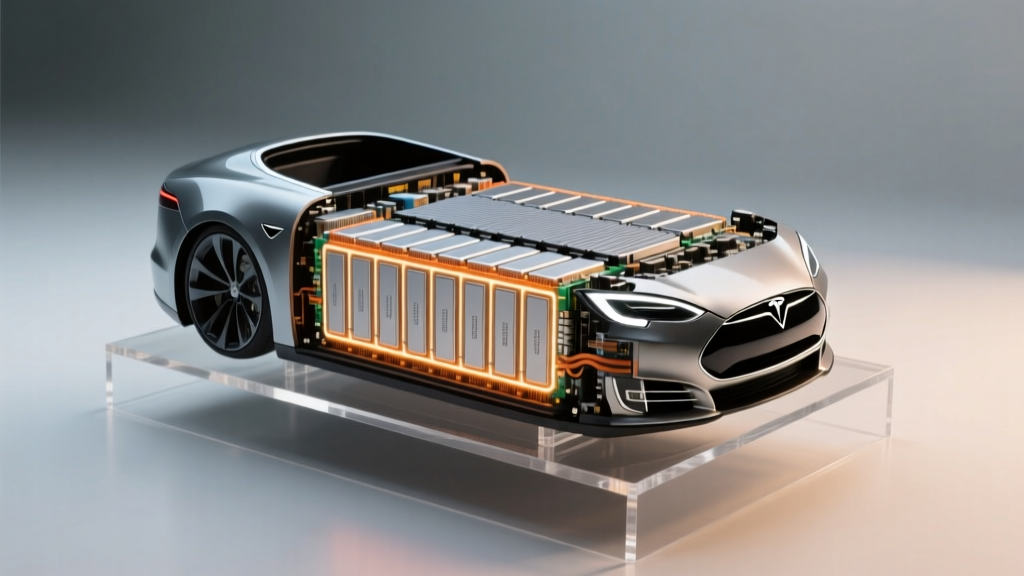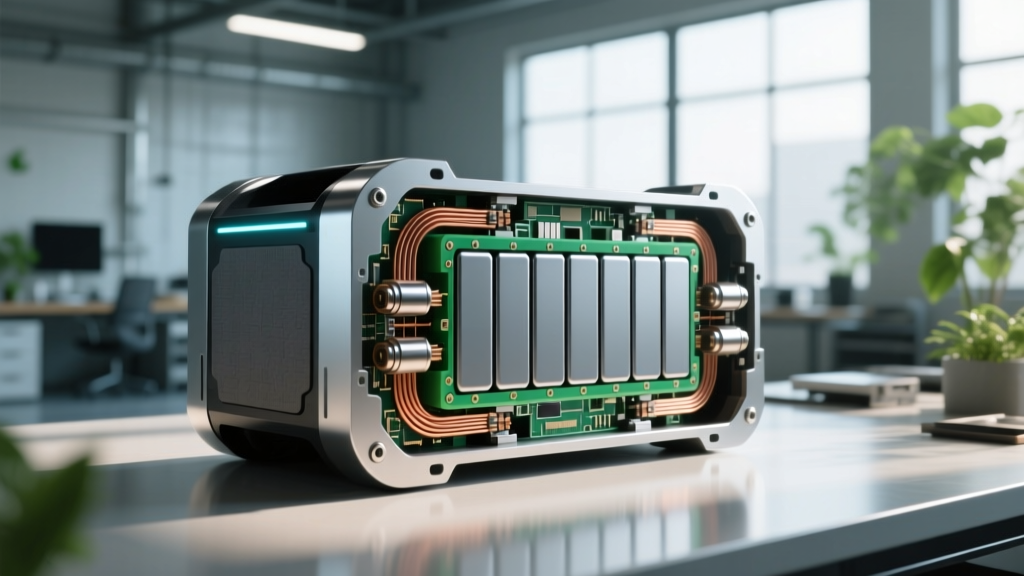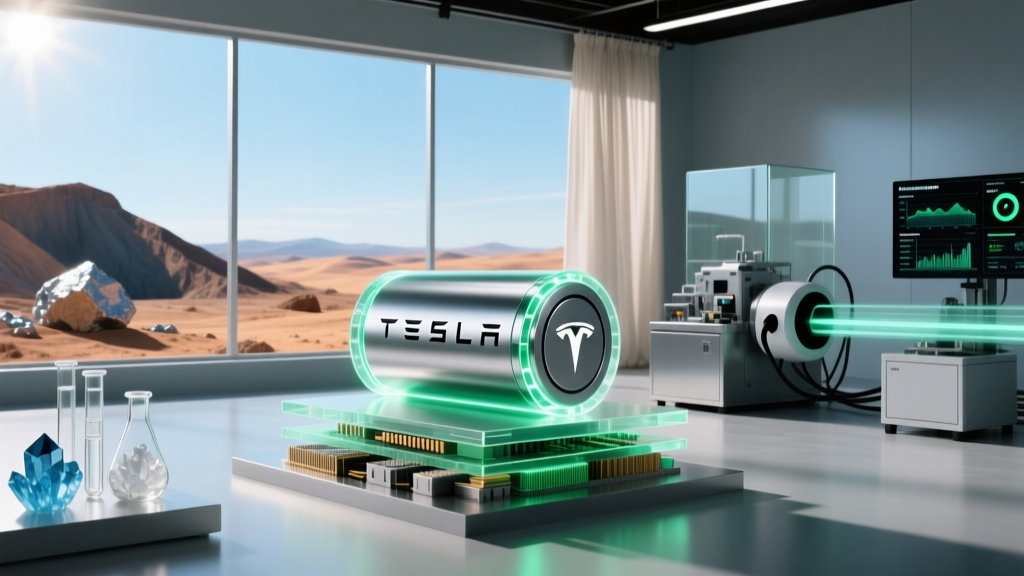
The electric-vehicle supply chain begins long before a car rolls off the assembly line. For Tesla, securing lithium — the element that gives modern EV batteries their energy density — has become a strategic priority, with investments in domestic refining and long-term supply agreements reshaping how batteries are sourced, priced, and engineered. But for the average EV shopper in 2026, the question isn't where the lithium comes from; it's what ends up in the pack under their floor, how long it lasts, and what it costs when it doesn't.
This guide traces the path from Tesla's lithium sourcing strategy to the two dominant chemistries now in its vehicles (and increasingly across the industry), then grounds everything in the numbers buyers actually need: degradation curves, warranty thresholds, replacement costs, and the daily habits that determine whether a pack lasts 150,000 miles or 300,000.
Why Tesla's Lithium Supply Chain Matters for Battery Chemistry
Tesla's push into lithium refining — most notably its investment in domestic processing capacity and supply agreements with producers in Australia, Chile, and North America — is driven by a simple constraint: battery chemistry is dictated by raw-material availability and cost. The two dominant lithium-ion chemistries in Tesla's 2026 lineup, Lithium Iron Phosphate (LFP) and Nickel Manganese Cobalt (NMC), require different mineral inputs and deliver different performance profiles.
LFP cells use iron and phosphate alongside lithium, avoiding the expensive and geopolitically sensitive nickel and cobalt supply chains. NMC cells trade higher material cost for greater energy density. Tesla's lithium procurement strategy supports both: LFP for the high-volume, cost-sensitive Model 3 and Model Y Standard Range trims, and NMC for Long Range and Performance variants where maximizing miles per kWh of battery matters most.
The result is a bifurcated lineup where buyers choose not just a trim level, but fundamentally different battery chemistries — each with distinct longevity, charging, and cold-weather characteristics.
LFP vs NMC: Chemistry Trade-Offs Explained
The choice between LFP and NMC isn't about one being universally superior. It's about which trade-offs align with your driving pattern, climate, and ownership horizon.
| Attribute | LFP (Lithium Iron Phosphate) | NMC/NCA (Nickel-based) |
|---|---|---|
| Energy Density | Lower (~160-180 Wh/kg cell-level) | Higher (~220-260 Wh/kg cell-level) |
| Typical Use in Tesla | Model 3/Y Standard Range (RWD) | Model 3/Y Long Range, Performance, Model S/X |
| Cycle Life | 3,000-5,000+ cycles to 80% capacity | 1,500-2,500 cycles to 80% capacity |
| Cold-Weather Performance | Greater range loss in freezing temps (15-30% reduction) | Better cold performance (10-20% reduction) |
| Charging to 100% SoC | Recommended weekly for BMS calibration | Generally limited to 80-90% daily; 100% for trips only |
| Cost per kWh | Lower — no nickel or cobalt | Higher — nickel/cobalt price volatility |
| Thermal Stability | Superior — higher thermal runaway threshold | Good, but requires more active cooling |
The practical upshot: if you drive a predictable daily commute of 40-80 miles, charge at home, and live in a temperate or warm climate, LFP is the more durable and economical choice. If you need maximum range for road trips, live in a cold-weather state, or want the fastest 0-60 times, NMC delivers — but with a somewhat shorter cycle-life ceiling and more careful state-of-charge management.
How Long Do EV Batteries Actually Last?
The short answer, backed by fleet data: most modern EV batteries outlast the vehicles they're installed in. But "last" requires definition. A battery doesn't suddenly fail at a specific mileage; it gradually loses capacity until the reduced range becomes inconvenient for the owner.
Tesla's own 2025 Impact Report stated that Model 3/Y batteries retain approximately 85% of original capacity after 150,000 miles. Independent fleet data from sources like Recurrent Auto corroborate this, showing median degradation of 12-15% over 8 years for NMC packs and 8-12% for LFP packs in similar mileage brackets.
- Year 1: 2-4% loss (initial formation period — steepest early curve)
- Years 2-4: ~1-2% per year (plateau phase)
- Years 5-8: ~0.5-1.5% per year (gradual long-term fade)
- 100,000 miles (NMC): ~88-92% State of Health (SoH)
- 100,000 miles (LFP): ~90-95% SoH
- 200,000 miles (NMC): ~80-87% SoH
- 200,000 miles (LFP): ~85-92% SoH
Translation: a Model 3 Long Range with an EPA-estimated 341 miles when new would realistically offer around 285-305 miles at 100,000 miles driven — still highly functional for most owners. At 200,000 miles, expect 260-295 miles. That's meaningful range loss, but not catastrophic.
What the Battery Warranty Actually Covers
Tesla's battery warranty is among the industry's more straightforward, but the details matter when you're evaluating a high-mileage used EV or projecting long-term ownership risk.
| Model / Trim | Battery Warranty | Capacity Retention Threshold |
|---|---|---|
| Model 3 RWD (LFP) | 8 years / 100,000 miles | 70% minimum SoH |
| Model 3 Long Range / Performance (NMC) | 8 years / 120,000 miles | 70% minimum SoH |
| Model Y RWD (LFP) | 8 years / 100,000 miles | 70% minimum SoH |
| Model Y Long Range / Performance (NMC) | 8 years / 120,000 miles | 70% minimum SoH |
| Model S / Model X | 8 years / 150,000 miles | 70% minimum SoH |
The 70% threshold is critical context. A warranty claim requires the battery to fall below 70% of original usable capacity within the time/mileage window. Given the degradation data above, the vast majority of Tesla packs never hit this threshold during the warranty period. Fleet data suggests fewer than 2-3% of packs require warranty replacement before 150,000 miles — and those are typically early-manufacturing-defect failures, not gradual degradation claims.
Importantly, the warranty covers the high-voltage traction battery and drive unit(s). It does not cover the 12V auxiliary battery (a separate, smaller battery that powers electronics and typically needs replacement every 4-6 years, similar to a conventional car battery).
EV Battery Replacement Cost: When and How Much
Battery replacement is the specter that haunts EV purchase decisions. The cost is real — but so is the context. Most EVs are retired, totaled, or traded in before the battery requires replacement. When replacement is needed, it's typically due to a manufacturing defect (covered by warranty) or physical damage, not end-of-life degradation.
| Model | Battery Size (usable kWh) | Estimated Replacement Cost | Typical Trigger |
|---|---|---|---|
| Model 3 RWD (LFP) | ~57 kWh | $10,000 - $14,000 | Physical damage, rare cell failure post-warranty |
| Model 3/Y Long Range (NMC) | ~75 kWh | $13,000 - $18,000 | Physical damage, rare cell failure post-warranty |
| Model Y Performance (NMC) | ~75 kWh | $14,000 - $19,000 | Physical damage, rare cell failure post-warranty |
| Model S / X (NMC) | ~95-100 kWh | $18,000 - $25,000 | High-mileage degradation, physical damage |
These figures include the battery pack and labor but can vary by service center and whether Tesla offers a refurbished pack (increasingly common, and 20-35% cheaper than new). Third-party EV battery repair shops are also emerging, offering module-level repairs for $3,000-$7,000 when only a subset of cells has failed — though Tesla's official service network remains the primary option.
For perspective: a Model 3 owner driving 12,000 miles/year would need to reach roughly year 14-18 before degradation alone might push range below a practical threshold — and even then, the car remains drivable, just with reduced range.
Factors That Accelerate or Protect Battery Life
Not all miles are equal in their effect on battery health. The following factors have the most measurable impact on long-term State of Health:
- Limit DC fast charging to road trips. Frequent 150-250 kW DC sessions accelerate degradation by 1-3% over 100,000 miles compared to primarily Level 2 home charging. Tesla's battery management system (BMS) mitigates this with active thermal preconditioning, but physics still applies.
- Avoid sustained 100% or 0% SoC. For NMC packs, set daily charge limit to 80-90%. Charge to 100% only when departing on a trip. For LFP packs, Tesla recommends charging to 100% at least once weekly for BMS calibration — this is chemistry-specific and safe for LFP.
- Minimize extreme-temperature exposure. Park in a garage when possible. In sub-20°F weather, use scheduled departure with preconditioning to warm the battery before driving and charging. Tesla's heat pump (standard on 2021+ models) significantly reduces cold-weather energy penalty.
- Use regenerative braking moderately in cold weather. Cold batteries accept less regen current; Tesla's BMS limits this automatically, but aggressive driving on a cold-soaked pack adds stress.
- Don't store the vehicle at low SoC. If leaving a Tesla unplugged for weeks, maintain ~50% SoC. Storage below 20% for extended periods risks cell imbalance.
The single most impactful habit: charge primarily at home on a Level 2 charger (7-11.5 kW) and reserve DC fast charging for trips. Owners who follow this pattern consistently see degradation at the lower end of the ranges cited above.
How to Monitor Your Tesla's Battery Health
Tesla doesn't display a direct "State of Health" percentage in the vehicle UI, but owners have several reliable methods to track degradation:
- Tesla App / In-Car Energy Display: Compare the displayed "rated range" at 100% SoC (or extrapolated from your charge limit) to the original EPA-rated range. A Model 3 Long Range originally rated at 341 miles that shows 310 miles at 100% has approximately 91% SoH.
- Third-party tools: Services like Tessie and TeslaFi log charging data over time and calculate SoH trends from energy-in vs. range-added ratios.
- Service Mode (2024+ vehicles): Some Tesla models expose a nominal full-pack capacity figure in Service Mode, allowing a direct kWh comparison to the original spec.
- Supercharger session data: Tracking how many kWh a 10-80% session delivers over time, compared to early-ownership baselines, provides a practical SoH proxy.
A gradual decline is normal and expected. A sudden drop of 5%+ in a short period warrants a service appointment, as it may indicate a module imbalance or cell defect covered under warranty.
Beyond Lithium-Ion: Solid-State and Silicon Anode Timelines
Emerging battery technologies promise step-change improvements in energy density, charging speed, and longevity — but none are commercially available in production EVs as of 2026.
Solid-state batteries replace the liquid electrolyte with a solid conductor, potentially enabling 400+ Wh/kg cell-level energy density, faster charging, and improved safety. Toyota has announced limited solid-state production for 2027-2028, but at low volumes and high cost. Tesla has not announced a solid-state timeline. Realistic mass-market availability: 2029-2032 at earliest.
Silicon anode technology (used in limited form in some current cells, including Tesla's 4680) increases the silicon content in the anode to boost energy density by 10-20%. This is an incremental evolution already in production, not a revolution. Expect gradual adoption across Tesla's lineup through 2027-2028.
Sodium-ion batteries are emerging as a low-cost alternative for entry-level EVs, using abundant sodium instead of lithium. CATL and BYD have begun limited production in China. Tesla has not announced sodium-ion plans. This chemistry is relevant for future budget models but offers lower energy density than even LFP.
For buyers deciding today: current lithium-ion chemistries (LFP and NMC) are mature, well-understood, and backed by extensive warranty coverage. Waiting for solid-state means waiting 4-6+ years for mass-market availability and likely paying a significant premium at launch.
Frequently Asked Questions
How long do Tesla batteries last in years and miles?
Fleet data shows most Tesla batteries retain 80-90% of original capacity at 150,000-200,000 miles (roughly 12-16 years at average US driving rates). LFP packs tend toward the higher end of this range. Complete failure before 200,000 miles is rare and typically covered by the 8-year warranty.
Is LFP or NMC better for a Tesla?
LFP is better for daily commuting, warm climates, and owners who want maximum cycle life and don't need maximum range. NMC is better for long road trips, cold climates, and performance-oriented driving. Neither is universally superior — the right choice depends on your use case.
Does frequent Supercharging damage the battery?
Exclusive DC fast charging accelerates degradation by approximately 1-3% over 100,000 miles compared to primarily Level 2 charging. Tesla's thermal management system minimizes this, but owners who Supercharge daily will see measurably faster capacity loss than those who charge at home overnight.
What happens when a Tesla battery degrades to 70%?
A pack at 70% SoH still functions — a 341-mile Model 3 Long Range would offer roughly 239 miles of range. This is the warranty replacement threshold, but many owners continue driving well below this point. The car doesn't become undrivable; it simply has reduced range.
Does Tesla's lithium sourcing affect battery quality?
Tesla's lithium supply agreements and domestic refining investments primarily affect cost and supply-chain resilience, not cell-level quality. Battery quality is determined by cell manufacturing processes, chemistry selection, and BMS calibration — all of which Tesla controls independently of lithium source.
Can I replace just one battery module instead of the whole pack?
Tesla's official service typically replaces the entire pack for warranty claims. Third-party EV repair shops increasingly offer module-level diagnostics and replacement for $3,000-$7,000, which can be cost-effective for out-of-warranty vehicles with isolated cell failures.