The Real Story Behind Tesla's Lithium Battery Lineup
If you've browsed Tesla's configurator recently, you may have noticed something that confuses many first-time EV buyers: two Model 3 Rear-Wheel Drive sedans sitting side by side, one advertising slightly different range and charging characteristics than the other. The difference isn't a trim package or a software unlock — it's the fundamental chemistry of the lithium-ion cells inside the high-voltage traction battery.
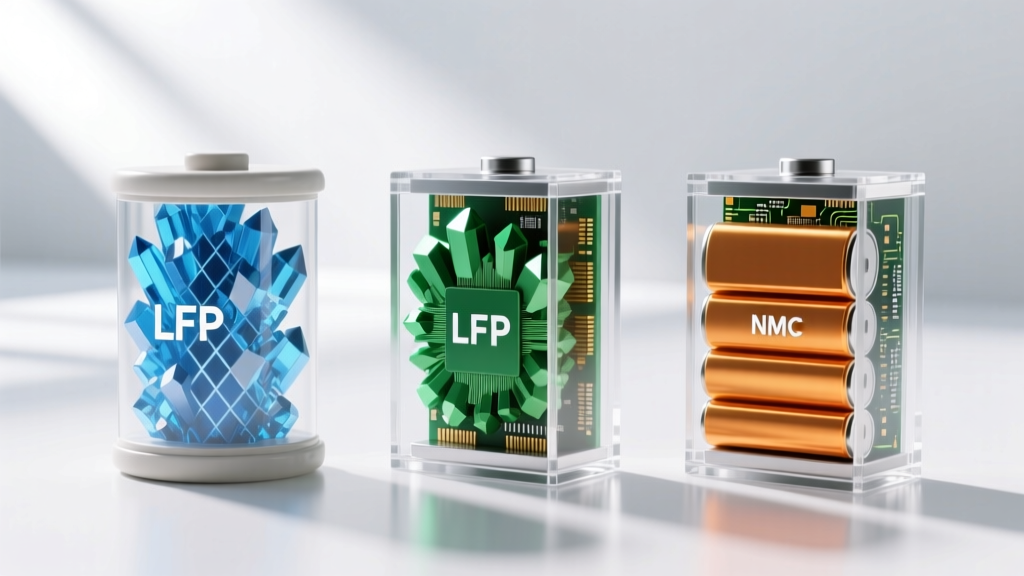
Tesla currently sources battery cells from multiple suppliers (CATL, Panasonic, LG Energy Solution) and deploys two primary chemistries across its fleet: lithium iron phosphate (LFP) and nickel-based chemistries (NMC and NCA). Understanding which chemistry sits under your car's floor is one of the most consequential ownership decisions you'll make, because it dictates how you charge, how the pack ages, and what happens if something goes wrong eight years down the road.
This guide breaks down the engineering, economics, and real-world ownership data behind Tesla lithium battery packs — with the exact numbers you need to decide which chemistry fits your driving life.
LFP vs NMC vs NCA: Tesla's Lithium Chemistry Breakdown
Before we compare, a quick terminology anchor: kWh (kilowatt-hours) measures the battery's energy capacity — how far it can take you. kW (kilowatts) measures power flow — how fast it can charge or discharge. Confusing these two is the most common EV mistake; they are not interchangeable.
Tesla's current chemistry deployment looks roughly like this (model year 2025–2026):
- LFP (Lithium Iron Phosphate, LiFePO₄): Standard Range / RWD variants of Model 3 and Model Y. Cells primarily sourced from CATL.
- NCA (Nickel Cobalt Aluminum): Long Range and Performance variants of Model 3 and Model Y. Panasonic 4680 and 2170 cells.
- NMC (Nickel Manganese Cobalt): Used in certain Model S/X packs and some regional Model Y builds. LG Energy Solution and Panasonic.
| Attribute | LFP (LiFePO₄) | NMC / NCA (Nickel-Based) |
|---|---|---|
| Energy Density | Lower (~160 Wh/kg cell-level) | Higher (~250–300 Wh/kg cell-level) |
| Typical Usable Capacity | ~57–60 kWh (Model 3 RWD) | ~75–82 kWh (Long Range) |
| EPA Range (2026 Model 3) | 272 mi (RWD) | 363 mi (Long Range AWD) |
| Cycle Life | 3,000–5,000+ cycles to 80% SoH | 1,000–2,000 cycles to 80% SoH |
| Recommended Daily SoC | 100% (charge to full regularly) | 80% daily, 100% for trips only |
| Cold-Weather Performance | Weaker — more range loss below 32°F | Better low-temp discharge & charge acceptance |
| DC Fast-Charge Peak | ~170 kW (10–80% in ~25 min) | ~250 kW (10–80% in ~18 min) |
| Cobalt Content | Zero | Present (supply-chain & cost factor) |
| Cell Cost (relative) | Lower ($/kWh) | Higher ($/kWh) |
The trade-off in plain terms: LFP gives you a longer-lasting, cheaper, cobalt-free pack that you can (and should) charge to 100% daily — but you sacrifice roughly 90 miles of EPA range versus Long Range and take a bigger hit in freezing weather. NMC/NCA gives you maximum range and better cold-weather usability, but the pack degrades faster if you habitually charge to 100% or fast-charge daily.
How Long Do Tesla Lithium Batteries Actually Last?
This is the question that dominates EV forums, and the answer requires separating marketing from measured data.
Tesla's own 2024 Impact Report (the most recent published dataset) showed that Model 3 and Model Y packs retained an average of 85% of original capacity after 200,000 miles. That's a 15% loss over what is effectively the median lifetime mileage of a US passenger vehicle. Model S and Model X data, with older and more varied pack architectures, showed slightly wider variance — roughly 80–88% retention at the same mileage.
Observed Degradation Curve (Tesla fleet data, aggregated):
- Year 1 / 15,000 mi: ~2–5% loss (initial formation drop)
- Year 3 / 45,000 mi: ~5–8% loss
- Year 5 / 75,000 mi: ~8–12% loss
- Year 8 / 120,000 mi: ~12–17% loss
- Year 10 / 150,000+ mi: ~15–20% loss (varies heavily by chemistry and use)
Sources: Tesla Impact Report, Recurrent Auto fleet data.
A few critical nuances:
- LFP packs degrade more slowly in calendar and cycle terms, but their lower starting range means a 15% loss on a 272-mile pack leaves you with ~231 miles — adequate for most commutes, tight for road trips.
- The degradation curve is non-linear. Most lithium-ion packs lose capacity fastest in the first year (formation and SEI layer growth), then the curve flattens considerably. A pack at 90% SoH at year 3 is not on a linear path to 60% by year 10.
- Outlier packs exist. Tesla has acknowledged isolated cases of higher degradation, typically tied to manufacturing variances in earlier production runs. This is precisely why the warranty matters.
Tesla's Battery Warranty: What's Covered and What Isn't
| Model | Warranty Period | Mileage Limit | Minimum Capacity Retention |
|---|---|---|---|
| Model 3 RWD (LFP) | 8 years | 100,000 miles | 70% |
| Model 3 Long Range / Performance | 8 years | 120,000 miles | 70% |
| Model Y (all trims) | 8 years | 120,000 miles | 70% |
| Model S / Model X | 8 years | 150,000 miles | 70% |
What this means practically: If your pack drops below 70% of original usable capacity within the warranty window, Tesla will replace or remanufacture it to bring retention back to at least 70%. They are not obligated to give you a brand-new pack — remanufactured units with equivalent or better capacity are standard practice.
What the warranty does NOT cover:
- Capacity loss above the 70% threshold (even if you're unhappy with range)
- Damage from accidents, flooding, or unauthorized modifications
- The 12V auxiliary battery (separate warranty, typically 4 years)
- Range reduction from software updates that adjust charge limits for safety
It's worth noting that Tesla's warranty documentation explicitly states the retention threshold is measured via the car's own BMS (Battery Management System) diagnostics, not third-party testing. If you suspect a warranty claim, your first step is a Tesla service center diagnostic — not an independent scan tool.
Tesla Battery Replacement Cost: What You'd Actually Pay
Let's address the fear directly: out-of-warranty battery replacement is expensive, but the scenario where you need one is statistically uncommon within the typical ownership window.
| Model / Pack | Battery Size | Chemistry | Estimated Replacement Cost |
|---|---|---|---|
| Model 3 RWD | ~60 kWh | LFP | $10,000 – $13,000 |
| Model 3 Long Range | ~79 kWh | NCA/NMC | $14,000 – $18,000 |
| Model Y Long Range | ~82 kWh | NCA/NMC | $15,000 – $20,000 |
| Model S / Model X | ~100 kWh | NMC/NCA | $18,000 – $25,000 |
These figures include the pack and labor but can vary based on whether Tesla installs a new or remanufactured unit. Independent EV shops have begun offering module-level repairs (replacing individual bad modules rather than the full pack) for $3,000–$7,000, though this voids any remaining Tesla warranty.
When is replacement typically needed? Based on fleet data from Recurrent Auto and Tesla's own disclosures, fewer than 5% of Tesla packs have required replacement to date, and the majority of those were under warranty. The most common replacement triggers are:
- Manufacturing defects caught in the first 2–3 years (covered)
- Physical damage from road debris or collision (insurance claim)
- Extreme degradation past the warranty window — rare, typically at 200,000+ miles
For context, a Model 3 owner driving 12,000 miles per year will reach 100,000 miles in year 8 — right at the warranty boundary. Most original owners will sell or trade the vehicle before facing an out-of-pocket replacement. Second owners of high-mileage Teslas are the demographic most likely to encounter this cost.
What Kills a Tesla Battery Faster (And What Doesn't)
Lithium-ion degradation is driven by electrochemical stress. Here's what the data actually shows — sorted by impact magnitude:
Highest-Impact Degradation Factors:
- Sustained high State of Charge (SoC) in NMC/NCA packs: Storing a nickel-based pack at 100% SoC for days or weeks accelerates electrolyte oxidation and cathode microcracking. Tesla's BMS recommends 80% daily for these chemistries for a reason.
- Extreme heat exposure: Ambient temperatures above 95°F combined with high SoC is the worst-case scenario. Phoenix and Las Vegas cars show measurably higher degradation than Seattle cars in Tesla's fleet data.
- Frequent DC fast charging without preconditioning: Charging at 250 kW on a cold pack forces lithium plating on the anode — permanent capacity loss. Always let the car precondition (it does this automatically when you navigate to a Supercharger).
Moderate-Impact Factors:
- Daily DC fast charging: Tesla's data shows cars that Supercharge >90% of the time exhibit ~2–3% more degradation at 100,000 miles versus primarily L2 home chargers. Meaningful but not catastrophic.
- Repeated deep discharge (below 10% SoC): Storing the car near 0% for extended periods stresses the anode. If you're leaving for a week, leave it plugged in at 50%.
Low-Impact / Myth Factors:
- Occasional 100% charges on NMC/NCA: Charging to 100% for a road trip and driving off immediately causes negligible harm. The damage comes from sitting at 100%, not reaching it.
- Regenerative braking: The charge currents from regen are well within safe C-rates. This is not a degradation concern.
- Software updates: Tesla occasionally adjusts usable buffer via OTA updates. This is the BMS protecting the pack, not degrading it.
LFP owners get a break here: Because LFP chemistry is more stable at high SoC, Tesla explicitly recommends charging to 100% at least once per week for LFP packs. This helps the BMS recalibrate cell balancing and actually improves range accuracy. If you own a Model 3 RWD with LFP, the "charge to 80%" rule does not apply to you.
How to Check Your Tesla's Battery Health (SoH)
Tesla does not display a simple "Battery Health: 92%" readout on the touchscreen the way a Nissan Leaf does. Instead, owners must infer State of Health through a few indirect methods:
Method 1: The Range Math Method
Charge your car to 100% (for LFP) or note the displayed range at a known SoC (for NMC/NCA). Compare the displayed range at 100% to the original EPA sticker. A 2026 Model 3 Long Range that showed 363 miles at 100% when new but now shows 325 miles at 100% has experienced roughly 10.5% degradation. This method is approximate because displayed range is also affected by temperature and recent driving efficiency.
Method 2: Third-Party Apps
Apps like Tessie, Stats for Tesla, and Scan My Tesla (with an OBD-II dongle) can read the BMS-reported nominal full-pack energy (in kWh) and compare it to the factory original. This is the closest you'll get to a true SoH percentage without a service center visit.
Method 3: Tesla Service Diagnostic
If you suspect warranty-level degradation, schedule a service appointment. Tesla can run a full-pack diagnostic that reports measured capacity versus original. This is the only method Tesla accepts for warranty claims.
What's Next: Solid-State, Silicon Anodes, and Realistic Timelines
Every EV owner wants to know if the next battery breakthrough will make their current car obsolete. Here's where the technology actually stands as of 2026:
Silicon-dominant anodes: Companies like Sila Nanotechnologies and Group14 are shipping silicon-carbon composite anode materials that boost energy density by 15–25% over graphite. These are appearing in limited production runs (notably in some Mercedes and Panasonic applications) but remain cost-prohibitive for mass-market vehicles. Expect broader Tesla adoption in the 2028–2030 timeframe.
Solid-state batteries: Toyota, Samsung SDI, and QuantumScape have all demonstrated prototype solid-state cells with impressive lab numbers — 500+ mile range potential, faster charging, improved safety. However, manufacturing yield, cost, and scale remain unsolved. Toyota's announced 2027–2028 production timeline is for low-volume, premium applications only. Mass-market solid-state EVs at Tesla-scale pricing are not realistic before 2032 at the earliest.
4680 cell maturation: The more immediate evolution is Tesla's own 4680 cell, now in its third generation. The dry-cathode manufacturing process has improved yield significantly since 2023, and the latest 4680 packs offer modest energy-density gains and structural-pack integration that reduces vehicle weight. This is the technology improving your next Tesla purchase, not a distant moonshot.
The practical takeaway: if you need an EV now, current lithium-ion chemistry is mature, well-warrantied, and proven to 200,000+ miles. Waiting for solid-state means waiting 6+ years for technology that will debut at luxury pricing.
LFP or NMC/NCA: Which Tesla Lithium Battery Should You Choose?
Choose LFP (Model 3/Y RWD or Standard Range) if:
- You drive under 200 miles daily and can charge at home every night
- You want the longest possible cycle life (5,000+ cycles)
- You prefer the simplicity of charging to 100% daily without SoC anxiety
- You live in a moderate climate (rarely below 25°F in winter)
- You want the lowest purchase price and zero cobalt in your supply chain
Choose NMC/NCA (Model 3/Y Long Range or Performance) if:
- You regularly drive 250+ miles between charges or take frequent road trips
- You live in a cold climate where LFP's winter range penalty compounds
- You need the fastest DC charging speeds (250 kW peak vs. ~170 kW for LFP)
- You plan to keep the car 8+ years and want maximum range buffer against degradation
- You're willing to manage daily SoC to 80% for long-term pack health
Frequently Asked Questions
How long do Tesla lithium batteries last in years?
Based on Tesla fleet data, the average Model 3/Y pack retains ~85% of original capacity at 200,000 miles. At 12,000 miles/year, that's roughly 16–17 years before reaching that threshold. Most packs will outlast the car's body and interior. LFP packs are expected to last even longer in cycle terms, though calendar aging (chemical degradation over time regardless of use) eventually affects all lithium-ion cells.
How much does a Tesla battery replacement cost out of warranty?
Between $10,000 and $25,000 depending on model and pack size, as of 2026. Model 3 RWD (LFP) sits at the lower end; Model S/X at the upper end. However, fewer than 5% of Tesla packs have historically needed replacement, and the majority of those were covered under the 8-year warranty. Independent module-level repair is emerging as a lower-cost option for out-of-warranty vehicles.
Does Tesla's battery warranty cover normal degradation?
Only if degradation drops the pack below 70% of original capacity within 8 years (or the mileage limit for your model). Gradual capacity loss above that threshold — say, from 100% to 82% over 6 years — is considered normal and is not covered. The warranty protects against premature or defective degradation, not the natural aging of lithium-ion chemistry.
Is LFP really better than NMC for daily driving?
For most daily-driving scenarios, yes. LFP's cycle life (3,000–5,000+ cycles vs. 1,000–2,000 for NMC), tolerance for 100% daily charging, lower cost, and zero cobalt content make it the pragmatic daily-driver choice. The trade-off is lower range (~272 vs. ~363 EPA miles in the Model 3) and worse cold-weather performance. If your daily round-trip is under 100 miles and you charge at home, LFP's disadvantages rarely surface.
Does frequent Supercharging damage Tesla batteries?
Exclusive DC fast charging shows a measurable but modest impact: Tesla's fleet data indicates ~2–3% additional degradation at 100,000 miles for cars that Supercharge >90% of the time versus primarily Level 2 home charging. The bigger risk is fast-charging a cold pack without preconditioning, which can cause lithium plating. Always navigate to the Supercharger via the car's built-in routing so the thermal management system can precondition the battery.
Can I check my Tesla battery health myself?
Not directly through the Tesla interface, but you can estimate SoH by comparing your 100%-charge displayed range to the original EPA figure, or use third-party apps like Tessie or Scan My Tesla with an OBD-II adapter to read BMS-reported nominal capacity. For a definitive measurement — especially for warranty claims — a Tesla service center diagnostic is required.