Tesla's Battery Strategy: Why Chemistry Matters More Than Capacity
When buyers research the lithium-ion battery Tesla Motors installs across its lineup, they often fixate on one number: kilowatt-hours (kWh). But the chemistry inside those cells — whether lithium iron phosphate (LFP) or nickel-based (NMC/NCA) — determines far more than range. It shapes how the pack ages, how it handles cold weather, how fast it charges, and ultimately how much it costs to replace a decade from now.
Tesla currently uses both chemistries across its 2025–2026 fleet. Standard Range Model 3 and Model Y vehicles typically ship with LFP packs (supplied primarily by CATL), while Long Range and Performance variants use NCA or NMC cells (from Panasonic and LG Energy Solution). Understanding this split is the single most important factor in predicting your ownership experience.
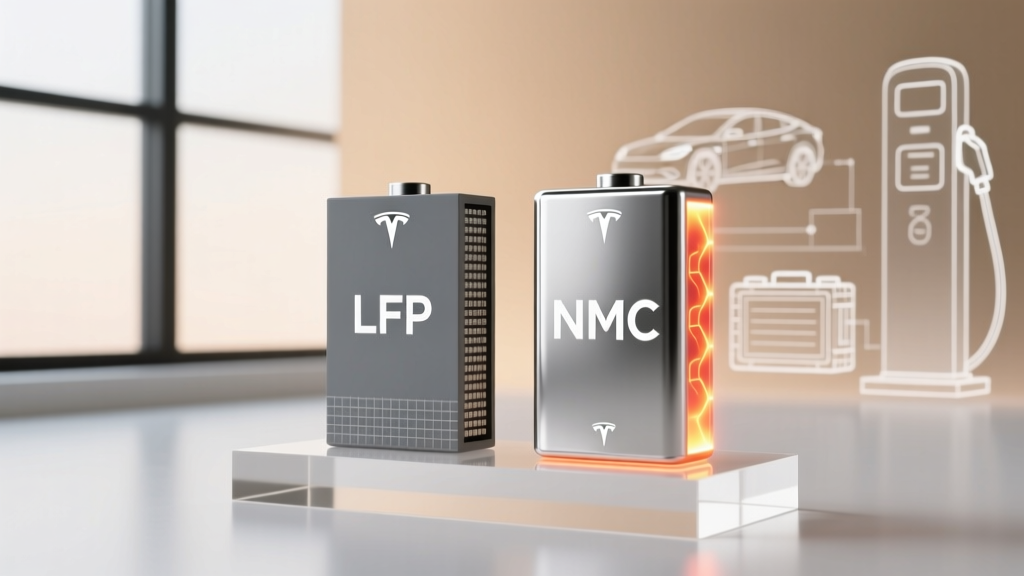
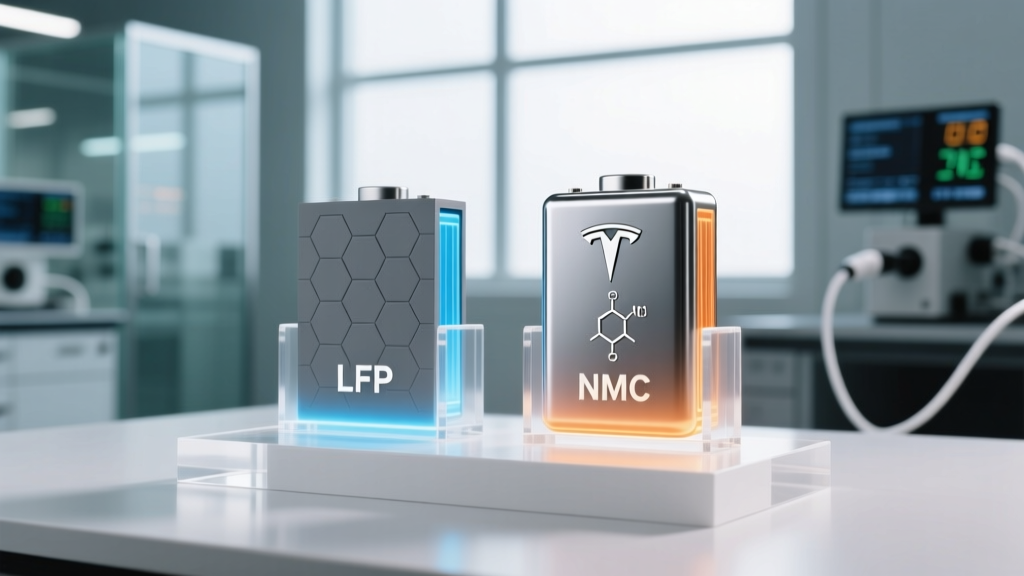
LFP vs NMC/NCA: The Chemistry Trade-Offs Explained
Both chemistries are lithium-ion, but their cathode materials create fundamentally different performance profiles. Here is how they compare in real-world EV ownership:
| Attribute | LFP (LiFePO₄) | NMC/NCA (Nickel-based) |
|---|---|---|
| Energy Density | Lower (~160 Wh/kg cell-level) | Higher (~250–270 Wh/kg cell-level) |
| Typical Tesla Use | Model 3/Y Standard Range (RWD) | Model 3/Y Long Range, Performance; Model S/X |
| Cycle Life | 3,000–5,000+ cycles to 80% SoH | 1,500–2,500 cycles to 80% SoH |
| Cold-Weather Performance | More range loss below 32°F; slower cold charging | Better low-temp discharge and charge acceptance |
| Recommended Charge Habit | Charge to 100% regularly (Tesla recommends weekly 100%) | Daily limit 80–90%; 100% only for trips |
| Cost per kWh (pack-level) | ~$100–120/kWh | ~$130–160/kWh |
| Cobalt Content | Zero | Present (NMC) or minimal (NCA) |
| Thermal Stability | Superior — higher runaway threshold | Good, but requires more active thermal management |
Bottom line: LFP wins on longevity, cost, and safety but sacrifices energy density and cold-weather range. NMC/NCA delivers more range per kilogram and charges faster in winter but degrades somewhat quicker and costs more to replace. Neither is universally "better" — the right choice depends on your climate, driving pattern, and how long you plan to keep the car.
How Long Do Tesla Batteries Actually Last?
Tesla's 2024 Impact Report (published mid-2025) stated that Model 3 and Model Y battery packs retain approximately 85% of original capacity after 200,000 miles — roughly 15% degradation over what is effectively the median lifespan of a US vehicle. That figure aligns with independent fleet data from sources like Recurrent Auto, which tracks over 15,000 Tesla vehicles in real-world conditions.
Here is a more granular look at typical degradation curves observed across Tesla fleets:
Tesla Battery Degradation — Real-World Data Points (Recurrent / Tesla Impact Report)
- Year 1 / 15,000 mi: ~3–5% loss (initial SEI layer formation)
- Year 3 / 45,000 mi: ~7–10% loss
- Year 5 / 75,000 mi: ~9–12% loss
- Year 8 / 120,000 mi: ~12–15% loss
- Year 10 / 150,000+ mi: ~14–18% loss (NMC/NCA); ~10–13% loss (LFP)
Note: Degradation is not linear. Most capacity loss occurs in the first 20,000–30,000 miles, after which the curve flattens significantly. LFP packs tend to show a flatter curve overall.
Real-world translation: A 2025 Model Y Long Range with an EPA-rated 320 miles and a 78 kWh (usable) NCA pack will likely deliver around 270–285 miles of usable range at the 100,000-mile mark. In cold weather (below 30°F), expect that to drop further to roughly 220–240 miles due to reduced lithium-ion mobility and cabin heating draw.
Tesla Battery Warranty: What Is Actually Covered?
Tesla's new-vehicle battery warranty is one of the more straightforward in the industry, but the details matter — especially the capacity retention threshold.
| Model | Warranty Period | Mileage Limit | Minimum Capacity Retention |
|---|---|---|---|
| Model 3 RWD (LFP) | 8 years | 100,000 miles | 70% |
| Model 3 Long Range / Performance | 8 years | 120,000 miles | 70% |
| Model Y (all trims) | 8 years | 120,000 miles | 70% |
| Model S / Model X | 8 years | 150,000 miles | 70% |
What this means in practice: If your battery drops below 70% of its original capacity within the warranty period, Tesla will repair or replace it at no cost. Critically, Tesla may replace it with a remanufactured pack of equivalent capacity — not necessarily a brand-new one. The warranty covers defects and abnormal degradation but does not cover damage from accidents, flooding, or unauthorized modifications.
For context, the US Department of Energy via fueleconomy.gov notes that federal regulations require EV manufacturers to warranty batteries for a minimum of 8 years / 100,000 miles, making Tesla's coverage baseline-compliant on Standard Range models and above-average on Long Range and Model S/X.
EV Battery Replacement Cost: What Tesla Owners Actually Pay
Out-of-warranty battery replacement remains the most anxiety-inducing cost in EV ownership. Here is what the numbers actually look like for Tesla vehicles as of early 2026:
| Model | Pack Size (Usable) | Chemistry | Estimated Replacement Cost |
|---|---|---|---|
| Model 3 RWD | ~57 kWh | LFP | $8,000–$12,000 |
| Model 3 Long Range | ~75 kWh | NCA/NMC | $12,000–$16,000 |
| Model Y Long Range | ~78 kWh | NCA/NMC | $13,000–$18,000 |
| Model S (2023+) | ~95 kWh | NMC | $18,000–$25,000 |
These figures include the pack, labor, and diagnostic fees but can vary by service center and region. Third-party EV repair shops are beginning to offer module-level repairs (replacing individual degraded modules rather than the full pack) for $3,000–$7,000, though this is not yet widely available for Tesla's structural battery pack design used in 2023+ Model Y vehicles.
When is replacement actually needed? Based on current degradation data, the vast majority of Tesla batteries will retain above 70% capacity for 200,000+ miles. Most vehicles are totaled, traded, or retired before the battery requires replacement. Catastrophic failure (sudden cell failure, coolant intrusion) is rare and typically covered under warranty.
Factors That Accelerate — or Preserve — Battery Life
Lithium-ion degradation is driven by electrochemical stress. The following habits have measurable, data-backed effects on pack longevity:
Maximize Battery Health: Evidence-Based Practices
- Avoid sustained 100% SoC (NMC/NCA only): Store nickel-based packs between 20–80% for daily use. LFP packs are an exception — Tesla recommends charging to 100% at least weekly to maintain cell balancing and accurate range estimation.
- Limit DC fast charging frequency: Occasional Supercharging is fine, but daily 250 kW sessions accelerate electrolyte decomposition. Data from Recurrent suggests vehicles that fast-charge more than 3x per week show 1–3% additional degradation over 100,000 miles vs. primarily L2-charged vehicles.
- Precondition before fast charging: Tesla's navigation-based preconditioning warms the pack to ~35°C (95°F), enabling faster charging and reducing lithium plating risk. Always navigate to a Supercharger rather than driving there without preconditioning.
- Avoid extreme SoC + extreme heat: A fully charged pack sitting in 100°F+ ambient temperatures accelerates calendar degradation. If storing the vehicle, set the charge limit to 50% and park in shade or a garage.
- Use regenerative braking moderately in cold weather: Tesla's blended braking reduces regen when the pack is cold to prevent lithium plating. Let the car manage this — don't force high regen on a freezing-cold pack.
How to Check Your Tesla's Battery Health (State of Health)
Tesla does not expose a direct State of Health (SoH) percentage in the vehicle UI, unlike some competitors (Hyundai, BMW). Here is how owners can assess pack condition:
In-Car Method
Charge to 100% and note the displayed range. Compare it to the original EPA-rated range for your model. A 2023 Model Y Long Range originally rated at 330 miles that now displays 290 miles at 100% shows roughly 88% SoH (~12% degradation). Note that displayed range is affected by temperature, driving style, and software updates, so track this metric over several full charges for accuracy.
Third-Party Tools
Apps like Tessie and TeslaFi log detailed charge data and can estimate SoH by comparing energy added during a full charge (in kWh) to the pack's original usable capacity. Some Tesla service centers will run a battery health test on request, providing a more official SoH figure.
OBD-II / CAN Bus Readers
Advanced users with tools like Scan My Tesla (via an OBD-II dongle and app) can read real-time pack data including individual module voltages, pack current, and nominal full-pack energy (kWh), providing the most granular SoH estimate available outside of Tesla's own diagnostics.
Looking Ahead: Solid-State and Silicon Anode Batteries
Next-generation battery technology is frequently discussed but remains in development for consumer vehicles:
Solid-state batteries replace the liquid electrolyte with a solid material, promising higher energy density (potentially 400+ Wh/kg), faster charging, and improved safety. Toyota has announced a commercialization target of 2027–2028 for limited production, while QuantumScape continues testing with Volkswagen. Tesla has not announced a solid-state timeline. Realistic mass-market availability remains 2029–2032 at the earliest.
Silicon anode technology (used in limited form in some current cells) increases energy density by replacing graphite anodes partially with silicon. Tesla's 4680 cells already incorporate incremental silicon content, and companies like Sila Nanotechnologies are scaling production. Expect gradual improvements rather than a step-change breakthrough.
Sodium-ion batteries are emerging as a low-cost alternative for standard-range vehicles, with CATL already producing them for the Chinese market. Tesla has not announced sodium-ion adoption, but industry analysts expect it could appear in entry-level models by 2028–2030.
None of these technologies are available in production Tesla vehicles today. If you are buying now, LFP and NMC/NCA remain mature, well-understood chemistries with extensive real-world track records.
Tesla Battery FAQ
How long do Tesla lithium-ion batteries last in years and miles?
Based on Tesla's fleet data and independent tracking from Recurrent Auto, most Tesla battery packs retain 85% or more of their original capacity at 200,000 miles. In years, that typically translates to 13–17 years of average US driving (12,000–15,000 miles/year). LFP packs in Standard Range models often show even slower degradation.
How much does it cost to replace a Tesla battery out of warranty?
Out-of-warranty replacement ranges from approximately $8,000 for a Model 3 RWD LFP pack to $25,000 for a Model S NMC pack, including parts and labor. However, full replacements are rare — most packs outlast the vehicle, and module-level repair may be an option as third-party EV repair networks expand.
What does the Tesla battery warranty cover?
Tesla covers battery capacity loss below 70% for 8 years and 100,000–150,000 miles (depending on model). The warranty includes defects and abnormal degradation but excludes accident damage, environmental damage (flooding), and unauthorized modifications. Replacement packs may be new or remanufactured to equivalent capacity.
How do I check my Tesla battery's State of Health?
Charge to 100% and compare the displayed range to the original EPA rating. For more precision, use third-party apps like Tessie or TeslaFi to track kWh added during full charges, or visit a Tesla service center for an official diagnostic. OBD-II tools like Scan My Tesla provide the most granular data.
LFP vs NMC — which Tesla battery is better for me?
Choose LFP (Model 3/Y Standard Range) if you want maximum cycle life, can charge at home regularly, live in a moderate climate, and prefer the simplicity of charging to 100% daily. Choose NMC/NCA (Long Range / Performance) if you need maximum range per charge, regularly drive in cold weather, take frequent road trips requiring fast DC charging, or want the highest performance output. Both chemistries are proven and will comfortably last 150,000+ miles with reasonable care.
Does frequent Supercharging damage my Tesla battery?
Occasional Supercharging has minimal impact. However, data suggests that vehicles DC fast-charging more than three times per week show 1–3% additional degradation over 100,000 miles compared to those primarily using Level 2 home charging. Always use Tesla's built-in navigation to precondition the pack before Supercharging — this significantly reduces stress on the cells.