Tesla LFP vs NMC: What's Actually in Your Model 3 or Model Y?
If you've been researching a Tesla Model 3 or Model Y, you've likely encountered the term Tesla LFP — and wondered how it differs from the NMC (nickel manganese cobalt) or NCA (nickel cobalt aluminum) batteries Tesla has used for years. The chemistry inside your EV's high-voltage traction battery determines real-world range, charging behavior, long-term degradation, and even whether you should charge to 100% daily. This isn't a minor spec-sheet footnote; it's one of the most consequential purchase decisions in the current Tesla lineup.
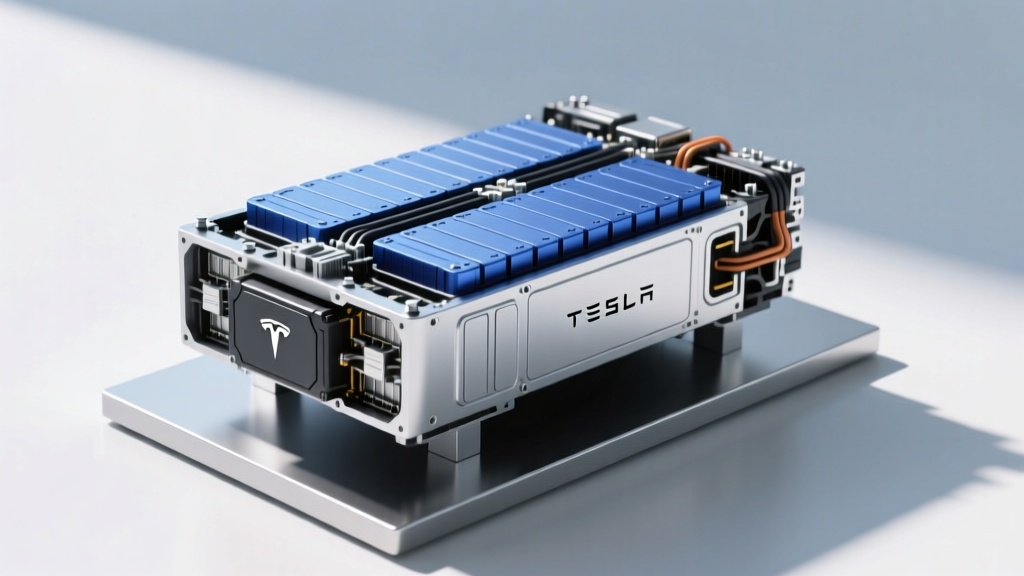
As of the 2026 model year, Tesla equips the Model 3 Rear-Wheel Drive and Model Y Rear-Wheel Drive (Long Range RWD in some markets) with lithium iron phosphate (LFP) battery packs, while the Long Range AWD and Performance trims continue to use NMC/NCA chemistry. Understanding the trade-offs between these two chemistries is essential before you sign a purchase agreement.
LFP vs NMC Chemistry: The Technical Trade-Offs
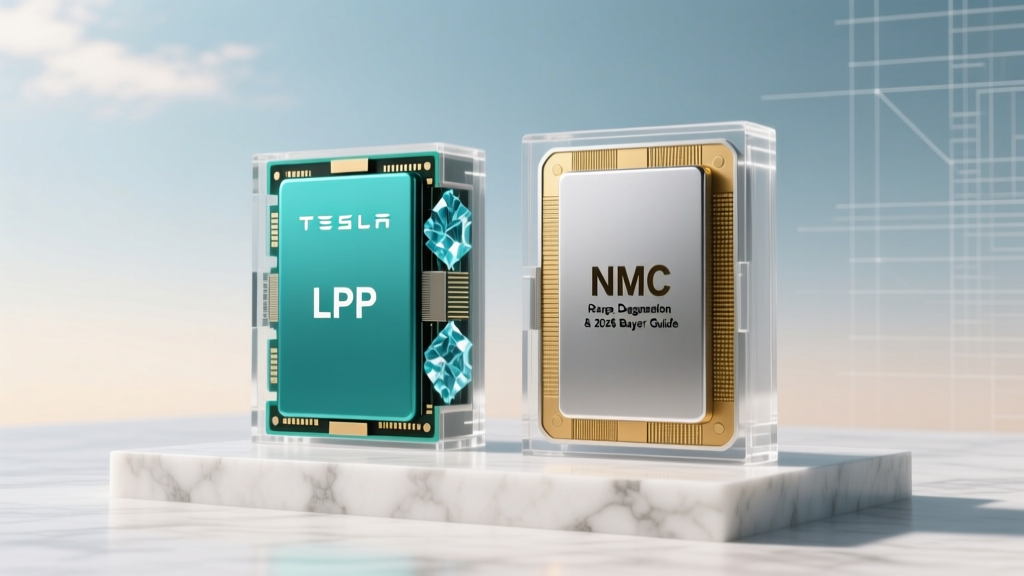
LFP (LiFePO₄) and NMC (nickel manganese cobalt oxide) are both lithium-ion chemistries, but they behave very differently in practice. Here's how they compare across the metrics that matter to owners:
| Attribute | LFP (LiFePO₄) | NMC / NCA |
|---|---|---|
| Energy Density | Lower (~160–180 Wh/kg cell-level) | Higher (~230–260 Wh/kg cell-level) |
| Typical Use in Tesla | Model 3 RWD, Model Y RWD | Model 3/Y Long Range & Performance, Model S/X |
| Cycle Life | 3,000–5,000+ cycles to 80% SoH | 1,000–2,000 cycles to 80% SoH |
| Daily Charge Recommendation | 100% SoC daily is fine (Tesla recommends it) | 80% SoC daily; 100% only for trips |
| Cold-Weather Performance | Weaker — more range loss below 32°F | Better low-temp conductivity |
| DC Fast-Charge Speed | Peak ~170 kW (Model 3 RWD); slower curve | Peak ~250 kW (Long Range); faster 10–80% |
| Cost per kWh | Lower — no cobalt or nickel | Higher — commodity-priced metals |
| Thermal Stability | Excellent — higher runaway threshold | Good but lower thermal margin |
| State of Charge Estimation | Flat voltage curve makes SoC harder to estimate | More linear voltage curve; easier BMS estimation |
The key takeaway: LFP sacrifices energy density and cold-weather performance in exchange for dramatically longer cycle life, lower cost, and the ability to charge to 100% daily without accelerating degradation. For a commuter who charges at home every night, LFP is arguably the better chemistry. For a road-tripper in Minnesota, NMC's cold-weather edge matters more.
Real-World Degradation: What the Data Shows
Battery degradation — the gradual loss of usable capacity over time — is the single biggest long-term ownership concern. Here's what actual fleet data and owner reports indicate for Tesla packs:
- NMC/NCA (Model 3/Y Long Range): ~5–7% capacity loss at 50,000 miles; ~8–12% at 100,000 miles. Data aggregated from TeslaFi fleet reports and Tesla's Impact Report.
- LFP (Model 3/Y RWD): ~3–5% capacity loss at 50,000 miles; ~5–8% at 100,000 miles. LFP's slower degradation curve is consistently observed in high-cycle fleet usage (taxis, ride-share).
- Early-life drop: Both chemistries typically lose 2–3% in the first 10,000–15,000 miles, then the curve flattens significantly.
- Outliers: Excessive DC fast charging (>80% of sessions), frequent 100% SoC holds on NMC, and sustained high-temperature exposure can push degradation to 12–15% at 100k miles.
For context, a Model 3 RWD with a 60 kWh (usable) LFP pack that loses 7% over 100,000 miles still retains roughly 55.8 kWh — translating to an EPA-estimated range drop from ~272 miles to approximately ~253 miles. That's meaningful but far from catastrophic.
Tesla Battery Warranty: What's Covered and What Isn't
Tesla's high-voltage battery warranty is one of the stronger guarantees in the EV market, but the details matter. Here are the current terms for 2026 model-year vehicles:
| Model / Trim | Warranty Period | Mileage Cap | Minimum Capacity Retention |
|---|---|---|---|
| Model 3 RWD (LFP) | 8 years | 100,000 miles | 70% |
| Model 3 Long Range / Performance (NMC) | 8 years | 120,000 miles | 70% |
| Model Y RWD (LFP) | 8 years | 100,000 miles | 70% |
| Model Y Long Range / Performance (NMC) | 8 years | 120,000 miles | 70% |
| Model S / Model X (NCA) | 8 years | 150,000 miles | 70% |
What's covered: If your battery drops below 70% of its original usable capacity within the warranty period, Tesla will repair or replace it to bring retention back to at least 70%. Manufacturing defects and premature cell failure are also covered.
What's not covered: Normal degradation above the 70% threshold, damage from accidents, flooding, or unauthorized modifications, and range loss from software updates that adjust the usable buffer. Tesla's warranty does not guarantee a specific EPA range number — only capacity retention relative to the original measured capacity.
Source: Tesla New Vehicle Limited Warranty.
Battery Replacement Cost: When and How Much?
Let's address the concern that dominates EV forums: what happens if the battery fails out of warranty? The honest answer is that most Tesla batteries outlast the vehicle itself. Data from Tesla's 2022 Impact Report showed that Model 3/Y packs retain roughly 85–89% capacity at 150,000 miles. Catastrophic failure requiring full replacement is statistically rare — well under 1% of packs in the field based on Tesla's published data.
That said, if replacement is needed out of warranty, here are current estimated costs at Tesla Service Centers:
| Model / Pack Size | Chemistry | Estimated Cost (Parts + Labor) |
|---|---|---|
| Model 3 RWD (~60 kWh) | LFP | $10,000 – $13,000 |
| Model 3/Y Long Range (~75–82 kWh) | NMC/NCA | $13,000 – $16,000 |
| Model S / Model X (~100 kWh) | NCA | $15,000 – $22,000 |
These figures include the battery pack, labor, coolant refill, and BMS recalibration. Costs have trended downward as LFP cell prices have fallen below $100/kWh at the manufacturing level (per BloombergNEF battery price surveys), but service-center pricing includes markup and logistics. Third-party EV repair shops are beginning to offer module-level replacements (swapping individual cell modules rather than the entire pack) for $4,000–$8,000, though this is still a developing market.
When is replacement typically needed? For the vast majority of owners, never during the ownership period. The cars most likely to need out-of-warranty battery work are those driven 25,000+ miles per year (high-cycle fleet use, ride-share) or those kept in extreme desert climates for 10+ years. A typical owner driving 12,000–15,000 miles annually will likely sell or trade the vehicle before degradation becomes a functional problem.
Maximizing Battery Health: A Chemistry-Specific Care Guide
How you charge and drive has a measurable impact on long-term battery health — but the optimal habits differ between LFP and NMC. Here's what the electrochemistry actually demands:
- ✅ Charge to 100% at least once per week. Tesla explicitly recommends this for LFP packs. The flat voltage curve means the BMS needs regular full charges to accurately calibrate State of Charge.
- ✅ Daily charging to 100% is acceptable. Unlike NMC, LFP does not suffer accelerated calendar degradation at high SoC.
- ⚠️ Precondition before DC fast charging. Use the car's navigation to route to a Supercharger — this activates battery preconditioning, warming the pack for optimal charge acceptance.
- ⚠️ Expect reduced regen braking at 100% SoC. A fully charged LFP pack has no room for regenerative energy recapture until you've driven a few miles.
- ❌ Avoid prolonged storage below 10% SoC. While LFP is tolerant of high SoC, very low SoC storage (weeks) can cause cell imbalance.
- ✅ Set daily charge limit to 80%. Use 100% only when departing for a long trip.
- ✅ Minimize time spent at 100% SoC. If you charge to full, try to depart within a few hours.
- ✅ Use Level 2 (home AC charging) as your primary method. Slow charging generates less heat stress on NMC cells.
- ⚠️ Limit DC fast charging to road trips — occasional use is fine, but daily Supercharging accelerates degradation modestly (studies from Idaho National Laboratory show ~1–3% additional loss over 50k miles with exclusive DCFC use).
- ❌ Don't store the car at 100% or below 10% for extended periods. Aim for 50% SoC if the car will sit for weeks.
Universal tips for both chemistries: Extreme heat is more damaging than extreme cold for long-term calendar aging. If you live in Phoenix or Las Vegas, parking in shade or a garage meaningfully extends battery life. Cold weather reduces range temporarily (expect 15–30% range loss at 20°F depending on driving style) but does not cause permanent damage — the battery recovers its capacity once warmed.
Monitoring Battery Health: Checking Your Tesla's State of Health
Tesla does not display a dedicated "State of Health" (SoH) percentage in the vehicle's touchscreen UI — a frustration for many owners accustomed to seeing this metric on a Nissan Leaf or via OBD-II tools on other EVs. Here are the practical ways to assess your Tesla battery's condition:
- Projected Range at Full Charge: Charge to 100% (for LFP) or note the 80% projected range and extrapolate (for NMC). Compare this to the original EPA-rated range for your model year. A 2024 Model 3 RWD originally rated at 272 EPA miles that now shows 250 miles at 100% has roughly 92% SoH (accounting for the fact that displayed range adjusts for recent driving efficiency).
- Energy Screen (Trip Meter): Navigate to the Energy app and reset the trip meter after a full charge. Drive a known distance and compare kWh consumed to expected values. Consistent efficiency degradation beyond seasonal norms can indicate capacity loss.
- Third-Party Tools: Apps like TeslaFi or Tessie log charge session data over time, allowing you to track kWh added from known SoC percentages. If a 10–80% session now adds fewer kWh than it did a year ago, that's a direct SoH indicator.
- Service Mode Diagnostic: Tesla Service can run a battery health diagnostic that reports nominal full-pack capacity (NFP) vs. original capacity. Request this during a service visit if you suspect abnormal degradation.
Important caveat: The range number displayed on the Tesla touchscreen is based on a fixed energy-per-mile calculation (not your recent driving style), and Tesla occasionally adjusts this via OTA software updates. A sudden drop in displayed range after an update doesn't necessarily mean your battery degraded — it may mean Tesla recalibrated the display algorithm.
What's Next: Solid-State and Silicon Anode Batteries
The EV battery landscape is evolving rapidly, but it's important to separate announced timelines from production reality:
- Solid-state batteries (using a solid electrolyte instead of liquid) promise higher energy density, faster charging, and improved safety. Toyota has announced limited production for 2027–2028, but these are expected in low volumes and premium models first. Tesla has not announced a solid-state timeline. Realistic mass-market availability: 2029–2032.
- Silicon anode technology (replacing graphite anodes with silicon to boost energy density by 20–40%) is in pilot production by companies like Sila Nanotechnologies and Group14. Some early adoption is expected in premium EVs by 2027–2028, but cost and cycle-life challenges remain.
- Sodium-ion batteries (no lithium required) are entering production in China for low-cost, shorter-range EVs. Tesla has not announced sodium-ion plans for US-market vehicles.
For buyers deciding today, these technologies are forward-looking and not currently available in any Tesla model. LFP and NMC remain the production chemistries for the foreseeable future, and both are mature, well-understood, and backed by substantial warranty coverage.
Frequently Asked Questions
How long do Tesla LFP batteries last compared to NMC?
LFP batteries are rated for 3,000–5,000+ charge cycles before dropping to 80% State of Health, compared to 1,000–2,000 cycles for NMC. In practical terms, that means an LFP pack could theoretically endure 600,000+ miles of driving before significant degradation — far exceeding the lifespan of the vehicle's other components. Real-world fleet data shows LFP packs losing only 5–8% capacity over 100,000 miles under normal use.
Is the Tesla LFP battery worse in cold weather?
Yes, measurably so. LFP cells have higher internal resistance at low temperatures, meaning more range loss in freezing conditions. Expect roughly 20–35% range reduction at 20°F with an LFP Model 3 RWD, compared to 15–25% for a Long Range NMC model. Preconditioning the battery (via the Tesla app or navigation to a Supercharger) mitigates some of this loss but doesn't eliminate it. If you live in a climate with sustained sub-freezing winters, the NMC Long Range model is the more practical choice.
Should I be worried about Tesla battery replacement cost?
For most owners, no. Statistical failure rates are very low (under 1%), degradation is gradual and manageable, and the 8-year/100,000–150,000-mile warranty covers the period when most people own the car. Out-of-warranty replacement costs of $10,000–$16,000 are significant, but the likelihood of needing one is small. Compare this to a gas car's potential transmission or engine rebuild at similar mileage — the risk profile is comparable, and EV powertrains have far fewer moving parts.
Can I Supercharge my Tesla LFP battery every day?
You can, but it's not optimal. While LFP handles high SoC better than NMC, frequent DC fast charging generates heat that accelerates calendar aging for any lithium-ion chemistry. If you have access to Level 2 home charging (a 240V outlet or wall connector at 7–11 kW), using that for daily top-ups and reserving Supercharging for road trips will maximize long-term battery health. Tesla's own guidance doesn't prohibit daily Supercharging, but the physics of heat management favor slower charging when time permits.
How do I check my Tesla's battery State of Health?
Tesla doesn't show a SoH percentage in the car's UI. The most practical method is to charge to 100% (on LFP) and note the displayed range, then compare it to the original EPA figure for your model year. Third-party apps like TeslaFi provide more granular tracking by logging charge session data. For a definitive measurement, request a battery health diagnostic from Tesla Service, which reports nominal full-pack capacity vs. original rated capacity.