Why Tesla's Battery Chemistry Matters for Your Next Purchase
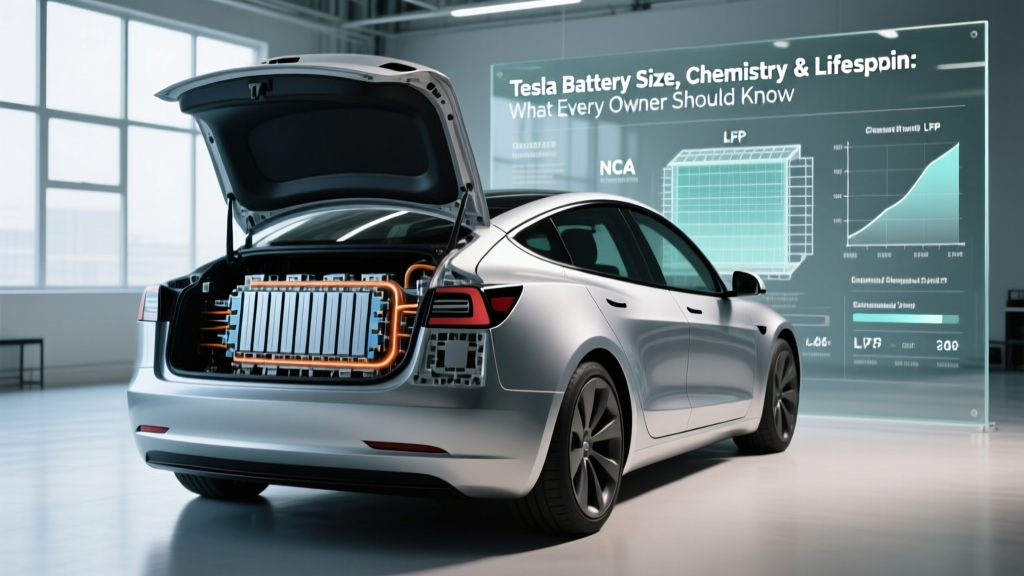
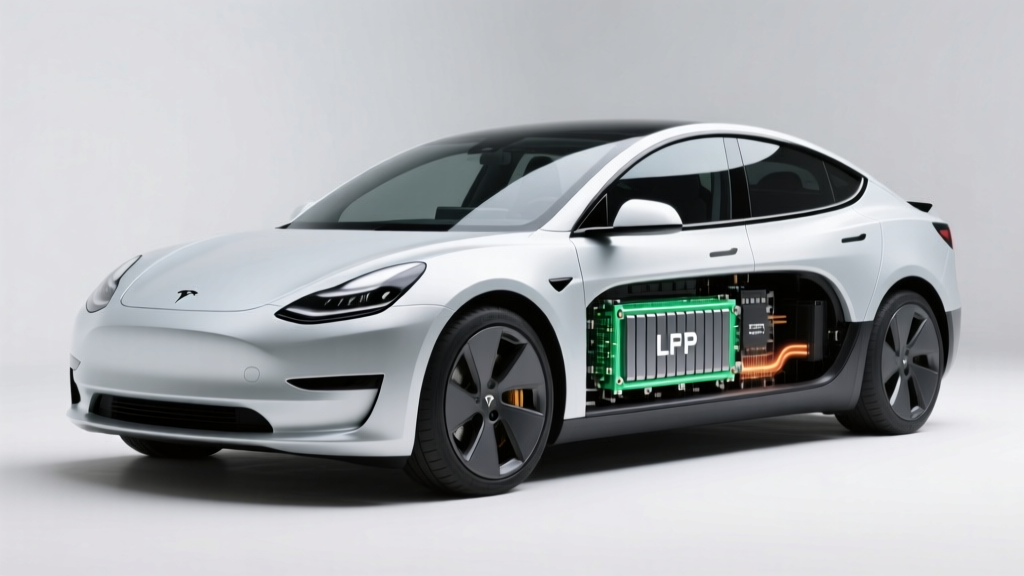
Not every Tesla rolling off the Fremont or Austin line carries the same battery chemistry. Since late 2021, Tesla has equipped its entry-level, rear-wheel-drive Model 3 and Model Y vehicles with lithium iron phosphate (LFP) cells, while Long Range and Performance trims continue to rely on nickel-based chemistries (NMC/NCA). Understanding which Teslas have LFP batteries is no longer a niche concern — it directly affects your daily charging habits, cold-weather range, long-term degradation trajectory, and even how you should set your state-of-charge limits.
As of the 2026 model year, the chemistry split remains clear:
- Model 3 RWD (Standard Range): ~60 kWh usable, LFP (prismatic cells primarily from CATL)
- Model 3 Long Range AWD: ~79 kWh usable, NMC/NCA (2170 cylindrical cells from Panasonic/LG)
- Model 3 Performance: ~79 kWh usable, NMC/NCA
- Model Y RWD (Standard Range): ~60 kWh usable, LFP
- Model Y Long Range AWD: ~79 kWh usable, NMC/NCA
- Model Y Performance: ~79 kWh usable, NMC/NCA
- Model S / Model X: ~100 kWh usable, NMC (Panasonic 4680/2170 depending on build)
- Cybertruck (AWD/Cyberbeast): ~123 kWh usable, NMC (4680 cells)
The practical upshot: if you buy a base-trim Model 3 or Model Y in 2026, you're getting an LFP pack. Step up to Long Range or Performance, and you're on nickel-based chemistry. Tesla does not always advertise this on the window sticker, but the VIN build sheet and the vehicle's charging menu will confirm the cell type.
LFP vs NMC/NCA: The Chemistry Trade-Offs Explained
LFP (lithium iron phosphate) and NMC (nickel manganese cobalt) / NCA (nickel cobalt aluminum) are both lithium-ion chemistries, but they behave quite differently in daily use. Here's how they stack up across the metrics that matter to EV owners:
| Attribute | LFP (Model 3/Y RWD) | NMC/NCA (Long Range, Performance, S/X) |
|---|---|---|
| Energy density (cell-level) | ~160–180 Wh/kg | ~250–300 Wh/kg |
| Typical usable capacity in Tesla | ~57–62 kWh | ~75–100 kWh |
| Cycle life (to 80% SoH) | 3,000–5,000+ cycles | 1,000–2,000 cycles |
| Recommended daily charge limit | 100% (Tesla recommends weekly 100% calibration) | 80% for daily; 100% only for trips |
| Cold-weather range loss (20°F) | ~25–35% reduction | ~20–30% reduction |
| DC fast-charge peak rate | ~170 kW (10–80% in ~25 min) | ~250 kW (10–80% in ~18–22 min) |
| Cobalt/nickel content | None (iron + phosphate) | Significant (supply-chain and cost sensitivity) |
| Cell cost ($/kWh, estimated) | ~$80–100 | ~$110–140 |
| Thermal stability / fire risk | Higher thermal runaway threshold | Lower threshold; requires more active management |
Energy density is where NMC wins decisively. Nickel-based cells pack more energy per kilogram, which is why Long Range Teslas achieve EPA ranges of 330–360+ miles while the LFP-equipped RWD models top out around 272 miles (Model 3) and 260 miles (Model Y) per fueleconomy.gov.
Cycle life is where LFP dominates. LFP cells can endure 3,000 to 5,000+ full charge-discharge cycles before degrading to 80% of original capacity, compared to roughly 1,000–2,000 cycles for NMC. For an owner driving 12,000 miles per year in a 270-mile-range LFP Model 3, that's approximately 44 full cycles per year — meaning the pack could theoretically last 68+ years at the lower cycle-life bound. In practice, calendar aging (time-based degradation) becomes the limiting factor before cycle exhaustion.
Cold performance is LFP's most notable weakness. Iron-phosphate cells experience higher internal resistance at low temperatures, translating to greater range loss and slower DC fast-charge speeds in winter. Tesla's heat pump and battery preconditioning mitigate this, but owners in Minnesota, Colorado, or New England should budget for a larger winter range penalty with LFP.
Charging to 100% is where LFP ownership requires a mindset shift. Tesla explicitly recommends charging LFP packs to 100% at least once per week for accurate state-of-charge calibration. With NMC, the guidance is the opposite: limit daily charges to 80% to minimize degradation. This is because LFP's voltage curve is extremely flat across most of the SoC range, making it harder for the battery management system (BMS) to estimate remaining capacity without periodic full charges.
Real-World Degradation: What the Data Shows
Tesla's 2025 Impact Report (the most recent published data) states that Model 3/Y battery packs retain approximately 88% of original capacity at 150,000 miles. This figure averages across both LFP and NMC packs. Independent fleet data from sources like Recurrent Auto and Tesloop suggest a more granular picture:
- Year 1: 2–4% loss (initial "formation" degradation as the solid electrolyte interphase stabilizes)
- Years 2–4: ~1–1.5% per year (slow, linear degradation)
- 100,000 miles: ~88–92% SoH typical for NMC; ~92–95% for LFP (fewer cycles consumed)
- 150,000 miles: ~85–90% SoH NMC; ~89–93% LFP
- 200,000 miles: ~80–86% SoH NMC; ~86–91% LFP
LFP packs tend to show a flatter degradation curve — they lose less per cycle but may show slightly more calendar aging if stored at 100% SoC for extended periods in hot climates. NMC packs degrade faster per cycle but benefit from being stored at lower SoC (80% daily limit).
The critical threshold is 70% capacity retention, which is where Tesla's warranty kicks in. Based on current degradation data, reaching 70% SoH would require well over 200,000 miles for most owners — meaning the vast majority of Tesla batteries will never need a warranty replacement during typical ownership.
Tesla Battery Warranty Terms: What's Actually Covered
Tesla's high-voltage battery warranty is one of the more straightforward in the industry, but the details matter:
| Model | Battery Warranty Period | Mileage Limit | Capacity Retention Threshold |
|---|---|---|---|
| Model 3 RWD (LFP) | 8 years | 100,000 miles | 70% |
| Model 3 Long Range / Performance | 8 years | 120,000 miles | 70% |
| Model Y RWD (LFP) | 8 years | 100,000 miles | 70% |
| Model Y Long Range / Performance | 8 years | 120,000 miles | 70% |
| Model S / Model X | 8 years | 150,000 miles | 70% |
| Cybertruck | 8 years | 120,000 miles | 70% |
Key nuances worth understanding:
- The warranty covers defects and excessive degradation — if your pack drops below 70% capacity within the warranty window, Tesla will replace or refurbish it at no cost. Tesla may use a refurbished pack with equivalent capacity, not necessarily a brand-new unit.
- Physical damage is excluded. Flooding, collision damage to the battery enclosure, or rodent damage to wiring harnesses are not covered under the battery warranty.
- The warranty is transferable to subsequent owners automatically — it follows the VIN, not the original purchaser.
- RWD (LFP) models get 100,000 miles while AWD/Long Range trims get 120,000 miles. This is a meaningful difference for high-mileage drivers or rideshare operators.
EV Battery Replacement Cost: Reality vs. Fear
The most common anxiety among prospective EV buyers is the specter of a $15,000+ battery replacement. Let's put that in perspective with actual numbers:
| Model / Pack | Battery Size | Estimated Out-of-Warranty Replacement | When Typically Needed |
|---|---|---|---|
| Model 3 RWD (LFP) | ~60 kWh | $10,000–$13,000 | Rarely before 250,000+ miles |
| Model 3/Y Long Range (NMC) | ~79 kWh | $13,000–$16,000 | Rarely before 200,000+ miles |
| Model S / Model X | ~100 kWh | $15,000–$20,000 | 200,000+ miles (older packs may degrade sooner) |
| Cybertruck (4680 NMC) | ~123 kWh | $18,000–$25,000 | Insufficient long-term data (launched 2023) |
These figures include the pack, labor, and Tesla service-center overhead. Independent EV shops may offer refurbished packs at 30–50% lower cost. Critically, most Tesla batteries outlast the vehicle's economic life. The average American car is scrapped at around 170,000–200,000 miles (per IHS Markit/S&P Global data), and Tesla packs are demonstrably lasting well beyond that threshold with 80%+ SoH.
For context, a gas vehicle's engine or transmission replacement at similar mileage often costs $4,000–$8,000 — and that vehicle has already consumed $15,000–$25,000 in fuel over those miles that the Tesla owner did not spend. Total cost of ownership math still favors the EV in most scenarios.
Maximizing Battery Life: LFP-Specific Care Tips
Because LFP and NMC chemistries behave differently, the "best practices" for each diverge in important ways:
LFP Battery Care (Model 3/Y RWD)
- Charge to 100% at least weekly. Tesla's in-car recommendation is explicit. LFP's flat voltage curve means the BMS loses calibration accuracy without full charges.
- Don't baby the SoC. Unlike NMC, LFP is tolerant of high SoC. Storing at 100% overnight is fine; chronic storage at very low SoC (below 10%) is more harmful.
- Precondition before DC fast charging. Use the car's navigation to route to a Supercharger — this triggers battery thermal preconditioning, enabling faster charge speeds and reducing stress on cells.
- Minimize DC fast charging in extreme cold. If you must fast-charge below 20°F, preconditioning is essential. Cold LFP cells accept charge very slowly and are more susceptible to lithium plating if forced.
- Use regenerative braking freely. Regen current on LFP packs is well within safe limits; there is no need to limit regen settings.
NMC Battery Care (Long Range, Performance, S/X)
- Set daily charge limit to 80%. Use the car's charge-limit slider. Only charge to 100% when you need full range for a road trip, and try to depart soon after reaching 100%.
- Avoid prolonged storage above 80% SoC. If leaving the car for a week or more, set the limit to 50–60%.
- Precondition for Supercharging. Same as LFP — this is critical for NMC packs, which are more sensitive to high-temperature fast charging.
- DC fast charging is fine in moderation. Data from Tesla's fleet shows no significant degradation penalty for frequent Supercharging, provided the battery is thermally managed (which Tesla does aggressively).
Checking Your Tesla's Battery Health (SoH)
Tesla does not expose a direct "State of Health" percentage in the vehicle UI the way some manufacturers do. However, owners can estimate SoH with reasonable accuracy using these methods:
- Rated range at 100% charge. Charge to 100% and note the displayed rated range. Compare it to the original EPA-rated range for your model. A Model 3 RWD that originally showed 272 miles at 100% but now shows 252 miles has approximately 93% SoH. (Note: LFP packs must be at 100% for this reading to be accurate — at 80%, the BMS estimate is unreliable.)
- Energy screen consumption data. Track your average kWh/mile over several thousand miles. An upward trend may indicate degradation, though driving habits and climate dominate this metric.
- Third-party apps. Services like Tessie, Teslamate (self-hosted), and TeslaFi log detailed charge data and can estimate SoH by comparing energy added during a known SoC change against the original pack capacity.
- Tesla service diagnostic. You can request a battery health report from Tesla Service (via the app). This runs a diagnostic that reads the BMS-reported capacity vs. original nominal capacity.
For LFP owners specifically, the 100%-charge range check is the most reliable method, but only if the pack has been recently balanced (charged to 100% and allowed to sit for a few hours). If your displayed range at 100% seems artificially low, perform a "calibration charge" — charge to 100%, let the car sit plugged in at 100% for 2–3 hours, then drive normally. The BMS will recalibrate on subsequent charges.
Looking Ahead: Solid-State and Silicon-Anode Batteries
The next frontier in EV battery technology includes solid-state batteries (replacing the liquid electrolyte with a solid material) and silicon-dominant anodes (replacing graphite to boost energy density). Here's where these stand realistically:
- Solid-state batteries: Toyota, Samsung SDI, and QuantumScape are targeting limited production between 2027–2030. Promised benefits include 500+ mile range, 10-minute fast charging, and improved safety. However, manufacturing scale-up remains the primary bottleneck. Tesla has not announced a solid-state timeline. Expect these to debut in premium/limited vehicles first, not mass-market Teslas, before 2030.
- Silicon-anode cells: Sila Nanotechnologies and Group14 are already supplying silicon-carbon anode materials for some consumer electronics and limited automotive applications. Tesla's 4680 cells may incorporate incremental silicon content in future revisions, offering 5–10% energy-density gains. This is evolutionary, not revolutionary.
- LFP improvements: CATL's second-generation LFP cells (already in production) offer ~10% higher energy density and improved cold performance. Tesla is a major customer, and future Model 3/Y RWD refreshes may benefit from these incremental gains.
None of these technologies are available in current-production Teslas as of 2026. If you're buying now, the LFP and NMC chemistries described above are mature, well-understood, and backed by billions of miles of fleet data.
Frequently Asked Questions
How long do Tesla LFP batteries last?
Based on current fleet data, Tesla LFP packs are projected to retain 85–90%+ capacity at 200,000 miles and 10+ years. The cycle-life advantage of LFP (3,000–5,000 cycles) means cycle exhaustion is unlikely in normal use. Calendar aging (roughly 1.5–2% per year) will be the dominant degradation factor.
Which is better: LFP or NMC?
Neither is universally better. LFP offers longer cycle life, lower cost, no cobalt, and tolerance for 100% daily charging — but sacrifices energy density (less range per kWh), cold-weather performance, and peak DC fast-charge speed. NMC delivers more range, faster charging, and better winter performance at higher cost and with a shorter cycle life. Choose LFP for daily commuting and value; choose NMC for road trips and maximum range.
Can I tell if my Tesla has an LFP battery?
Yes. Go to Settings → Charging in your Tesla. If you see a recommendation to charge to 100% regularly, your vehicle has an LFP pack. Additionally, if your Model 3 or Model Y is RWD (rear-wheel drive) and was built from late 2021 onward, it almost certainly has LFP. You can also check your VIN build sheet via Tesla's website or a third-party VIN decoder.
Does frequent Supercharging hurt my LFP battery?
Tesla's own fleet data shows no statistically significant degradation penalty from frequent DC fast charging, provided the battery is preconditioned (which happens automatically when navigating to a Supercharger). The primary degradation drivers are extreme heat exposure, prolonged storage at very low SoC, and calendar aging — not charge speed.
Is the LFP battery covered under the same warranty?
Yes, but with a mileage difference. LFP-equipped Model 3 and Model Y RWD vehicles carry an 8-year/100,000-mile battery warranty with a 70% capacity retention threshold. Long Range and Performance models (NMC/NCA) get 8 years/120,000 miles. The shorter mileage limit on RWD models reflects their lower MSRP positioning, not a lack of confidence in LFP durability.
What happens if my LFP battery needs replacement out of warranty?
Out-of-warranty LFP pack replacement for a Model 3/Y currently costs approximately $10,000–$13,000 through Tesla Service. Third-party EV shops may offer refurbished packs at lower prices. Given LFP's projected longevity, most original owners will sell or trade the vehicle before a replacement is needed. The secondary market is also seeing growing availability of salvaged and refurbished Tesla packs.