Searches for "Tesla fire battery" spike every time a viral video shows an EV in flames. The imagery is dramatic — but does it reflect reality? As an analyst who has tracked EV battery incidents, ownership data, and chemistry evolution for years, I can tell you the truth is far more nuanced than the headlines suggest. This guide cuts through the fear with hard data on battery safety, chemistry trade-offs, degradation curves, warranty coverage, and what you'll actually pay if a replacement is needed in 2026.
Do Tesla Batteries Catch Fire More Than Gas Cars?
Let's address the keyword directly. Lithium-ion battery fires — in Teslas or any EV — are exceedingly rare. According to data compiled by the Swedish Civil Contingencies Agency (MSB) and cited across multiple safety reviews, EV fires occur at a rate of roughly 1 per 10,000 vehicles over a multi-year period, compared to approximately 1,500-2,000 fires per 10,000 internal combustion engine (ICE) vehicles over a similar span. The National Fire Protection Association (NFPA) and NHTSA data consistently show that gasoline-powered vehicles are orders of magnitude more likely to experience a fire.
What makes EV battery fires newsworthy is their behavior, not their frequency. A lithium-ion thermal runaway event burns hotter, is harder to extinguish, and can reignite hours after being suppressed. Fire departments need specialized protocols — and that novelty generates coverage. But statistically, you are far safer from a vehicle fire in a Tesla than in a conventional sedan.
Battery Chemistry Explained: LFP vs NMC/NCA
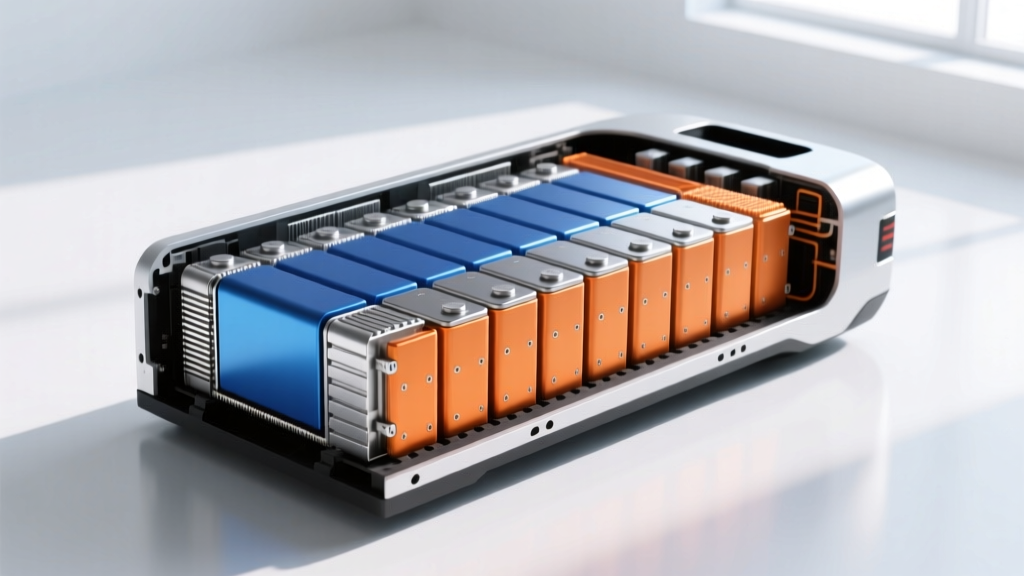
Not all EV batteries are the same. The two dominant chemistries in the Tesla lineup — and across the broader EV market — are NMC/NCA (nickel-manganese-cobalt / nickel-cobalt-aluminum) and LFP (lithium iron phosphate). The chemistry inside your pack directly affects range, longevity, safety margins, and charging behavior.
| Attribute | LFP (Lithium Iron Phosphate) | NMC / NCA |
|---|---|---|
| Energy Density | Lower (~160-180 Wh/kg cell-level) | Higher (~220-260 Wh/kg cell-level) |
| Range Impact | Shorter range per kWh of pack weight | Longer range per kWh of pack weight |
| Cycle Life | 3,000-5,000+ full cycles | 1,000-2,000 full cycles (varies by formulation) |
| Thermal Stability | Excellent — higher thermal runaway threshold (~270°C) | Good — lower threshold (~210°C), requires more active management |
| Cold-Weather Performance | Weaker — more range loss below 32°F | Better — retains more usable capacity in cold |
| Charging to 100% | Recommended regularly (helps BMS calibration) | 80-90% daily limit recommended for longevity |
| Cost | Lower — no cobalt or nickel | Higher — commodity-sensitive materials |
| Typical Tesla Application | Model 3 RWD, Model Y RWD (Standard Range) | Model 3/Y Long Range & Performance, Model S/X |
Which is better? Neither is universally superior. If you prioritize maximum range and cold-weather performance, NMC/NCA wins. If you want maximum cycle life, lower cost, and a wider thermal safety margin — and you don't mind slightly less range — LFP is the stronger pick. For most daily commuters who charge at home, LFP's longevity advantage is substantial.
How Long Do EV Batteries Actually Last?
The short answer: far longer than most buyers expect. The high-voltage traction battery (not to be confused with the 12V auxiliary battery that powers accessories) is engineered to outlast the useful life of the vehicle in the majority of cases.
Here's what the data shows:
- Tesla fleet data (from Tesla's Impact Reports): Model S/X batteries show approximately 10-12% degradation at 150,000 miles, with the curve flattening significantly after the initial break-in period of 20,000-30,000 miles.
- Model 3/Y (NMC): Independent fleet analyses from sources like Recurrent Auto show 5-8% capacity loss at 100,000 miles under typical mixed-use conditions.
- Model 3/Y (LFP): Early data suggests even slower degradation — many packs showing less than 5% loss at 80,000 miles, consistent with LFP's superior cycle-life chemistry.
- Industry average: A 2025 study by Geotab, analyzing over 10,000 EVs across brands, found an average annual degradation rate of 1.8% per year, meaning a typical EV retains roughly 82% of original capacity at the 10-year mark.
What Does the Tesla Battery Warranty Cover?
Tesla's battery and drive unit warranty is among the most straightforward in the industry. Here's the breakdown for current 2026 model-year vehicles:
| Model | Warranty Period | Mileage Limit | Minimum Capacity Retention |
|---|---|---|---|
| Model 3 RWD (LFP) | 8 years | 100,000 miles | 70% |
| Model 3 Long Range / Performance | 8 years | 120,000 miles | 70% |
| Model Y (all trims) | 8 years | 120,000 miles | 70% |
| Model S / Model X | 8 years | 150,000 miles | 70% |
The warranty covers battery replacement or repair if the pack falls below the stated retention threshold within the warranty period. It also covers defects in materials and workmanship. Critically, it does not cover capacity loss from normal use that remains above the 70% threshold — but as the degradation data above shows, hitting that floor within 8 years is unusual under normal conditions.
For broader context, the federal government mandates that EV batteries carry a minimum warranty of 8 years / 100,000 miles (10 years / 150,000 miles in CARB states like California). Tesla meets or exceeds these requirements across its lineup.
EV Battery Replacement Cost: What You'll Actually Pay
This is the question that generates the most anxiety. Here are realistic 2026 replacement cost ranges based on out-of-warranty service invoices, third-party repair shop data, and manufacturer estimates:
| Battery / Model | Pack Size (usable kWh) | Replacement Cost Range | Typical Replacement Timeline |
|---|---|---|---|
| Model 3 RWD (LFP) | ~57 kWh | $8,000 – $12,000 | Rarely needed within 15 years |
| Model 3/Y Long Range (NMC) | ~75-82 kWh | $12,000 – $16,000 | Rarely needed within 15 years |
| Model S / Model X (NCA) | ~95-100 kWh | $15,000 – $22,000 | Some early packs replaced at 150K-200K mi |
| Non-Tesla mid-size (e.g., Ioniq 5) | ~77 kWh | $10,000 – $15,000 | Rarely needed within 15 years |
| Non-Tesla large (e.g., F-150 Lightning) | ~98-131 kWh | $18,000 – $28,000 | Rarely needed within 15 years |
Factors That Accelerate Battery Degradation
While modern battery management systems (BMS) are remarkably effective at protecting pack health, your habits still matter. Here are the primary factors that influence how quickly your battery loses capacity:
1. DC Fast-Charging Frequency
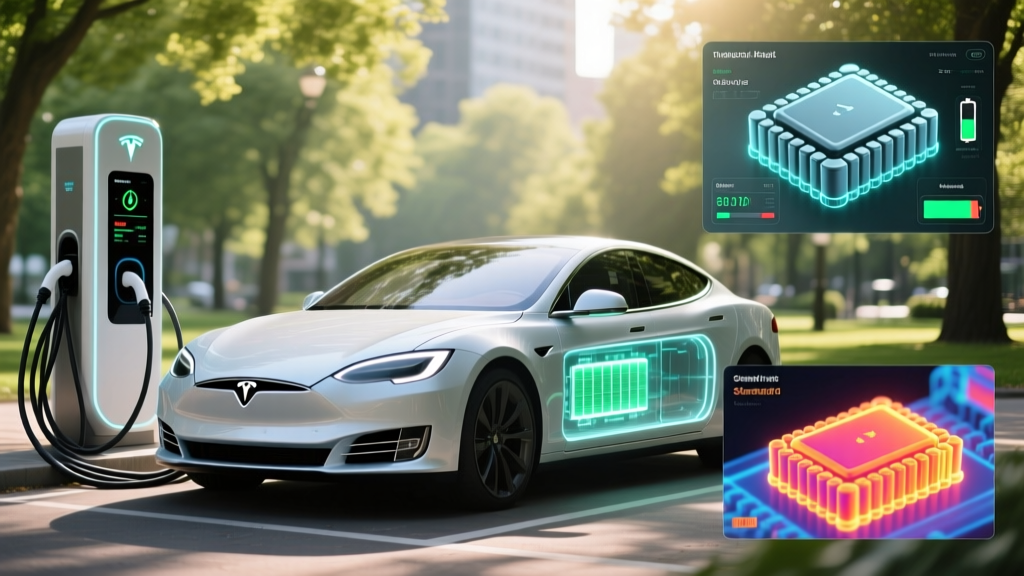
Occasional DC fast charging (DCFC) at 150-250 kW is fine. But data from Geotab and Recurrent Auto shows that vehicles that rely on DCFC for more than 80% of their charging sessions exhibit measurably faster degradation — roughly 1-2% additional loss per year compared to predominantly Level 2 home charging. The heat generated during high-power charging stresses cells over time.
2. State of Charge (SoC) Habits
For NMC/NCA batteries, consistently charging to 100% and letting the pack sit at full SoC accelerates degradation. Tesla's own recommendation is to set a daily charge limit of 80-90% for NMC packs and only charge to 100% before long trips. LFP packs are the exception — Tesla recommends charging to 100% at least weekly to keep the BMS calibration accurate.
3. Extreme Temperatures
Both hot and cold affect batteries, but in different ways:
- Heat (sustained ambient above 95°F / 35°C) accelerates chemical degradation. Tesla's liquid thermal management mitigates this significantly, but garage parking in hot climates still helps.
- Cold (below 32°F / 0°C) temporarily reduces usable capacity and slows charging speeds — this is not permanent degradation. Range recovers when temperatures rise. However, attempting to fast-charge a cold-soaked battery without preconditioning can cause lithium plating, which is permanent damage. Always use Tesla's navigation-based preconditioning when heading to a Supercharger in cold weather.
4. Deep Discharge Cycles
Regularly driving the battery down to 0-5% SoC before recharging is more stressful than partial cycles. The "20-80%" rule — keeping the battery in the middle of its range for daily use — remains the gold standard for NMC longevity.
Battery Care Checklist
- ✅ Set daily charge limit to 80-90% (NMC) or 100% (LFP) via the Tesla app
- ✅ Use Level 2 home charging as your primary charging method
- ✅ Limit DC fast charging to road trips when possible
- ✅ Always navigate to a Supercharger in cold weather to trigger preconditioning
- ✅ Avoid leaving the car at 100% SoC for extended periods (multiple days)
- ✅ Avoid letting the car sit below 10% SoC for more than 24 hours
- ✅ Park in a garage or shaded area during extreme summer heat
- ✅ Keep the Tesla app's battery health notifications enabled
How to Check and Monitor Battery Health (SoH)
State of Health (SoH) is a percentage representing your battery's current maximum capacity relative to its original capacity. A new battery is 100% SoH; a battery that can only hold 90% of its original kWh is at 90% SoH.
Here's how to monitor it:
- Tesla App / In-Car Display: Tesla does not display a direct SoH percentage. However, you can infer degradation by comparing your current displayed range at 100% charge to the original EPA-rated range. For example, if your Model 3 LR originally showed 341 miles at 100% and now shows 315 miles, that's roughly a 7.6% loss.
- Third-Party Apps: Tools like TeslaFi and Tessie log charge data over time and calculate estimated SoH by analyzing the energy added during charges versus the SoC change. These provide a more granular picture than the dashboard alone.
- Service Center Diagnostics: If you suspect a warranty claim, a Tesla Service Center can run a full battery health diagnostic that provides a precise SoH reading. This is the only method accepted for warranty evaluations.
For buyers evaluating a used Tesla, requesting a pre-purchase battery health report from a Tesla Service Center (typically $0-$100) is strongly recommended. It provides documented SoH data that the seller cannot dispute.
What's Next: Solid-State and Silicon-Anode Batteries
If you're researching battery longevity, you've likely seen headlines about solid-state batteries promising 500+ mile ranges and 20-minute charges. Here's the realistic 2026 status:
- Solid-state batteries replace the liquid electrolyte with a solid material, offering higher energy density, faster charging potential, and improved thermal safety. Toyota, Nissan, and several startups (QuantumScape, Solid Power) have announced pilot production. However, no mass-market EV currently on sale uses a solid-state pack. Realistic volume production timelines point to 2028-2030 for limited applications, with broad availability not expected until the early 2030s.
- Silicon-anode batteries (used in limited form by startups like Sila Nanotechnologies) boost energy density by replacing graphite anodes with silicon-dominant composites. These are closer to market — some are appearing in consumer electronics and are expected in automotive applications by 2027-2028 — but they remain a niche, premium offering for now.
- Sodium-ion batteries are emerging as a low-cost alternative for entry-level EVs. CATL and BYD have begun production, but energy density is significantly lower than LFP, limiting range. These are unlikely to appear in the U.S. market before 2028.
Frequently Asked Questions
How long do EV batteries last in years and miles?
Based on fleet data across multiple brands, most EV batteries retain 80-90% of original capacity at 150,000 miles or 10-15 years. Complete failure requiring replacement within the first decade is rare and typically covered under warranty. The 8-year/100,000-mile minimum federal warranty provides a strong baseline of protection.
How much does an EV battery cost to replace?
Out-of-warranty replacement costs in 2026 range from approximately $8,000 for a smaller LFP pack (Model 3 RWD) to $22,000+ for a large NCA pack (Model S/X). However, most owners never face this cost — the battery typically outlasts the vehicle, and failures within the warranty period are covered. Refurbished replacement packs are increasingly available at 30-50% below new-pack pricing.
What does the battery warranty cover?
Tesla's warranty covers the high-voltage traction battery and drive unit for 8 years and 100,000-150,000 miles (depending on model), guaranteeing a minimum of 70% capacity retention. If the pack drops below that threshold, Tesla will repair or replace it at no cost. The warranty also covers manufacturing defects. It does not cover cosmetic issues, damage from accidents, or normal degradation above the 70% floor.
How do I check and maximize battery health?
Monitor SoH by comparing your 100%-charge displayed range to the original EPA rating, or use third-party logging apps like TeslaFi for more precise tracking. Maximize longevity by using Level 2 home charging as your primary method, setting appropriate daily charge limits (80-90% for NMC, 100% for LFP), avoiding frequent DC fast charging, preconditioning before cold-weather fast charging, and avoiding prolonged storage at extreme SoC levels.
LFP vs NMC — which is better and why?
It depends on your priorities. LFP offers superior cycle life (3,000-5,000+ cycles vs 1,000-2,000 for NMC), a higher thermal safety margin, lower cost, and the convenience of regular 100% charging. NMC delivers higher energy density (more range per pound), better cold-weather performance, and faster charging speeds. For daily commuters who charge at home, LFP's longevity and simplicity are compelling. For road-trippers and cold-climate drivers, NMC's range advantage matters more.
Are Tesla batteries more prone to fires than other EVs?
No. Available data from NHTSA, the NFPA, and Tesla's own reporting shows that Tesla vehicles experience fires at a rate well below the industry average for all vehicles (including ICE). The structural battery pack design, liquid thermal management, and sophisticated BMS provide multiple layers of protection. While any lithium-ion pack can experience thermal runaway under extreme conditions (severe crash damage, manufacturing defect), the probability is extremely low — and far lower than the fire risk associated with gasoline fuel systems.